Skip to content
Live
Oct 12Mon
  1. Microsoft Official Blog

    Microsoft expands the Azure Maia system to multi-gigawatt deployment

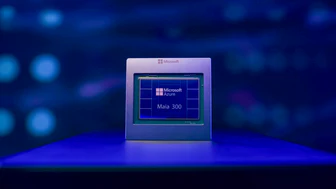
    Microsoft is expanding the Azure Maia system to multi-gigawatt deployment, Maia 200 has entered production, and Maia 300 will be launched in 2027. Maia 200 is serving Microsoft's production workloads, including Microsoft Copilot, and supports the MAI team in developing next-generation models. GitHub Copilot and Microsoft Foundry will be launched by the end of this year.

Oct 10Sat
  1. Latent Space
    How Standard Bots (Standard Bots) build AI systems for reliable execution: Lessons from the industrial robotics field.

    Standard Bots develop AI systems for industrial robots by sharing a base model, combined with demonstrations and fine-tuning. Their maximum model parameter count is in the billions, emphasizing data quality over scale, and leveraging unique customer data to address edge cases. The model handles perception tasks (like machine loading and unloading), traditional programming handles motion and logic, and reasoning runs on local devices to ensure reliability and real-time performance in scenarios like factories.

  2. Interconnects65

    Researchers expect AI to surpass its performance in the workplace in a few years, but not general superintelligence

    Researchers predict that AI will surpass its performance in work in the next few years, but it will not be general superintelligence. The infrastructure and engineering capabilities of models will be significantly accelerated, making experiments and model adjustments easier to implement, but it will not change the nature of the model. The effective cost of AI intelligence is expected to decline exponentially in the coming years, and demand will increase as industries explore the direction and delivery methods of intelligent agents.

  3. Sierra Blog

    The draft of the Personal Agent Protocol has been released, and 35 design partners have joined.

    The draft of the Personal Agent Protocol (Poppy) has been released, announcing the participation of 35 new design partners such as Adyen and Atomic; the protocol is based on standards such as OAuth and JWT, allowing customers to control agent permissions, and enterprises can securely collaborate across channels (website, API, proprietary agents) to achieve a variety of tasks from returns to mortgage applications.

  4. Cohere Blog

    Cohere discusses the choice of shared or dedicated inference for Embed & Rerank workloads.

    When analyzing Embed & Rerank workloads, shared inference is suitable for batch processing (such as e-commerce indexing) to improve cost-effectiveness, while dedicated inference is better for re-ranking with a high number of candidate documents (such as fine-tuning search results); the choice should be based on request characteristics (batch processing/single query/candidate count), traffic patterns (continuous/bursty), and utilization, rather than purely price comparison.

Oct 9Fri
  1. Simon Willison65

    Simon Willison uses GPT-6 Astra High to build new blog features through voice

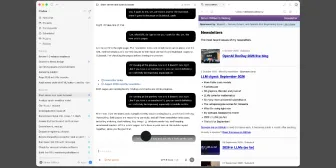
    Simon Willison interacted with GPT-6 Astra High via voice to build the Newsletters page of his blog, implementing a subscription list indexing feature, including weekly free Substack and monthly exclusive updates for sponsors. He used the Codex voice chat mode of the ChatGPT desktop application to complete the model, migration, view code, template, and database import functions in a local development environment and integrated the website search engine.

  2. The Decoder75

    Anthropic has introduced new features for Claude: generating animation explanation videos and real-time data dashboards from text.

    Anthropic has introduced two new beta features for Claude: Dashboards can generate automatically updated real-time dashboards by connecting to data sources like BigQuery and Databricks via text prompts, with results outputtable to tools like Amplitude and Grafana; Motion can create editable code animation explanation videos from text, charts, and images and export them as MP4.

  3. Comfy Blog70

    How to use MiniMax H3 to generate real-time video on a single GPU

    Using the FastVideo FastH3 V2 checkpoint, it generates 15-second 448×256 resolution video on a single RTX 5090 GPU through optimizations like four-step sampling, sparse attention, small text encoders, small checkpoints, and fused FP4 MLP. VRAM requirements are reduced from 80GB to <30GB; this custom Comfy node is open-sourced and can be deployed by requesting GPU and models via Comfy API.

  4. AWS Machine Learning Blog

    How BlockRun and Incarna use Amazon Bedrock AgentCore Pay to enable AI agents to pay per inference

    AgentCore Pay allows AI agents to pay as needed, Incarna uses it to enable agents to pay per request to BlockRun for model inference, BlockRun offers on-demand billing inference services for over 90 models. AgentCore Pay reduces the workload of adding x402 support from months to days through hosted wallets, native protocol handling, infrastructure layer spending governance, and auditable settlements.

  5. TechCrunch · AI

    Google is pushing Gemini AI into the agent era, with the first phase targeting enterprises

    Google announced at the cloud services conference the launch of a unified agent for Gemini AI, which not only answers questions but also represents users to complete tasks, initially focusing on enterprise applications. The agent can accept goals rather than instructions and connects to internal enterprise systems through custom skills and tools, defaulting to the best model (including third-party Anthropic Claude model), which will be extended to open-source and private model selection in the future.

Oct 8Thu
  1. The Verge · AI

    Google launches universal Gemini AI agent for cross-application and device operation in work scenarios

    Google has released a universal Gemini AI agent that can operate across applications and devices in work scenarios. The tool provides a single interface through the Gemini Enterprise app, supporting chat with the agent and task assignment, and can work directly within Workspace applications like Gmail, Drive, Docs while maintaining cloud context. It is currently only available to business customers for private preview, as Google had previously launched the consumer-focused Gemini Spark agent in May.

  2. Ars Technica · AI58

    Microsoft's new product launch introduces AI-supported new hardware and Windows 11 updates

    Microsoft unveiled the Surface Laptop Ultra at its new product launch, featuring the Nvidia RTX Spark SoC, with a starting price of $2,599, equipped with 5120-core or 6144-core Blackwell GPUs and up to 128GB LPDDR5x memory, starting shipping on October 16; also announced the Windows 11 update, supporting local AI and intelligent agent workflows.

  3. Google Developers Blog

    AQuA: An agent that can diagnose agent issues in a production environment.

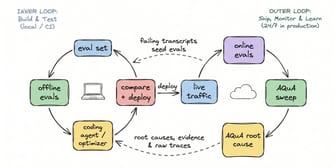
    AQuA runs alongside the production agent, analyzing production trajectories through a five-stage process (sampling, review, clustering, validation, tracking), clustering common issues, and generating actual/expired findings to help teams continuously monitor and improve agent quality. It uses target files written by developers and custom metrics to guide the review process and supports integration with AutoRaters on the Gemini platform.

  4. NVIDIA Blog

    NVIDIA and Microsoft team up to usher in a new era of AI agents for Windows PCs: RTX Spark and local AI calculator

    NVIDIA and Microsoft collaborate to launch RTX Spark laptops and Windows AI agent infrastructure, supporting local running of 125B parameter Qwen 3.8 Flash Next models; Microsoft releases MXC operating system-level container to ensure agent secure operation, pre-orders for RTX Spark open today, paired with Grace Blackwell chip, offering up to 20 PFLOPS inference performance.

  5. AWS Machine Learning Blog

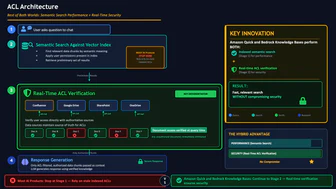
    How Amazon Quick and Amazon Bedrock Knowledge Bases perform RAG access control through real-time ACLs

    Amazon Quick and Amazon Bedrock Knowledge Bases address the RAG access control challenge through real-time access control list (ACL) access, verifying permissions directly with authoritative sources during queries, avoiding reliance on potentially outdated or incorrectly mapped ACL data. The system employs a two-phase architecture: the first phase performs pre-retrieval filtering, and the second phase calls the data source API in real-time to validate candidate documents, striking a balance between performance and security, ensuring AI responses always comply with the latest permission requirements.

Oct 7Wed
  1. AWS Machine Learning Blog

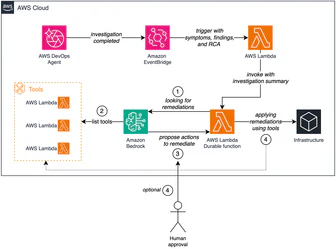
    AWS has launched an automated value model, redefining the business case for agent automation.

    AWS has proposed an automated value model, redefining the business case for agent automation. Traditional RPA investment return models overlook the value of agent automation in exception handling, decision quality, process adaptability, and value realization. Enterprises need to consider the redeployment value of released labor time or the reduction in cash costs, as well as the cost of exception correction, to build a credible business case.

  2. Latent Space75

    Mecatl: An intelligent agent harness for the cloud

    Mecatl is an open-source cloud-native intelligent agent harness developed by Stacklok, the company founded by Kubernetes founder Craig McLuckie and Joe Beda, designed to separate the agent loop from the execution environment, achieve enterprise-level centralized management, reduce reliance on cutting-edge laboratories and ultra-large-scale cloud service providers, and whose architecture draws inspiration from Kubernetes' control loop and container orchestration concepts.

  3. Ars Technica · AI75

    Google has launched an improved SynthID AI content detector, now available globally.

    Google has extended the SynthID detector to all partner watermarks. Users can check whether AI content contains SynthID tags through the new website SynthID.com without relying on the Gemini model. The detector has been integrated with SynthID data from 180 billion images and videos and 240,000 years of audio from Google, now supporting cross-platform watermark recognition.

  4. Claude app release notes

    Anthropic releases Claude Haiku 5.5, Max and Team plan to receive monthly API credit limits

    Anthropic released Claude Haiku 5.5, which is its cheapest, fastest, and most powerful micro-model, designed for high-volume, cost-sensitive tasks. Max and Team plan to now include monthly API credit limits for running their own applications and agents on the Claude platform, which can be claimed by associating the Claude console organization in Settings > Billing (Max) or Organization Settings > Billing (Team).

  5. Google Developers Blog

    The Google Developer Knowledge API ecosystem helps developers build AI tools efficiently.

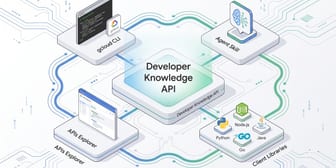
    The Google Developer Knowledge API is Google's official developer documentation programmable source, providing semantic search, intelligent document chunking, and reliable Q&A capabilities for Google Cloud, Firebase, Android, and other Google ecosystems, reducing hallucinations in AI tools due to the expiration of LLM training deadlines.

  6. OpenRouter Blog

    OpenRouter's AI sales agent Rasp saves the sales team 600 hours per month

    OpenRouter's AI sales agent Rasp saves a 5-person sales team about 600 hours per month by handling inbound leads, sending the first email, writing call briefs, drafting notes, and updating CRM, allowing each representative to add about 2 calls per day, shortening the sales cycle by 34%, increasing the conversion rate by 2.6 times, and reducing costs from nearly 800 USD/day to 30 USD/day

  7. OpenHands Blog75

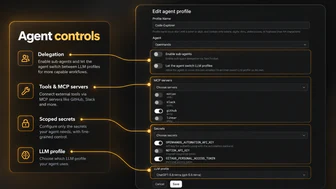
    OpenHands released in September: range agents, isolated runtime, persistent workflows

    OpenHands was released in September, introducing features such as scoped agents, isolated runtime, and persistent workflows. From version v1.17.0 to v1.24.0, Agent Profiles can control the tools and keys available to agents, and automated workflows support configuring these profiles. The Docker runtime provides isolated workspaces for agents. From version v1.18.0 to v1.21.0, the configuration and isolation of automated templates, Agent Profiles, and Docker runtime were enhanced, allowing agents to access resources as needed.

Oct 6Tue
  1. Google Research

    Google Earth AI's Population Dynamics Foundation Model (PDFM) provides a planetary geospatial foundation model for global public health.

    Google Earth AI's Population Dynamics Foundation Model (PDFM) compresses search trends, population flows, building environment density, and environmental factors into location embeddings, enhancing epidemiological research performance in various disease fields and geographical environments without specific task fine-tuning.

  2. Mistral AI

    Mistral AI has launched the public beta version of Mistral Large 4.

    Mistral Large 4 is a native multimodal large language model with 100 billion parameters, featuring 52 billion active parameters. It excels in coding, agent workflows, and multimodal understanding, reaching the level of the world's strongest open-source model. It also leads in critical enterprise workloads such as cybersecurity, finance, and law. The model will be open-sourced by the end of this month and is currently available for experience through the public beta API of Mistral Studio.

  3. Claude.dev Blog

    Claude Code cloud sessions: Cloud session domain guide

    Claude Code cloud sessions run on independent virtual machines, with each task cloning a code repository to a new branch, ensuring no interference. Users can start it via claude.ai/code, mobile app, desktop app, terminal, or Slack, supporting tracking in browsers, mobile apps, and desktop apps. Users of Pro, Max, Team, or Enterprise plans can use it for free without additional costs, and share other usage limits with Claude Code.

  4. Cursor Changelog

    Cursor iOS app adds local agent remote control feature.

    Cursor iOS app now supports viewing and responding to local agents running on the user's computer, default enabled (excluding enterprise organizations). After downloading the app and logging in, the user's computer account is automatically displayed. Remote management requires pairing and authorization via the desktop app. Remote control only connects to the agent, does not move its running location, and requires the computer to be powered on and connected to the network.

  5. Google Developers Blog

    EmbeddingGemma 2 Developer Guide

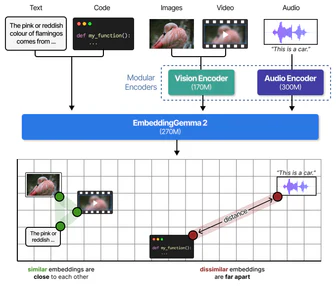
    EmbeddingGemma 2 is an open-source 740M parameter model developed based on Gemma 4, which maps text, code, images, video, and audio to a unified 768-dimensional space, supports modular loading (270M-740M parameters), and performs excellently in code search and cross-modal retrieval, can be used via the sentence-transformers library.

Oct 5Mon
Oct 2Fri
  1. NVIDIA Blog

    NVIDIA DGX Spark 64GB released, providing developers with more local AI building and expansion solutions

    The NVIDIA DGX Spark with 64GB unified memory, launched by Acer, ASUS, Dell, Gigabyte, HP, and MSI, supports developers, researchers, and AI enthusiasts to run models with up to 100 billion parameters locally without cloud dependency. Two devices can be clustered via NVIDIA Sync Cluster Assistant, merging memory to 128GB and boosting performance 1.7 times, priced from $4999.