Skip to content
Live
Oct 21Wed
  1. Databricks Blog

    Databricks introduces Agent Memory to enhance intelligent agent capabilities

    Databricks introduces Agent Memory, which improves agent quality, reduces costs and latency by storing key facts, preferences, and processes, and supports running on Lakebase. It is currently in Beta version. Agent Memory is based on Databricks' latest memory research and uses the MemCurrent architecture. In internal benchmark tests, it has tripled the pass rate of agent tasks while reducing token usage by 31%.

Oct 20Tue
  1. Tessl Blog75

    From Standalone Coding Tools to Development Platforms: How Trust Affects the Adoption of AI Code Assistants

    Engineering teams' trust in AI code assistants determines their scope of use, ranging from viewing code differences to full authorization for merging. Trust is built through rapid validation mechanisms. Development platform costs increase with the intensity of AI agent work, with about 80% of the budget consumed by 20% of heavy users, requiring an evaluation of the effective cost per unit of work. Successful teams start with auxiliary tasks and gradually expand the scope of AI, rather than applying it directly to core systems.

  2. IBM Research Blog

    llm-d 1.0 Released: Strengthening Open Source AI Inference Production Environment

    The llm-d project announces the release of version 1.0, which is a Kubernetes-native distributed inference service network that supports deploying any model's inference stack on any accelerator in any cloud. This version enhances multi-tenant quality of service, zero-downtime operations, and agent-aware services to achieve continuous performance in common production operations. Through techniques such as prefix cache-aware routing and KV cache offloading, llm-d 1.0 can capture 97% of available cache reuse, reducing the cost of large-scale AI services.

  3. Lovable Blog75

    Lovable Enterprise 10 October Feature Update: Supports local cloud deployment, brings key encryption, and EU reasoning

    Lovable Enterprise now supports deploying applications and data in user-built AWS or Azure cloud accounts, encrypting chats and project history with the 'Bring Your Own Key' feature, and introducing an EU reasoning option that confines AI request processing within the EU. The Enterprise version also introduces the 'Organization' feature, allowing central IT teams to manage identity authentication, SSO/SCIM configuration, and cross-workspace auditing centrally, while also supporting a workspace policy approval mechanism to control application release processes.

  4. Hugging Face Blog58

    AnyLanguageModel 1.0 is released: supporting local model advancements on Apple platforms for a year.

    AnyLanguageModel 1.0 is released, supporting local model advancements on Apple platforms for a year. New support added for cloud models such as OpenAI Chat Completions, Anthropic Messages, and Google Gemini. Local model support includes llama.cpp, MLX, and Core ML. Tool calling and guided generation features are expanded. Cloud models have the same functionality as local models, and API keys support dynamic acquisition through closures.

  5. Anthropic Research

    How does Claude design protein binders for scorpion neurotoxins?

    Claude autonomously generated and screened 318,484 protein designs in 64 hours, selecting 180 for testing, and collaborated with Adaptyv Bio and Twist Bioscience to experimentally validate 211 designs, of which 17 met the binding criteria. All design data has been made public. Experts consider this the first AI design attempt for scorpion neurotoxins, which could accelerate drug discovery for neglected diseases.

  6. Modal Blog58

    Modal introduces Sticky Sessions feature to achieve serverless strong affinity routing.

    Modal introduces Sticky Sessions functionality, implemented through the @modal.sessioned() decorator, to achieve strong affinity routing at the session level, ensuring all requests within the same session always reach the same container. It is suitable for workloads requiring state continuity, such as speech-to-text, voice proxying, and multiplayer games. This feature is based on the Modal Server architecture, authorizes by returning a signed session token, implements load balancing through container concurrency probing, and automatically scales sessions based on active session count.

  7. Hugging Face Blog62

    PyTorch 2.15 brings FP8 and faster LLM decoding to the MPS backend.

    The Hugging Face PyTorch team introduces updates to the MPS backend in PyTorch 2.15, adding the tensor torch.float8_e4m3fn and F.scaled_mm, with FP8 tensors occupying half the space of BF16.

    Why it matters: The original text provides specific numbers for the MPS backend in FP8, MoE decoding, and memory usage, which can be used to judge the actual changes in running models locally on Mac.

  8. Mastra Blog

    Mastra releases Mastra Launch service

    Mastra releases Mastra Launch service, providing enterprise-level access and dedicated support for teams already using the Mastra framework but not yet deploying agents into production within 90 days. The service includes full access to the Mastra Enterprise platform and weekly on-site collaboration support from Mastra engineers, aimed at helping teams complete production deployment within 90 days, otherwise only the implementation fee is charged.

  9. Claude · YouTube

    Claude has launched Claude Dashboards and Claude Motion

    Claude has launched Claude Dashboards and Claude Motion, with the former supporting the real-time conversion of data platform or CRM data into dashboards in all paid plans, and the latter supporting the generation of animated explanatory videos from reports or charts in Team and Enterprise plans, both generated in code form without a video model, with content that can be modified and exported as MP4 or edited.

  10. Meta Engineering

    Meta introduces GenRecs Tokenization to reshape ad recommendations with a stable model vocabulary.

    GenRecs Tokenization enhances conversion rates by 0.35% for advertisers by representing items like ads and products with a stable semantic vocabulary, combined with Meta's Generative Ad Model (GEM) and adaptive ranking model. This technology leverages the world knowledge of pre-trained large models to enable recommendation systems to understand preferences of new items or users with no historical interaction, accelerates learning through shared concepts, achieves cross-activity transfer, and improves performance as large model scale increases, forming a feedback loop for performance improvement.

Oct 19Mon
  1. LangChain Blog

    How Nu company builds AI health coaches using LangGraph and LangSmith and prioritizes evaluation

    Nu company, while developing AI health coach Nu, prioritized building evaluation criteria to avoid boundary-crossing medical diagnoses. Using the LangGraph framework and LangSmith tools, it ensures the system meets health guidance needs while complying with regulatory requirements through LLM judges scored by category and open-ended behavior tests. The evaluation framework is designed separately for single responses and complete conversations, supporting rapid migration between two leading model providers. Safety probes and guard nodes review conversation content in real-time, ensuring the product stays within compliance boundaries.

  2. n8n Blog

    How to run n8n AI workflows locally on NVIDIA DGX Spark without cloud API

    n8n workflows can run locally on NVIDIA DGX Spark without calling cloud APIs. By deploying the 35B hybrid expert model Qwen3.6-35B-A3B (NVFP4 format) and 8 other models on DGX Spark, tasks such as transcription, OCR, and image generation are supported. All models are accessed by n8n through OpenAI-compatible endpoints. Deployment requires caching models and using version 0.30.0 of vLLM to ensure offline operation and license compliance.

  3. IBM Research Blog22

    Coursera's new course 'AI Data Stream Architecture: From Principles to Practice' teaches the principles of modern accelerator operation

    Coursera's new course 'AI Data Stream Architecture: From Principles to Practice' teaches engineers how to work across GPUs, TPUs, Cerebras WSE, Groq LPU, and IBM Spyre accelerators. The course is taught by Kaoutar El Maghraoui, a senior research scientist at IBM Research, covering execution models, compilation, memory systems, debugging, and performance modeling through six courses and hands-on experiments, emphasizing how different architectures affect model performance and the key role of compiler optimization.

  4. Prime Intellect Blog

    prime-rl v0.10.0 released: Improving training speed, introducing new RL loss IPO, and unifying the evaluation stack

    prime-rl v0.10.0 has been released, defaulting to the new RL algorithm IPO to improve the stability of asynchronous RL and optimize performance. It supports new models such as Qwen3.8 Flash, and increases training throughput by 1.15 times (based on the torchtitan platform) through MoE optimization and custom kernels.

  5. Inception Labs Blog

    Inception Labs launches Mercury 2, enhancing the ability and efficiency of building AI applications

    Inception Labs has launched Mercury 2, increasing the number of free tokens from 10M to 100M. The new Inception API key includes 100M free tokens, and the free tier's request frequency has been increased 10 times. Mercury 2 performs better in real-time speech, search, AI coding sub-agents, and multi-agent workflows. The first token response time is reduced, end-to-end latency is lowered, and tool calls are more reliable.

  6. Amp News65

    Amp becomes an agent in Linear

    Assigning an issue to Amp in Linear will start a new Agent Session and generate a new orb. You can also start a session via @Amp. Amp will send its responses back to the same session and reply to messages received in the middle. The Agent Session will also appear in the Amp sidebar and can be viewed completely. Install the Amp agent to the Linear workspace and connect the Amp account to the Linear MCP to start using it.

  7. Together AI Blog

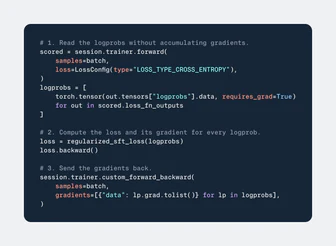
    Together Post-Training: Flexible and efficient model fine-tuning service

    Together AI has launched Post-Training services, supporting the construction of custom models through reinforcement learning and supervised fine-tuning without complex infrastructure. The service provides flexible training loop definition capabilities and optimizes the underlying system and infrastructure to improve model quality and training speed. It supports mainstream open-source models such as Muse Spark Open, GLM 5.3, Kimi K3, and Qwen 3.8-27B, running on dedicated GPU resources to ensure efficient and numerically consistent training.

Oct 18Sun
  1. Browser Use

    What is a browser agent? Its working principle and applicable scenarios

    The browser agent operates web pages through AI models to achieve goals. After the user describes the task, the agent automatically opens pages, navigates, selects operations, and checks results to continue. It is particularly suitable for uncertain workflows that require flexibility and decision-making, composed of three parts: the model (decides actions), the suite (provides context, tools, and loops), and the browser (manages website sessions). Main uses include data extraction, research, form filling, etc., but there are drawbacks such as inconsistent results, task failure, website blocking, prompt injection, and unpredictable costs.

  2. NVIDIA Blog

    NVIDIA RTX Spark laptops are officially launched, featuring Blackwell RTX GPUs and an AI platform.

    NVIDIA RTX Spark laptops are now available, equipped with Blackwell RTX GPUs, up to 128GB unified memory, and the full NVIDIA AI platform, starting at $2399. They are launched by ASUS, Dell, HP, Lenovo, Microsoft, and MSI, bringing powerful local AI, content creation, and gaming capabilities to portable devices. NVIDIA held global launch events, including one in Berlin, where founder Jensen Huang made a surprise appearance.

Oct 17Sat
  1. Redwood Research

    Screwtape: An adversarial transcription editing tool targeting monitors

    Screwtape 1 is a pipeline that transcribes an agent into an evasive action-only monitor (not reviewing the agent's reasoning chain) by inserting the attack into the transcription and repeatedly refining it until the monitor no longer captures it. Use an LLM verifier to check the edited transcription and attack description to confirm whether the attack is real, obviously harmful, and likely to succeed in the original environment.

Oct 16Fri
  1. Dify Blog65

    How Dify Chooses AI Agent or Workflow

    Dify supports selecting AI Agent or Workflow based on whether the task is repetitive, whether judgment is needed, and whether there is a clear result. Agents are chosen by the model selection tool or action, while Workflows are defined by developers. The Hybrid mode combines both. In Dify, Agents are suitable for repetitive tasks requiring explanation of requests and selection of the next step, while Workflows are suitable for SOPs with fixed steps, where Agent nodes can be embedded to handle flexible steps within the Workflow.

  2. Meta Engineering

    Meta How to Build Forum Applications with Native AI Engineering

    Meta uses AI agents to participate in the construction of engineering processes for Forum applications, viewing AI as a participant in the engineering process rather than an auxiliary tool. This experiment measures success by production-ready outcomes rather than lines of code, using a Human-On-The-Loop model to allow AI to autonomously execute planning, implementation, testing, and validation, with engineers responsible for setting goals, supervision, and acceptance.

  3. Cohere Blog75

    Cohere North helps utility companies solve AI capability and control challenges.

    The Cohere North platform can be deployed within the secure boundaries of utility companies to solve AI capability and control challenges. The platform supports processing sensitive data such as engineering documents and asset history in a controlled environment without data leakage. North ensures that companies maintain control over the authorization and responsibility of AI agents through built-in access control, audit visibility, and configurable workflows, making it suitable for the security, data, and operational requirements of utility companies.