Codex releases00
GitHub Copilot 0.167.0-alpha.4 released
GitHub Copilot 0.167.0-alpha.4 released, providing code review, security vulnerability detection, and secret scanning features.
Codex releases00GitHub Copilot 0.167.0-alpha.4 released, providing code review, security vulnerability detection, and secret scanning features.
 NVIDIA Technical Blog6565
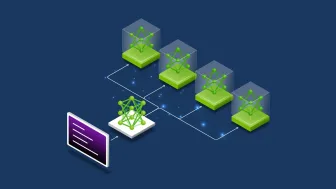
NVIDIA Attribution can help users locate the initial failure point in distributed AI workloads by analyzing NCCL errors, scheduler state changes, and downstream message cascading symptoms, revealing the source of anomalies rather than just reporting the stop location. This tool is suitable for diagnosing cross-node issues caused by GPU or network fabric events, by visualizing and tracing the root cause of problems through thousands of message links.
 Apple Machine Learning Research
Apple researchers propose a cross-architecture distillation recipe, distilling Attention-based models to the Mamba architecture, with the distilled Mamba model achieving a perplexity of 14.01, close to the teacher model's 13.86, and performing well on downstream tasks.
 Redwood ResearchNVIDIA Technical Blog6565
NVIDIA introduces automated workload recovery, providing fast and reliable recovery from failures such as NCCL timeouts, GPU node interruptions, or slow nodes, to ensure stable distributed AI training.
Qualcomm's HBC technology has completed hardware validation at its San Diego lab. Its first-generation solution provides 133 TB/s memory bandwidth for the AI250 accelerator card, an 18-fold increase over the AI200. This architecture achieves near-memory computing through multi-layer LPDDR memory stacking and is planned to be samples in the first half of 2027.
 Hugging Face Daily Papers6565
CEPO enhances prompt optimization for multi-agent systems by separating shared coordination from agent-specific execution, continuously improving the performance of four existing prompt optimization methods across 11 cross-domain benchmark tests. The framework uses shared coordinator prompts and agent-specific execution prompts, guiding them to update based on their respective roles, allowing shared coordination rules to be consistently optimized across all agents while maintaining independent adjustment of execution instructions. Experiments show that CEPO improves optimization budget efficiency and scales performance as the number of agents increases.
 LangChain Blog3838
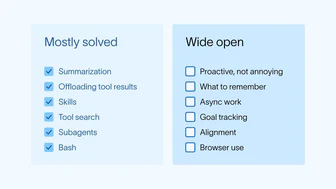
LangChain points out new challenges for agent context engineering in late 2026, including how to proactively notify users without being annoying, agent memory management, asynchronous task processing, goal tracking and alignment, and browser usage, among other difficulties. These challenges involve how agents balance notification frequency when running in the background, decide on memory content, coordinate asynchronous tools and sub-agents, break down and iterate on goals, and prevent agents from over-optimizing goals.
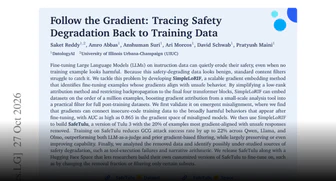
Hugging Face Daily PapersSimpleLoRIF identifies and filters instruction data that silently erodes LLM safety through gradient alignment, generating the SafeTulu dataset that reduces adversarial success rate by 22% while preserving model capabilities.
 Databricks Blog
Lakebase Postgres is officially launched on Google Cloud, supporting serverless Postgres running on the Databricks data and AI platform.
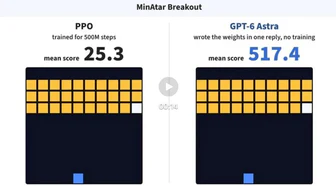
The research team proposed Weight-Space Programming, discovering that GPT-6 Astra can directly read and write neural network weights: with only 17,253 weights, it can determine which game the network is trained on, and from scratch, write a small game network that defeats PPO trained for 100 million steps without gradients or training.
 MarkTechPost6767
Deep Principle releases the open-source scientific model Hydrogen-1.0, a 753B parameter model based on GLM-5.3 post-training using Z.ai, for the fields of chemistry, materials science, and life sciences, scoring 38.3% in the FrontierScience-Research evaluation, surpassing GPT-6-Astra's 33.3%.
 PyTorch Blog3434
Ray announces the Special Interest Group (SIG) for Accelerators, aiming to unite hardware vendors, Ray contributors, and application developers to create a neutral accelerator support roadmap. Initial focus will be on developing test infrastructure, hardware awareness capabilities, and network transmission, prioritizing shared hardware access, reproducible development and testing environments, and broader CI coverage.
 AWS Machine Learning Blog3838
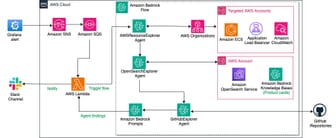
Circle K builds an automated incident investigation system using Amazon Bedrock, reducing the average investigation time to under 15 minutes with a reduction of 67-75%. The system utilizes Amazon Bedrock Flows and AgentCore, enabling specialized agents to autonomously analyze incidents through parallel execution, and sending structured summaries in real-time to Slack, allowing engineers to take immediate action while avoiding repetitive log queries, health checks, and manual manual searches.
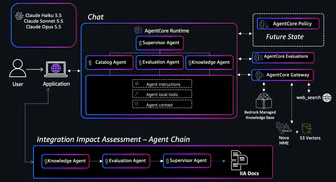
AWS Machine Learning Blog3434Engineers use the Amazon Bedrock AgentCore platform to build multi-agent systems, combining Claude Haiku 5.5, Claude Sonnet 5.5, and Claude Opus 5.5 models.
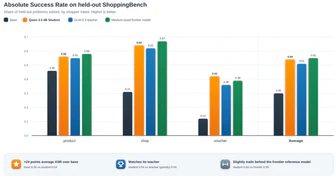
AWS Machine Learning Blog4343Use knowledge distillation to fine-tune the shopping assistant on Amazon SageMaker AI, by transferring the behavior of cutting-edge models to small models through sequence-level knowledge distillation (SeqKD), generating reasoning trajectories for task-solving and using them for supervised fine-tuning to achieve efficient low-cost inference. SeqKD only requires the text output of the teacher model, without weights or logits, and is suitable for scenarios where access to the teacher model's internal information is not available, such as API models, and can evaluate the performance of student models through benchmark tests.
Hugging Face Daily Papers6565WeFair improves personalized query rewriting through a human feedback phase (demonstration, preference, and validation) based on fidelity perception, reducing intent drift and enhancing search effectiveness on short video platforms. This technology addresses the need for compact query rewriters in short video search, recovering user personalized intent from ambiguous queries under strict latency constraints. WeFair-2B outperforms strong rewriting baselines in overall accuracy and intent preservation in offline experiments, while online A/B testing shows a relative increase of 2.593% in effective video play rate and a relative decrease of 2.350% in query rewriting rate.
Hugging Face Daily Papers3838REA unifies deliberative and reactive strategies in a single runtime, achieving high success rates and reducing control overhead through asynchronous coordination in both simulated and real robotic tasks. On 3,000 test segments across 60 LIBERO-Pro tasks, REA achieved a 95.9% success rate, outperforming its best single-agent baseline from its strategy library (94.7%), while reducing control steps by 25% and control time by 17%.
Hugging Face Daily Papers3434OSWAM achieves real-time high-quality action generation in autonomous driving and embodied control by using structured imagination tokens to initialize the diffusion process and distilling future condition privileged information into a single denoising step. The model generates high-quality actions with just one diffusion step, about 3 times faster than direct strategy world action models (WAM) that require dozens of denoising steps, achieving low latency of up to 40ms on an NVIDIA RTX 5090 GPU, supporting real-time compiled inference.
Hugging Face Daily Papers5959Apriel Voice 27B Preview is an open-source speech language model that integrates speech understanding, reasoning, and tool use through a two-stage training process (including online distillation) and performs excellently in audio benchmark tests.
 Import AI4242
Realtime-Bench benchmark tests evaluated the performance of LLMs on 50 real-time interactive games and web tasks, with GPT-6 Astra achieving a 36% pass rate under real-time clock conditions; this test was developed by institutions such as the University of Texas at Austin to measure the model's real-time state awareness, adaptive reasoning, and time-aware action selection capabilities.
Hugging Face Daily Papers3838The LARC framework alleviates the bottleneck of applying linguistic reasoning in image generation for unified multimodal models by reasoning on continuous hidden states, improving generation quality and achieving test-time scaling without discrete token bottlenecks. The framework includes two stages: curriculum supervised fine-tuning (SFT) and information gain reinforcement learning (RL). In text-to-image generation benchmark tests, LARC improved performance by 7% over BAGEL on GenEval and demonstrated clear test-time scaling behavior.
Hugging Face Daily Papers6565HiFOR guides action generation by hierarchically predicting future states and retrieving relevant future information, enhancing robotic manipulation capabilities. The framework jointly predicts short-term state evolution, semantic milestones, and final goal states through hierarchical dependency masks (HDM), establishing cross-temporal dependency relationships; structured perception latent world modeling organizes future potential representations along temporal, perspective, and spatial dimensions, promoting fine-grained retrieval; action-guided decomposition world retrieval adaptively retrieves relevant future information based on action representations during the denoising process, providing targeted guidance for action generation.
MarkTechPost5858qwenGPU is an experimental model published by developer Vixhal on GitHub, which embeds 45 compiled GPU layers directly into the weights of Qwen3.5-2B, allowing it to run real CUDA in its own forward pass.
MarkTechPost6060NVIDIA releases Auto Ontology, a semantic layer framework based on enterprise metadata, allowing AI agents to write SQL through certified business definitions. The default LLM is nvidia/nemotron-3-nano-30b-a3b, supporting Docker Compose or Kubernetes deployment. Performance tests show a 90% reduction in ontology creation time, but the text-to-SQL accuracy has not been announced.
The 'Flywheel Turning, Myriad Phenomena Arising' Instrumentation and Electrical Intelligence Computing Blockchain Ecosystem, jointly launched by Shanghai Instrumentation and Electrical and Shanghai Chuangzhi College, features the Token Factory achieving faster, more cost-effective, and more stable token production through a high-performance reasoning engine and elastic scheduling. It constructs a triple trustworthy system for service operations, autonomous ecosystems, and security compliance to support core business applications. In five major fields such as intelligent terminals, scientific intelligence, online new economy, and autonomous driving, its deliverable, auditable, and traceable capabilities are forming industry practice benchmarks, driving 'stability, security, and trustworthiness' to become the core threshold for next-generation token services.
Alibaba Cloud upgrades Memory service, by extracting key information from conversations and saving it as user profiles, enhancing the Personal Agent's ability to remember user preferences, plans, and historical agreements.
The 2026 Mercedes-Benz E 300 L sedan has been launched, with a recommended retail price ranging from 423,800 yuan to 509,800 yuan, with the starting price reduced by 16,000 yuan. This car is the first to feature a brand-new AI smart cockpit developed under the leadership of the Mercedes-Benz China R&D team, integrating the Doubao AI large model and supporting quarterly major version OTA updates.
Hugging Face Daily Papers3838R^2Orch trains orchestrators through recursive self-play with learnable task selection and skill withdrawal, without hand-designed curricula, improving performance in reasoning and interactive tasks. Experimental results show that R^2Orch consistently outperforms baselines on twelve datasets, covering question answering, mathematics, code, and interactive tasks. The code is open source.
 Moonshot AI · Hugging Face new models
Kimi K3.1 Pro is an open-source multimodal AI model by Moonshot AI, with 2.8T parameters, 104B activation parameters, and a context window of 1M tokens, demonstrating excellent performance in areas such as coding, 3D creation, and financial research. Compared to Kimi K3, it adopts Gated DSA layers to improve long text processing efficiency and has outperformed competitors like Claude Fable 5.1 and GPT-6 Astra in benchmarks such as Terminal-Bench 4.0.
Hugging Face Daily Papers6565Research proposes that by allowing the lightweight predictor System-1 to evaluate candidate interactions before execution, the execution cost of the resource-intensive executor System-2 can be reduced, ideally reducing the computational workload to 1/ρ_u times (where ρ_u is the utility-related interaction density), and this collaborative design method is applicable to scenarios such as training, inference, decision-making, and agent tool use.
Codex releases00GitHub Copilot 0.167.0-alpha.3 released, no specific update content mentioned.
Codex releases00GitHub Copilot 0.167.0-alpha.2 released, this AI coding assistant is used for tasks, projects, and automation work, providing code review, quality analysis, and security vulnerability detection features.
 IBM Research Blog88
IBM Research Blog announces the November 2026 Ponder This Challenge, requiring the calculation of a sequence a0,...,a10^10-1, where ai=(N^i) mod (10^10+19); an extra reward for solving the sequence ai=13^i mod (10^11+3) of length 10^11.
 The Decoder5858
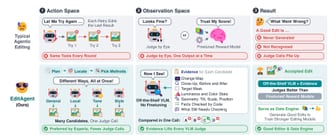
Adobe researchers developed the EditAgent system, which combines general editors with specialized tools and uses quantitative data instead of manual judgment to select the best results, significantly improving the performance of AI agents in image editing.
Claude Code compared the costs of building Pokémon applications using JavaScript frameworks such as Next.js and SvelteKit. The results showed that SvelteKit, Gracile+Lit, and Angular had the highest development costs, respectively, at $4.28, $4.65, and $4.97, while Hono+htmx had the lowest at $2.67.
Qt has released the zero-code embedded interface design tool Clate Beta 0.6, supporting visual editing and Claude Agent-driven AI generation, exporting QML code for integration with Qt 6.12, and does not currently support component reuse and data binding
The Decoder4242Google DeepMind released StreamVibe video agent, a model based on Qwen3.5-9B and specifically trained to understand ambiguous requests and provide help when appropriate, improving response timing and quality by 10.7% on ProactiveBench and increasing proactive interaction rate by 12.3%. Tests show it outperforms other open-source models, but it still struggles to track changes in long videos (>5 minutes), with performance dropping to 38.5% of the benchmark.