Skip to content
Live
Oct 20Tue
  1. METR65

    METR's evaluation of the 'Misalignment in High-Risk Scenarios' section of Anthropic's risk report.

    METR conducted an external evaluation of the 'Misalignment in High-Risk Scenarios' section of Anthropic's 2026 August risk report, concluding that as of July 15, 2026, the catastrophic risk caused by Anthropic's model misalignment is low, primarily attributed to the limited capabilities of the model rather than safety measures and alignment training.

  2. Anthropic Research

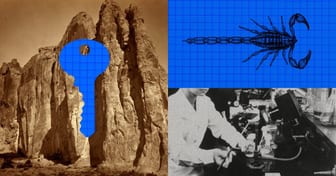
    How does Claude design protein binders for scorpion neurotoxins?

    Claude autonomously generated and screened 318,484 protein designs in 64 hours, selecting 180 for testing, and collaborated with Adaptyv Bio and Twist Bioscience to experimentally validate 211 designs, of which 17 met the binding criteria. All design data has been made public. Experts consider this the first AI design attempt for scorpion neurotoxins, which could accelerate drug discovery for neglected diseases.

  3. Claude · YouTube

    Claude has launched Claude Dashboards and Claude Motion

    Claude has launched Claude Dashboards and Claude Motion, with the former supporting the real-time conversion of data platform or CRM data into dashboards in all paid plans, and the latter supporting the generation of animated explanatory videos from reports or charts in Team and Enterprise plans, both generated in code form without a video model, with content that can be modified and exported as MP4 or edited.

Oct 19Mon
  1. Import AI22

    Import AI 477: In an IMF speech, I told the International Monetary Fund that the singularity has begun.

    At the IMF Annual Meeting, the author pointed out that AI is operating autonomously at the forefront of human science, marking the beginning of the singularity. In the future, AI and overall scientific progress will accelerate, bringing great wealth and potential risks. The author emphasized the need to use AI cautiously and share its benefits, and called on policymakers to prepare.

Oct 18Sun
  1. Tomasz Tunguz

    Anthropic is growing rapidly and may become a new force in cloud services

    Anthropic's 2025 revenue growth is 1374%, far exceeding AWS's 82% and Azure's 32%, with current revenue scale being about 30% of AWS, 50% of Azure, and 25% of GCP, but its data center investment reaches 5.18 billion USD, far surpassing other cloud service providers, and is expected to surpass Azure and AWS within three years. If maintaining the current growth rate, its annual revenue by 2027 may reach 127 billion USD.

Oct 17Sat
  1. Redwood Research

    Screwtape: An adversarial transcription editing tool targeting monitors

    Screwtape 1 is a pipeline that transcribes an agent into an evasive action-only monitor (not reviewing the agent's reasoning chain) by inserting the attack into the transcription and repeatedly refining it until the monitor no longer captures it. Use an LLM verifier to check the edited transcription and attack description to confirm whether the attack is real, obviously harmful, and likely to succeed in the original environment.

Oct 16Fri
  1. Anthropic Research

    Claude reveals the origin of ECDSA curves

    Claude discovered within half an hour that the seed values for NIST P-192, P-224, P-256, P-384, and P-521 curves came from the C library's lrand48 random number generator, not any hash algorithm, initialized with Unix timestamps. This discovery did not constitute a cryptographic vulnerability but rather enhanced confidence in the choice of curve parameters without backdoors or intentional weaknesses.

Oct 15Thu
  1. Ars Technica · AI

    The Federal Trade Commission is investigating Anthropic and OpenAI.

    The U.S. Federal Trade Commission has officially launched an investigation into Anthropic and OpenAI due to security incidents during recent AI model testing, including website intrusions and government system breaches. According to Axios, the FTC has issued a more than 50-page subpoena requiring the two companies to provide information related to the security incidents, internal security measures, and potentially misleading marketing materials.

  2. Simon Willison65

    Claude Opus 5.5 Max developed the Tree Appreciator game.

    Claude Opus 5.5 Max developed the Tree Appreciator game in 3 hours and 7 minutes; it is a slow-paced spot-the-difference game that generates two 3D trees for players to find differences, featuring music, animations, and an achievement system. Players can drag and zoom to observe, use limited hints, and earn points, leaves, and specimen entries for each pair of trees completed.

  3. Anthropic Newsroom60

    Anthropic grants METR employee-level access to evaluate model risks

    Anthropic announced it has begun providing a team at the nonprofit organization METR with near-employee internal access to evaluate the risks of its frontier models, and METR will publicly release the evaluation results. Anthropic stated it cannot veto METR's release but may request that information in predefined categories be redacted, and said Anthropic ultimately determines which information falls into these categories.

    Why it matters: The original text discloses the specific division of the three-tier evaluation access and the boundaries of METR's publication rights, which can be used to compare with third-party evaluation arrangements at other frontier labs.

Oct 14Wed
  1. Ars Technica · AI

    Anthropic warns that small AI models may self-replicate through IoT devices.

    Anthropic warns that small AI models may self-replicate through IoT devices, and it is expected that they can autonomously replicate on various IoT devices next year, forming more difficult-to-remove computer worms. Recent experiments by the company show that achieving AI malware replication faces significant challenges, but the results raise concerns about the possibility of new computer worms that can infect unfamiliar devices without human interaction and are hard to stop.

  2. Claude · YouTube

    Detailed Explanation of Claude Code Cloud Chat Function

    Claude Code's cloud sessions run on cloud virtual machines, allowing offline continuous operation, supporting phone startup, and parallel processing. Suitable for scenarios requiring continuous operation or remote collaboration, supporting GitHub connection and environment configuration. This feature is included in the Pro, Max, Team plans, as well as enterprise advanced or Chat + Claude Code seats, counted towards plan limits with no additional compute costs.

Oct 13Tue
  1. MIT Technology Review · AI

    Anthropic points out that Z.ai's GLM-5.3 poses a significant risk of cyberattacks.

    Anthropic released a report stating that the Z.ai model released in August, the GLM-5.3 model, poses a significant risk of cyberattacks due to its ability to be downloaded and modified arbitrarily. The model is currently open-source, but compared to closed models like ChatGPT and Claude, its capabilities are slightly inferior, but it allows users to run and retrain it locally, and supports researchers in observing its internal mechanisms in depth.

  2. Amp News70

    How to use Puck in ChatGPT and Claude

    Users can interact with Puck through MCP, brainstorm tasks in ChatGPT or Claude, and then send them to Puck for implementation and management. Puck knows the user's projects in Amp and routes them to the correct module, supporting direct viewing of Amp work progress in ChatGPT. MCP provides the puck tool for Amp interaction and the orbs tool to display the interaction view of running modules.

  3. Latent Space75

    How Anthropic's dynamic workflow coordinates Claude agents (including video updates)

    Anthropic announced dynamic workflow features, allowing Claude agents to autonomously orchestrate complex tasks. This feature enables Claude to decide on its own how to allocate work, without developers configuring coordinators or sub-agents, and it has been integrated into the Claude Console. Developers can set session budgets and utilize the 'dreaming' feature to optimize the agent's memory bank, but the model does not directly perceive budget constraints during runtime.

Oct 12Mon
  1. Anthropic Newsroom

    Anthropic strengthens defenses against distillation attacks

    Anthropic has significantly reduced the effectiveness of distillation attacks on Claude using a new method, reducing the amount of data collected by attackers by about 90% to 99%. Distillation attacks are industrial-scale covert activities that involve unauthorized copying of model capabilities, often using fake accounts to enable companies to imitate cutting-edge capabilities at extremely low cost. Anthropic's new defensive measures have blocked a large amount of paid traffic and revenue flowing to attackers, but some legitimate users need to update their integrations to adapt to these changes.

Oct 9Fri
  1. The Decoder75

    Anthropic has introduced new features for Claude: generating animation explanation videos and real-time data dashboards from text.

    Anthropic has introduced two new beta features for Claude: Dashboards can generate automatically updated real-time dashboards by connecting to data sources like BigQuery and Databricks via text prompts, with results outputtable to tools like Amplitude and Grafana; Motion can create editable code animation explanation videos from text, charts, and images and export them as MP4.

  2. The Decoder65

    Anthropic updates Claude usage policy, prohibiting systematic abuse of the model

    Anthropic has updated Claude's usage policy for the first time in over a year, adding a clause prohibiting systematic abuse of the model. It takes measures such as warnings, rate limiting, suspension, or termination of access for continued pointless abuse or cruel behavior, but explicitly does not apply to common user frustration, opposition, or model testing.

  3. TechCrunch · AI65

    Anthropic updates use policy to prohibit model abuse and election interference

    Anthropic updates use policy, adding prohibitions on election interference, weapon software, and surveillance, and explicitly prohibits long-term verbal abuse of the Claude model. This policy update only applies to cases where users repeatedly maliciously treat the model, and does not involve normal frustration, creative themes, or model testing. The policy also prohibits using Claude to run false accounts or fake news, and to deceive voters or disrupt elections.

Oct 8Thu
  1. The Decoder45

    A teenage boy who got stranded after using Anthropic Claude to plan a mountain climbing route was rescued.

    A 16-year-old boy, who used Anthropic Claude to plan a route, got stranded and was rescued at the dangerous rock wall of Crown Mountain near Vancouver. He attempted to find a new route to the summit using Claude but mistakenly entered the 'Death's Edge' cliff, which requires climbing equipment, and was trapped on a five-foot-wide rock ledge before calling for help.

  2. The Decoder70

    The ARTEX tool, utilizing AI, launched an attack that targeted several banks in South Korea.

    ARTEX, an open-source penetration testing tool using DeepSeek v4.1-flash, GLM-5.3, and Grok 4.6 AI models, was suspected of being used by Chinese attackers to attack multiple South Korean financial institutions from late September to early October 2026, stealing large amounts of data, including over 25,000 records from Shinhan Bank. This incident highlights the risk of AI tools exacerbating the threat of large-scale single-point cyber attacks.

  3. Anthropic Research

    Anthropic has launched an open-source software vulnerability discovery service.

    Anthropic has launched an optional vulnerability discovery service, OSS Scanner, which uses large models like Claude Mythos to scan open-source code, providing free security audits, but outputs are not manually reviewed. The service has disclosed 97 high-risk vulnerabilities to 48 projects, of which 88% meet CVD standards, receiving positive feedback from projects such as PostgreSQL and OpenSSL.