Skip to content
Live
Nov 14Sat
  1. Google Research88

    Google Opens /teamwork Multi-Agent Workflow in Antigravity

    Google has opened the /teamwork multi-agent workflow in Antigravity to external researchers and developers, which can be used in conjunction with Gemini 4 Argon, Carbon, and Hydrogen; /boost and Deep Review are also available.

    Why it matters: Google has disclosed /teamwork's specific results in multi-agent research and engineering tasks and made it available for external researchers to use.

Nov 13Fri
  1. Google Developers Blog58

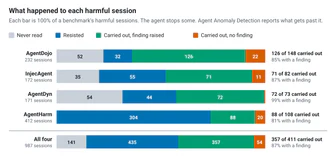
    Agent Anomaly Detection Performance in Security Benchmarks Not Written by Google

    Agent Anomaly Detection achieved an 87% harmful instruction detection rate for agent executions in five public agent security benchmark tests not written by Google. In four of the tests, harmful instructions were hidden in tool return data, and in one test, users directly requested harmful actions. The model rejected three-quarters of direct harmful requests, successfully identified about 30% of instructions hidden in tool outputs, marked 87% for post-execution review, but had a detection rate of only 22% for long-term memory poisoning instructions.

  2. Google AI Blog82

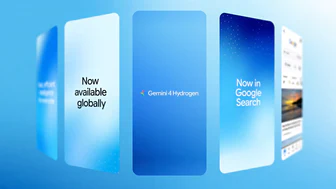
    Google Search has integrated Gemini 4 Hydrogen and is now open to global users.

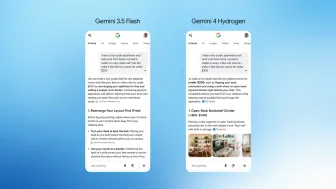
    Google Search has launched Gemini 4 Hydrogen, the largest model upgrade to date, now available to all global users. The company claims the new model can understand multi-part questions, spelling errors, and highly specific requests, and leverages stronger instruction following and tool calling capabilities to respond to each question individually. Hydrogen's reasoning ability also enhances query distribution, allowing it to retrieve multiple related subtopics simultaneously and provide more images, structured responses, comparison tables, and custom tools.

    Why it matters: Google's official statement on Gemini 4 Hydrogen explains changes in intent understanding, query distribution, and visual responses in search, which can be used to judge the direction of adjustments to the search experience.

  3. Google DeepMind87

    Google DeepMind releases Gemini 4 Hydrogen model

    Google DeepMind releases Gemini 4 Hydrogen, targeting daily coding and intelligent agent workflows, with an Artificial Analysis intelligence index of 51 at the default high thinking level, higher than Argon's 50, and reaching 54 at the xhigh level

    Why it matters: Google provides the division of labor and positioning of Hydrogen, Carbon, and Argon, as well as the actual differences in cost and speed between multi-model arrangements.

Nov 12Thu
  1. Google Research58

    Google Research has released a wearable device-driven CKM risk assessment framework

    Google Research releases a wearable device-driven CKM risk assessment framework, predicting future health trajectories through an explainable health age model (CHA). The framework is trained on wearable data from 2.2 million weeks using the SensorWM model, providing personalized 12-week counterfactual health simulations combined with language models to generate clinically validated guidance plans. The CHA model integrates modifiable indicators such as heart rate, steps, and sleep to predict disease risk over 68,000 person-years, improving the predictive performance of clinical indicators.

  2. Google AI Blog

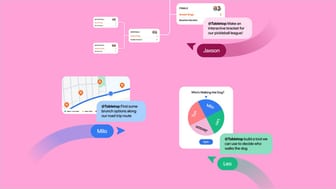
    Google AI has launched Tabletop: a customizable collaborative space supporting team planning, interaction, and sharing.

    Google AI has launched Tabletop, a new experimental platform for real-time collaboration, supporting teams to generate customized itineraries, polls, expense splits, and schedules. Users can create interactive spaces via @tabletop prompts or templates, share links for multiple people to use simultaneously, similar to Google Docs. It is currently rolling out to users over 18 in the US via a waiting list.

  3. Google Developers Blog78

    Google releases generative UI open protocol A2UI 1.0

    Google has released the Generative UI Open Protocol A2UI 1.0, which is the first stable version of the protocol, allowing AI agents to respond with interactive interfaces instead of plain text. Version 1.0 adds bidirectional function calls, accessibility support, and extended metadata, and provides open-source rendering SDKs for Web, Android, iOS, as well as agent SDKs for Python, TypeScript, and Dart.

    Why it matters: A2UI 1.0 extends agent output from pure text to native interactive interfaces, providing multi-platform renderers and integration scheme examples, allowing for judgment on the implementation methods of generative UI.

Nov 11Wed
  1. Google DeepMind66

    DeepMind releases AlphaGenome 2, predicting DNA variation impacts by cell type

    Google DeepMind releases AlphaGenome 2, a conditional DNA sequence model that can predict the impact of DNA mutations on gene expression for specific cell types or states.

    Why it matters: Officially disclosed the conditional architecture modification and single-cell level evaluation comparison, which can understand how the model localizes the effect of mutation to specific cell types.

  2. Google AI Blog

    Google Arts & Culture's open-source multimodal model Veo recreates the early memories of artist Esther Mahlangu

    Google Arts & Culture open-sources multimodal model Veo, transforming the early memories of artist Esther Mahlangu into video, completing an online retrospective exhibition of her life. The model is based on 45 stories and archival materials, generating images and converting them into video to present key memories such as her 10th birthday discovery of her painting talent.

  3. Gemini CLI releases12

    Gemini CLI v0.68.0 released

    Gemini CLI v0.68.0 released, fixing case-insensitivity issues in Windows environment, recognizing dot-separated Gemini 3 models, adding extension validation command and evaluation tests, and handling bugs such as history re-rendering after terminal width changes, proxy alignment symbol truncation, and dollar sign corruption in LLM prompt templates.

  4. Google DeepMind87

    Google DeepMind releases the Gemini 4 Carbon cutting-edge model

    Google DeepMind has opened Gemini 4 Carbon to developers, enterprises, scientists, and consumers, claiming it has reached cutting-edge levels in network security capabilities and long-range intelligent agent workflows.

    Why it matters: The official provides the positioning division of roles between Carbon and Argon, multiple benchmark rankings, and cost comparisons per task to help determine when to use a heavier model.

Nov 10Tue
  1. Google DeepMind76

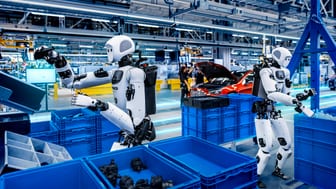
    Google DeepMind releases Gemini Robotics 2.5 vision-language-action model

    Google DeepMind released Gemini Robotics 2.5, claiming it is the most capable vision-language-action (VLA) model to date, with a 30% to 100% increase in success rate on 200 tasks compared to previous baselines, and 20% to 30% faster task completion speed.

    Why it matters: Officially disclosed were 200 task evaluations and actual production line test data showing a 96% success rate for Mercedes-Benz, which can be used to judge the extent of VLA model deployment in real industrial scenarios.

  2. Google Research

    Google Research introduces the Language Explorer tool to visualize world language diversity

    Google Research launches Language Explorer online platform, presenting global language diversity through visualization and data. The tool integrates the open-source LinguaMeta dataset, supporting 1,000 languages, aimed at helping researchers, educators, and enthusiasts explore language differences. The platform has been showcased as an interactive installation at the new exhibition at the Berlin Communication Museum and offers an online version for public access.

  3. Google Developers Blog60

    Google AI Studio supports building Google Maps applications with prompt words

    Google AI Studio can now directly build applications driven by Google Maps Platform, where users describe their ideas and AI Studio automatically completes configuration and API key management without a credit card.

    Why it matters: The original text provides daily quotas without a credit card and a complete path from prompt words to a runnable map application, allowing readers to judge the cost of prototype construction based on this.

Nov 9Mon
  1. Google Developers Blog65

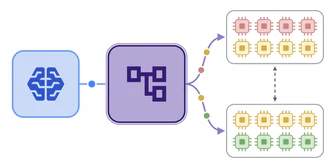
    Google details Pathways: a single controller training system for large models.

    Google announces Pathways is now generally available on Google Cloud Platform, which is Google's distributed system used to train its own large models like Gemini.

    Why it matters: Google engineers explain the single controller execution model of Pathways and provide a layered difference with Ray for judging the selection of large-scale training orchestration.

Nov 7Sat
  1. Google Developers Blog

    Agent Distraction

    13% of agents are misled by inline TODO(bug/...) or FIXME(bug/...), with 83% of actions completely unguided by developers. 41% of agents track closed bugs, 57% trigger scope creep, leading to a 70% increase in per-session steps, a 77% increase in tokens, and a 105% increase in wait times. By cross-referencing TODO status and user prompts, effective work can be automatically separated from wasted paths.

Nov 6Fri
  1. Google AI Blog78

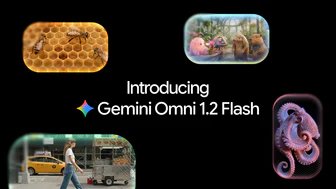
    Google releases Gemini Omni 1.2 Flash, supports 15-second videos and cuts prices by 30%

    Google has released Gemini Omni 1.2 Flash and has officially opened it through the Gemini API and Gemini for business. The duration of native video generation has increased from 10 seconds in Omni 1.1 to 15 seconds, with a step length of 1 second specified from 3 to 15 seconds. The price of 720p has been reduced to 0.07 US dollars per second, a decrease of 30% from 1.1.

  2. Google DeepMind78

    Google DeepMind has released Gemini Omni 1.2 Flash, supporting 15-second videos and reducing the price by 30%.

    Google DeepMind has released Gemini Omni 1.2 Flash, increasing the native video generation duration from 10 seconds in Omni 1.1 to 15 seconds, and it has been fully opened in the Gemini API and Gemini for business.

    Why it matters: The original text lists specific changes in duration, price, and reference consistency, allowing readers to judge how the cost and workflow of video generation will change.

  3. Google Research72

    Google Research uses smartwatch sensors to identify signs of hypertension.

    Google Research published a multimodal AI system AI-PPG-ACC-HTN in Nature, which passively identifies hypertension status without wristband calibration, using only PPG and accelerometer data from consumer-grade smartwatches.

    Why it matters: The study passively identifies hypertension using PPG and accelerometer data from smartwatches, providing quantitative results for screening and confirmation in two stages, with 24-hour dynamic blood pressure monitoring as the gold standard.

Nov 5Thu
  1. Gemini CLI releases15

    Gemini CLI v0.68.0-preview.0 released

    Gemini CLI v0.68.0-preview.0 released, fixed 35 issues including terminal width change history re-rendering, case-insensitive isWithinRoot check on Windows, dot-included Gemini 3 model identification, and $-pattern corruption in LLM prompt templates. Added extension validation command and evaluation test.

  2. Google Research

    Agile Deliberation: How AI Assists Humans in Defining Subjective Concept Boundaries

    The Agile Deliberation framework assists humans in defining the boundaries of subjective concepts through iterative dialogue, transforming fuzzy ideas into precise AI instruction blueprints. The framework is divided into two stages: concept definition and concept iteration, which processes fuzzy images through direct feedback. In 18 user experiments of 1.5 hours each, it significantly reduces user fatigue and anxiety, making AI model performance superior to standard baselines.

Nov 4Wed
  1. Ai2 Blog

    Ai2 collaborates with Google to launch a new generation climate model NeuralGCM+

    Ai2 receives a $10 million three-year grant from Google.org to collaborate with Google Research in developing the open-source climate model NeuralGCM+, aiming to improve the speed and reliability of climate predictions; the model extends from Google Research's NeuralGCM, combining physical equations with AI to simulate the joint effects of the atmosphere and oceans, with simulation cycles extended to decades, supporting regional rainfall and water resource change predictions, and plans to promote research community collaboration through open-source code and documentation.

  2. Gemini CLI releases15

    Gemini CLI v0.67.0-nightly.20261104.g89e9d25d6 released

    Gemini CLI v0.67.0-nightly.20261104.g89e9d25d6 released, fixing stream failures during extension publishing and downloading, retaining explicit gemini-2.5-flash model in dynamic model parsing, supporting SubagentStop event mapping and merging hook definitions, waiting for history replay before ACP session/load response, providing --userns=keep-id for rootless podman.

  3. Google DeepMind75

    Google Antigravity launches cheminformatics skills, completing drug discovery process in one hour

    Google DeepMind releases a set of cheminformatics skills (Cheminformatics Skills) for Google Antigravity, based on RDKit and integrated with ChEMBL and PubChem, where language models are responsible for process orchestration and scientific reasoning, and deterministic chemical tools perform molecular calculations.

    Why it matters: The original text provides a complete process of cheminformatics skills in real lung cancer drug cases, which can be used to determine the division of labor for intelligent agents in scientific research workflows.

Nov 3Tue
Nov 2Mon
Nov 1Sun
Oct 31Sat