Skip to content
Live
Nov 10Tue
  1. Claude.dev Blog85

    Anthropic uses Claude Fable 5.2 to enable 1000 agents to safely collaborate on proving Fermat's Last Theorem

    Anthropic announces a toy experiment: 1000 agents running early versions of Claude Fable 5.2 in a network sandbox, organizing and dividing tasks solely with Git and a shared Postgres database, completing the formal proof of Fermat's Last Theorem in 28.7 hours, outputting tokens one-third of the September version and proof length one-seventh.
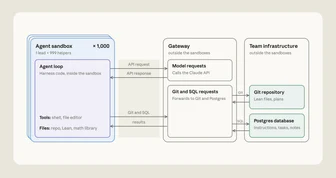
    Why it matters: The original complete record shows 1000 agents building collaboration mechanisms and proving Fermat's Last Theorem in a network sandbox, observable how multi-agent scalable collaboration and safety boundaries are designed simultaneously.


  2. Claude · YouTube75

    Anthropic released Claude Fable 5.2

    Anthropic released Claude Fable 5.2, stating that it has improved in coding, reasoning, and vision, targeting the most complex and open-ended technical work. The official recommendation is to start most coding and knowledge tasks from Opus 5.5, and Fable 5.2 has been launched in the Pro, Max, Team, and Enterprise packages.

    Same story · 3 outlets

    How the accounts differ:TechCrunch states the input price of Fable is reduced to $8 per million tokens; others do not mention the price.

  3. Claude · YouTube68

    Claude Mythos 5.2 predicted the complete AAV coat structure

    Claude Mythos 5.2 predicts the complete AAV capsid structure, which is composed of 60 identical protein chains. It writes code for an open-source folding model to handle the overlap grouping of adjacent five chains, then uses the symmetry of the capsid to assemble the 60 chains. On AAV2, its prediction deviates from the experimental structure by about the width of an atom.

    Why it matters: The original text provides specific methods and accuracy of the model in real scientific research tasks, allowing readers to judge its applicable boundary in structural prediction work.

  4. Claude · YouTube58

    Claude Fable 5.2 has designed a working voice assistant center.

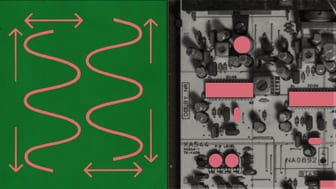
    Claude Fable 5.2 designs a voice assistant center from a prompt word, including circuit board layout, CAD shell modeling, and firmware writing. Diode Computers manufactured the prototype board according to its design documents. This is one of the three devices designed by Claude in the project. Anthropic and Diode have a business relationship.

    Same story · 2 outlets

    How the accounts differ:Anthropic Research states Claude Fable 5.2 completes hardware from design to prototype, while Claude mentions designing a working voice assistant center including PCB layout, CAD modeling, and firmware.

  5. Claude · YouTube75

    Anthropic released Claude Fable 5.2

    Anthropic releases Claude Fable 5.2, designed for the most challenging technical challenges, with improvements in coding, reasoning, and vision, suitable for the most ambitious open-ended technical work. The official recommendation is to use Opus 5.5 for most coding and knowledge tasks, and Fable 5.2 is now available in the Pro, Max, Team, and Enterprise packages.

    Same story · 3 outlets

    How the accounts differ:TechCrunch states the input price of Fable is reduced to $8 per million tokens; others do not mention the price.

    Why it matters: The official statement explains the positioning and applicable scenarios of Fable 5.2, and provides a choice suggestion between Opus 5.5, making it easier to decide which model to use.

  6. AWS Machine Learning Blog22

    AWS Quick Professional Workspace officially released

    AWS Quick officially released, designed for work scenarios, supporting enterprise-level security and governance, integrates existing data and applications through AI agents to improve team collaboration efficiency. Supports use on multiple devices, data never leaves the environment, compliant with HIPAA, FedRAMP, and other compliance standards.

  7. AWS Machine Learning Blog38

    CrossnoKaye on How to Achieve Industrial Physical AI with Amazon Bedrock AgentCore

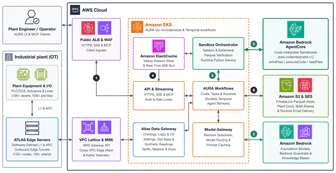
    CrossnoKaye achieves industrial physical AI on Amazon Bedrock AgentCore through its ATLAS platform and AURA agent, improving production efficiency by 11-17% and reducing energy consumption by 21%. AURA leverages AgentCore's code interpreter capabilities to run Python workloads in isolated micro VMs to verify numerical calculations, while achieving closed-loop control through edge clusters and cloud optimization systems.

  8. Berkeley AI Research22

    BAIR at CoRL 2026

    BAIR team presented multiple research achievements at the Robot Learning Conference (CoRL) held from November 9 to 12, 2026, in Austin, Texas, including 33 main conference papers, 4 breakthrough posters, 10 oral presentations, and 7 thematic speeches, among which Professor Negar Mehr will deliver an early career keynote speech. The conference covers topics such as robotic vision-language-action models, embodied agents, fine-grained manipulation alignment, and hindsight reward editing.

  9. Google Developers Blog60

    Google AI Studio supports building Google Maps applications with prompt words

    Google AI Studio can now directly build applications driven by Google Maps Platform, where users describe their ideas and AI Studio automatically completes configuration and API key management without a credit card.

    Why it matters: The original text provides daily quotas without a credit card and a complete path from prompt words to a runnable map application, allowing readers to judge the cost of prototype construction based on this.

  10. Meta Engineering38

    LLDB extension architecture supports application debugging across CPU and GPU

    LLDB supports application debugging across CPU and GPU through the neutral accelerator plugin architecture of lldb-server, separating general debugging infrastructure from hardware-specific device control, presenting CPU and GPU as independent debugging processes that work together in a single debugging session. This architecture converts hardware-specific debugging APIs into concepts understood by LLDB through plugins, supporting collaborative debugging of CPUs and GPUs with different architectures, registers, memory spaces, and execution models while maintaining the neutrality of the client.

Nov 9Mon
  1. NVIDIA Newsroom78

    NVIDIA released the GR00T 2 world action model and Isaac Lab 3.0 on CoRL.

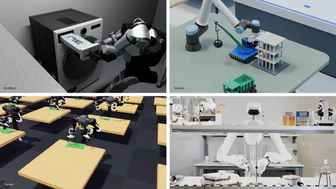
    NVIDIA released the open-source world action model GR00T 2 on CoRL, built on NVIDIA Cosmos, trained with 100,000 hours of NVIDIA open-source first-person human data, and can complete 40 out of 50 evaluation tasks without task-specific demonstrations.

    Why it matters: The original text provides the success rate of GR00T 2 on few-shot tasks and the training throughput improvement of Isaac Lab 3.0, which can be used to judge the extent to which simulation training promotes robot deployment.

  2. Google Developers Blog65

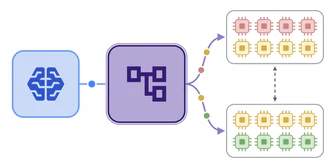
    Google details Pathways: a single controller training system for large models.

    Google announces Pathways is now generally available on Google Cloud Platform, which is Google's distributed system used to train its own large models like Gemini.

    Why it matters: Google engineers explain the single controller execution model of Pathways and provide a layered difference with Ray for judging the selection of large-scale training orchestration.

  3. Hugging Face Blog45

    HOPE Advanced Pruning Method Released

    The HOPE method achieves better pruning effects in mixed expert language models by considering the second-order interactions between experts. It improves performance by 6.1% over the next best method on the agentic coding task at a 50% pruning rate. This method is validated on models like Qwen3.5-122B, where each MoE layer has 256 experts. After pruning, it can reduce memory usage by about 250 GB and is compatible with quantization.

  4. NVIDIA Newsroom31

    NVIDIA announced its investment plan for South Korean startups at the MSIT-NVIDIA AI Entrepreneurship Partner Forum.

    NVIDIA, in collaboration with South Korea's Ministry of Science and Information and Communication Technology, held the MSIT-NVIDIA AI Entrepreneurship Partner Forum, announcing investments in South Korean startups Point2, Motif Technologies, RLWRLD, and Upstage. These companies focus on AI interconnectivity, foundational models, physical AI, and enterprise AI tools, representing AI full-stack technology.

  5. NVIDIA Newsroom38

    NVIDIA, Rebellions, and SK Telecom announce collaboration, leveraging NVIDIA NVLink Fusion to advance sovereign AI infrastructure

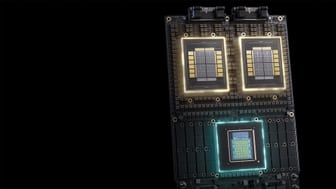
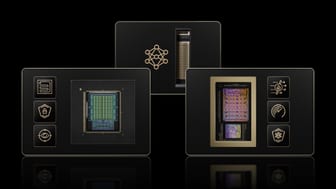
    Rebellions plans to adopt NVIDIA NVLink Fusion to connect its next-generation R200 neural processing units. SK Telecom plans to deploy these systems in its AI data center to support its full-stack sovereign AI vision, covering infrastructure, proprietary models, and public-facing services. The collaboration is supported by South Korea's Ministry of Science, Information and Communication Technology, aiming to connect domestic semiconductor innovation with sovereign AI infrastructure.

  6. NVIDIA Newsroom32

    NVIDIA has released an optimized deployment solution for South Korea's leading open-source models, Dynamo.

    NVIDIA has released an optimized deployment solution for South Korea's leading open-source models, Dynamo, supporting SK Telecom A.X K2, LG AI Research K-EXAONE 2.0, Upstage Solar Open 2, and Motif Technologies Motif-3, achieving up to 2x performance improvement through optimized multi-GPU coordination and communication, accelerating model production deployment.

  7. NVIDIA Newsroom31

    NVIDIA and South Korea have expanded their sovereign AI cooperation to include chips, skills, and more.

    NVIDIA and South Korea's Ministry of Science and ICT have expanded their sovereign AI collaboration, covering semiconductors, data centers, talent, startups, models, agents, and security. The collaboration will support South Korean NPU and XPU companies in exploring participation in NVIDIA's NVLink Fusion ecosystem, and includes NVIDIA training and certification programs, hackathons, and technical seminars to enhance GPU utilization.

  8. NVIDIA Newsroom38

    South Korea: NVIDIA helps implement physical AI in industries such as semiconductors and robotics

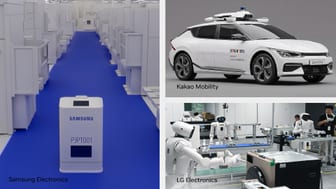
    Samsung, a major South Korean semiconductor company, collaborates with NVIDIA to enhance semiconductor engineering efficiency through accelerated computing and AI physics, achieving 5x end-to-end acceleration in quantum chemistry calculations and 1600x acceleration in AI homogenization cases; Kakao Mobility will develop Level 4 autonomous driving systems based on NVIDIA Hyperion and Halos platforms.

  9. NVIDIA Newsroom78

    NVIDIA's board has launched an independent investigation regarding reports that Huang Renxun has been targeted by foreign intelligence activities.

    NVIDIA's board announced that, in light of recent reports that founder and CEO Huang Renxun has become a target of foreign intelligence activities, the board has launched an independent investigation. An independent committee composed of independent directors will oversee the investigation with the assistance of external independent lawyers. The board stated there is no reason to believe that national security or NVIDIA's confidential information has been compromised, and the investigation will review all available information; Huang Renxun has expressed full support and pledged cooperation.

    Why it matters: NVIDIA's board has launched an independent investigation regarding reports that Huang Renxun has been targeted by foreign intelligence activities, allowing readers to understand the company's response at the corporate governance level.

Nov 8Sun
  1. MiniMax · Hugging Face new models

    MiniMax-H3-Image-PE provides hint extension functionality

    MiniMax-H3-Image-PE uses prompt expansion (PE) to convert short requests into detailed image descriptions and recommends aspect ratios. It supports two workflows: text-to-image (T2I) and image editing, using fine-tuned FP4 weights from Qwen3.8-27B. The online API can be accessed via platform.minimax.io or platform.minimax.cn, and the documentation provides support in both Chinese and English.

  2. OpenAI Agents SDK releases22

    OpenAI Agents SDK v0.24.0-alpha.7 released

    OpenAI Agents SDK v0.24.0-alpha.7 released, supports classic workflows and native execution, adds voice and managed tools, introduces persistent session storage and context control. The new version defaults to strict mode execution, requiring updates to existing environments; bundled model default inference strength is increased to medium.

Nov 7Sat
  1. Databricks Blog38

    OpenSharing: Replace SFTP and API data feeds with an open protocol

    OpenSharing is an open protocol developed based on Delta Lake and Iceberg, used for directly reading customer tables without copying data. It supports incremental pull of change data, real-time access to the latest data, and smooth backfill of historical data, while reducing costs for customers and consumers in data management, storage, and access control. Consumers do not need to maintain SFTP or API connections; customers can share tables with authorization and can track access records through system tables.

  2. Anthropic Research34

    Anthropic explores methods for AI to build scientific models

    Anthropic proposes that AI building scientific models requires three steps: modeling, constraining, and explaining, where the constraining model can obtain probability distributions rather than single solutions with Bayesian reasoning; AI has made significant progress in constraining models, but if only the model is given, it lacks understanding of the real system.