Skip to content
Live
Nov 5Thu
  1. AWS Machine Learning Blog41

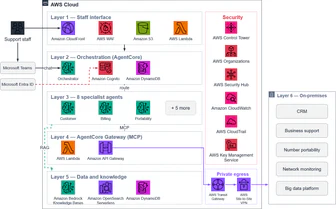
    How U Mobile builds an intelligent customer service center AiDaH based on Amazon Bedrock AgentCore

    U Mobile partnered with AWS to develop the AiDaH intelligent customer service center based on Amazon Bedrock AgentCore, handling 150 operational scenarios through cross-system real-time coordination, chained reasoning, and a multi-tenant security framework, resulting in an 84.5% reduction in critical business work orders. AiDaH will launch a pilot by the end of 2025 and officially launch in Q3 2026, using Microsoft Teams as the interaction interface

Nov 4Wed
  1. Together AI Blog50

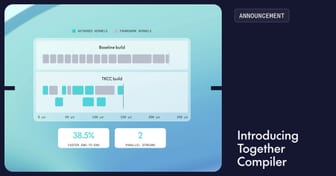
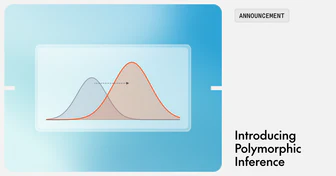
    Together AI launches Polymorphic Inference: Adaptive open-source model inference technology

    Together AI Launches Polymorphic Inference Technology, Continuously Compiling and Optimizing Open Source Model Inference Performance Using AI Agents to Address Challenges Such as Model Release Acceleration, Architectural Diversity, and Rapid Changes in Workloads and Hardware Platforms. This Technology Enables Inference Systems to Adapt Quickly to Dynamic Environments, for Example, Achieving Near-Hardware-Limit Performance When 80% of OpenRouter Traffic Comes from Models Released in the Past Three Months.

  2. Ai2 Blog

    Ai2 collaborates with Google to launch a new generation climate model NeuralGCM+

    Ai2 receives a $10 million three-year grant from Google.org to collaborate with Google Research in developing the open-source climate model NeuralGCM+, aiming to improve the speed and reliability of climate predictions; the model extends from Google Research's NeuralGCM, combining physical equations with AI to simulate the joint effects of the atmosphere and oceans, with simulation cycles extended to decades, supporting regional rainfall and water resource change predictions, and plans to promote research community collaboration through open-source code and documentation.

  3. Gemini CLI releases15

    Gemini CLI v0.67.0-nightly.20261104.g89e9d25d6 released

    Gemini CLI v0.67.0-nightly.20261104.g89e9d25d6 released, fixing stream failures during extension publishing and downloading, retaining explicit gemini-2.5-flash model in dynamic model parsing, supporting SubagentStop event mapping and merging hook definitions, waiting for history replay before ACP session/load response, providing --userns=keep-id for rootless podman.

  4. Meta Engineering34

    Meta launches F3 Lightning to accelerate the large-scale production of advertising ML features

    Meta launches F3 Lightning to address bottlenecks in F3 graph publishing by decoupling feature publishing from execution, enabling independent validation deployment. It adopts optimizations such as stable compute identifiers, a single execution plan, shared memory buffers, and dense index mapping, making the production speed of extraction features approximately 3.6 times faster than F3 without increasing infrastructure compute costs.

  5. OpenAI Agents SDK releases40

    OpenAI Agents SDK v0.24.0-alpha.6 released

    OpenAI Agents SDK v0.24.0-alpha.6 released, supporting submission of work through captured Turn control, passive event handling, manual request handling, redirection and cancellation, and extending local storage session state recovery and tool policy features. New features include local storage, native output, experimental external job recovery, and tool selection, while updating the API, such as using Agent.run() instead of Runner, and unified FunctionTool callback and manual tool.

  6. Hugging Face Blog60

    IBM trains 20B small model Palette to generate slides according to its own design language

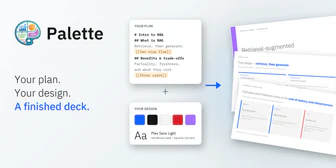
    IBM's research team fine-tunes a 20B open-source weight model, Palette, using a two-role LoRA scheme where designers write JSON briefs and encoders generate pptxgenjs code page by page to create presentations according to IBM Design Language.

    Why it matters: IBM uses synthetic data and checks to repair closed-loop training for a 20B small model to create presentations, providing a method that can be transferred to other structured outputs.

  7. Hugging Face Blog50

    StateBench: Testing how language models track state changes in long documents

    StateBench is a long-context state tracking benchmark that tests how language models maintain tracking changes in entity information within long documents. The benchmark includes four difficulty levels, ranging from simple immutable assignments to complex dependency assignments. It found that cyclic and hybrid models generalize better than Transformers on direct training tasks, but cutting-edge models like Gemini 3.8 Flash, Claude Opus 5.5, and GPT-6 Sol still fail in complex state tracking with long inputs.

  8. AWS Machine Learning Blog38

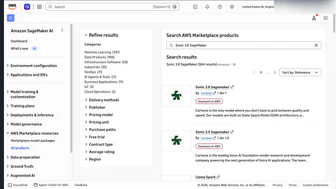
    How does Cartesia build ultra-low latency speech AI applications on AWS?

    Cartesia uses state space models (SSM) designed for real-time speech AI and AWS infrastructure to achieve sub-100ms text-to-speech and speech-to-text, supporting voice cloning for 44 languages, suitable for scenarios such as virtual assistants and customer service centers. The Sonic model generates the first audio byte in about 90ms, and the Ink model has native turn detection and noise robustness. The API interface supports real-time streaming output.
  9. NVIDIA Newsroom38

    How AI is reshaping the work of semiconductor wafer factories - engineers accelerating decision-making due to it

    AI is changing the way semiconductor wafer factories work, accelerating decision-making for engineers. NVIDIA's cuDSS library accelerates COMSOL's multiphysics simulation 10 times, Applied Materials' Ginestra platform simulation 10 times, ACE+ platform 35 times, and Siemens' Calibre lithography software simulation 17 times. NVIDIA's PhysicsNeMo framework enables Lam Research to predict plasma behavior at the millisecond level, replacing full simulations that took days.

  10. Hugging Face Blog62

    The same model with a different harness: Comparing CUGA, Hermes, and Deep Agents on AppWorld.

    The IBM team compared CUGA, Hermes, and Deep Agents using the same open-source weight model GLM-5.3-flash on 90 tasks in AppWorld, with pass rates of 81.1%, 46.7%, and 30.0%, respectively, and 20, 8, and 2 scenarios where all three variants passed.
    Why it matters: With the same model but a different harness, the task completion rate increased from 30% to 81%, and reproducible configurations and evaluation links were provided in the text.

Nov 3Tue
  1. Ai2 Blog

    StateBench: Benchmark for testing large language models to track changes in long document states

    StateBench is a benchmark for testing large language models' ability to track entity state changes in long documents, including four difficulty levels: R-trivial, non-periodic, solvable, and general finite. Research finds that recurrent and hybrid models generalize far better than Transformers when directly trained on these tasks, while cutting-edge models like Gemini 3.8 Flash, Claude Opus 5.5, and GPT-6 Sol still struggle with more complex state tracking issues when input lengths vary.

  2. Hugging Face Blog

    Transformers Model Integration Contracts Released: Hugging Face Launches Model Integration Contracts Standard

    Transformers supports over 750 model types, its test suite includes 88,000+ CPU tests and 200,000+ GPU tests. Hugging Face releases Model Integration Contracts (MIC) standard, including compressed models (such as a 66 MB weight UMT5 fix), runnable examples (such as SmolLM text generation), and human review baselines.

  3. Anthropic Research62

    Anthropic has released the verifiable reasoning system FlashProve, generating proofs at approximately 110 tokens/second on a single H100.

    Anthropic announced the verifiable reasoning prototype FlashProve, using zkSNARK to prove that the response indeed comes from the committed model weights. For the 400B parameter Llama 4 Maverick (4-bit quantization), a single H100 generates proofs at approximately 110 tokens/second, with proofs for each 1,024 token request being about 19 MB, and verification on a 24-core CPU taking about 17 seconds.

    Why it matters: Anthropic has released the measured data and Lean formal proof of the verifiable reasoning prototype FlashProve, allowing for a cross-comparison with existing zkML solutions.

  4. PyTorch Blog34

    Ray announces the Special Interest Group (SIG) for Accelerators

    Ray announces the Special Interest Group (SIG) for Accelerators, aiming to unite hardware vendors, Ray contributors, and application developers to create a neutral accelerator support roadmap. Initial focus will be on developing test infrastructure, hardware awareness capabilities, and network transmission, prioritizing shared hardware access, reproducible development and testing environments, and broader CI coverage.

Nov 2Mon
  1. Moonshot AI · Hugging Face new models

    Kimi K3.1 Pro Released: Open-Weight Multimodal AI Model

    Kimi K3.1 Pro is an open-source multimodal AI model by Moonshot AI, with 2.8T parameters, 104B activation parameters, and a context window of 1M tokens, demonstrating excellent performance in areas such as coding, 3D creation, and financial research. Compared to Kimi K3, it adopts Gated DSA layers to improve long text processing efficiency and has outperformed competitors like Claude Fable 5.1 and GPT-6 Astra in benchmarks such as Terminal-Bench 4.0.

  2. Sakana AI38

    Sakana AI held a seminar: Jürgen Schmidhuber talks about the past and future of AI, Japan will challenge language models, world models, and physical AI

    Jürgen Schmidhuber, professor at the Sakana AI Symposium, presented a speech reviewing the many ideas that contributed to modern deep learning and generative AI from the 1980s to the 1990s, and introduced the LSTM paper proposed in 1990. Sakana AI announced the development of a pre-trained model, planning to release a small language model named 'Sawara Small' in spring 2027.