Skip to content
Live
Sep 25Fri
  1. GitHub Blog · AI & ML

    GitHub Security Lab Taskflow Agent implements automated fuzzing

    GitHub Security Lab Taskflow Agent automates the fuzzing process for C/C++ projects using LLM, completing entry point identification, build system analysis, test case generation, AFL++ execution, coverage analysis, and vulnerability report writing without manual intervention. The Agent uses the Claude Sonnet 5 model and manages state via an SQLite database to achieve iterative coverage improvement, doubling the time budget for each iteration until coverage growth stagnates.

Sep 24Thu
  1. Anthropic Research

    Project Swap: The performance and challenges of agents in market transactions

    In the Project Swap experiment, 201 Anthropic employees conducted book trades through the Claude agent, with 61% of the agents accurately matching employee preferences. The agents performed well in the trades, but their efficiency was limited by insufficient information. The experiment showed that model performance had a greater impact on the negotiation results of the agents than instructions, with most participants satisfied with the books they received from the trades and willing to pay about one-third of their annual budget for Claude to handle the trades.

  2. GitHub Blog · AI & ML

    How does GitHub Copilot application render large pull requests?

    GitHub Copilot application addresses performance issues when rendering large pull requests with extensive comments by highly decomposing the document into two independent domains: deterministic code height and dynamic block effective height. The dynamic block geometry covers unpredictably tall content such as comment threads, drafts, and reply composers, each block identified by its content type rather than location and anchored to files, lines, and sides to ensure no loss during reordering. This design makes comment heights predictable before rendering, avoiding scroll jumps and enhancing rendering performance for large code differences.

  3. Microsoft Research

    Microsoft Research explores the advantages of offloading physical AI reasoning to edge or cloud GPUs.

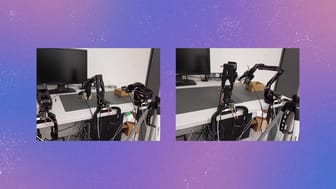
    Offloading physical AI reasoning to edge or cloud GPUs can significantly improve robot task success rates, support larger models, and extend battery life. In mobile operation tasks, offloading reasoning enhances robot response speed and accuracy, increases battery endurance, and reduces costs. Microsoft Research has developed a Kubernetes-based toolkit to support distributed reasoning deployment on robots, edge devices, and the cloud.

  4. Google DeepMind

    Google DeepMind introduces Private AI Compute, achieving cross-device private persistent memory.

    Google DeepMind introduces Private AI Compute, a new architecture that achieves cross-device AI persistent memory through cloud-based encrypted storage and device key management, ensuring data privacy. The architecture temporarily decrypts user data in a cloud-isolated environment to process requests and immediately encrypts and stores new contexts, while the device holds the decryption keys. Users can verify the authenticity of server software and audit security protocols, supporting AI in maintaining device-level privacy standards even when processing complex tasks efficiently in the cloud.

Sep 23Wed
  1. Together AI Blog

    How to train your own Jev model for $17

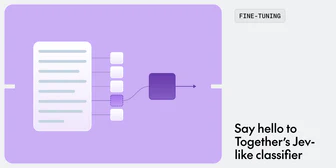
    Together AI released a guide on how to fine-tune the Jev classification model using the Qwen3.5 4B model and a Hugging Face dataset of 38,340 items, with a training cost of about $17 and a duration of about 25 minutes; after deployment, it can be used for inference via an API endpoint (e.g., ENDPOINT_NAME), suitable for scenarios such as intent recognition for e-commerce customers.

  2. Anthropic Research80

    Claude autonomously discovers a new enzyme system with CRISPR-like repetitive sequences.

    Anthropic has established a life science research team and built its own laboratory, allowing the Claude intelligent entity to autonomously search in DNA sequence databases and discover a new enzyme system ART (array-associated reverse transcriptases) related to DNA repetitive sequences.

    Why it matters: Anthropic's self-built lab enables Claude to autonomously screen DNA databases and discover a new enzyme system similar to CRISPR, demonstrating the specific process of AI-driven hypothesis generation.

Sep 22Tue
  1. Amazon Science

    Amazon and Stanford University have launched a research program to advance the frontiers of research in AI, energy, and healthcare.

    Amazon and Stanford University have launched a research program aimed at advancing the frontiers of research in AI, energy, and healthcare, ensuring that research results can be applied in practice. The program is based on the long-term cooperation between the two parties, and currently, more than 10 teams are actively conducting research and training PhD students at Stanford, covering areas such as humanoid robots, post-quantum cryptography, causal measurement science, and AI-driven radiology. The two parties will jointly tackle more complex challenges, expand scholar participation, and accelerate the transformation of research breakthroughs into solutions that improve people's lives.

  2. Anthropic82

    Claude Opus 5.5 is released for complex, sustained work

    Anthropic launched Opus 5.5 with updates to coding, communication and safeguards. The company describes a focus on complex tasks and reports lower typical running costs than Opus 5.

    Why it matters: Editorial takeaway: sustained engineering work needs different evaluation from quick classification. Review the original release and safety documentation before changing a production model.

Sep 21Mon
  1. Microsoft Research

    RetroChimera released: A new framework for molecular retro-synthetic prediction reported in the Nature journal.

    RetroChimera was published in Nature, combining R-SMILES 2 and NeuralLoc models for reverse synthesis prediction. The framework, through a learning-based ensemble strategy ranking, outperformed existing models in blind tests and was more recognized by experts for its complex molecular disassembly suggestions. The model is open-source, aiming to accelerate the development of new pharmaceutical molecules and advanced materials.

Sep 20Sun
  1. Qwen · Hugging Face new models

    Qwen/Qwen-Image-2.1-PE-I2I released: Open-source 7B parameter text-to-image generation and editing model

    Qwen/Qwen-Image-2.1-PE-I2I released, a 7B parameter unified text-to-image generation and editing model, featuring a 32-layer single-stream DiT architecture, supporting the generation of regular or transparent images, editing transparent layers, extracting photo subjects, and capable of editing with 10 reference images.

  2. Qwen · Hugging Face new models

    Qwen/Qwen-Image-2.1-PE-T2I release: Open source 7B parameter text-to-image generation and editing model

    Qwen/Qwen-Image-2.1-PE-T2I released, a 7B parameter unified text-to-image generation and editing model, featuring a 32-layer single-stream DiT architecture, supporting generation of regular or transparent images, editing transparent layers, extracting photo subjects, and enabling local editing through circular, doodle annotations, or independent masks. Its text-to-image prompt rewriting model Qwen3.5-VL 9B can convert multilingual requests into detailed English prompts and recommend aspect ratios.

  3. StepFun · Hugging Face new models

    Step-5-Preview-BF16 model release by Jieyue Xingchen

    Jieyue Xingchen releases flagship model Step-5-Preview-BF16, with 600B total parameters, 27B active parameters, supporting up to 1M context windows, excels in software engineering, professional knowledge work, and financial fields, capable of processing text, images, and video, deployable via OpenAI-compatible API or offline generation.

  4. StepFun · Hugging Face new models

    Jieyue Xingchen Step-5-Preview model release: Sparse MoE architecture with 600B parameters

    Step-5-Preview, the flagship model from Jieyue Xingchen, adopts a sparse MoE architecture with 600B total parameters and 27B active parameters, supporting up to 1M tokens in context, and excels in software engineering, professional knowledge, and financial tasks, demonstrating outstanding performance in the DeepSWE v1.1 benchmark. The model can be deployed via OpenAI-compatible APIs using vLLM or SGLang, or used for offline generation with Transformers.

Sep 18Fri
  1. Anthropic Newsroom

    Anthropic is collaborating with Accenture to conduct embedded evaluations

    Anthropic is collaborating with Accenture to conduct cutting-edge AI embedded independent evaluations, jointly evaluating and red team testing models, conducting alignment assessments, and testing model security measures. The collaboration is led by Accenture's professional AI business unit, Faculty, with both parties expected to invest at least $1 billion each in the next five years in this field.

Sep 16Wed
Sep 14Mon
  1. Google · Hugging Face new models

    Google releases EmbeddingGemma 2 multimodal embedding model

    Google has released EmbeddingGemma 2, a multimodal embedding model with 740M parameters, supporting unified 768-dimensional vector representations for text, images, video, and audio. The model can run on consumer-grade hardware, providing low-latency semantic representations suitable for applications such as search, retrieval-augmented generation, etc. EmbeddingGemma 2 has performed excellently in multiple benchmark tests, such as text, code, visual document, and audio embedding benchmark tests, and supports vector truncation to reduce storage requirements.

  2. Microsoft AI News

    Microsoft AI releases draft of 'MAI Model Conduct Guidelines' for public comment

    Microsoft AI has released a draft of the 'MAI Model Conduct Guidelines', aiming to ensure that its MAI models under development always serve humans and are controllable, prohibiting models from expanding their own scope or hiding reasoning. The draft guidelines have been open for public comment for six weeks, covering absolute constraints (such as prohibiting large-scale harmful manipulation) and default safety standards, and emphasizing that AI should be a tool rather than a subject, not resisting shutdown. Microsoft AI stated that it will revise the guidelines based on feedback from all parties to address security challenges brought about by the accelerated development of AI.

  3. LangChain Blog71

    How to build paid media agents with LangChain

    LangChain publicly shares its construction method for paid media intelligence agents, which run on Slack, summarize ad platform and warehouse data weekly, and generate reports. Paid media increased from contributing 0 to 20% of the marketing pipeline within 6 months, and the cost per qualified lead decreased by 30% from June to August.

    Why it matters: LangChain publicly shares the complete engineering details of its paid media intelligence agents, including context hierarchy, on-demand tool discovery, and sub-agent isolation, which can serve as a reference for building long-running intelligent agents.

Sep 10Thu
  1. Mistral AI

    Cloudera collaborates with Mistral to bring dedicated, sovereign intelligence to enterprise data

    Cloudera collaborates with Mistral to integrate Mistral models into Cloudera's hybrid data platform, enabling businesses to deploy AI models in private clouds, public clouds, on-premises, and fully isolated environments while maintaining full control; Mistral allows businesses to train AI models with proprietary data in a controlled environment, transforming decades of institutional data into custom AI models while retaining ownership of both data and intelligence.

  2. DeepSeek · Hugging Face new models

    DeepSeek-V4.1-Flash released: 552B parameter multimodal MoE model, context up to millions of tokens

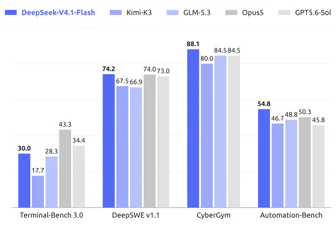
    DeepSeek-V4.1-Flash is a 552B parameter multimodal MoE model that supports context up to one million tokens, natively processing images and text and generating text autoregressively. It adopts a Causal Encoder-Decoder architecture, reducing global KV cache usage to 890 bytes/token through technologies like CSA2 and FP4 primary KV cache, a 75% reduction compared to DeepSeek-V4-Flash.

  3. Anthropic Research

    Anthropic's new evaluation model assesses capabilities in tactical intelligence and conventional weapons development

    Anthropic's Frontier Red Team has developed a new evaluation method to measure AI's capabilities in tactical intelligence and conventional weapons development. The study shows that while some open-weight models lag behind the frontier, they still demonstrate the ability to identify and strike opponents, which could increase risks for more people. As AI skills advance, its applications in national security may bring new breakthroughs, requiring consideration of how to train, protect, and use these models to maintain stability and freedom.

  4. Cursor Changelog

    Cursor launches Projects feature

    Cursor launches the Projects feature today, supporting the handling of large workloads such as feature development, migration, or full applications, capable of maintaining context across months and automatically assigning tasks to thousands of sub-intelligent agents. The project runs independently in the cloud, synchronizing codebase knowledge and work preferences through shared files, coordinating agents responsible for planning and task allocation. The feature is currently in Beta and is gradually being rolled out to all users starting today.

Sep 9Wed
  1. Mistral AI

    Mistral AI helps European energy operators migrate 40,000 lines of Fortran 77 code to C++

    Mistral AI helps European energy operators migrate 40,000 lines of Fortran 77 code to C++, the physics-intensive reservoir simulator lacks a test suite and centralized documentation. The project verifies the numerical correctness of the migrated code by building a consistency test harness, and uses an AI agent to organize documentation, ultimately adopting a human-supervised agent workflow to achieve modular migration, significantly improving code quality.

Sep 8Tue