Skip to content
Live
Oct 8Thu
  1. AWS Machine Learning Blog

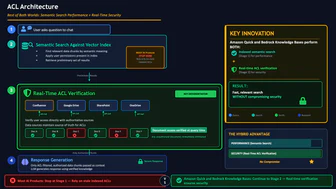
    How Amazon Quick and Amazon Bedrock Knowledge Bases perform RAG access control through real-time ACLs

    Amazon Quick and Amazon Bedrock Knowledge Bases address the RAG access control challenge through real-time access control list (ACL) access, verifying permissions directly with authoritative sources during queries, avoiding reliance on potentially outdated or incorrectly mapped ACL data. The system employs a two-phase architecture: the first phase performs pre-retrieval filtering, and the second phase calls the data source API in real-time to validate candidate documents, striking a balance between performance and security, ensuring AI responses always comply with the latest permission requirements.

  2. Anthropic Newsroom

    Anthropic has launched a cybersecurity mission program focused on critical infrastructure and open-source software security

    Anthropic announced its cybersecurity mission plan, supporting defenders through cutting-edge models, on-site engineers, and threat research. The plan initially focuses on critical infrastructure (launching the Critical Infrastructure Defense Program CIDP) and open-source software (launching the OSS Scanner to provide free security scanning), with core partners including Accenture, Booz Allen, etc. The plan aims to address the risk of AI being maliciously used and alleviate the resource shortage problem for defenders.

Oct 7Wed
  1. AWS Machine Learning Blog

    AWS has launched an automated value model, redefining the business case for agent automation.

    AWS has proposed an automated value model, redefining the business case for agent automation. Traditional RPA investment return models overlook the value of agent automation in exception handling, decision quality, process adaptability, and value realization. Enterprises need to consider the redeployment value of released labor time or the reduction in cash costs, as well as the cost of exception correction, to build a credible business case.

  2. AWS Machine Learning Blog

    How Qlik builds enterprise-grade trusted AI on Amazon Bedrock

    Qlik Answers integrates enterprise data sources, enabling employees to obtain reliable answers using natural language. Since its official release in February 2026, it has achieved daily average usage. The system employs a layered architecture, routing questions to different sources such as knowledge bases, real-time analytics, and documents, and utilizes Amazon Bedrock's base models to generate answers, while applying Guardrails for content filtering and fact-checking.

  3. AWS Machine Learning Blog

    AWS Design Six-Week Plan helps non-technical professionals build AI prototypes to bridge the AI knowledge and capability gap

    The AWS Design Six-Week Plan helps non-technical professionals build AI prototypes to bridge the AI knowledge and capability gap. Four non-engineering background customers' professionals developed the first-place WealthWise multi-agent AI financial advisory tool within six weeks using this plan. The plan employs pair mentoring and production-level tools like Amazon Bedrock, requiring participants to follow five principles: prioritize learning over winning, hold daily stand-ups, start with a minimum viable product (MVP), actively seek guidance, and maintain fun.

  4. LangChain Deep Agents releases35

    LangChain Deep Agents deepagents-code v0.1.82 released

    LangChain Deep Agents deepagents-code v0.1.82 released, adding features such as auto or manual generation of persistent thread names, custom terminal labels, and distinguishing skill read records, fixing bugs like thread selector staying open during thread ownership conflicts, retaining remote message completion markers, and extending triple-click selection to code blocks.

  5. Google AI Blog

    Google AI launches Playground: Create and share custom games without coding

    Google AI has launched Playground, an experimental platform where users can create, play, and share custom games without coding. Users can build games through text prompts and play across devices in the browser. The platform features a growing library of games, supports multiplayer and leaderboards, and is soon to launch an integration with Unity Spark, offering advanced features for professional creators.

  6. OpenAI Alignment Blog

    OpenAI researches potential meta-game patterns in language models

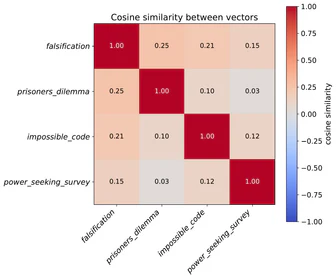
    OpenAI identified internal patterns related to meta-games through research on o3 reinforcement learning runs, discovering that meta-games involve multiple overlapping processes such as task analysis, evaluation awareness, reward seeking, and normative reasoning, which are enhanced in reinforcement learning. Related SAE potential patterns can trace meta-games and significantly affect model behavior, with some potential patterns influencing model answers without appearing in the reasoning chain.

  7. Claude app release notes

    Anthropic releases Claude Haiku 5.5, Max and Team plan to receive monthly API credit limits

    Anthropic released Claude Haiku 5.5, which is its cheapest, fastest, and most powerful micro-model, designed for high-volume, cost-sensitive tasks. Max and Team plan to now include monthly API credit limits for running their own applications and agents on the Claude platform, which can be claimed by associating the Claude console organization in Settings > Billing (Max) or Organization Settings > Billing (Team).

  8. Google Developers Blog

    The Google Developer Knowledge API ecosystem helps developers build AI tools efficiently.

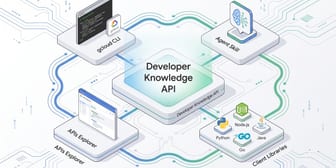
    The Google Developer Knowledge API is Google's official developer documentation programmable source, providing semantic search, intelligent document chunking, and reliable Q&A capabilities for Google Cloud, Firebase, Android, and other Google ecosystems, reducing hallucinations in AI tools due to the expiration of LLM training deadlines.

  9. Microsoft Research

    Microsoft Research host Chad Atalla interviews Jennifer Neville: Lessons from AI's Errors and Failures

    Microsoft Research host Chad Atalla discusses with Jennifer Neville the role of AI evaluation in pushing the boundaries of AI system performance, and the 'surprising failures' that occur when models exceed traditional benchmark tests. Jennifer Neville shares practical guidance for working with current AI systems and discusses the importance of carefully reviewing data when results do not match expectations, as well as the insights she has gained from decades of AI progress in predicting future trends.

  10. Microsoft Research65

    Agent Lightning trains agents through their existing harness

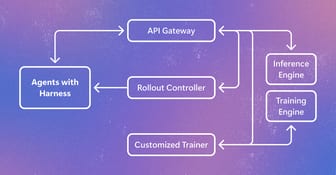
    Microsoft Research's October 7 technical overview describes the rebuilt Agent Lightning v1.0: roughly 3,500 lines of control-plane code, agents running as Kubernetes jobs, and an LLM proxy that lets an existing harness participate in reinforcement learning. Its reported Qwen3.5-9B coding pipeline improved SWE-bench Verified Pass@1 from 41.8% to 56.4% using about 6,000 samples.

    Why it matters: Editorial takeaway: the training setup should resemble the deployed agent. Inspect the released workflow before adopting it; those results describe the authors' coding experiment, and running training still requires compute and infrastructure. This is a technical overview, not a claim that the framework first launched today.

  11. Liquid AI58

    Liquid AI releases open-weight decision models for edge devices

    Liquid AI released d1-3B and the experimental d1-omni-600M on Hugging Face. These models choose an answer in a single forward pass rather than generating a token sequence. d1-3B accepts text and images; the smaller experimental model also supports text-and-audio inputs. The company reports 8 ms for d1-3B on an RTX 4090 and 50 ms on a Jetson Orin Nano.

    Why it matters: Editorial takeaway: a constrained choice or routing task may not need a full chat model. Evaluate the models on your own answer options and hardware; the latency figures are the publisher's measurements, and the smaller checkpoint is explicitly experimental.

  12. vLLM engineering42

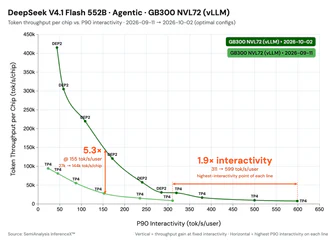
    vLLM explains a 5.3× throughput gain for DeepSeek-V4.1-Flash

    Inferact and the vLLM team report 1.9× faster low-concurrency serving and 5.3× higher throughput under a 150-tokens-per-second constraint after three weeks of optimization. The changes combine bounded replay of sliding-window attention, CUDA graphs, and fused kernels. Their post explains how cache reconstruction and skipping parts of prompt prefill reduce serving work.

    Why it matters: Editorial takeaway: model benchmarks alone do not describe serving costs. This engineering breakdown helps identify cache and kernel bottlenecks; the reported gains apply to its benchmark conditions, rather than every deployment.

  13. OpenAI News

    GPT-6 brings interactive answers to ChatGPT

    OpenAI announced a ChatGPT rollout combining GPT-6 with Intelligent UI: visual explanations, interactive comparisons and small tools generated inside a conversation. Availability depends on plan and rollout timing.

    Why it matters: Editorial takeaway: interactive answers could change how teams present information. This announcement concerns ChatGPT; it does not announce a change to the models powering Work or Codex.

  14. Anthropic75

    Claude Haiku 5.5 targets fast, high-volume AI workloads

    Anthropic released Haiku 5.5 for summaries, classification and agent subtasks. For prompts up to 100,000 tokens, its published API prices are $0.10 per million input tokens and $0.50 per million output tokens; larger prompts have a separate price tier. The release also halves Sonnet 5.5 cache-read pricing to $0.10 per million tokens. These are publisher-listed prices checked on 8 October.

    Why it matters: Editorial takeaway: workload routing matters as much as model choice. Test routine tasks on a smaller model before sending every request to a more expensive one; vendor evaluations do not establish results for your application.

  15. LangChain55

    Deep Agents loads tools only when the relevant skill is read

    LangChain updated Deep Agents with three controls: bind tools to a skill, pin requested skills before the first model call, and reload a skill library during a running thread. Bound tool schemas stay outside the context until needed; models supporting mid-conversation tools can retain the cached prompt prefix.

    Why it matters: Editorial takeaway: for a large skill library, load instructions and tools together rather than exposing every tool at startup. Check your model's support for mid-conversation tool changes; reloading changed skills still modifies the system prompt and can invalidate its cache.

Oct 6Tue
  1. Google Research

    Google Earth AI's Population Dynamics Foundation Model (PDFM) provides a planetary geospatial foundation model for global public health.

    Google Earth AI's Population Dynamics Foundation Model (PDFM) compresses search trends, population flows, building environment density, and environmental factors into location embeddings, enhancing epidemiological research performance in various disease fields and geographical environments without specific task fine-tuning.

  2. LangChain Deep Agents releases35

    LangChain Deep Agents 0.1.81 released

    LangChain Deep Agents 0.1.81 released, supporting discovery of marketplace plugins, opening effort selector at runtime, displaying cost details, adding `--no-tracing` option and explicit tracing status indicator. Fixed issues with concurrent local thread writes and hook execution context changes, improved server-side model directory and interactive model metadata processing.

  3. Mistral AI

    Mistral AI has launched the public beta version of Mistral Large 4.

    Mistral Large 4 is a native multimodal large language model with 100 billion parameters, featuring 52 billion active parameters. It excels in coding, agent workflows, and multimodal understanding, reaching the level of the world's strongest open-source model. It also leads in critical enterprise workloads such as cybersecurity, finance, and law. The model will be open-sourced by the end of this month and is currently available for experience through the public beta API of Mistral Studio.

  4. Claude.dev Blog

    Claude Code cloud sessions: Cloud session domain guide

    Claude Code cloud sessions run on independent virtual machines, with each task cloning a code repository to a new branch, ensuring no interference. Users can start it via claude.ai/code, mobile app, desktop app, terminal, or Slack, supporting tracking in browsers, mobile apps, and desktop apps. Users of Pro, Max, Team, or Enterprise plans can use it for free without additional costs, and share other usage limits with Claude Code.

  5. Cursor Changelog

    Cursor iOS app adds local agent remote control feature.

    Cursor iOS app now supports viewing and responding to local agents running on the user's computer, default enabled (excluding enterprise organizations). After downloading the app and logging in, the user's computer account is automatically displayed. Remote management requires pairing and authorization via the desktop app. Remote control only connects to the agent, does not move its running location, and requires the computer to be powered on and connected to the network.

  6. Google Developers Blog

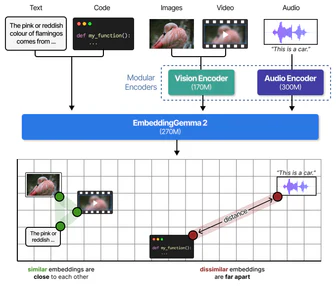
    EmbeddingGemma 2 Developer Guide

    EmbeddingGemma 2 is an open-source 740M parameter model developed based on Gemma 4, which maps text, code, images, video, and audio to a unified 768-dimensional space, supports modular loading (270M-740M parameters), and performs excellently in code search and cross-modal retrieval, can be used via the sentence-transformers library.

  7. Google Research

    Google Research explores the open and emergent challenges in agent privacy and security from a contextual perspective.

    Google Research has released a new report titled 'Privacy and Security Challenges of Open and Emergent Agents: A Contextual Perspective,' analyzing the fundamental privacy and security challenges faced by autonomous agents, requiring coordinated defense at the system, model, user, and ecosystem levels. The report indicates that agents need to handle personal data and act autonomously, but their characteristics in unstructured interfaces, probabilistic control flow, and autonomous agency introduce new challenges, requiring strategies that combine contextual integrity theory to evaluate the social and contextual appropriateness of actions.

Oct 5Mon