Skip to content
Live
Oct 18Sun
  1. NVIDIA Blog

    NVIDIA RTX Spark laptops are officially launched, featuring Blackwell RTX GPUs and an AI platform.

    NVIDIA RTX Spark laptops are now available, equipped with Blackwell RTX GPUs, up to 128GB unified memory, and the full NVIDIA AI platform, starting at $2399. They are launched by ASUS, Dell, HP, Lenovo, Microsoft, and MSI, bringing powerful local AI, content creation, and gaming capabilities to portable devices. NVIDIA held global launch events, including one in Berlin, where founder Jensen Huang made a surprise appearance.


Oct 17Sat
  1. LangChain Deep Agents releases17

    LangChain Deep Agents 0.1.86 Released

    LangChain Deep Agents released version 0.1.86, adding NVIDIA OpenShell as a sandbox provider, fixed multiple bugs including improved alias matching, accurate reporting of workspace rejection, replacing duplicate thread recovery errors, replacing chat input on recall prompts, displaying expiration prompts in the footer, providing actionable errors when Groq tools are limited, and comparing effective interpreter permissions, etc.

  2. AWS Machine Learning Blog

    Amazon Bedrock AgentCore: Building Trustworthy AI Agents with a Production-Ready Evaluation Framework

    Amazon Bedrock AgentCore Evaluation Framework helps AWS internal sales team handle business problems with multi-agent systems, identifying differences in agent performance between demonstrations and actual production; through services like Amazon Bedrock Guardrails and Amazon CloudWatch, the framework verifies answer accuracy before release and during ongoing production, tracing errors back to data, prompts, or code, avoiding user trust breakdown due to agents answering confidently yet incorrectly.

  3. Google Research

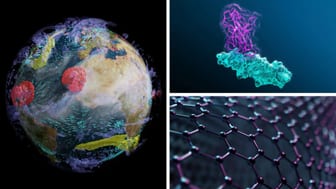
    Google Research explores combining AI agents with biological reality to build autonomous wet labs.

    Google Research releases the VERID framework, enabling AI agents to run in physics-based, safe, and resource-efficient experiments; demonstrates closed-loop intelligent agent scientific discovery on adapter and de novo protein design prototypes; through three rounds of design-test-iterate cycles, AI-driven rational and de novo design will increase confirmed target hit rates to 33.5% and 42.1% on myoglobin and α-thrombin, respectively.

Oct 16Fri
  1. Tencent Hunyuan · Hugging Face new models

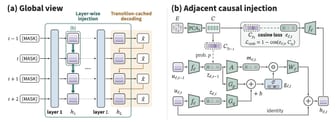
    Qwen3-8B-DSpine-b16 released: Speculative decoding model with parallel drafting and deep conditional injection

    Qwen3-8B-DSpine-b16 released by Qwen, employing speculative decoding technology with parallel drafting and deep conditional injection, achieving an average acceptance length score of 10.55 on Qwen3-8B. The model supports a context length of 8192 tokens, uses bfloat16 data type and fa3 attention backend, installation requires git clone and pip install, and runs via sglang serve.

  2. Anthropic Research

    Claude reveals the origin of ECDSA curves

    Claude discovered within half an hour that the seed values for NIST P-192, P-224, P-256, P-384, and P-521 curves came from the C library's lrand48 random number generator, not any hash algorithm, initialized with Unix timestamps. This discovery did not constitute a cryptographic vulnerability but rather enhanced confidence in the choice of curve parameters without backdoors or intentional weaknesses.

  3. Hugging Face Blog

    Hugging Face releases open-source multimodal model Beam, with 501B parameters

    Hugging Face has released the open-source multimodal model Beam, with 501B parameters, including 23B for per-token activation parameters, supporting a 1M token context window, suitable for coding and agent scenarios. The model uses a mixed expert model (MoE) architecture with 52 layers of attention mechanisms and supports various inference methods such as inference, supervised fine-tuning, and reinforcement learning. It can be deployed on user hardware or in the cloud and customized.

  4. Meta Engineering

    Meta How to Build Forum Applications with Native AI Engineering

    Meta uses AI agents to participate in the construction of engineering processes for Forum applications, viewing AI as a participant in the engineering process rather than an auxiliary tool. This experiment measures success by production-ready outcomes rather than lines of code, using a Human-On-The-Loop model to allow AI to autonomously execute planning, implementation, testing, and validation, with engineers responsible for setting goals, supervision, and acceptance.

  5. LangChain Blog

    LangChain blog: Frequently Asked Questions about Agent Evals

    The LangChain blog introduces how to use Agent Evals to test AI agent behavior, including analyzing behavior through trace logs, building test datasets containing inputs and expected outputs, running offline benchmark tests (such as Terminal-Bench) and online real-time evaluations, as well as using four types of evaluators: code inspection, LLM scoring, and manual review. Offline evaluations are used to test new prompts or models and catch regression issues, while online evaluations are used to monitor production quality and discover dataset gaps.

  6. Microsoft AI News

    Microsoft AI has released an 80 billion parameter MoE large model MAI-Base-2.

    Microsoft AI has completed the pre-training of a new MoE large model MAI-Base-2, with 80 billion active parameters and 2.8 trillion total parameters, surpassing all open-source models in internal evaluations. The model is 4-12 times more efficient in pre-training FLOPs than the strongest open-source base model DeepSeek-V4-Pro-Base and is used to train larger models. Microsoft plans to license the model weights through Foundry using organic data pre-training and full-stack control.

  7. Google DeepMind

    How does Google Antigravity accelerate the discovery of antibacterial peptides?

    The Google Antigravity platform works through its intelligent agent workbench and ProtNLM model, helping biologists quickly discover, structure evaluate, and prioritize potential antimicrobial peptide targets, compressing searches previously scattered across multiple databases into a single session. The platform uses ProtNLM to predict protein function and supports researchers in scanning millions of uncharacterized proteins in the UniProt database. Researchers collaborate with AI agents on a shared 3D canvas, compressing the time required for the antimicrobial peptide discovery process from several days to a single session.

  8. Microsoft Research

    Magnetar achieves provable general computation

    Magnetar proves that programs written in Rust, Go, or C are, on average, 10 to 39 times faster than the fastest comparable systems, and achieves security solely by relying on standard hash functions, solving the three major challenges of zero-knowledge proofs: efficiency, generality, and usability. It significantly reduces proof overhead by leveraging repetitive computations and early termination of the proof process, making proof generation as routine as running a program, and can be used in scenarios such as AI agent behavior verification and financial transaction validation.

Oct 15Thu
  1. NVIDIA Blog

    NVIDIA DLSS 4.5 control features are launched on GeForce NOW.

    NVIDIA DLSS 4.5 control features are now available on GeForce NOW, allowing members to choose cloud gaming quality and performance without the latest hardware. DLSS Super Resolution enhances image quality, Dynamic Multi Frame Generation reduces latency and stuttering, and Ray Reconstruction enhances ray tracing effects.

  2. Mistral AI

    Mistral AI launched the Timestral time series foundational model family

    Mistral AI released the Timestral time series foundational model family, with the smallest model at only 209M, ranking first in three major benchmark tests (GIFT-Eval, TIME, and fev-bench), outperforming models with larger parameter sizes; this series includes four sizes ranging from 5M to 209M parameters, supports past and future covariates, runs efficiently on CPUs, and can be fine-tuned for specific domains via Mistral Forge.

  3. OpenAI Agents SDK releases27

    OpenAI Agents SDK v0.24.0 has been released: adding MCP annotations and tool exception formatting support.

    OpenAI Agents SDK v0.24.0 has been released, adding MCP annotations for exposing support to conversion tools and a feature for formatting exceptions of running range tools. It has fixed the API limit issue for batch OpenAI dialogue session writes and optimized the automatic compression delay for pending approvals. The version includes 15,444 lines of new code and 1,412 lines of deleted code, with main improvements in tool execution and fault recovery, persistent RunState and session history, sandbox security, tracking, examples, dependencies, and release metadata.

  4. Apple Machine Learning Research

    Selection-Based Structured Reasoning: A framework for efficient multimodal search agents

    The Selection-Based Structured Reasoning (SSR) framework restructures reasoning into selection rather than open-ended generation, selecting the most likely solution from predefined reasoning candidates before each action, significantly reducing reasoning costs. Validated using 2B and 4B models on seven multimodal search benchmarks, SSR achieved average success rates comparable to leading search agents of the same scale, reducing single-step reasoning latency by 90% and total reasoning latency per task by 28-54%.