Skip to content
Live
Oct 22Thu
  1. Hugging Face Blog78

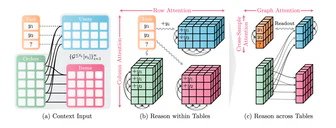
    NVIDIA releases Kumo Relational relational foundation model, capable of prediction without training

    NVIDIA releases pre-trained relational foundation model Kumo Relational, enabling direct prediction on enterprise databases without task-specific training, feature engineering, or table flattening. The model outperforms supervised relational deep learning and expert feature engineering gradient boosting trees on 41 tasks across 15 databases, achieving an MRR 8% higher than AutoGluon ensemble on the SAP SALT benchmark.

    Why it matters: The original provides a comparison result of pre-trained relation models on 41 tasks and an open-source entry, allowing readers to judge whether it can replace the existing XGBoost pipeline.

  2. Microsoft Research

    Microsoft researchers and collaborators combined new mathematical ideas with human-guided AI to address the core problem of the KLS conjecture in high-dimensional geometry and probability.

    Microsoft researchers and collaborators combined new mathematical ideas with human-guided AI to prove the KLS conjecture in high-dimensional geometry and probability, which has been proposed for 31 years and widely regarded as the central unsolved problem in the field. AI tools explore candidate methods and perform detailed derivations, researchers evaluate, prune, and reorient the search, ultimately proving geometric principles in high-dimensional spaces, making the barrier no longer grow unbounded with increasing dimensions. Independent researchers confirm the result, identify key criteria, and complete formal verification with machine checking.

  3. Hugging Face Blog

    How to reduce inference cost by 77% in real-world applications using a specialized SLM vocabulary list.

    Qwen3-4B's specialized vocabulary list VocabX reduces inference cost by 77% by focusing on the cost of each token rather than frequency, without changing the base model. This method for the Portuguese essay scorer reduces the output layer vocabulary from about 152,000 lines to about 65,000 lines, significantly reducing the computational overhead of token splitting and unused vocabulary items.

  4. Anthropic Newsroom55

    Physicist Christopher Stubbs joins Anthropic's long-term benefit trust

    Experimental physicist Christopher Stubbs joins Anthropic's long-term benefit trust, he will use decades of cosmology observation and precision measurement science expertise. Stubbs is a professor at Harvard University and has served as the Dean of the Harvard School of Science. In 1998, he participated in the discovery of the universe's accelerating expansion and won the Breakthrough Prize. Anthropic co-founder and President Daniela Amodei said that Stubbs's rigor and pursuit of truth will shape the future of AI technology.

Oct 21Wed
  1. Ant Group inclusionAI · Hugging Face new models35

    inclusionAI/Ling-3.0-tiny-UBTree release: A fine-tuned model based on UBTree technology

    inclusionAI released the UBTree fine-tuned version of Ling-3.0-tiny, Ling-3.0-tiny-UBTree-B16, with 183.1M parameters, combining a five-layer DFlash backbone and a bigram selector, achieving 2.6-3.5 times speed improvement on benchmarks like GSM8K and MATH-500. This model needs to be used in conjunction with the target model. The UBTree adaptation for the open-source version of SGLang has not yet been released.

  2. OpenAI News62

    OpenAI models will go live on Google Cloud

    OpenAI Collaborates with Google Cloud, Integrating OpenAI Frontline Models and Codex Workflows into Gemini's Model Garden and Offering Through Google Cloud Marketplace

    Why it matters: OpenAI's cutting-edge models and Codex workflow enter Google Cloud's Model Garden, providing a new entry point for cross-cloud distribution for readers to explore.

  3. IBM Research Blog

    IBM vLLM-Hook MIA Plugin enables rapid runtime monitoring and control

    IBM releases vLLM-Hook MIA Plugin, implementing runtime monitoring and control in the vLLM inference engine, 20 times faster than its predecessor vLLM-Hook and 14 times faster than similar methods inserting code inside the model, with only a 2%-6% increase in latency. The plugin allows developers to observe and adjust model states in real-time, such as rejecting malicious prompts, marking hallucinatory facts, or editing response tone and accuracy, while almost not reducing performance.

  4. NVIDIA Blog42

    European leaders are adopting NVIDIA Vera CPUs to build local infrastructure.

    Nebius and Nscale, among other global technology partner programs, are using NVIDIA Vera CPUs to build next-generation infrastructure to meet the rapidly growing demand for agent computing. Vera CPUs enhance response speed and optimize data center computing power by accelerating tasks such as agent information retrieval, software tool operation, code execution, and result evaluation, while maintaining high efficiency even when running thousands of tasks in parallel.

  5. NVIDIA Blog62

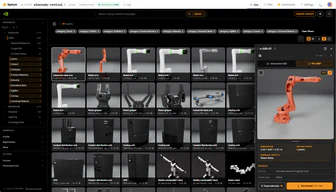
    NVIDIA expands its family of open models to cover language, robotics, biology, and quantum computing

    NVIDIA expands its family of open models to cover language, robotics, biology, and quantum computing, including the new Nemotron 3.5 Super VL and Nemotron 3.5 Bolt.

    Why it matters: NVIDIA has rolled out open models across four lines: language, robotics, biology, and quantum, allowing readers to judge the coverage of its open-source ecosystem based on this.

  6. NVIDIA Blog62

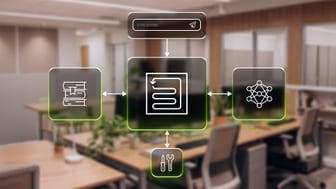
    NVIDIA expands Agent Toolkit to enable enterprise agents to access company data

    NVIDIA expands its open-source Agent Toolkit, adding components such as Agent Knowledge Foundation, the OpenShell secure runtime, and the NemoClaw blueprint, enabling enterprises to customize and govern agents with their own data.

    Why it matters: The original article lists the new components of Agent Toolkit and details of deployments at multiple enterprises, showing how enterprise agents connect to their own data and are constrained by the runtime.

  7. Mistral AI50

    Mistral collaborates with NVIDIA to advance AI in engineering

    Mistral is collaborating with NVIDIA to integrate AI models with NVIDIA accelerated computing and physics modeling tools, accelerating engineering simulations and enabling closed-loop AI-driven design. The collaboration will launch public benchmarks and open datasets, standardizing the evaluation of physics and agent AI in computer-aided engineering, and leveraging NVIDIA Omniverse for 3D simulations and resource creation.

  8. NVIDIA Blog55

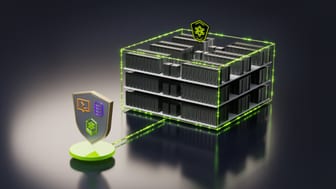
    NVIDIA Confidential Computing expands, providing secure extension capabilities for cutting-edge model builders across global infrastructure

    NVIDIA Confidential Computing protects models and data execution through hardware root isolation and encrypted authentication, adding Confidential Bare Metal deployment options, enabling cutting-edge model builders to run sensitive workloads on third-party infrastructure while retaining model data control.

  9. NVIDIA Blog38

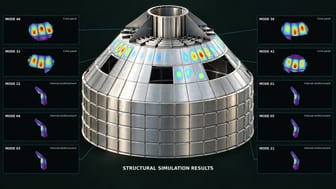
    NVIDIA cuDSS is now generally available, accelerating engineering and scientific simulations.

    NVIDIA cuDSS is generally available, migrating large sparse system of equations solvers to GPUs as part of the CUDA-X library, shortening simulation runtimes and improving throughput. Applied Materials achieves up to 10x acceleration in Ginestra, Dassault Systèmes reports 8-10x improvement in Abaqus, and ZEISS SMT completes an EUV lithography plasma simulation benchmark in COMSOL 4x faster.

    Same story · 2 outlets

    How the accounts differ:NVIDIA Blog states ZEISS SMT achieved a 4x speedup with COMSOL for EUV lithography plasma simulation; NVIDIA Newsroom mentions a 10x speedup for COMSOL with cuDSS.

  10. NVIDIA Blog58

    NVIDIA European partners expand computing capabilities, building sovereign, open, and secure AI agent cloud ecosystems.

    NVIDIA European partners are expanding regional computing capabilities to support model training and inference, helping developers build agentic and physical AI applications. Nscale achieves 37% more GPUs and 50% higher inference throughput using the NVIDIA DSX platform, Crusoe develops a liquid-cooled AI factory for low-latency inference, and Nebius adopts the NVIDIA Groq 3 LPX to accelerate sensitive applications.

  11. NVIDIA Blog72

    Google Cloud and NVIDIA announce Vera Rubin infrastructure now available

    Google Cloud and NVIDIA announce A5X instances based on NVIDIA Vera Rubin now available, opening next month and planned to expand to Europe.

    Why it matters: The original text provides the availability time of A5X instances, customer testing, and confidential computing support, allowing readers to judge the implementation rhythm of large-scale reinforcement learning infrastructure.

  12. NVIDIA Blog

    NVIDIA showcased its full lineup of local AI hardware: RTX Spark, DGX Spark, and DGX Station, helping to power next-generation intelligent agents.

    NVIDIA showcased its full lineup of local AI hardware at GTC Berlin, with RTX Spark now available to support personal agents on Windows PCs, DGX Spark enabling developers to build and scale Linux applications, and DGX Station designed for Linux enterprise teams to run cutting-edge workloads, with the Windows version launching in December.

  13. Databricks Blog

    Databricks AI Runtime officially released

    Databricks releases AI Runtime (AIR), bringing managed GPU infrastructure directly into its platform, allowing customers to train high-demand models at their enterprise data location. AIR provides GPU infrastructure, developer tools, and data governance features, supporting large-scale training, rapid iteration, and load safety, with customers not needing to manage a separate GPU stack.

  14. NVIDIA Blog67

    NVIDIA GTC Berlin 2026: Huang Renxun announces multiple updates including DSX POD, OpenShell, and Nemotron.

    NVIDIA CEO Huang Renxun announced multiple updates at the GTC Berlin 2026 keynote speech, including the Vera Rubin AI factory reference design DSX POD delivered in modular container format, reducing on-site deployment time from six months to 14 days.

    Why it matters: Huang Renxun's keynote speech at GTC Berlin revealed the latest developments in three product lines: AI factories, secure runtime for agents, and open-source models, providing insights into NVIDIA's focus in Europe.

  15. AWS Machine Learning Blog58

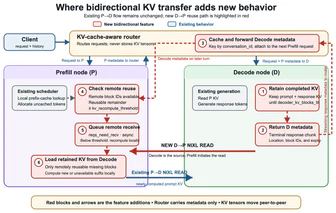
    vLLM enhances the TTFT performance of multi-round agent workloads through bidirectional KV transmission.

    vLLM's bidirectional KV transmission mechanism reduces redundant calculations by allowing the decoding node to return previously computed KV cache to the pre-filled node in subsequent dialogue turns. In multi-round benchmark tests on AWS EC2 P5en instances, it improved the TTFT of Qwen3-32B by 1.6x and zai-org/GLM-5-FP8 by 3.3x. This feature is implemented by extending the NIXL KV connector and utilizing a KV cache-aware router to coordinate KV reuse across dialogue turns.

  16. AWS Machine Learning Blog58

    TwelveLabs' Pegasus 1.5 is now available on Amazon Bedrock

    TwelveLabs' Pegasus 1.5 video language model is now available on Amazon Bedrock, which can convert long videos into structured, timestamped metadata, supports analyzing the entire video based on user-defined standards and returns JSON data of matching segments, analysis duration extended to two hours per request, no pre-indexing required and data remains within AWS boundaries.