Skip to content
Live
Oct 29Thu
  1. Microsoft Official Blog72

    Microsoft opens the Copilot harness through Foundry, supporting the development of multi-model intelligent agents

    Microsoft opens the GitHub team's Copilot harness built by GitHub through Microsoft Foundry, providing a fully managed way to build intelligent agents that can reason, call tools, and complete long tasks.

    Why it matters: Microsoft opens the multi-model harness supporting multiple Copilot products internally to Foundry, allowing readers to judge the trade-offs of building their own orchestration layer based on this.

Oct 28Wed
  1. Hugging Face Blog78

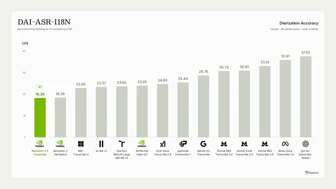
    NVIDIA has released Nemotron 3.5 Transcribe and the Granary v2 data pipeline.

    NVIDIA has released the open-source weight model Nemotron 3.5 Transcribe, integrating transcription, speaker separation, translation, and audio Q&A into a single checkpoint, supporting transcription in 40 languages, translation between 31 languages and English, and speaker annotation in 13 languages, capable of processing the longest 1-hour recordings and annotating up to 8 speakers.

    Why it matters: The original text provides a unified weighting model for multilingual transcription, speaker separation, and translation, along with an open data pipeline and fine-tuning recipes, which can be used to determine the adaptation path for voice scenarios.

  2. Together AI Blog38

    Together AI has launched an auto-repair feature for GPU clusters: a complete process from GPU failure to healthy nodes

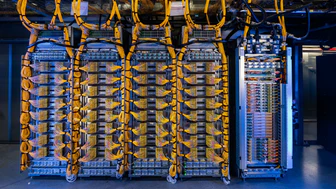
    Together AI has launched an auto-repair feature for GPU clusters, which continuously monitors node health on both virtual machines and host machines. When a failure is detected, it recommends minimizing repair actions and provides evidence, allowing users to choose automatic execution or manual approval. This feature is now fully available, supporting passive health checks, repair recommendations, automatic repair policies (including fault and node-level authorization), idle wait control, upgrade tiers, and safety guards, and is performed via API and console; the preview version provides repair commitment support based on node tags for third-party detection systems.

  3. Anthropic Research

    How Anthropic's Claude accelerates the drug development process

    Anthropic collaborates with six pharmaceutical companies to use Claude Code for drug development tasks, including designing shorter gene instructions for CAR T cell therapy (standard version 70% longer, new design increases immune cell receptor generation by about 10 times), generating approximately 35,000 antibody designs for food allergy treatment (20 designs are better than standard drugs), and optimizing the binding affinity, stability, and anti-aggregation properties of two antibody fragment drug molecules (binding force improved after improvement).

  4. Anthropic Research

    How Claude Code Influences Experts' Decision Making

    When 50 professional analysts use Claude Code for statistical analysis, 86% adopt its biased recommendations; if the analysts already had preferences, 60% changed their decisions when the AI's suggestions contradicted them, while only 6% changed when they were the same. 77% of analysts would repeat the AI's arguments but only 15% acknowledged its source. Although analysts using AI complete tasks faster and make fewer errors, the AI's preferences may influence important decisions without being noticed, potentially affecting policy or research directions.

  5. AWS Machine Learning Blog

    Amazon Web Services (AWS) has been named a Leader in Gartner's 2026 Contact Center as a Service (CCaaS) Magic Quadrant for four consecutive years.

    Amazon Web Services (AWS) has been named a Leader in Gartner's 2026 Magic Quadrant for Contact Center as a Service (CCaaS) for the fourth consecutive year. AWS Connect Customer achieves personalized, intelligent customer experiences by integrating customer context, AI, and flexibility, meeting customers' expectations for being recognized, their needs understood, and consistent across channels, and supports end-to-end interactions with AI agents to resolution.

  6. Anthropic Research88

    Anthropic discovered and exploited real vulnerabilities in Claude on Chrome, Safari, Android, Windows, and Linux.

    Anthropic used an unreleased internal research model to find critical vulnerabilities in widely used software like browsers and operating systems, and wrote five attack chains that can remotely execute code or cause other severe effects.

    Why it matters: Anthropic used an internal research model to run five complete attack chains on Chrome, Safari, Android, Windows, and Linux, and provided updates on vulnerability disclosure and fixes.

  7. Hugging Face Blog76

    Liquid AI releases LFM3 series: Same 2B backbone derived text, visual, audio, multimodal and decision models

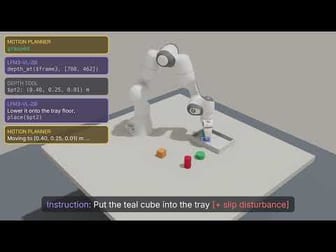
    Liquid AI releases the new generation Liquid Foundation Models, LFM3, deriving six 2B-level models from the shared backbone LFM3-1.7B-Base, covering text, vision, audio, multimodal, and decision, all open weights on Hugging Face.

    Why it matters: Liquid AI derives six modality models from the same 2B-level backbone and provides single-card fine-tuning and edge deployment paths, which can be used to judge the specialization route for small models.

  8. Databricks Blog
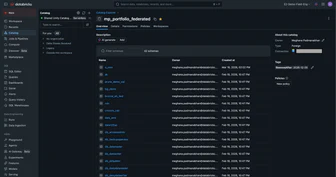
    Databricks improves document extraction accuracy through ai_extract and MLflow Prompt Registry

    Databricks improves document extraction accuracy by building a document extraction process that includes a review step, using ai_extract combined with JSON schema and global instructions, and leveraging MLflow Prompt Registry for versioned configuration. Finally, it validates the improvement effect on a fixed set of manually labeled data, enhancing the overall performance of the system.

  9. Google Research58

    Google Research introduces a sleep framework: a new method for LLMs to acquire knowledge through continuous learning

    Google Research proposes a sleep framework that enables LLMs to achieve continuous learning through alternating active (awake) and sleep phases; the sleep phase utilizes the MoE and Hope architectures for parameter expansion and knowledge distillation, integrating short-term memory into long-term parameters, supporting the retention of long-context knowledge up to 10M tokens and enhancing complex reasoning capabilities.

  10. AWS Machine Learning Blog34

    How does Property Finder identify evaluation bias on Amazon Bedrock and optimize model costs?

    Property Finder discovered that 96.8% of the labels in its evaluation dataset for visual AI workloads migrated to Amazon Bedrock were predictions from a single model rather than human validation, hindering objective comparison of new models. The company built a trustworthy benchmark dataset by independently labeling 356 images with human experts and, after 27 iterative optimizations with evolutionary prompt tuning, reduced costs by 86% while maintaining an 86% accuracy rate.

  11. AWS Machine Learning Blog34

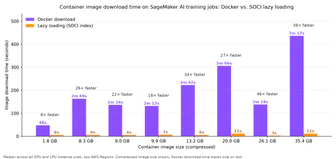
    AWS SageMaker AI Launch SOCI-indexed images to accelerate inference tasks

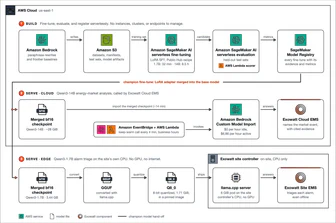
    AWS SageMaker AI introduces SOCI-indexed images functionality, removing container image downloads from the critical path, reducing SageMaker AI training and processing task startup times from minutes to seconds. This feature is achieved by pre-indexing AWS Deep Learning Container (DLC) or adding indexing to custom images, requiring no changes to workload definitions. Benchmark tests show it can reduce GPU idle time by 90% and improve efficiency 8-46 times.

  12. LangChain Blog71

    How to Set Up Design Intelligent Agents with LangChain Content Studio

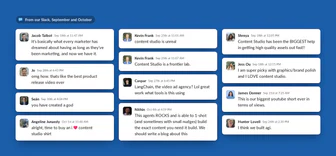
    LangChain introduces the internal design of its intelligent agent Content Studio, which can generate videos, social media graphics, UI diagrams, and presentations in Slack with a single prompt word, with all materials generated by code.

    Why it matters: LangChain has disclosed the complete setup process of its design agent Content Studio, including skills, wiki, inspection gates, and the division of labor between asynchronous sub-agents, which can serve as a reference for building vertical agents.