Skip to content
Live
Oct 16Fri
  1. Anthropic Research

    Claude reveals the origin of ECDSA curves

    Claude discovered within half an hour that the seed values for NIST P-192, P-224, P-256, P-384, and P-521 curves came from the C library's lrand48 random number generator, not any hash algorithm, initialized with Unix timestamps. This discovery did not constitute a cryptographic vulnerability but rather enhanced confidence in the choice of curve parameters without backdoors or intentional weaknesses.


  2. MIT News · AI75

    IRIS model decodes intercellular communication language

    The IRIS model identifies cell signaling pathway fingerprints by analyzing gene activity patterns, discovering consistent features of the same pathway across different cell types, enabling scientists to reconstruct signaling history across multiple cell types. This neural network model accurately predicted the timing and location of specific signaling pathway activation during mouse embryonic development in human embryonic stem cell experiments, providing new methods for organoid research and regenerative medicine.

  3. Meta Engineering

    Meta How to Build Forum Applications with Native AI Engineering

    Meta uses AI agents to participate in the construction of engineering processes for Forum applications, viewing AI as a participant in the engineering process rather than an auxiliary tool. This experiment measures success by production-ready outcomes rather than lines of code, using a Human-On-The-Loop model to allow AI to autonomously execute planning, implementation, testing, and validation, with engineers responsible for setting goals, supervision, and acceptance.

  4. Microsoft Research

    Magnetar achieves provable general computation

    Magnetar proves that programs written in Rust, Go, or C are, on average, 10 to 39 times faster than the fastest comparable systems, and achieves security solely by relying on standard hash functions, solving the three major challenges of zero-knowledge proofs: efficiency, generality, and usability. It significantly reduces proof overhead by leveraging repetitive computations and early termination of the proof process, making proof generation as routine as running a program, and can be used in scenarios such as AI agent behavior verification and financial transaction validation.

Oct 15Thu
  1. Apple Machine Learning Research

    Selection-Based Structured Reasoning: A framework for efficient multimodal search agents

    The Selection-Based Structured Reasoning (SSR) framework restructures reasoning into selection rather than open-ended generation, selecting the most likely solution from predefined reasoning candidates before each action, significantly reducing reasoning costs. Validated using 2B and 4B models on seven multimodal search benchmarks, SSR achieved average success rates comparable to leading search agents of the same scale, reducing single-step reasoning latency by 90% and total reasoning latency per task by 28-54%.

  2. Apple Machine Learning Research

    MLX and RDMA implement local and distributed large language model inference on Mac Studio

    On a cluster of four Mac Studio machines, Muse Spark Open (816B parameters) generates at a speed of over 36 tokens/second. The Mac Studio M5 Ultra version offers 4.6x faster inference speed (TTFT) and 1.6x faster tokens/second compared to the M3 Ultra, benefiting from the GPU neural accelerator and 1.2 TB/s memory bandwidth.

  3. AI as Normal Technology

    Beyond Automation: New Research Directions in AI

    Beyond Automation: A new research direction in AI argues that AI should not be limited to automating human labor but should explore new directions for enhancing humans and promoting human-machine collaboration. This perspective advocates for AI research to focus on new issues such as transparent agents, process tracking, and human-machine interaction design to push AI beyond pure technological automation and achieve broader applications.

Oct 14Wed
  1. METR

    METR proposed a scheme to enhance public awareness of the risks of front-end AI out of control.

    METR hopes to provide evidence to the public to prove whether front-end AI developers may lose control of internal AI systems. Recent multiple incidents of AI system out of control have caused public concern. The public lacks transparency in the internal development process of front-end AI, unable to judge whether developers are solving risks or whether more severe incidents will occur in the future.

  2. METR

    How to evaluate the control and monitoring of internal AI agents

    Assessors can collect evidence of the reliability of internal AI agent monitoring by monitoring five core sub-questions: coverage, system vulnerability monitoring, evasion monitoring, response mechanisms, and potential impact. The focus of the assessment is on LLM monitoring, as agents typically have broad permissions, requiring an understanding of their full range of actions. The assessment requires access to reasoning logs, monitoring logs, and employee interviews, and checks whether there are blocking monitors and whether unmonitored reasoning is indeed non-agent reasoning.

  3. METR

    How to evaluate the alignment of unreleased AI models?

    Alignment assessments aim to understand the worst misaligned actions an AI agent developed by a developer might take in reasonable future scenarios. They require reviewing severe misaligned behaviors observed in all cutting-edge internal models during training, evaluation, and internal use, and assessing whether the developer's training process might incentivize the agent to evade assessment or hide misalignment. This requires querying relatively comprehensive internal text records and accessing internal model checkpoints.

  4. Apple Machine Learning Research27

    Whisper-small performs excellently on the Code-Switching Detection task

    Whisper-small achieved an average F1 score of 0.798 across 14 language pairs in the CS-FLEURS benchmark test, surpassing CNN's 0.776 and HuBERT's linear baseline's 0.751. The method detects language switching directly from speech by identifying the language-selective hidden state dimension in pre-trained speech encoders, and only requires a small amount of code to convert the dataset to fine-tune decision rules.

  5. Pragmatic Engineer

    Sam Newman's 'Building Resilient Distributed Systems' explores software resilience design in the AI era.

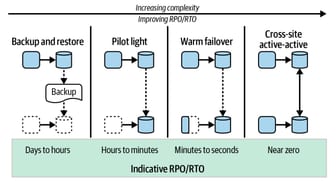
    Sam Newman releases new book 'Building Resilient Distributed Systems', discussing software resilience design in the AI era, covering disaster recovery (DR), infrastructure availability, resilience of AI model providers, and strategies for dealing with uncertainty, emphasizing the importance of balancing cost and complexity to set recovery objectives (RPO/RTO) in the context of frequent service disruptions caused by AI code and bugs.

Oct 13Tue
  1. IBM Research Blog58

    IBM Research uses an open-source agent factory to achieve 52-fold acceleration in quantum error correction chip design with a cost of $26

    IBM Research uses an open-source agent factory to optimize quantum error correction hardware, achieving 52x acceleration with a cost of about $26; with the same budget, a closed-source cutting-edge model configuration costs $299 (11.5x higher) but provides 204x acceleration, with the open-source configuration achieving hardware optimization with a smaller area; the agent factory assigns tasks to parallel working agents through a coordinator, combining code modification with hardware effect evaluation, exploring various architectural possibilities.

  2. Microsoft Research

    Microsoft Research open-sources multi-modal model StudentSim for simulating student learning behavior

    Microsoft Research has open-sourced the multimodal model StudentSim for simulating student learning behavior. It is trained on publicly anonymized learning records to create a personalized student simulator that outperforms benchmarks in areas such as chess, English writing, and mathematics. It provides early feedback signals for AI tutoring systems but is not intended to replace teachers or classroom teaching.

Oct 12Mon
  1. Baseten Labs75

    Base Labs research found: Why does the model forget facts during iterative learning? Experimental analysis based on talkie-1930-13b-it.

    Base Labs research found that iterative learning with the talkie-1930-13b-it model using sports facts from 2011-2019 leads to fact forgetting, with forgotten facts still present in model weights. Experiments show that early learned facts are difficult to recall after 20 writes and merges, and are covered by later facts, but the covered facts can be relearned, primarily occurring in the later MLP weights.

  2. Anthropic Newsroom

    Anthropic strengthens defenses against distillation attacks

    Anthropic has significantly reduced the effectiveness of distillation attacks on Claude using a new method, reducing the amount of data collected by attackers by about 90% to 99%. Distillation attacks are industrial-scale covert activities that involve unauthorized copying of model capabilities, often using fake accounts to enable companies to imitate cutting-edge capabilities at extremely low cost. Anthropic's new defensive measures have blocked a large amount of paid traffic and revenue flowing to attackers, but some legitimate users need to update their integrations to adapt to these changes.

Oct 11Sun
Oct 10Sat