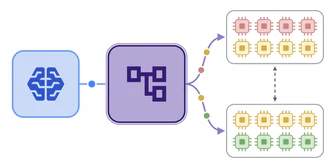
OpenAI Control Room: A central system for tracking and stopping model workloads in research infrastructure.
OpenAI's Control Room can track model workloads in research infrastructure and quickly stop them in the event of security or safety issues.
CodeRabbit uses OpenAI models to govern and trust AI-generated code, combining Codex to increase the software delivery volume of engineering teams by 20 times.
OpenAI Control Room can track model workloads in research facilities and quickly stop them in case of security or safety issues
Apple offers a one-time purchase option of $49.99 to extend the use of AI features in Logic Pro, which allows users to continue using Apple Intelligence features limited by reliance on OpenAI or Google Gemini cloud AI models.
GitHub Copilot has released version 0.169.0-alpha.7, offering code generation, review, security, and collaboration features, supporting custom integrations and continuous updates.
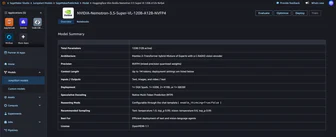
NVIDIA Nemotron 3.5 Super VL is now available on Amazon SageMaker JumpStart, supporting text generation from image, video, and text inputs.
Anthropic Launches Claude Fable 5.2 and Claude Mythos 5.2 on AWS, Fable 5.2 is its most powerful general model for coding and scientific fields, supporting unsupervised operation for days; Mythos 5.2 is provided through a validation program and performs more reliably in cybersecurity and life science fields.
Amazon Bedrock Managed Knowledge Base now supports single-retrieval enhanced generation (RAG) and retrieval-only requests, implemented through AgenticRetrieveStream.
Kuken Industries uses the OpenAI API to reduce the search time for 70-year cooling tower diagrams to 4.5 minutes, significantly improving efficiency from nearly an hour.
ChatGPT Enterprise is provided through AWS Marketplace, helping organizations simplify procurement processes by leveraging existing AWS purchase and billing relationships.
Instagram releases Effect Builder feature, allowing users to create custom filters using AI prompts, supporting additional style reference images and previewing effects. Submitted filters need to pass security review before being made available to other users, and use will link to the creator's profile.
AWS Quick officially released, designed for work scenarios, supporting enterprise-level security and governance, integrates existing data and applications through AI agents to improve team collaboration efficiency. Supports use on multiple devices, data never leaves the environment, compliant with HIPAA, FedRAMP, and other compliance standards.
GitHub Copilot released version 0.169.0-alpha.6, but no specific update content was provided.
ComfyUI v0.44 introduces multiple quality improvement features, including the new Branch Node and Stack LoRAs Node, simplifying model selection and stacking processes. Templates and models can now automatically download sample inputs for users to run directly. Additionally, the new export feature allows users to download multiple output files at once, improving work efficiency.
Google releases TPU 8i Max and TPU 8tx, TPU 8i Max integrates 2 TPU 8i chips into 1 package, doubling performance; TPU 8tx uses TPU 8t chips paired with the 5th generation AMD EPYC host to achieve confidential inference, reducing latency by 2 times.
How the accounts differ:MarkTechPost states TPU 8tx uses TPU 8t chips paired with 5th gen AMD EPYC, while TechCrunch mentions it was co-developed with AMD for secret training and running AI models with direct hardware security integration.
Sendoso converts buying signals into a sales pipeline via Genie One AI agent without exporting lists or logging into other tools. The MCP server on Databricks Marketplace integrates Sendoso functionality into existing data environments, AI suggests gifts, researches recipients, and drafts notes, supporting direct display of data and reasons in Genie One.
Apiiro's AI safety researchers found that Claude Code has a negligence in handling user auto Shell commands with user approval settings, causing its settings file (.claude/settings.local.) to potentially contain sensitive information such as database passwords, API tokens, and root login, and accidentally exposed in a GitHub repository.
Google AI Studio can now directly build applications driven by Google Maps Platform, where users describe their ideas and AI Studio automatically completes configuration and API key management without a credit card.
Why it matters: The original text provides daily quotas without a credit card and a complete path from prompt words to a runnable map application, allowing readers to judge the cost of prototype construction based on this.
Disney and Adobe announce collaboration to develop proprietary 'artist-led' generative AI model, supporting Disney's production process. The collaboration will give Disney early access to Adobe's latest technology for content creation in theme parks, cruise ships, ESPN graphics, etc. Both parties will use Adobe Firefly Foundry to explore AI models that fit Disney's unique knowledge system (character attributes, environment, visual style), accelerate work, and develop more creative projects.
Disney and Adobe announce a multi-year collaboration to create custom AI tools for the entertainment empire. Disney will get early access to Adobe's new technologies for theme parks, cruise ships, and ESPN content. Adobe will build brand-specific models for Disney through Firefly Foundry, which will be trained based on Disney characters, environments, and visual styles to generate commercially safe, production-ready outputs.
Medium launches TK app with AI assistance
Databricks releases Unity Catalog Dataset (UCDataset) Beta version, reducing the average training time for recommended model workloads by 10 times by streaming Unity Catalog table data directly from cloud storage to each GPU in training jobs
Ollama v0.40.16-rc0 released, adding Ripple Preview support for MLX runners; fixes Claude Code routing and model errors.
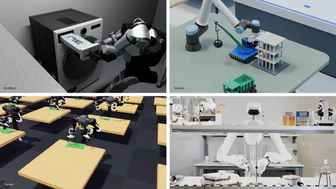
NVIDIA released the open-source world action model GR00T 2 on CoRL, built on NVIDIA Cosmos, trained with 100,000 hours of NVIDIA open-source first-person human data, and can complete 40 out of 50 evaluation tasks without task-specific demonstrations.
Why it matters: The original text provides the success rate of GR00T 2 on few-shot tasks and the training throughput improvement of Isaac Lab 3.0, which can be used to judge the extent to which simulation training promotes robot deployment.
Apple iOS 27.3 code reveals the development of a personal memory system, including a 'memory graph' component for organizing users' social relationships, frequently visited places, daily habits, and other information. The system designs 'memory atoms' as data units to record facts, opinions, and other details, associating specific information. It collects data through two mechanisms, but currently, only one AI-driven mechanism appears in the code. The system uses Apple's version of the Kuzu graph database but is not yet complete and no launch date has been revealed.

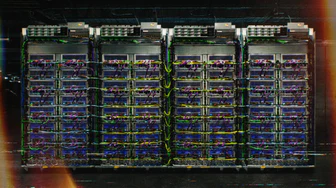
Google released two new systems, TPU 8tx and TPU 8i Max, targeting confidential computing and high-memory demand applications, delivering a total of four TPU systems within the year. The new systems are based on existing chips, achieving rapid iteration through different packaging, networking, and memory configurations. Data in TPU 8tx remains encrypted during processing, while TPU 8i Max doubles computing power, memory, and bandwidth within a single rack, significantly improving data center performance per square meter.
How the accounts differ:MarkTechPost states TPU 8tx uses TPU 8t chips paired with 5th gen AMD EPYC, while TechCrunch mentions it was co-developed with AMD for secret training and running AI models with direct hardware security integration.
Google launches two new products, TPU 8tx and TPU 8i Max, targeting confidential computing and ultra-long context window AI applications, aiming to challenge NVIDIA's position in the AI chip market. TPU 8tx works with AMD chips, TPU 8i Max integrates two chips to provide stronger computing power. Both products are expected to launch next year.
How the accounts differ:MarkTechPost states TPU 8tx uses TPU 8t chips paired with 5th gen AMD EPYC, while TechCrunch mentions it was co-developed with AMD for secret training and running AI models with direct hardware security integration.
Google has launched two new versions of its Tensor Processing Unit (TPU) chips, competing with NVIDIA. The new chips can meet confidential computing needs and adapt to the industry's shift towards AI agents. The four TPU products are designed for different needs, and Google's chip division is accelerating its iteration speed.
Google announces Pathways is now generally available on Google Cloud Platform, which is Google's distributed system used to train its own large models like Gemini.
Why it matters: Google engineers explain the single controller execution model of Pathways and provide a layered difference with Ray for judging the selection of large-scale training orchestration.
ShaoYin OpenDots 2 earbuds dropped to 859 yuan today in JD.com's flagship store, members can use 2 points to grab a 800-80 yuan god voucher, after the voucher it's 779 yuan, plus 50 yuan E card and 30 yuan E card, plus Xiaomi power bank and other gifts, equivalent to only 699 yuan. The earbuds support IP57 dustproof and waterproof, equipped with 11.8mm symmetrical dual units, optimize 70% distortion, upgrade Dolby audio effects, battery life of 10 hours.
The Red Magic GamePad 5 Pro 16GB+1TB version will go on sale tonight at 8 PM, priced at 6999 yuan. This tablet features RGB water cooling, a 185Hz OLED screen, the Snapdragon 8 Ultra Gen 5 processor, a built-in 8300mAh battery, and supports 80W wired charging.
Edifier W900NB 30th Anniversary Limited Edition Headphones now on sale at 20:00, priced at 1159 yuan, limited to 3000 sets, equipped with 8 high-precision wide-angle silicon microphones, 6nm process 6-core heterogeneous chip, and Arm Ethos U55 independent NPU for end-to-end AI pickup and noise reduction.
Sony obtains US patent US 2026/0346147 A1, which uses AI to analyze player keying habits and preferences to establish operational feature profiles, identifying suspected veteran players opening new accounts 'fishing'. When a new account attempts to match low-level opponents, the system will compare operational features and retrieve main account data to adjust the matching mechanism. This technology can be applied to detect malicious score manipulation, but there are privacy collection disputes and misjudgment risks.
The Xiaomi 18 Pro series will be launched internationally for the first time in Paris on November 17 at 14:00 local time, starting at a price of 1,549 euros. The series was released in China on September 23, featuring the Snapdragon 8 Ultra, a 200 million pixel main camera by Leica, and an AI adaptive back screen. The global version is available in black, white, and burgundy (exclusive to the global market).
Reason Machines has released an open-source Git server, Aspen, designed for handling repositories with hundreds of AI agents pushing simultaneously. It independently implements the design of OpenAI Pando, with a single 8-core server capable of sustaining 567 pushes per second, and a p99 push latency of 314 milliseconds.
Qianwen Office released version 2.0 on November 9, introducing the 'Collaboration' feature supporting multiple people and Agents, and launching capabilities such as 'Human-Machine Co-Creation,' 'Data Space,' 'Auto Tasks,' and 'Tri-Platform Connectivity,' all features are fully launched in the client.
Why it matters: Qwen Office 2.0 integrates Agents into team collaboration scenarios, providing specific implementation cases like Yintai Department Store, allowing observation of the path from individual assistants to team collaboration for office Agents.
The native AI intelligent assistant 'Da Yuan' for enterprise WeChat has fully launched and integrated the latest large language model Mixuan Hy4, allowing users to directly upgrade AI office capabilities on-site. Da Yuan does not require users to open additional windows; its side handle and shortcut keys in the WeChat interface can be called at any time to assist in summarizing chats, sending messages, reading and writing documents and tables, summarizing project progress, and supporting the setting of timed tasks to automatically organize to-do lists and gather industry dynamics online.