Skip to content
Live
Oct 22Thu
  1. Browser Use38

    Introduction to Browser Use Cloud MCP server and open-source MCP server

    Browser Use Cloud MCP server runs proxies in cloud browsers via API V3, offering 11 model selections, supports 10 parallel tasks, charges approximately 0.02 USD per minute, but only supports API V3 and has no GPT-6 Luna; its open-source version Browser Use open-source MCP runs locally for free, includes 16 direct control tools, allows custom models, suitable for long tasks.


  2. Claude Code releases15

    Claude Code v2.1.307 Released

    Claude Code v2.1.307 is released, fixing over 20 bugs including API version migration, security event tracking, model alias error handling, prompt cache scope, MCP server authentication and timeout issues, and WebFetch tool error reporting, improving browser login, tool call retry, and self-hosted runner stability.

  3. The Verge · AI65

    Anthropic releases Claude Duet AI agent.

    Anthropic releases Claude Duet, an AI agent for professionals and small business owners, as a research preview. It supports standalone iOS and Android apps and a web version, built on Claude Opus 5.5. It can send daily summaries, monitor applications, and handle tasks, equipped with a browser virtual machine and a security system. It is currently in an early version and requires a paid subscription.

    Same story · 3 outlets

    How the accounts differ:The Verge mentions Claude Duet is for professionals and small business owners, while Claude states it's for Pro and Max plan users.

  4. TechCrunch · AI71

    Recursive has released a laptop-grade coding model called Flint, claiming it is mostly built with AI.

    Recursive releases its first model, Flint, a free coding model that can run on laptops, with almost the entire development process driven by AI. Recursive's automated research system, Eureka Machine, participated in almost every development step of Flint, enabling the team to complete the model construction in less than four months.

  5. The Verge · AI

    Walmart invites AI intelligent entities to shop on its website

    Walmart will allow users to connect their AI agents to shop on its website, where users can approve and review purchases and set spending limits. The agents will connect to a new 'Agent Profile,' with all purchases requiring user approval by default, but budgets can also be set (e.g., up to $100). Walmart will establish an 'Agent Gateway,' connecting agents via the Model Context Protocol to prevent them from accessing users' shopping history and personal information.

  6. Ars Technica · AI42

    How to connect OpenAI's latest models to Google Cloud and Antigravity

    OpenAI's GPT 6.1 models (Astra, Sol, Luna) will land on Google Cloud's Model Garden and Antigravity code tools. Google Cloud Marketplace will offer GPT model services based on its infrastructure, supporting dynamic workload migration based on performance, latency, and efficiency.

    Same story · 2 outlets

    How the accounts differ:OpenAI News mentions the integration with Gemini's Model Garden and Google Cloud Marketplace; The Decoder specifies the models GPT-6 Astra, GPT-6.1 Sol, and GPT-6 Luna being offered with pricing details.

  7. TechCrunch · AI75

    Walmart launches Agent Gateway, welcoming AI agents, in contrast to Amazon

    Walmart releases Agent Gateway to manage transactions, welcoming AI agents shopping, in contrast to Amazon's blockade of AI agents. The technology supports connection via MCP protocol, allowing AI agents to search Walmart inventory and make purchases on behalf, while also launching Agent Profiles control features, enabling users to authorize and restrict AI agent behavior. Walmart emphasizes that agents must comply with specific terms, including not exceeding user intent, inability to access payment information, and violators will be blocked.

  8. The Decoder70

    Google Cloud starts offering OpenAI models, becoming the only cloud service provider with Gemini, Claude, and OpenAI models

    Google Cloud starts today providing three OpenAI models: GPT-6 Astra (for coding and research), GPT-6.1 Sol (similar performance but cheaper), and GPT-6 Luna (fast and cost-efficient), becoming the only cloud service provider to offer Gemini, Claude, and OpenAI models simultaneously. Currently, it is open for enterprise customers to register in private preview form, with costs included in existing Google Cloud contracts.

    Same story · 2 outlets

    How the accounts differ:OpenAI News mentions the integration with Gemini's Model Garden and Google Cloud Marketplace; The Decoder specifies the models GPT-6 Astra, GPT-6.1 Sol, and GPT-6 Luna being offered with pricing details.

Oct 21Wed
  1. The Decoder47

    How Mistral and Nvidia use physics AI to accelerate industrial design

    Mistral and Nvidia join forces to combine Mistral Large 4 with physics AI, CUDA-X, Warp, and Omniverse, providing an integrated workflow for design, simulation, and AI training for the aerospace, automotive, and semiconductor industries. Mistral Large 4 has approximately one trillion parameters and is trained on 3800 Grace Blackwell GPUs, with plans to release as an open-weight model at the end of October.

  2. Modal Blog75

    Modal Dojo: A library to easily start production-level LLM training.

    Modal Dojo is a library for easily performing production-level LLM training, supporting models from 500 million to 10 trillion parameters, providing automatically optimized training recipes and built-in observability dashboards. Users can select models, load data, and start training through simple prompts, supporting data sources such as Hugging Face and Harbor environments, and can adjust recipes through parameters.

  3. IBM Research Blog

    IBM vLLM-Hook MIA Plugin enables rapid runtime monitoring and control

    IBM releases vLLM-Hook MIA Plugin, implementing runtime monitoring and control in the vLLM inference engine, 20 times faster than its predecessor vLLM-Hook and 14 times faster than similar methods inserting code inside the model, with only a 2%-6% increase in latency. The plugin allows developers to observe and adjust model states in real-time, such as rejecting malicious prompts, marking hallucinatory facts, or editing response tone and accuracy, while almost not reducing performance.

  4. NVIDIA Blog42

    European leaders are adopting NVIDIA Vera CPUs to build local infrastructure.

    Nebius and Nscale, among other global technology partner programs, are using NVIDIA Vera CPUs to build next-generation infrastructure to meet the rapidly growing demand for agent computing. Vera CPUs enhance response speed and optimize data center computing power by accelerating tasks such as agent information retrieval, software tool operation, code execution, and result evaluation, while maintaining high efficiency even when running thousands of tasks in parallel.

  5. NVIDIA Blog62

    NVIDIA expands Agent Toolkit to enable enterprise agents to access company data

    NVIDIA expands its open-source Agent Toolkit, adding components such as Agent Knowledge Foundation, the OpenShell secure runtime, and the NemoClaw blueprint, enabling enterprises to customize and govern agents with their own data.

    Why it matters: The original article lists the new components of Agent Toolkit and details of deployments at multiple enterprises, showing how enterprise agents connect to their own data and are constrained by the runtime.

  6. Mistral AI50

    Mistral collaborates with NVIDIA to advance AI in engineering

    Mistral is collaborating with NVIDIA to integrate AI models with NVIDIA accelerated computing and physics modeling tools, accelerating engineering simulations and enabling closed-loop AI-driven design. The collaboration will launch public benchmarks and open datasets, standardizing the evaluation of physics and agent AI in computer-aided engineering, and leveraging NVIDIA Omniverse for 3D simulations and resource creation.

  7. NVIDIA Blog55

    NVIDIA Confidential Computing expands, providing secure extension capabilities for cutting-edge model builders across global infrastructure

    NVIDIA Confidential Computing protects models and data execution through hardware root isolation and encrypted authentication, adding Confidential Bare Metal deployment options, enabling cutting-edge model builders to run sensitive workloads on third-party infrastructure while retaining model data control.

  8. NVIDIA Blog38

    NVIDIA cuDSS is now generally available, accelerating engineering and scientific simulations.

    NVIDIA cuDSS is generally available, migrating large sparse system of equations solvers to GPUs as part of the CUDA-X library, shortening simulation runtimes and improving throughput. Applied Materials achieves up to 10x acceleration in Ginestra, Dassault Systèmes reports 8-10x improvement in Abaqus, and ZEISS SMT completes an EUV lithography plasma simulation benchmark in COMSOL 4x faster.

  9. NVIDIA Blog58

    NVIDIA European partners expand computing capabilities, building sovereign, open, and secure AI agent cloud ecosystems.

    NVIDIA European partners are expanding regional computing capabilities to support model training and inference, helping developers build agentic and physical AI applications. Nscale achieves 37% more GPUs and 50% higher inference throughput using the NVIDIA DSX platform, Crusoe develops a liquid-cooled AI factory for low-latency inference, and Nebius adopts the NVIDIA Groq 3 LPX to accelerate sensitive applications.

  10. NVIDIA Blog

    NVIDIA showcased its full lineup of local AI hardware: RTX Spark, DGX Spark, and DGX Station, helping to power next-generation intelligent agents.

    NVIDIA showcased its full lineup of local AI hardware at GTC Berlin, with RTX Spark now available to support personal agents on Windows PCs, DGX Spark enabling developers to build and scale Linux applications, and DGX Station designed for Linux enterprise teams to run cutting-edge workloads, with the Windows version launching in December.

  11. QbitAI

    Tsinghua AIR incubates Zijing Zhikang: Multi-intelligent agent collaboration reconstructs medical AI, doctor AI avatar 'consults' hospitals

    Zijing Zhikang's 'Zijing AI Hospital' system has been tested in hospitals nationwide, allowing doctors to have AI avatars and achieve cross-departmental collaboration through multi-avatar intelligent agent collaboration technology. AI avatars can simulate diagnosis and treatment in virtual environments and evolve by combining real cases, enabling doctors to make decisions based on suggestions from different avatars. The system achieved 96% accuracy on the MedQA dataset and has been tested in 18 departments at Beijing Tsinghua Changgeng Hospital, improving diagnostic efficiency by 30%.

  12. Databricks Blog

    Databricks AI Runtime officially released

    Databricks releases AI Runtime (AIR), bringing managed GPU infrastructure directly into its platform, allowing customers to train high-demand models at their enterprise data location. AIR provides GPU infrastructure, developer tools, and data governance features, supporting large-scale training, rapid iteration, and load safety, with customers not needing to manage a separate GPU stack.

  13. NVIDIA Technical Blog75

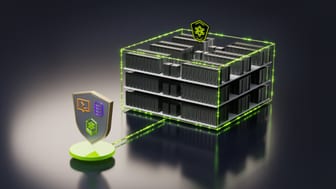
    NVIDIA Sentry: A Runtime Security AI Agent Framework

    The NVIDIA Sentry framework prevents AI agents from bypassing security boundaries by monitoring them externally at runtime. The framework can monitor the tools, credentials, and services used by the agents, ensuring they do not compromise security controls while completing their objectives. NVIDIA Sentry, as a security software framework, is designed to protect AI agents, preventing them from tampering with or disabling monitoring mechanisms.

  14. AWS Machine Learning Blog58

    TwelveLabs' Pegasus 1.5 is now available on Amazon Bedrock

    TwelveLabs' Pegasus 1.5 video language model is now available on Amazon Bedrock, which can convert long videos into structured, timestamped metadata, supports analyzing the entire video based on user-defined standards and returns JSON data of matching segments, analysis duration extended to two hours per request, no pre-indexing required and data remains within AWS boundaries.