Skip to content
Live

Model releases · Page 3

Oct 27Tue41–54
  1. ITHome · AI86

    OpenAI releases low-cost new model GPT-6.1 Terra, with a cost per task about one-ninth of Claude Opus 5.5

    OpenAI releases new model GPT-6.1 Terra, featuring lower costs for complex tasks requiring visual reasoning and desktop software operation, opening to Plus, Pro, Enterprise, and Edu users on October 27, available in ChatGPT Work and Codex, with the API model identifier as gpt-6.1-terra.

    Why it matters: The original text provides multiple benchmarks and cost per task comparisons, allowing readers to judge the trade-offs of low-cost models in desktop automation.

  2. Artificial Analysis Articles85

    OpenAI released GPT-6.1 Terra, focusing on cost efficiency.

    OpenAI released GPT-6.1 Terra, the first Terra-level model after GPT-5.6, with input/output pricing at $1/5 per million tokens, lower than the $2/12 per million tokens of GPT-5.6 Terra.

    Why it matters: The original text used the scores of the Intelligence Index and Coding Agent Index, along with the cost per task, to quantify the change in cost-effectiveness of GPT-6.1 Terra compared to GPT-5.6 Terra.

Oct 26Mon
  1. QbitAI78

    Rockchip Matrix, in collaboration with CUHK and CMU, has open-sourced EdgeRock-4B, reducing KV Cache by 99.1%.

    Rockchip Technology's Rockchip Matrix, in collaboration with CUHK and CMU, has released and open-sourced EdgeRock-4B, with a fixed KV Cache of 72MiB under 256K context, reducing the source model Qwen3.5-4B by 99.1%.

    Why it matters: The original provides a comparison of throughput under fixed memory, which can be used to judge the trend of GPU memory costs for long-context reasoning.

Oct 24Sat
  1. Tencent Hunyuan · Hugging Face new models71

    Tencent Mixuan open-sources Hy-Nomas Interactive World Generation Model Diffusers version

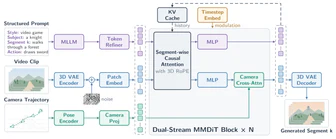
    Tencent's Huyuan has released Hy-Nomas' BF16 Diffusers format distilled weights on Hugging Face. This video world generation model supports multi-round free interaction through text instructions and camera control, generating the same world segment by segment.

    Why it matters: Officially releases distilled BF16 Diffusers weights and supporting benchmarks, allowing readers to judge the practical usage and threshold of multi-round interactive world generation.

  2. Simon Willison82

    Kimi K3.1 Pro goes live with Kimi API, promising to open source weights by November 4th.

    Kimi K3.1 Pro goes live with Kimi API today, weights not yet open, Moonshot promises to release complete model weights by November 4th, 2026. Pricing is $2.00/100 million tokens for input, $10/100 million tokens for output, the same as GPT-6.1 Sol, half of Claude Opus 5.5, also provides a Highspeed version that is 2-3 times faster and doubles the price.

Oct 22Thu
  1. The Decoder74

    Recursive releases its first model developed in collaboration with Eureka Machine

    AI startup Recursive has released its first language model, Flint. During the development process, the AI system named Eureka Machine participated in proposing ideas, building, testing, and planning subsequent experiments.

    Why it matters: Recursive publicly announces its first model developed with the assistance of an automated research system, allowing readers to observe how far AI-assisted R&D can go.

  2. Tencent Hunyuan · Hugging Face new models72

    Tencent Mixuan open-sourced the real-time simultaneous translation model Hy-SimulMT-30B-A3B

    Tencent Mixuan has released and open-sourced the real-time simultaneous translation model Hy-SimulMT-30B-A3B, supporting bidirectional Chinese-English voice-to-voice translation, capable of continuously outputting translated text and speech during speech, and supporting real-time voice cloning.

    Why it matters: The official provides a comparison of latency and quality for real-time simultaneous translation, and opens up multiple quantitative versions and inference deployment scripts, which can be used to evaluate the deployment cost.

  3. Hugging Face Blog78

    NVIDIA releases Kumo Relational relational foundation model, capable of prediction without training

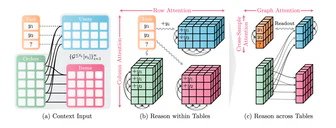
    NVIDIA releases pre-trained relational foundation model Kumo Relational, enabling direct prediction on enterprise databases without task-specific training, feature engineering, or table flattening. The model outperforms supervised relational deep learning and expert feature engineering gradient boosting trees on 41 tasks across 15 databases, achieving an MRR 8% higher than AutoGluon ensemble on the SAP SALT benchmark.

    Why it matters: The original provides a comparison result of pre-trained relation models on 41 tasks and an open-source entry, allowing readers to judge whether it can replace the existing XGBoost pipeline.

Oct 21Wed
  1. NVIDIA Blog62

    NVIDIA expands its family of open models to cover language, robotics, biology, and quantum computing

    NVIDIA expands its family of open models to cover language, robotics, biology, and quantum computing, including the new Nemotron 3.5 Super VL and Nemotron 3.5 Bolt.

    Why it matters: NVIDIA has rolled out open models across four lines: language, robotics, biology, and quantum, allowing readers to judge the coverage of its open-source ecosystem based on this.

  2. Hugging Face Blog66

    NVIDIA has released the Cosmos3-H-Dreams surgical generative simulation model.

    NVIDIA has released Cosmos3-H-Dreams, extending interactive generative simulation to clinical gallbladder removal scenarios, capable of generating surgical scenes in real-time based on instrument movements.

    Why it matters: The original text explains the migration path from desktop stitching to clinical cholecystectomy scenarios, as well as the trade-off between quality and delay between four-step and two-step distillation checkpoints.

Oct 14Wed
  1. Google AI Blog90

    Google has released the Gemini 4 Argon cutting-edge model.

    Google has released Gemini 4 Argon, opening it up to developers, businesses, and researchers, with API pricing at $2 per million input tokens and $10 per million output tokens, offering a 95% discount on cached input tokens.

    Why it matters: Official pricing, baseline rankings, and multiple internal implementation cases are provided, allowing judgment on its position in coding and research workflows.

Aug 12Wed
  1. Liquid AI Blog71

    Liquid AI releases edge-side visual language model LFM2.5-VL-3B

    Liquid AI releases LFM2.5-VL-3B, an upgraded 3.1B edge-side visual language model based on its predecessor LFM2-VL-3B, now available on Hugging Face and Playground

    Why it matters: The original text provides 28 benchmark items, edge-side, and GPU throughput data, which can be used to compare with similar-sized competitors to determine the actual position of this 3B visual model.