Skip to content
Live

Deployment & infra · Page 3

Oct 29Thu41–59
  1. QbitAI72

    Tenstorrent releases Tianhe 300 and Tongyang TY1200, on-site actual test targets NVIDIA H200 and Thor T5000.

    Tenstorrent releases cloud-based general-purpose GPU Tianhe 300 and edge product Tongyang TY1200 based on the Tianshu architecture, and compares them with NVIDIA H200, Jetson Thor T5000 on-site with random questions.

    Why it matters: On-site random tests, dual-track comparison of cloud and edge against NVIDIA, and providing reproducible test numbers and software stack implementation methods.


  2. QbitAI72

    Genspark releases Media Studio video Agent workbench

    Genspark releases video Agent workbench Media Studio, integrating over 70 model versions from more than 20 manufacturers, where large language models act as directors responsible for writing scripts and scheduling video, image, and audio models.

    Why it matters: The author conducted a complete test of the entire process from short drama to knowledge explanation video, allowing readers to judge the completeness and shortcomings of multi-model arrangement in real-world creation based on this.

  3. The Decoder80

    Google announced the integration of third-party AI agents into Android Studio at the Android Dev Summit and released a new Gemini API

    Google announced Android Studio Rabbit 2 at the Android Dev Summit, supporting more than 40 coding agents, including Claude, Codex, and Google Antigravity, to run within the IDE through the open-sourced Agent Client Protocol.

    Why it matters: Android Studio opens third-party intelligent agent access and provides corresponding changes at the CLI and MCP levels, which can be used to judge the changes in mobile development workflows.

  4. Artificial Analysis Articles72

    Artificial Analysis Reviews GitHub Copilot Fusion: Performance slightly lower than Opus 5.5, single-task cost halved

    Artificial Analysis tested GitHub Copilot CLI's Copilot Fusion highest settings in Coding Agent Index v2.0, with a single task cost of 5.59 USD, while Claude Code with Opus 5.5 (max) costs 11.42 USD, only 2 points lower in overall score.

    Why it matters: Artificial Analysis used Coding Agent Index to test Copilot Fusion, providing a cost and token comparison with Claude Code at the same performance level.

Oct 28Wed
  1. ITHome · AI72

    Days Smart Chip Tianya 300 runs its first prototype, claims single-card throughput reaches 1.05 times that of NVIDIA H200

    Days Technology Core first publicly demonstrates Tianji 300 general GPU prototype running on October 28th Shanghai media open day, claiming it as the first general GPU in China with actual performance reaching NVIDIA H200 level. Third-party actual testing converts single card overall throughput to 1.05 times that of H200, but specific testing methods, model loads, and workload conditions have not been announced.

    Why it matters: Days Technology Core first publicly demonstrates Tianji 300 prototype running, providing throughput comparison with H200 and super-node cost estimation, allowing observation of domestic GPU's ground progress.

  2. LangChain Blog71

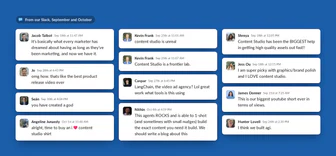
    How to Set Up Design Intelligent Agents with LangChain Content Studio

    LangChain introduces the internal design of its intelligent agent Content Studio, which can generate videos, social media graphics, UI diagrams, and presentations in Slack with a single prompt word, with all materials generated by code.

    Why it matters: LangChain has disclosed the complete setup process of its design agent Content Studio, including skills, wiki, inspection gates, and the division of labor between asynchronous sub-agents, which can serve as a reference for building vertical agents.

Oct 27Tue
  1. Google Developers Blog66

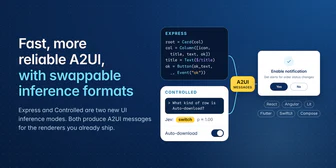
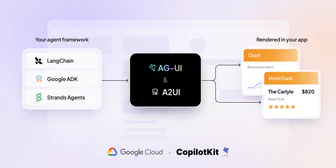
    Google launches replaceable reasoning format and A2UI Express for A2UI

    Google introduces a replaceable reasoning format for generative UI protocol A2UI, and adds default format A2UI Express, claiming it reduces latency up to 3 times and token usage up to 3 times less than Direct JSON for generating the same UI.

    Why it matters: The official provides an accessible way to replace reasoning formats with latency and token comparisons, facilitating engineering trade-offs for generative UI.

Oct 25Sun
  1. The Decoder71

    Anthropic claims that a single agent is superior to a multi-sub-agent architecture in terms of quality, cost, and latency.

    Anthropic indicates that a single context-loaded agent is often superior to a multi-sub-agent architecture in terms of quality, cost, and latency, and releases a migration toolkit to help teams evaluate whether to merge sub-agents. Anthropic claims that new models starting from Opus 4.5 can directly manage complex plans in a single loop, with a single-agent architecture running about twice as fast as a multi-agent solution in a single comparison.

    Why it matters: Anthropic based on enterprise deployment experience gives a judgment that a single agent is better than multiple sub-agents, and lists the applicable boundaries and migration paths.

  2. MarkTechPost80

    Microsoft Research open-sources Agensh: a multi-agent framework supporting 1024 agents

    Microsoft Research has open-sourced Agensh, a multi-agent framework without a central orchestrator, where each worker independently claims sub-tasks, shares discoveries, and merges code into the same Git repository.

    Why it matters: The original text provides scalability data for multi-agent frameworks without a central orchestrator on ProgramBench from 1 to 1024 agents, allowing for comparison with existing orchestration solutions.

  3. ITHome · AI75

    The open-source project GPU Unlock can release the hidden AI computing power of RTX 30 series graphics cards, with testing showing an increase of up to 60%

    The open-source project GPU Unlock, developed by GitHub user Zagitta, can remove the instruction emission rate limit of Ampere architecture consumer-grade GPUs in FP16/BF16 tensor core operations without modifying the driver or flashing VBIOS.

    Why it matters: The original text provides measured improvement data for multiple RTX 30 GPUs under GEMM and image generation workloads, also indicating limitations such as memory bandwidth.

  4. vLLM Blog60

    vLLM serves DeepSeek-V4.1-Flash on GB300 NVL72: performance matches DeepInfer and extends to the entire rack

    The vLLM team used P/D separation and Wide-EP to serve DeepSeek-V4.1-Flash on a single NVIDIA GB300 NVL72 rack, achieving 954K tokens/s per GPU and 196 tokens/s for single-user P90 on SemiAnalysis AgentX, which is 7.9 times the early single-node results.

    Why it matters: The vLLM team has released per-item optimization and measured data for serving DeepSeek-V4.1-Flash on GB300 NVL72, which can be compared with DeepSeek's own engine DeepInfer.

Oct 24Sat
  1. vLLM Blog62

    vLLM provides an in-depth explanation of the optimization of PCP, DCP, and Hybrid HiSparse for GLM-5.3 on 16 H200s

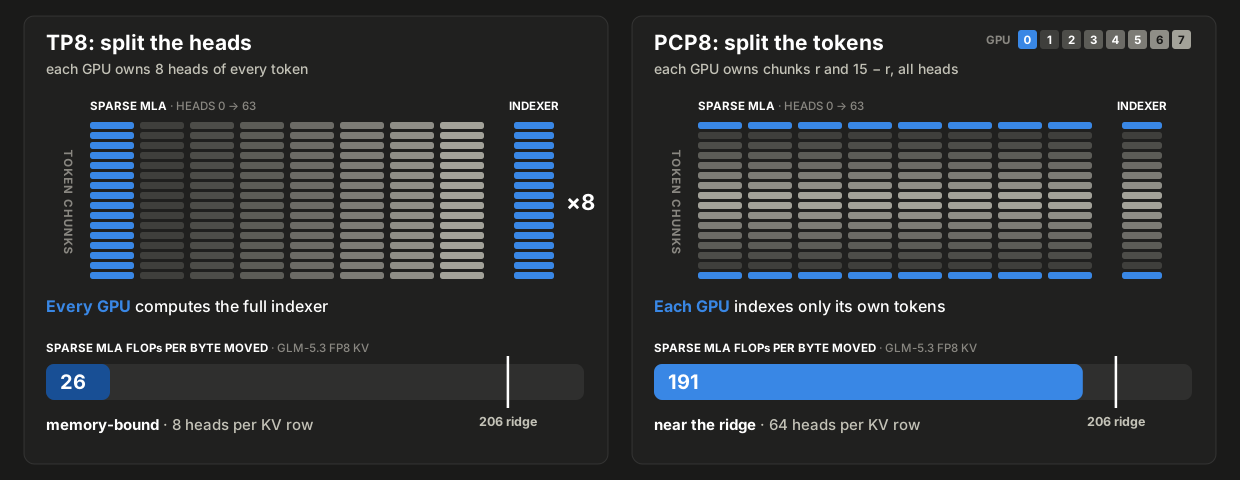
    vLLM team releases the second part of GLM-5.3 optimization, deploying on 16 H200s with 1 pre-filled node and 1 decoding node, using PCP to split pre-fill by token and DCP to split KV cache by token, allowing 1M context to fit into the pre-fill node

    Why it matters: The vLLM team has dissected how PCP, DCP, and Hybrid HiSparse can be combined on 16 H200s, allowing readers to understand the memory and pre-fetch bottlenecks of long-context deployment.

  2. Google Research62

    Google Research is advancing tuberculosis screening implementation with foundational models.

    Google Research introduced the path of its tuberculosis screening AI from research to clinical use at IDWeek 2026: publishing a benchmark in Radiology in 2019, completing multi-center prospective validation in NEJM AI in 2024, and then converting it into a clinical tool certified by CE MDR Class IIb through Nexus AI.

    Why it matters: Google Research outlined the complete path from imaging benchmark to CE certification tool to open-source MedGemma, allowing readers to understand the stages medical AI needs to cross to move from papers to clinical use.

Oct 23Fri
  1. MarkTechPost71

    Google Cloud has launched Agent Compute Engine, allocating an independent microVM for each AI agent.

    Google Cloud announced Agent Compute Engine at AGNTCon + MCPCon, allocating a hardware-isolated microVM for each AI agent's session, with no credentials stored within the sandbox; a customer preview program is set to open in the coming months.

    Why it matters: The text disassembles the design of each intelligent agent's exclusive microVM and zero credential sandbox, and provides a comparison of isolation and idle processing with AWS, Azure, and E2B.

  2. Databricks Blog60

    Databricks Talks AI Billing: How to Reduce the Unit Cost of Coding Agents by 90%

    Databricks executive Patrick reviews the process where the cost of AI coding agents increased exponentially after the company fully adopted them, and then reduced the unit cost by up to 90% by controlling the layer. He mentions that shifting traffic to cheaper new models contributed to more than 50% of the reduction, and Smart Router reduced the average task cost by more than 30% while maintaining near the quality of the most expensive model. This internal solution was later productized as Unity Gateway, which is now used by thousands of customers.

    Why it matters: Databricks executive reviews the process of its own AI coding costs from out of control to reducing the unit cost by 90%, providing migratable practices for gateways, routing, and self-built evaluations.

Oct 22Thu
  1. NVIDIA Newsroom76

    NVIDIA releases OpenShell reference architecture for enterprise security agents

    NVIDIA releases the OpenShell reference architecture, based on the OpenShell secure runtime software, integrating Vera Rubin inference infrastructure, Vera CPU runtime intelligence framework, and the Sentry security framework on BlueField-4 DPU, and can be extended to the edge via RTX Spark, DGX Spark, and DGX Station.

    Why it matters: The original text provides the full-stack architecture composition for secure operation of enterprise agents and the first batch of partners, allowing readers to judge the implementation form of enterprise-level agent governance.

Oct 21Wed
  1. OpenAI News62

    OpenAI models will go live on Google Cloud

    OpenAI Collaborates with Google Cloud, Integrating OpenAI Frontline Models and Codex Workflows into Gemini's Model Garden and Offering Through Google Cloud Marketplace

    Why it matters: OpenAI's cutting-edge models and Codex workflow enter Google Cloud's Model Garden, providing a new entry point for cross-cloud distribution for readers to explore.

  2. NVIDIA Blog72

    Google Cloud and NVIDIA announce Vera Rubin infrastructure now available

    Google Cloud and NVIDIA announce A5X instances based on NVIDIA Vera Rubin now available, opening next month and planned to expand to Europe.

    Why it matters: The original text provides the availability time of A5X instances, customer testing, and confidential computing support, allowing readers to judge the implementation rhythm of large-scale reinforcement learning infrastructure.

  3. NVIDIA Blog67

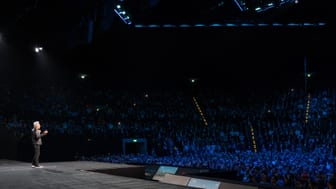
    NVIDIA GTC Berlin 2026: Huang Renxun announces multiple updates including DSX POD, OpenShell, and Nemotron.

    NVIDIA CEO Huang Renxun announced multiple updates at the GTC Berlin 2026 keynote speech, including the Vera Rubin AI factory reference design DSX POD delivered in modular container format, reducing on-site deployment time from six months to 14 days.

    Why it matters: Huang Renxun's keynote speech at GTC Berlin revealed the latest developments in three product lines: AI factories, secure runtime for agents, and open-source models, providing insights into NVIDIA's focus in Europe.