Skip to content
Live

Deployment & infra · Page 2

Nov 7Sat21–40
  1. Cursor Changelog60

    Cursor online with real-time voice calls to agents

    Cursor launches Voice Chat, allowing users to have real-time voice calls with agents, dictate modification requests, ask what the agent is doing, and receive progress updates.

    Why it matters: Officially, it explains which platforms the voice call is available on and how to divide tasks with coding agents, allowing readers to judge which collaboration scenarios it suits.


  2. LangChain Blog72

    LangChain introduces asynchronous sub-agents for Deep Agents

    LangChain introduces asynchronous sub-agents in Deep Agents, where a resident orchestrating agent interfaces with users, and the sub-agents execute long tasks in the background in parallel and report results upon completion.

    Why it matters: The original text provides five management tools and notification mechanisms for asynchronous sub-agents, which can be used to determine how to set up the workflow for parallel long tasks.

Nov 6Fri
  1. vLLM Blog72

    REINFORCE Zero: Aligned kernel allows asynchronous RL to train stably under lag 64.

    NVIDIA Research and Inferact's REINFORCE Zero proposes to first align rollout with training kernel, then use unclipped token-level importance sampling to correct weight lag, achieving a training step throughput 2.40 times that of synchronous training under 16 GPUs and 12K updates.

    Why it matters: The paper breaks down the gap between asynchronous RL's rollout and training into two items: weight lag and kernel inconsistency, and proposes an alignment-free, no-trimming importance sampling method after alignment.

  2. Cursor Changelog78

    Cursor goes live with Live Apps, allowing building and sharing accessible applications within the editor

    Cursor introduces the Live Apps feature, where users describe their needs, and the cloud-based intelligence builds a web application, starts a Postgres database on demand, integrates with Cursor SSO authentication, and completes hosted deployment, generating a shareable link after publication.

    Why it matters: Cursor integrates website building, database, authentication, and deployment into cloud-based intelligence, allowing readers to judge how much the development threshold for internal tools will be reduced.

  3. Mistral AI75

    Mistral releases Mistral Large 4 (Le Chonk) and expands Mistral Studio platform

    Mistral releases Mistral Large 4 (codename Le Chonk), featuring coding, defensive cybersecurity, and complex document reasoning, while expanding the enterprise platform Mistral Studio with new capabilities for hosted agents, applications, workflows, as well as enterprise context, agent observability, and evaluation features.

    Why it matters: The original text provides three types of capabilities (hosted agents, workflows, applications) and deployment options, allowing readers to judge the implementation methods of enterprise agents accordingly.

Nov 5Thu
  1. vLLM Blog71

    Buoyant Open Sources Kinference: An Inference Control Plane for vLLM and Kubernetes

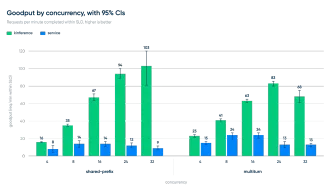
    Buoyant releases open-source project Kinference, as an inference control plane for vLLM and Kubernetes, providing token rate limiting, tenant usage and cost tracking, KV cache-aware load balancing, and inference strategies.

    Why it matters: The original text provides benchmark comparisons and YAML strategy examples for KV cache-aware load balancing, which can be used to judge how to design the routing layer of the reasoning platform.

  2. Databricks Blog60

    Apache Spark 4.3 was released, and Databricks Runtime 19 is now available.

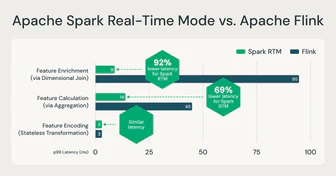
    Apache Spark 4.3 was released and is available in Databricks Runtime 19, with the Real-Time Mode now adding stateful processing, supporting streaming aggregation, dropDuplicates, and transformWithState.

    Why it matters: The original text provides three benchmark latency data for real-time stateful processing and the changes in the quarterly release rhythm, allowing readers to judge the trade-offs of the stream processing architecture.

  3. AWS Machine Learning Blog60

    The four-layer context engineering of production-level AI agents: The practice of Deep Insight in runnable code.

    The AWS team, referencing the open-source multi-agent data analysis solution Deep Insight, has broken down the context engineering of production-level AI agents into four layers: multi-agent architecture isolation of context, using prompts to limit output, externalizing heavy content to the file system, and using a validation agent with a fallback mechanism.

    Why it matters: The AWS team has broken down the context engineering into four layers and provided specific code and token-saving data from the open-source reference implementation, which can be directly used to modify your own Agent.

  4. vLLM Blog75

    vLLM provides Day-0 support for Kimi K3.1 Pro

    vLLM announces Day-0 support for the open-sourced Kimi K3.1 Pro on NVIDIA, AMD, Google TPU, and Alibaba's Zhenwu PPU, a 2.8T parameter (104B activation) multimodal MoE model with 1M context tokens.

    Why it matters: The vLLM team details the engineering trade-offs for Day-0 adaptation of Kimi K3.1 Pro, including specific numbers for sparse attention, KV cache packing, and DCP.

Nov 4Wed
  1. Together AI Blog75

    Together AI has released Together Compiler, continuously compiling and optimizing AI inference.

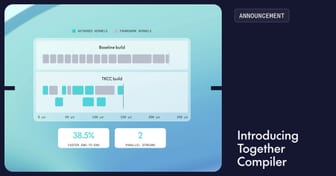
    Together AI has released Together Compiler (TKCC), which uses high-throughput intelligent agents to continuously generate optimization solutions for inference engines, achieving 1.3-3x TPS improvements on cutting-edge open-source models like Kimi K3, GLM 5.3, MiniMax M3.1-Flash, and DeepSeek v4.1-Flash within 24 hours.

    Why it matters: The original text provides a comparison of throughput improvements and engine startup time on multiple cutting-edge models, allowing for an assessment of changes in the inference optimization process.

  2. OpenHands Blog71

    OpenHands and Snowflake introduce a workflow for training models using their own Agent harness

    OpenHands partnered with Snowflake AI Research, allowing developers to directly use the existing OpenHands Agent harness for reinforcement learning and training without rebuilding the harness in the training framework.

    Why it matters: The original text provides specific configuration methods and code locations for directly using the existing Agent harness for RL training, allowing readers to judge whether training and deployment can share a single harness.

Oct 31Sat
  1. MarkTechPost72

    Vercel Labs has open-sourced agent-desktop, enabling agents to operate desktop applications through the system's accessibility tree.

    Vercel Labs has released an open-source CLI tool, agent-desktop, which allows AI agents to read and operate native applications on macOS, Windows, and Linux by accessing the operating system's accessibility tree, rather than relying on screenshots.

    Why it matters: The original text compared the differences between agent-desktop based on accessibility trees and screenshot-based computer use in terms of token consumption and cursor usage, and provided self-reported data.

  2. MarkTechPost71

    Microsoft and UC Berkeley release TokenEconomizer plugin, coding agent costs reduced by up to 30.9%

    Microsoft Research and UC Berkeley's research team released the open-source cost controller TokenEconomizer, which can reduce the cost of encoding agents without changing model weights and agent code.

    Why it matters: The original text provides the cost reduction of the plugin on 277 SWE-Bench tasks and the change in Pass@1, which can be used to judge its impact on the coding agent workflow.

  3. QbitAI78

    FaceWall AI's ForgeKernel live stream generated an operator from scratch, 9.8% faster than DeepSeek FlashMLA and announced open-source.

    FaceWall AI's operator generation system ForgeKernel generated the DeepSeek-V4.1 FlashMLA Prefill operator from scratch on an NVIDIA B200, with a final time of 472 microseconds, 9.8% faster than FlashMLA's 518 microseconds. The entire process took 22.5 hours, 42 iterations, and 32 versions, using 1 B200 and 22 GPU hours.

    Why it matters: The original provided live stream iteration data and Ascend 3 benchmark results can be used to judge the path of operator generation shifting from manual tuning to intelligent agent self-evolution.

Oct 30Fri
  1. Factory News78

    Factory releases Droid 1.0: an intelligent agent harness for enterprise development

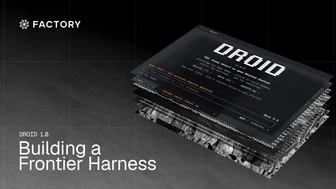
    Factory releases Droid 1.0, a major update to its intelligent agent harness, with programmatic tool calling enabled by default (Script mode). The model can execute hundreds of tool calls within a single request in a sandbox, executing JavaScript.

    Why it matters: The original text provides cost and time data for Droid 1.0 compared to Codex, Claude Code, and other harnesses on Terminal-Bench 4, which can be used to determine the selection of agent harnesses.

  2. LangChain Blog67

    LangChain adds browser capabilities to Managed Deep Agents

    LangChain adds browser capabilities to Managed Deep Agents, allowing developers to export browser configurations through define_browser, enabling managed agents to read page rendering results and perform click operations.

    Why it matters: The original text provides the integration method for browser tools, handoff mechanisms, and WebVoyager experimental data, which can be used to determine how managed agents can cover web tasks without APIs.

  3. LangChain Blog67

    LangChain releases Managed Deep Agents v0.10, adding browser usage and asynchronous sub-agents

    LangChain releases Managed Deep Agents v0.10, adding browser usage capabilities to let agents operate websites without APIs, and supporting asynchronous sub-agents to run long tasks in the background.

    Why it matters: The original text provides specific configuration methods and handover processes for browser takeover and asynchronous sub-agents, allowing judgment on the division of labor for agents handling websites without APIs and long tasks.

  4. Meta Engineering66

    Meta rolls out JiTTesting to production: Use LLM to generate tests and catch bugs before code merge

    Meta announced that Catching JiTTests has been put into internal production, using LLM to automatically generate executable tests for diffs to be merged, exposing behavioral differences before the code is landed

    Why it matters: Meta has disclosed the production deployment details and quantitative results of JiTTests, available for evaluating the implementation of LLM-generated tests in ultra-large-scale codebases.

Oct 29Thu
  1. Hugging Face Blog85

    Mistral Large 4 (Le Chonk) released on Hugging Face

    Mistral releases multimodal MoE model Mistral Large 4 (Le Chonk), with approximately 1T total parameters, 49B activation parameters, a context window of 1M tokens, offering two official versions FP8 and NVFP4, as well as GGUF made by Unsloth and llama.cpp teams.

    Why it matters: The original text provides specific scores for the 1T total parameter, 49B activation multimodal MoE model on cybersecurity and coding benchmarks, along with measured throughput for local and endpoint deployment.

  2. Mistral AI82

    Mistral releases open-source model Mistral Large 4 (Le Chonk) with trillion parameters

    Mistral releases open-weight version of its flagship trillion-parameter native multimodal model Mistral Large 4 (Le Chonk), which has been in public preview for three weeks.

    Why it matters: The official provides data on the encoding, security, and inference efficiency of the trillion-parameter open-source model, as well as weight downloads and self-hosting paths.