




Skip to content
Live

Fields

AI coding

Everything about AI coding: coding assistants, Vibe Coding, code model evaluation, and workflow transformation.

21featured stories
17this month
12 Nov, 02:58Updated
Active this month

Major events

  1. Grok Build encoding agents leak a large amount of confidential information, some of which belongs to SpaceXSI. 4 sources

    Grok Build leaked thousands of user data, including some confidential information of SpaceXSI itself, such as business plans, advertising proposals, employee information, etc. Security company Claroc's research shows that the leakage path was users sharing links to the app, due to design flaws allowing anyone to enumerate thousands of items. Among the 24 applications built by SpaceXSI, there are sensitive data such as confidential onboarding plans and sales area maps.

  2. Meta acquires AI coding startup Conductor to lock in developers 4 sources

    Meta acquires AI coding startup Conductor, which allows developers to control multiple AI coding agents simultaneously, aiming to strengthen Meta's AI developer products. Conductor CEO Charlie Holtz confirmed the transaction in a blog post but did not disclose the price.

  3. French Mistral releases 'Le Chonk,' which has strong coding capabilities but still lags behind Chinese models. 3 sources

    Mistral has released its largest model, Mistral Large 4, which leads open-source competitors in coding tasks but still lags behind Chinese models in overall rankings. The model has approximately 100 billion parameters, with 52 billion parameters per step, requiring 8 Nvidia B300 GPUs to run.

  4. Anthropic stops coding interviews: 'Hunger beats lifetime employment' 3 sources

    Anthropic has stopped traditional coding interviews for managers, believing Claude has performed better in React and assembly language tests, and points out that the most successful builders do not depend on these test performances. It suggests that junior engineers should prioritize business impact rather than backlog tasks, propose radical ideas, and build prototypes over the weekend, focusing on a good idea and leveraging fresh perspectives.

  5. Alibaba and other teams released Co-Design Bench: coding intelligence agents only fully solve 26.4% of real tasks. 2 sources

    Researchers from Alibaba and several Asian universities used real user change requests to build the coding intelligence agent benchmark Co-Design Bench. Among the ten tested models, the best-performing GPT-6 Astra only meets about 70% of the task requirements, but only 26.4% of the tasks are completely correct.

  6. Recursive has released a laptop-grade coding model called Flint, claiming it is mostly built with AI. 2 sources

    Recursive releases its first model, Flint, a free coding model that can run on laptops, with almost the entire development process driven by AI. Recursive's automated research system, Eureka Machine, participated in almost every development step of Flint, enabling the team to complete the model construction in less than four months.

Latest stories

Nov 12Thu1–20
Nov 11Wed
  1. Google DeepMind87

    Google DeepMind releases the Gemini 4 Carbon cutting-edge model

    Google DeepMind has opened Gemini 4 Carbon to developers, enterprises, scientists, and consumers, claiming it has reached cutting-edge levels in network security capabilities and long-range intelligent agent workflows.

    Why it matters: The official provides the positioning division of roles between Carbon and Argon, multiple benchmark rankings, and cost comparisons per task to help determine when to use a heavier model.

Nov 10Tue
  1. Claude · YouTube75

    Anthropic released Claude Fable 5.2

    Anthropic releases Claude Fable 5.2, designed for the most challenging technical challenges, with improvements in coding, reasoning, and vision, suitable for the most ambitious open-ended technical work. The official recommendation is to use Opus 5.5 for most coding and knowledge tasks, and Fable 5.2 is now available in the Pro, Max, Team, and Enterprise packages.

    Why it matters: The official statement explains the positioning and applicable scenarios of Fable 5.2, and provides a choice suggestion between Opus 5.5, making it easier to decide which model to use.

Nov 8Sun
  1. The Decoder71

    Alibaba and other teams released Co-Design Bench: coding intelligence agents only fully solve 26.4% of real tasks.

    Researchers from Alibaba and several Asian universities used real user change requests to build the coding intelligence agent benchmark Co-Design Bench. Among the ten tested models, the best-performing GPT-6 Astra only meets about 70% of the task requirements, but only 26.4% of the tasks are completely correct.

    Why it matters: A benchmark display composed of real user requests shows that the strongest model can only fully solve about one-quarter of the tasks, and the score difference for the same model in different environments is nearly 20 percentage points.

  2. Hacker News · 300+71

    MaxxBench release: Model scores show significant divergence after rewriting DeepSWE tasks

    The MaxxBench team made minor changes to 89 DeepSWE tasks (median reference patch added only 17 lines, 3.5%), re-evaluating 15 model configurations, finding the difference between the highest and lowest scores expanded from 20.9 percentage points in DeepSWE to 48.3 percentage points.

    Why it matters: By rewriting the instructions and starting code for 89 DeepSWE tasks, it demonstrates the huge gap in model scores between familiar benchmarks and tasks after modification.

Nov 4Wed
  1. OpenAI News60

    OpenAI announced the acquisition of Pierre Computer Company.

    OpenAI announced its acquisition of Pierre Computer Company to expand the tool capabilities of Codex in code construction, understanding, and review. The original text did not disclose the transaction amount, timeline, or specific arrangements for the team and products after the acquisition.

    Why it matters: Official disclosure of the acquisition move, readers can understand Codex's reinforcement direction in code construction and review tools.

  2. The Decoder74

    OpenAI claims GPT-6 Astra designed a hardware device from scratch in less than a week.

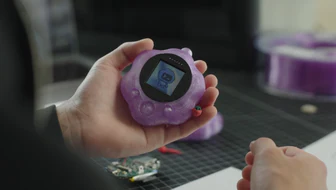
    OpenAI states its hardware team used GPT-6 Astra to design a device that can communicate with Codex encoding agents as a side project, completed in less than a week. Astra handled all aspects including casing design, PCB layout with component selection and routing, firmware, and user interface. Contract manufacturers produced small batches of prototypes in less than a month, but due to Astra not always considering manufacturing constraints, tolerances, and assembly details, several rounds of modifications were required.

    Why it matters: OpenAI reveals the end-to-end hardware design process for GPT-6 Astra, also pointing out its shortcomings in manufacturing constraints.

Oct 31Sat
  1. MarkTechPost71

    Microsoft and UC Berkeley release TokenEconomizer plugin, coding agent costs reduced by up to 30.9%

    Microsoft Research and UC Berkeley's research team released the open-source cost controller TokenEconomizer, which can reduce the cost of encoding agents without changing model weights and agent code.

    Why it matters: The original text provides the cost reduction of the plugin on 277 SWE-Bench tasks and the change in Pass@1, which can be used to judge its impact on the coding agent workflow.

Oct 30Fri
  1. Factory News78

    Factory releases Droid 1.0: an intelligent agent harness for enterprise development

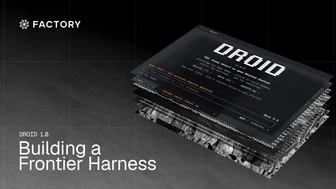
    Factory releases Droid 1.0, a major update to its intelligent agent harness, with programmatic tool calling enabled by default (Script mode). The model can execute hundreds of tool calls within a single request in a sandbox, executing JavaScript.

    Why it matters: The original text provides cost and time data for Droid 1.0 compared to Codex, Claude Code, and other harnesses on Terminal-Bench 4, which can be used to determine the selection of agent harnesses.

  2. Meta Engineering66

    Meta rolls out JiTTesting to production: Use LLM to generate tests and catch bugs before code merge

    Meta announced that Catching JiTTests has been put into internal production, using LLM to automatically generate executable tests for diffs to be merged, exposing behavioral differences before the code is landed

    Why it matters: Meta has disclosed the production deployment details and quantitative results of JiTTests, available for evaluating the implementation of LLM-generated tests in ultra-large-scale codebases.

Oct 29Thu
  1. Mistral AI82

    Mistral releases open-source model Mistral Large 4 (Le Chonk) with trillion parameters

    Mistral releases open-weight version of its flagship trillion-parameter native multimodal model Mistral Large 4 (Le Chonk), which has been in public preview for three weeks.

    Why it matters: The official provides data on the encoding, security, and inference efficiency of the trillion-parameter open-source model, as well as weight downloads and self-hosting paths.

  2. Artificial Analysis Articles72

    Artificial Analysis Reviews GitHub Copilot Fusion: Performance slightly lower than Opus 5.5, single-task cost halved

    Artificial Analysis tested GitHub Copilot CLI's Copilot Fusion highest settings in Coding Agent Index v2.0, with a single task cost of 5.59 USD, while Claude Code with Opus 5.5 (max) costs 11.42 USD, only 2 points lower in overall score.

    Why it matters: Artificial Analysis used Coding Agent Index to test Copilot Fusion, providing a cost and token comparison with Claude Code at the same performance level.

Oct 24Sat
Oct 23Fri
  1. The Decoder82

    Anthropic enables Claude to automatically generate formal safety proofs for code.

    Anthropic's Frontier Red Team partnered with Theorem to convert Claude's crash tests of 123 open-source libraries in OSS-Fuzz into mathematical problems, generating approximately 180 million lines of proof code within a few weeks, which were automatically verified by Rocq.

    Why it matters: Anthropic uses Claude to automatically generate formal proofs for the OSS-Fuzz library, providing computational cost and applicable boundaries, allowing readers to judge the feasibility of AI-verified code.

  2. Anthropic Research82

    Anthropic research: LLMs make large-scale formal software verification feasible.

    Anthropic partnered with Theorem to complete formal verification of the RISC-V assembly layer for 239 entry points in 123 OSS-Fuzz open-source libraries using Claude. The verification proves that these programs will not crash with any input less than 64 MB, with the proof code consisting of about 180 million lines of Rocq.

    Why it matters: Anthropic used Claude to formally prove the RISC-V assembly layer for 123 open-source libraries and provided cost and reuse data, which can be used to determine whether this method can enter the daily development process.

Oct 22Thu
  1. The Decoder74

    Recursive releases its first model developed in collaboration with Eureka Machine

    AI startup Recursive has released its first language model, Flint. During the development process, the AI system named Eureka Machine participated in proposing ideas, building, testing, and planning subsequent experiments.

    Why it matters: Recursive publicly announces its first model developed with the assistance of an automated research system, allowing readers to observe how far AI-assisted R&D can go.

Jun 16Tue
Mar 23Mon
  1. Anthropic Research78

    Vibe physics: Harvard professor uses Claude Opus 4.5 to complete a high-energy physics thesis in two weeks

    Harvard physics professor Matthew Schwartz guides Claude Opus 4.5 to perform NLL re-sum calculation of Sudakov shoulder in C-parameter, producing a high-energy theoretical physics thesis containing a new factorization theorem within two weeks, while similar work usually takes a year.

    Why it matters: Harvard physics professor uses two weeks, 110 drafts, and 36M tokens to let Claude complete a high-energy physics thesis, listing point by point what the model can and cannot do.

Jan 14Wed
  1. Anthropic Research67

    Anthropic uses Claude with property testing to find bugs in the Python ecosystem

    Anthropic's research team developed an agent based on Claude Code custom commands, which infers the properties that code should satisfy by reading type annotations, docstrings, and comments, and then uses Hypothesis to write property tests, discovering hundreds of potential bugs in over 100 popular Python packages such as NumPy, SciPy, and Pandas.

    Why it matters: Anthropic uses Claude agents to automatically write property tests to find bugs in packages like NumPy, SciPy, Pandas, and provides the efficiency after manual review and merged fixes