Why it matters: The original provides pricing, four tiers of thinking depth, and Terminal-Bench comparative data, allowing judgment on the trade-offs between cost and speed in daily coding scenarios.

#Coding
The day's essential AI stories, from the labs, startups and researchers shaping it.
ITHome · AIFeaturedSame story · 4 outlets8787Same story · 4 outlets
The DecoderFeaturedSame story · 2 outlets8585Google DeepMind releases AlphaProof Code, a four-week verification of the Signal encryption core
Google DeepMind releases AlphaProof Code, an AI-powered mathematical proof software that meets security specifications, and completes the verification work usually requiring several years on the Signal encryption protocol in just four weeks.
Claude · YouTubeFeaturedSame story · 5 outlets7575Anthropic released Claude Fable 5.2
Anthropic releases Claude Fable 5.2, designed for the most challenging technical challenges, with improvements in coding, reasoning, and vision, suitable for the most ambitious open-ended technical work. The official recommendation is to use Opus 5.5 for most coding and knowledge tasks, and Fable 5.2 is now available in the Pro, Max, Team, and Enterprise packages.
Same story · 5 outlets- Claude · YouTube · Anthropic released Claude Fable 5.2First
- TechCrunch · AI · Anthropic releases Mythos 5.2 and Fable 5.2 models, with Fable input price reduced to $8 per million tokens
- AWS Machine Learning Blog · Anthropic launched Claude Fable 5.2 and Claude Mythos 5.2 on AWS
How the accounts differ:TechCrunch states the input price of Fable is reduced to $8 per million tokens; others do not mention the price.
Why it matters: The official statement explains the positioning and applicable scenarios of Fable 5.2, and provides a choice suggestion between Opus 5.5, making it easier to decide which model to use.
Hacker News · 300+Featured7171MaxxBench release: Model scores show significant divergence after rewriting DeepSWE tasks
The MaxxBench team made minor changes to 89 DeepSWE tasks (median reference patch added only 17 lines, 3.5%), re-evaluating 15 model configurations, finding the difference between the highest and lowest scores expanded from 20.9 percentage points in DeepSWE to 48.3 percentage points.
Why it matters: By rewriting the instructions and starting code for 89 DeepSWE tasks, it demonstrates the huge gap in model scores between familiar benchmarks and tasks after modification.
Hacker News · 300+Featured7070Claude Code's Don't Ask Again option leads to passwords leaking into 1,122 public GitHub files
Apiiro's research indicates that Claude Code's Don't Ask Again option makes passwords and other sensitive information appear in 1,122 public GitHub files. The article received a score of 582 and 394 comments on Hacker News.
OpenAI NewsFeatured6060OpenAI announced the acquisition of Pierre Computer Company.
OpenAI announced its acquisition of Pierre Computer Company to expand the tool capabilities of Codex in code construction, understanding, and review. The original text did not disclose the transaction amount, timeline, or specific arrangements for the team and products after the acquisition.
Why it matters: Official disclosure of the acquisition move, readers can understand Codex's reinforcement direction in code construction and review tools.
The DecoderFeatured7474OpenAI claims GPT-6 Astra designed a hardware device from scratch in less than a week.
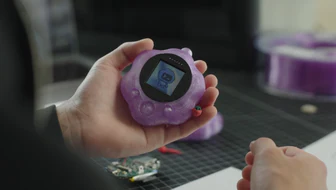
OpenAI states its hardware team used GPT-6 Astra to design a device that can communicate with Codex encoding agents as a side project, completed in less than a week. Astra handled all aspects including casing design, PCB layout with component selection and routing, firmware, and user interface. Contract manufacturers produced small batches of prototypes in less than a month, but due to Astra not always considering manufacturing constraints, tolerances, and assembly details, several rounds of modifications were required.
Why it matters: OpenAI reveals the end-to-end hardware design process for GPT-6 Astra, also pointing out its shortcomings in manufacturing constraints.
ITHome · AIFeatured7272Meituan LongCat releases LongCat-2.5 native multimodal model, 1.6T parameters targeted at long-range intelligent agent tasks
Meituan Longma has released the native multimodal model LongCat-2.5 for long-range intelligent agent tasks, with a total parameter count of 1.6 trillion, activating about 48 billion parameters per token, enhancing native visual understanding and intelligent agent programming capabilities based on LongCat-2.0.
Why it matters: The original text provides 1.6T parameters and activation scale, and explains how long-range reinforcement learning is used for complex codebase and project construction tasks.
The DecoderFeaturedSame story · 2 outlets7171Alibaba and other teams released Co-Design Bench: coding intelligence agents only fully solve 26.4% of real tasks.
Researchers from Alibaba and several Asian universities used real user change requests to build the coding intelligence agent benchmark Co-Design Bench. Among the ten tested models, the best-performing GPT-6 Astra only meets about 70% of the task requirements, but only 26.4% of the tasks are completely correct.
Same story · 2 outletsWhy it matters: A benchmark display composed of real user requests shows that the strongest model can only fully solve about one-quarter of the tasks, and the score difference for the same model in different environments is nearly 20 percentage points.
MarkTechPostFeatured7171Microsoft and UC Berkeley release TokenEconomizer plugin, coding agent costs reduced by up to 30.9%
Microsoft Research and UC Berkeley's research team released the open-source cost controller TokenEconomizer, which can reduce the cost of encoding agents without changing model weights and agent code.
Why it matters: The original text provides the cost reduction of the plugin on 277 SWE-Bench tasks and the change in Pass@1, which can be used to judge its impact on the coding agent workflow.
Factory NewsFeaturedSame story · 2 outlets7878Factory releases Droid 1.0: an intelligent agent harness for enterprise development
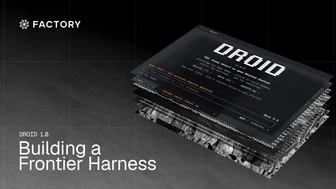
Factory releases Droid 1.0, a major update to its intelligent agent harness, with programmatic tool calling enabled by default (Script mode). The model can execute hundreds of tool calls within a single request in a sandbox, executing JavaScript.
Same story · 2 outletsHow the accounts differ:Factory News states the model can execute hundreds of tool calls in one request; MarkTechPost mentions the model request drives hundreds of tool calls.
Why it matters: The original text provides cost and time data for Droid 1.0 compared to Codex, Claude Code, and other harnesses on Terminal-Bench 4, which can be used to determine the selection of agent harnesses.
Meta EngineeringFeatured6666Meta rolls out JiTTesting to production: Use LLM to generate tests and catch bugs before code merge
Meta announced that Catching JiTTests has been put into internal production, using LLM to automatically generate executable tests for diffs to be merged, exposing behavioral differences before the code is landed
Why it matters: Meta has disclosed the production deployment details and quantitative results of JiTTests, available for evaluating the implementation of LLM-generated tests in ultra-large-scale codebases.
Mistral AIFeatured8282Mistral releases open-source model Mistral Large 4 (Le Chonk) with trillion parameters
Mistral releases open-weight version of its flagship trillion-parameter native multimodal model Mistral Large 4 (Le Chonk), which has been in public preview for three weeks.
Why it matters: The official provides data on the encoding, security, and inference efficiency of the trillion-parameter open-source model, as well as weight downloads and self-hosting paths.
Google DeepMindFeaturedSame story · 5 outlets8787Google DeepMind releases the Gemini 4 Carbon cutting-edge model
Google DeepMind has opened Gemini 4 Carbon to developers, enterprises, scientists, and consumers, claiming it has reached cutting-edge levels in network security capabilities and long-range intelligent agent workflows.
Same story · 5 outlets- Artificial Analysis Articles · Gemini 4 Carbon topped the Artificial Analysis Intelligence Index v5First
- Google DeepMind · Google DeepMind releases the Gemini 4 Carbon cutting-edge model
- MarkTechPost · Google DeepMind released Gemini 4 Carbon, emphasizing network security defense and coding.
- Ars Technica · AI · Google has released Gemini 4 Carbon: a cutting-edge AI model that cannot be used immediately.
Why it matters: The official provides the positioning division of roles between Carbon and Argon, multiple benchmark rankings, and cost comparisons per task to help determine when to use a heavier model.
Artificial Analysis ArticlesFeatured7272Artificial Analysis Reviews GitHub Copilot Fusion: Performance slightly lower than Opus 5.5, single-task cost halved
Artificial Analysis tested GitHub Copilot CLI's Copilot Fusion highest settings in Coding Agent Index v2.0, with a single task cost of 5.59 USD, while Claude Code with Opus 5.5 (max) costs 11.42 USD, only 2 points lower in overall score.
Why it matters: Artificial Analysis used Coding Agent Index to test Copilot Fusion, providing a cost and token comparison with Claude Code at the same performance level.
The DecoderFeatured8585Why it matters: The article uses third-party indices and multiple benchmarks to present the specific extent to which the gap between open-source weight models and closed-source cutting-edge models has narrowed.
MarkTechPostFeatured8383Moonshot AI has released Kimi K3.1 Pro: a 2.8T total parameter, 104B activated MoE model that supports a context length of 1M.
Moonshot AI has released the first model of the K3.1 series, Kimi K3.1 Pro, which adopts a MoE architecture with a total parameter count of 2.8T and an activation parameter count of 104B, supporting a context length of 1M tokens. It has been launched on Kimi.ai, Kimi Work, Kimi Code, and Kimi API. The API pricing is $2 per million tokens for input and $10 for output, lower than K3's $3 and $15.
Why it matters: The original text lists the self-reported data of K3.1 Pro in terms of terminal encoding, scientific terminal tasks, and hallucination rate, and provides API pricing and open weight time.
The DecoderFeatured8282Anthropic enables Claude to automatically generate formal safety proofs for code.
Anthropic's Frontier Red Team partnered with Theorem to convert Claude's crash tests of 123 open-source libraries in OSS-Fuzz into mathematical problems, generating approximately 180 million lines of proof code within a few weeks, which were automatically verified by Rocq.
Why it matters: Anthropic uses Claude to automatically generate formal proofs for the OSS-Fuzz library, providing computational cost and applicable boundaries, allowing readers to judge the feasibility of AI-verified code.
Anthropic ResearchFeatured8282Anthropic research: LLMs make large-scale formal software verification feasible.
Anthropic partnered with Theorem to complete formal verification of the RISC-V assembly layer for 239 entry points in 123 OSS-Fuzz open-source libraries using Claude. The verification proves that these programs will not crash with any input less than 64 MB, with the proof code consisting of about 180 million lines of Rocq.
Why it matters: Anthropic used Claude to formally prove the RISC-V assembly layer for 123 open-source libraries and provided cost and reuse data, which can be used to determine whether this method can enter the daily development process.
The DecoderFeaturedSame story · 2 outlets7474Recursive releases its first model developed in collaboration with Eureka Machine
AI startup Recursive has released its first language model, Flint. During the development process, the AI system named Eureka Machine participated in proposing ideas, building, testing, and planning subsequent experiments.
Same story · 2 outletsWhy it matters: Recursive publicly announces its first model developed with the assistance of an automated research system, allowing readers to observe how far AI-assisted R&D can go.