Skip to content
Live
Nov 4Wed
  1. Hugging Face Daily Papers65

    VidUEU-Agent: An intelligent agent for data management in multimodal understanding, editing, and unification tasks.

    The VidUEU-Agent framework solves the problem of scarce high-quality multimodal instruction data and high annotation costs in multimodal model development by automatically constructing instruction data from raw videos. The framework adopts a four-stage data construction process, combining visual language models and visual tools for evidence-based data synthesis, and utilizes downstream training feedback for autonomous iteration.

  2. ITHome · AI58

    Anthropic develops FlashProve open-source system: using cryptography to prove AI output source

    Anthropic is developing an open-source system called FlashProve, which uses cryptography to prove that AI output indeed comes from a specified model, similar to email encryption signatures. The system can prevent AI companies from secretly switching to different models, verify third-party statements about model usage, and does not disclose model weights, supporting closed-source models. The code has been open-sourced on GitHub. Current research is still ongoing and has not yet been deployed.

  3. Ai2 Blog

    Ai2 collaborates with Google to launch a new generation climate model NeuralGCM+

    Ai2 receives a $10 million three-year grant from Google.org to collaborate with Google Research in developing the open-source climate model NeuralGCM+, aiming to improve the speed and reliability of climate predictions; the model extends from Google Research's NeuralGCM, combining physical equations with AI to simulate the joint effects of the atmosphere and oceans, with simulation cycles extended to decades, supporting regional rainfall and water resource change predictions, and plans to promote research community collaboration through open-source code and documentation.

  4. Hugging Face Daily Papers42

    Route Anything: A Research Framework for Model and Strategy Routing in General AI Systems

    The Route Anything framework enhances the performance and efficiency of general AI systems by dynamically selecting and coordinating different AI models and strategies. It has constructed a 250,000-run trajectory matrix covering 25 benchmark tests, including 452 configurations such as language understanding, image, video, speech generation, coding, task proxying, and robotic operation.

  5. Hugging Face Daily Papers65

    Pandora framework: Simulating personalized customer expressions in psychological therapy

    The Pandora framework generates more realistic and individualized customer expressions by modeling the evolution of psychological and relational states, reducing AI-like responses. In an evaluation of 115 cases, Pandora outperformed five baseline systems in expression similarity and disclosure consistency scores, with only 7.2% of 45 disclosures rated as AI-like expressions, significantly lower than the baseline systems' 43.3--67.2%.

  6. Hugging Face Daily Papers38

    YANAMI: A Large-Scale Multimodal Dataset and Benchmark for Multi-Round State Interaction

    YANAMI introduces a large-scale multimodal dialogue dataset and benchmark that requires models to track and implement evolving dialogue states across rounds, revealing that current unified multimodal models still struggle with this task. YANAMI-400K contains 400,000 multimodal dialogue rounds across 4 scenarios, requiring models to continuously track, store, and revise evolving multimodal dialogue states across rounds; YANAMI-Bench contains 400 multimodal rounds for system evaluation of multimodal state interaction, jointly evaluating dialogue state understanding and visual implementation.

  7. Hugging Face Daily Papers65

    MoviEdit: A framework for editing long-segment, multi-shot video

    MoviEdit framework, through cascaded bidirectional autoregressive modeling and new benchmark tests, maintains cross-scene coherence while reducing manual data annotation, significantly outperforming existing open-source models with performance comparable to industry leading models. The framework automatically generates 87K pairs of paired editing videos for cross-shot supervision, establishes a global editing draft using a lightweight bidirectional stage, and then performs autoregressive propagation and refinement.

  8. Hugging Face Daily Papers62

    Axion 1.0: An open-source foundation model for agents, simplifying implementation

    Axion 1.0 achieves competitive agent performance through a three-stage training process (two lightweight supervised fine-tuning + reinforcement learning) using fully open-source data and training pipelines. The model employs model-aware data construction and verifiable task generation, without specialized mid-training, direct preference optimization, or policy-intrinsic distillation, demonstrating excellent performance in multiple multi-agent benchmarks, comparable to leading commercial models in some tests, and openly sharing the complete development process to promote open-agent research.

  9. Hugging Face Daily Papers

    RoboColosseum evaluates physical intelligence in large-scale real environments

    RoboColosseum evaluates general robotic strategies across different robots and environments, finding weak consistency across robot platforms, limited open-world reliability, and significant differences in zero-shot and fine-tuning performance. This distributed evaluation framework assessed five visual language action (VLA) strategies and three cutting-edge AI agents on four robot platforms (SO-101, Franka, dual-arm YAM, humanoid G1). The results show that cutting-edge agents are comparable to dedicated VLA strategies, but all systems perform poorly in open-world tasks. RoboColosseum evaluates physical intelligence in large-scale real environments.

  10. Hacker News · AI hot posts65

    The revised edition of 'Generative AI Basics: A Visual Introduction to Mathematics' has been released.

    This book provides a concise derivation introduction, explaining the mathematical foundations of modern generative AI. It constructs a coherent understanding path by connecting the ideas of major generative model families (from PCA, variational autoencoders to diffusion models, GANs, etc.). The revised edition adds visual explanations, with 195 pages, suitable for researchers, practitioners, and students interested in mathematics.

  11. MarkTechPost71

    Anthropic open-sources FlashProve: using zkSNARK to prove responses from committed weights

    Anthropic's cutting-edge red team has released an open-source research prototype FlashProve, which uses zkSNARK to prove that a response is generated by committed model weights without revealing the weight information. On Llama 4 Maverick (400B MoE), a single H100 achieves a proof speed of approximately 110 tokens/s, with a proof size of 18.78 MB, and CPU verification takes 17 seconds.

  12. TechCrunch · AI58

    Anthropic is developing a system called FlashProve to verify the identity of AI models

    Anthropic has released an open-source system called FlashProve, which uses cryptography to verify that specific outputs come from designated AI models, preventing model spoofing or replacement; the system requires AI labs to publish model fingerprints for verification without disclosing model weights, and the code is open-source.

  13. Hugging Face Daily Papers65

    CrossSWE: Benchmark for testing large language models in cross-repository collaborative development

    CrossSWE benchmark tests the cross-repository consistency of large language models in cross-repository collaborative software development, including 171 instances, covering 165 repositories, 20 technical fields, and 13 programming languages. The evaluation shows that the strongest GPT-6.1 Sol only achieves 58.48% Pass@1, with cross-repository inconsistency being the main failure mode.

  14. Hugging Face Daily Papers65

    Order-Only On-Policy Distillation released

    Order-Only On-Policy Distillation (O^{3}PD) trains student models to match the token ordering of the teacher model rather than probabilities, averaging 2.9 points better than OPD on HMMT25, AIME24, and AIME25, with a 5.6 point improvement on AIME25. This technique requires no temperature tuning and is unaffected by the teacher model's temperature.

  15. ITHome · AI42

    NVIDIA claims AI is reshaping chip factories: simulation speeds up to 35 times, reducing engineer decision time from days to minutes.

    NVIDIA claims AI is driving semiconductor foundries into the 'AI-defined factory' phase, accelerating simulation technology to compress engineering simulation from hours and days to just minutes. Applied Materials' Ginestra platform's shape simulation accelerates up to 35 times, reducing engineer decision time from days to minutes.

  16. Meta Engineering34

    Meta launches F3 Lightning to accelerate the large-scale production of advertising ML features

    Meta launches F3 Lightning to address bottlenecks in F3 graph publishing by decoupling feature publishing from execution, enabling independent validation deployment. It adopts optimizations such as stable compute identifiers, a single execution plan, shared memory buffers, and dense index mapping, making the production speed of extraction features approximately 3.6 times faster than F3 without increasing infrastructure compute costs.

  17. Hugging Face Blog60

    IBM trains 20B small model Palette to generate slides according to its own design language

    IBM's research team fine-tunes a 20B open-source weight model, Palette, using a two-role LoRA scheme where designers write JSON briefs and encoders generate pptxgenjs code page by page to create presentations according to IBM Design Language.

    Why it matters: IBM uses synthetic data and checks to repair closed-loop training for a 20B small model to create presentations, providing a method that can be transferred to other structured outputs.

  18. Hugging Face Blog50

    StateBench: Testing how language models track state changes in long documents

    StateBench is a long-context state tracking benchmark that tests how language models maintain tracking changes in entity information within long documents. The benchmark includes four difficulty levels, ranging from simple immutable assignments to complex dependency assignments. It found that cyclic and hybrid models generalize better than Transformers on direct training tasks, but cutting-edge models like Gemini 3.8 Flash, Claude Opus 5.5, and GPT-6 Sol still fail in complex state tracking with long inputs.

  19. Hugging Face Blog62

    The same model with a different harness: Comparing CUGA, Hermes, and Deep Agents on AppWorld.

    The IBM team compared CUGA, Hermes, and Deep Agents using the same open-source weight model GLM-5.3-flash on 90 tasks in AppWorld, with pass rates of 81.1%, 46.7%, and 30.0%, respectively, and 20, 8, and 2 scenarios where all three variants passed.

    Why it matters: With the same model but a different harness, the task completion rate increased from 30% to 81%, and reproducible configurations and evaluation links were provided in the text.

Nov 3Tue
  1. Hugging Face Daily Papers65

    When Latent Prediction Error Supports Physical Anomaly Claims - Research on Video World Models

    Research shows that the latent prediction error in video world models reflects appearance and motion rather than reliable measurements of physical anomalies. Comparisons of latent prediction, masked pixel reconstruction, and simple visual statistics on the IntPhys2 benchmark show that appearance is easy to decode, and V-JEPA2 only slightly reveals whether an event is possible.

  2. Hacker News · 300+65

    Astra does not improve Qwen solely by reading weights, and the experimental design is misleading

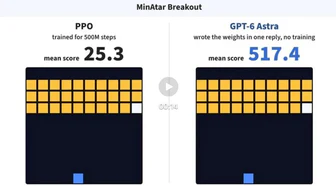
    Astra directly reads weights in 17K-172K weight network experiments, but in the 800M weight Qwen3.5 mathematical ability improvement experiment, it requires combining Python programming and model execution, not just reading weights; Astra modifying 0.016% weights increased Qwen3.5-0.8B's MATH-500 from 7.9% to 48.1% and tripled IFEval.

  3. Hugging Face Daily Papers65

    SWE-Trail: A Historical Guidance Trajectory Collection Method for Coding Agent Training

    SWE-Trail leverages past execution trajectories to guide subsequent exploration without exposing historical information to coding agents, thereby enhancing the trajectory collection effectiveness for coding agent training. This method improves the average problem-solving rate by 2.33 and 1.60 percentage points on SWE-bench Multilingual and SWE-bench Pro, respectively, using a student model with 124B parameters.

  4. Hugging Face Daily Papers65

    Hugging Face Daily Papers: Advances in Proxy Computer Graphics

    Hugging Face Daily Papers has released a report on proxy computer graphics driven by large language models, proposing a unified classification method and literature system, analyzing trends and challenges in human-machine collaboration and long-term planning. The report introduces a unified classification method for representing agent systems in different computer graphics tasks and develops an agent literature system to assist researchers in large-scale analysis of existing and new published papers.

  5. MIT Technology Review · AI

    "Reverse game theory" how it constrains AI agents

    Reversed game theory controls powerful AI models by designing systems that incentivize agents to follow rules, such as rewarding cross-validation or competitive dynamics between model answers, or having the model take turns being a 'problem solver' and an 'auditor' to simulate social constraints. Models like Claude already have moral guidelines, but reversed game theory incentivizes agent behavior through mechanism design (such as cake-cutting strategies, bidding auctions) rather than relying on understanding their internal workings, addressing the issue that current security research primarily focuses on internal understanding or value training but achieves poor results.

  6. Hugging Face Daily Papers65

    From Fragmentation to Fusion: A Review and Roadmap of Multimodal Embeddings

    Embedding research is moving towards multimodal unification through contrastive learning and Transformer architectures, proposing a framework centered on transformation, alignment, and joint embedding to integrate different modalities. Embedding models support modern AI systems, but research is fragmented by modality, with each community developing in isolation. This paper proposes a coverage, comparability, and combinability framework, extending coverage through transformation, achieving comparability through alignment, and reaching combinability through joint embedding, providing a unified perspective on multimodal embedding research for the first time.

  7. Hugging Face Daily Papers

    ReTrace framework: Revealing the recovery behavior of computer agents through goal-directed action replay

    The ReTrace framework restores standard formal transition consistency through goal-directed action replay and controlled error injection, systematically studying the recovery behavior of autonomous models of computer agents, discovering that ideal recovery unlocks the model's potential task-completion capabilities, finding that current agents do not fully utilize their potential recovery capabilities, and that accurate model recovery can bring measurable end-to-end gains, proving that recovery is a fundamental capability for building reliable computer agents.

  8. Hugging Face Daily Papers

    Reviso: Not All Visual Evidence Should Be Given Equal Attention in Video Caption Generation

    Reviso is an intelligent video subtitle framework that prioritizes key visual evidence through hierarchical planning and active perception learning, enhancing subtitle quality and downstream video understanding capabilities. Multimodal large language models (MLLMs) generated video subtitles may overemphasize minor details while ignoring important context and key events.