Skip to content
Live
Nov 11Wed
  1. ITHome · AI

    Microsoft Auto SR officially debuts: compatible with Asus ROG Xbox Ally X handheld and some AMD Ryzen models, with a maximum frame rate of 120 FPS.

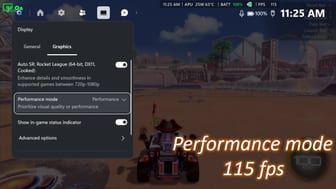
    Microsoft announces the official launch of its AI super-resolution technology Automatic Super Resolution, supporting Asus ROG Xbox Ally X handheld and some AMD Ryzen platform Windows Copilot+ PCs, with a maximum frame rate of 120 FPS. The technology can enhance game screen resolution in handheld mode, adds support for 1080p games, and supports running simultaneously with Windows Auto HDR.

  2. ITHome · AI65

    MooreThread completes adaptation of the MiniMax H3-Image image generation model

    MooreThread announced that its MTT S5000 AI computing card and MUSA software stack have been adapted to the MiniMax H3-Image image generation model. This model can generate high-resolution images of 4096×4096 pixels within 10 seconds, achieving speeds five times faster than mainstream market offerings. MooreThread has optimized the entire chain based on MTT S5000, supporting text-to-image generation, image reference, and editing capabilities.

  3. Comfy Blog

    Seedream 5.5 is provided through partner nodes

    Seedream 5.5 is provided through partner nodes in ComfyUI, a multimodal model that generates content from text and edits from images. This version advances in transparent RGBA generation, precise local multi-round editing, poster and chart generation with readable text and structured layouts, more realistic portraits, and lighting control. In ComfyUI, all features are integrated into a single node, allowing for sequential editing processes and direct transparent output to synthesis nodes.

  4. Microsoft Research

    Microsoft researchers discover 'Lazarus' technique can reprogram AI model dormant neurons to plant backdoors.

    Microsoft researchers discover 'Lazarus' technique can reprogram AI model dormant neurons to plant backdoors, enabling normal AI agents to execute malicious commands under trigger conditions. The technique can plant backdoors without retraining and is difficult to detect through conventional tests, posing a particularly severe threat to AI agents with tool or terminal access.

  5. ITHome · AI

    Claris testing Harbor application: Turning Mac into a local AI server

    Claris is testing the Harbor app, which can turn a single or multiple Apple Silicon Macs into a local AI server to run larger AI models without manual configuration. The app is currently in the early experience phase and has not been made available to the public yet.

  6. OpenRouter Blog

    LLM Quantization: The Impact of fp8 and fp4 on Quality and Price

    Testing on OpenRouter, fp8, fp4, and fp16 showed no precision differences in 240 scoring tasks, with all six endpoint scores ranging from 98.3% to 99.2%. Lower precision is generally cheaper, but there were 7 models where fp8 was more expensive than fp16, and 7 models where 4-bit was more expensive than 8-bit. The fp4 endpoint performed the worst among 40 workflows without multiplication tasks, but the difference might be due to chance.

  7. ITHome · AI

    Google's strongest VLA robot model, Gemini Robotics 2.5, debuts, can tie bows, already on the Mercedes production line

    Google launches VLA robot model Gemini Robotics 2.5, achieving leaps in dexterity, reliability, and safety, with a success rate of 96% on the Mercedes production line. The model has tested 200 tasks, with a success rate 30%-100% higher than the baseline, a speed increase of 20%-30%, and is compatible with robots like Apptronik Apollo 2, adopting ASIMOV-Jailbreak benchmark to enhance jailbreak resistance to 99.5%.

  8. ITHome · AI

    Google's strongest model yet, Gemini 4 Carbon, debuts: Focused on complex programming, scientific research, and cybersecurity

    Google has released the Gemini 4 Carbon model, which is its most powerful reasoning model to date. The model has a unified context window of 1,048,576 tokens, with a maximum standard synchronous request output of 65,536 tokens, expandable to 1,048,576 tokens via the Long Decode mechanism.

  9. AWS Machine Learning Blog40

    How Amazon Bedrock AgentCore Evaluations use built-in, DeepEval, and AutoEval to assess agents.

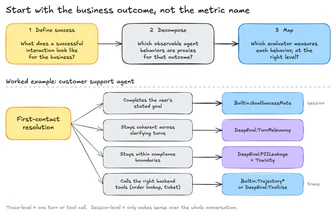
    Amazon Bedrock AgentCore Evaluations provides three evaluators—built-in, DeepEval, and AutoEval—to assess agents. The built-in evaluator is developed and tested by AWS, covering common dimensions; DeepEval and AutoEval are third-party open-source libraries, with AgentCore hosting them in production environments. The evaluation process requires first defining business success criteria, breaking them down into observable behaviors, and then mapping them to the appropriate evaluator level.

  10. OpenAI Alignment Blog

    GPT-6 Astra's CoT monitoring capability is affected by pre-training, architecture, reinforcement learning, and model-generated data

    GPT-6 Astra shows a decrease in CoT monitoring ability in non-adversarial settings, an increase in CoT evasion ability in adversarial tests, and no significant improvement in CoT capability. During pre-training, CoT capability does not increase with the decrease of the base model's perplexity, and the architecture has a limited impact. Reinforcement learning enhances CoT control ability, and model-generated data fine-tuning can transfer CoT control ability. Model perplexity is positively correlated with CoT capability and control ability.

  11. The Decoder

    Nvidia's GR00T 2 model learns tasks by observing human actions through video and imagines itself as a robot

    Nvidia's GR00T 2 AI model learns new tasks for robots by analyzing human video actions without remote control, trained on 400,000 hours of video data, with lab test success rates of 10-80%, and combined with GPT-6 Astra achieves 97% success rate for toy model assembly, but tactile processing and language model latency remain challenges.

  12. Meta Engineering

    Meta open-sources Triton Low-Level Extensions (TLX): a hardware-native GPU compiler optimized for large-scale production ML

    Meta open-sources Triton Low-Level Extensions (TLX) compiler, enhancing GPU performance by introducing explicit warp-group and cluster-level orchestration, supports RecSys training/inference and LLM pre-training, achieving end-to-end performance improvements over standalone libraries on NVIDIA and AMD GPUs.

  13. Meta Engineering

    Meta launches Your Algorithm tool to make Facebook recommendation content more transparently personalized

    Meta has launched the Your Algorithm tool, allowing users to edit interest lists ("Interested In"/"Not Interested In") in natural language to adjust Feed and Reels recommendations in real-time. The system uses LLM to process user preferences and integrate user behavior, achieving responsive adjustments through retrieval, reordering, and pushing optimization stages. New interest content will appear quickly but will not dominate recommendations.

  14. LangChain Blog

    Workday how to build an AI intelligent agent platform with LangGraph and LangSmith

    Workday has utilized LangGraph for agent orchestration and LangSmith for tracking and evaluation, reducing prototype development time from 5 months to within 1 day with a 4-person team by 2025 and supporting production environment deployment. Its Python SDK 'Workday LangChain' encapsulates LangChain core components and routes through internal services (including LLM gateway, RAG retrieval) while meeting enterprise-level security and compliance requirements.

  15. AWS Machine Learning Blog

    How TCS uses Amazon Bedrock AgentCore to build an agentic test orchestrator

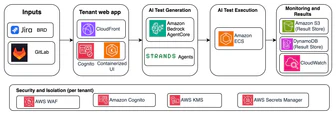
    TCS has built an Agentic test orchestrator for BFSI clients, transforming requirements into executable controlled tests through Amazon Bedrock AgentCore, breaking down tests into dedicated tasks and executing them using their respective agents, tools, and validation rules, while meeting project-specific context, API, and browser UI testing, tenant-level security isolation, and repeatable test path requirements, significantly improving test throughput and allowing engineers to focus on risk analysis and exploratory testing.

  16. n8n Blog62

    Google Gemini 4 Carbon is released in n8n, enhancing the security, reliability, and efficiency of agents and workflows

    Google Gemini 4 Carbon has officially launched on n8n, being Google's strongest model, scoring 53.9% on AutomationBench. It significantly improves in security (SEC-bench Pro 88.2%, ExploitGym 54.8%, CWE-bench 71.0%), long task processing (internal testing lasting several days), and reasoning, and has zero vulnerability to Gray Swan prompt injection attacks (0.0%).

  17. Factory News

    Secure Factory: Connecting Security Discovery, Remediation, and Validation into a Continuous Workflow

    Security Factory connects the signal, classification, and remediation three stages to help engineering teams transform security discoveries into test fixes. It integrates existing tools and contextual information, automatically coordinates investigation tasks, generates a risk-prioritized remediation list based on validation, and simplifies the entire process from discovery to remediation.

  18. Amp News65

    Amp launches new deployment tool Boxes: small, cheap, and permanently running computing units

    Amp launches Boxes, a permanently running, small, and affordable computer where users can deploy software built with Amp, with the smallest model priced at $18 per month, supporting the operation of any application and equipped with an AI agent to manage deployed applications and production data. Users can create, deploy applications, and control the power on/off of Boxes via the agent as needed, supporting minute-by-minute billing and default continuous operation.

  19. Google DeepMind87

    Google DeepMind releases the Gemini 4 Carbon cutting-edge model

    Google DeepMind has opened Gemini 4 Carbon to developers, enterprises, scientists, and consumers, claiming it has reached cutting-edge levels in network security capabilities and long-range intelligent agent workflows.

    Why it matters: The official provides the positioning division of roles between Carbon and Argon, multiple benchmark rankings, and cost comparisons per task to help determine when to use a heavier model.