Skip to content
Live
Oct 29Thu
  1. Ars Technica · AI65

    Google has released Gemini 4 Carbon: a cutting-edge AI model that cannot be used immediately.

    Google has released Gemini 4 Carbon, reaching new thresholds in coding, agent tasks, and scientific analysis, but it has not yet been made available for use. The model significantly enhances vulnerability detection, validation, and repair capabilities in cybersecurity applications, with a 200% higher probability of generating bug-free code compared to Argon and a 10 times greater ability to generate high-quality patches compared to non-Google models.

  2. Artificial Analysis Articles85

    Gemini 4 Carbon topped the Artificial Analysis Intelligence Index v5

    Google's Gemini 4 Carbon ranked first with 59 points on the Artificial Analysis Intelligence Index v5, leading in four out of nine evaluation items: HLE-Diamond, Terminal-Bench-Science, AA-Omniscience, and AutomationBench-AA

  3. Google DeepMind82

    Google DeepMind releases the Gemini 4 Carbon cutting-edge model

    Google DeepMind releases the Gemini 4 Carbon, claiming it has the strongest capabilities in cybersecurity and long-term tasks, ranking first with a score of 59 in the Artificial Analysis Intelligence Index v5.0

  4. Artificial Analysis Articles72

    Artificial Analysis Reviews GitHub Copilot Fusion: Performance slightly lower than Opus 5.5, single-task cost halved

    Artificial Analysis tested GitHub Copilot CLI's Copilot Fusion highest settings in Coding Agent Index v2.0, with a single task cost of 5.59 USD, while Claude Code with Opus 5.5 (max) costs 11.42 USD, only 2 points lower in overall score.

    Why it matters: Artificial Analysis used Coding Agent Index to test Copilot Fusion, providing a cost and token comparison with Claude Code at the same performance level.

Oct 28Wed
  1. Hugging Face Daily Papers

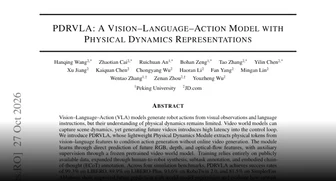
    PDRVLA: A Visual-Language-Action Model Integrating Physical Dynamics Representation

    PDRVLA improves robot action generation by integrating a lightweight physical dynamics module that predicts future visual features under the supervision of a physical world model, avoiding latency caused by online video generation. PDRVLA achieves success rates of 99.3% (LIBERO), 89.9% (LIBERO-Plus), 93.6% (RoboTwin~2.0), and 81.5% (SimplerEnv) on four simulation benchmarks.

  2. Hugging Face Daily Papers65

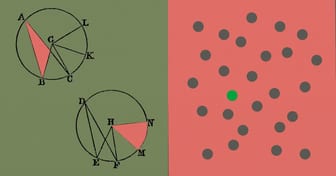
    CodeCap-Bench: Can executable code serve as high-quality video subtitles?

    CodeCap-Bench demonstrates that code captions outperform natural language captions in terms of reasoning accuracy and reconstruction fidelity on video question answering and reconstruction tasks. The benchmark includes 323 structured 2D content videos, covering five categories. Evaluation finds that mainstream closed-source MLLMs perform well in code caption generation but struggle to capture complex temporal dynamics, while open-source models have a significant gap.

  3. Ars Technica · AI65

    Pinal released: AI tools can design proteins through natural language

    Pinal can generate proteins through natural language prompts, with a success rate meeting specific functional requirements; Hugging Face also launches a similar tool at the DNA level. Pinal uses T2struct to convert prompts into structural blueprints, which are then combined with SAProt-T for sequence generation based on probabilistic evaluation, trained based on three major databases and AlphaFold predictions.

  4. Hugging Face Daily Papers

    Qwen-Image-PE: Enhances text-to-image prompt enhancement capabilities through a two-stage training process.

    Qwen-Image-PE enhances text-to-image prompt enhancement capabilities through a two-stage training process (based on title reverse distillation and group design rewards). When using Qwen-Image-2.1 on Qwen-Image-Bench, Qwen-Image-PE-397B improves by 7.81 points compared to the original request, and Qwen-Image-PE-9B surpasses all evaluated PE baselines.

  5. Databricks Blog

    Databricks improves document extraction accuracy through ai_extract and MLflow Prompt Registry

    Databricks improves document extraction accuracy by building a document extraction process that includes a review step, using ai_extract combined with JSON schema and global instructions, and leveraging MLflow Prompt Registry for versioned configuration. Finally, it validates the improvement effect on a fixed set of manually labeled data, enhancing the overall performance of the system.

Oct 27Tue
Oct 26Mon
  1. The Verge · AI58

    OpenAI GPT-6.1 Sol has made significant progress in migrating COBOL code to modern languages.

    OpenAI GPT-6.1 Sol achieves 87% accuracy retention under low inference effort and 98% under high inference effort when migrating COBOL code to modern languages (C++, Java, Kotlin, Python, Rust). Anthropic's Claude Code is also used for COBOL code migration, but performance benchmarks are not provided. Experts believe AI tools have made progress in handling legacy code, but they are still far from safely replacing critical legacy systems. OpenAI GPT-6.1 Sol has made significant progress in migrating COBOL code to modern languages.

  2. ITHome · AI60

    ByteDance's Imagination AI Short Drama Studio has launched, offering self-developed script, image, and storyboard models.

    The Imagination AI Short Drama Studio has launched, offering self-developed script models DreamScript (supporting multi-genre generation, hit diagnosis, and 100,000-character long story analysis), image models Anycook (supporting differentiated character settings and multi-style scene construction), and storyboard models DreamShot (dual-mode creation, 3D director's desk dynamic preview).

  3. Hugging Face Daily Papers49

    RSIHub: A composite framework for agent evolutionary methods

    RSIHub is an open-source framework that standardizes research on agent evolution by providing reusable components and a consistent evaluation infrastructure, used to build, compare, and extend related methods. Researchers can focus on evolutionary strategies while keeping evaluation external, with results associated with candidates and evaluation conditions.

Oct 25Sun
  1. MarkTechPost52

    Stanford and Berkeley researchers launch TokenGate: Boosting the speed of long-context pre-filling by up to 11.3 times

    Researchers from Stanford and Berkeley have introduced the TokenGate module, which uses learnable token pruning techniques to improve the speed of long-context pre-filling by 1.4 to 11.3 times without losing accuracy, and reduces peak pre-filling memory consumption by 1.5 to 3.4 times. It outperforms 6 baseline models on 5 tasks, with the best performance showing an 11.3-fold speed increase and a 3.42-fold memory reduction on the NIAH 16k task. The code and checkpoints are open-sourced.

Oct 24Sat
  1. The Decoder65

    Research finds that complex coding agent frameworks do not improve performance but increase costs

    Research indicates that the performance gap between different coding agent frameworks is within the range of statistical noise, and the effect of switching frameworks is comparable to rerunning with the same settings. Claude Code, OpenCode, and mini-SWE-agent three frameworks increase the number of tokens consumed per model by two to three times, but the pass rate is still within the range of measurement uncertainty. OpenCode shows statistically significant underperformance in large task sets, mainly due to output limits and shorter runtime limits, while system prompts and tool descriptions in other frameworks are the main sources of cost differences.

  2. MarkTechPost83

    Moonshot AI has released Kimi K3.1 Pro: a 2.8T total parameter, 104B activated MoE model that supports a context length of 1M.

    Moonshot AI has released the first model of the K3.1 series, Kimi K3.1 Pro, which adopts a MoE architecture with a total parameter count of 2.8T and an activation parameter count of 104B, supporting a context length of 1M tokens. It has been launched on Kimi.ai, Kimi Work, Kimi Code, and Kimi API. The API pricing is $2 per million tokens for input and $10 for output, lower than K3's $3 and $15.

    Same story — showing the featured version《》

  3. Hugging Face Daily Papers

    The FRED framework enhances the future video representation capabilities of world action models through self-distillation and temporal conditioning.

    The FRED framework enhances the future video representation capabilities of world action models through self-distillation and temporal conditioning, consistently outperforming competing models in real-world operational scenarios, achieving significant gains in zero-shot generalization on long-term and out-of-domain tasks, and increasing the success rate of human video skill transfer from 19.4% to 50.0%.

  4. Hugging Face Blog

    LitPivot: Developing research ideas through dynamic context in the literature landscape

    LitPivot helps researchers adjust their research direction by reading previous literature, dividing research ideas into problems, contributions, and evaluation plans, and providing literature-based criticism and revision suggestions for each section. In a laboratory study involving 17 researchers, domain experts rated the literature foundation of novel ideas developed using LitPivot better than ideas developed using text editors and AI chat tools. Participants also reported stronger literature comprehension and improved understanding of the novelty and practicality of their ideas.

Oct 23Fri
  1. The Decoder82

    Anthropic enables Claude to automatically generate formal safety proofs for code.

    Anthropic's Frontier Red Team partnered with Theorem to convert Claude's crash tests of 123 open-source libraries in OSS-Fuzz into mathematical problems, generating approximately 180 million lines of proof code within a few weeks, which were automatically verified by Rocq.

    Why it matters: Anthropic uses Claude to automatically generate formal proofs for the OSS-Fuzz library, providing computational cost and applicable boundaries, allowing readers to judge the feasibility of AI-verified code.

  2. Hugging Face Daily Papers75

    LaLa-World: Using Natural Language Actions to Extend Latent World Models

    LaLa-World is a language-conditioned latent world model that achieves efficient model prediction planning and strategy initialization by combining simulation, robotics, and video data. The model adopts a language-conditioned interface of video generation models, enabling JEPA-style latent world models (LWMs) to learn across different domains and data sources.

  3. Hugging Face Daily Papers65

    Cola2: Adaptive Hierarchical Language Model improves hierarchical language generation through continuous semantic compression and balanced discrete generation.

    Cola2, through dynamic span splitting, masked diffusion decoding, and stream matching priors jointly optimizes continuous semantic compression, reconstruction-generation balance, and encoder-decoder adaptation, verifying its core design on five downstream tasks. Using 2100 billion training tokens, it demonstrates competitive non-saturated scalability, with a 3460 billion source token checkpoint showing an average of 60.10 points on eight tasks and surpassing Llama-3-8B on HellaSwag and StoryCloze.

  4. Hugging Face Daily Papers65

    Different tasks, different time steps: temporal task-aware quantization for diffusion language models T²Quant

    T²Quant framework predicts accuracy sensitivity through minimal unlabeled calibration prompts, allocating activation precision within a fixed bit-width budget, improving existing quantization methods by 6.7 percentage points across 3 diffusion language models and 6 benchmark tests without increasing average accuracy budget.

  5. Anthropic Research82

    Anthropic research: LLMs make large-scale formal software verification feasible.

    Anthropic partnered with Theorem to complete formal verification of the RISC-V assembly layer for 239 entry points in 123 OSS-Fuzz open-source libraries using Claude. The verification proves that these programs will not crash with any input less than 64 MB, with the proof code consisting of about 180 million lines of Rocq.

    Why it matters: Anthropic used Claude to formally prove the RISC-V assembly layer for 123 open-source libraries and provided cost and reuse data, which can be used to determine whether this method can enter the daily development process.

  6. Hugging Face Daily Papers70

    AgenticRoboRL framework enhances robot planner performance through post-training

    AgenticRoboRL framework improves robot planner performance via supervised fine-tuning and multi-round reinforcement learning, boosting the success rate of a 9B parameter planner from 18.1% to 71.0% on LIBERO-PRO without external memory, approaching Codex (GPT-5.5)'s 72.1% with external memory. The framework adapts to different execution mechanisms, linking recorded planner interactions with task outcomes to achieve a universal reinforcement learning training process through adapters.

Oct 22Thu
  1. The Decoder74

    Recursive releases its first model developed in collaboration with Eureka Machine

    AI startup Recursive has released its first language model, Flint. During the development process, the AI system named Eureka Machine participated in proposing ideas, building, testing, and planning subsequent experiments.

    Why it matters: Recursive publicly announces its first model developed with the assistance of an automated research system, allowing readers to observe how far AI-assisted R&D can go.