Skip to content
Live
Jul 13Mon
Jul 9Thu
  1. Microsoft AI News

    MAI integrates Audible poetry into audio models, creating a digital poetry experience.

    MAI's audio model Ode Poetry recommends and plays real human reading recordings of poems for users worldwide, providing a digital poetry experience. The system uses MAI-Transcribe to understand user language in real-time, achieving the lowest word error rate of 4.86% in the FLEURS benchmark test; MAI-Voice can faithfully reproduce the unique voice of William Sieghart. The system combines William's literary analysis experience, recommends poems through custom logic and tool calls, and iteratively optimizes for a safe, high-quality user experience.

  2. Cognition Blog

    SWE-1.7 Released: A Cost-Reduction Solution for Cutting-Edge Intelligence

    SWE-1.7 is the strongest Cognition training model, achieving cutting-edge intelligence levels at a lower cost. It achieves breakthroughs by improving the RL pipeline (better infrastructure, more stable training, high-quality data, new techniques for long-term tasks), challenging the 'fine-tuning ceiling' assumption. It is provided on the Devin platform (Web/Desktop/CLI) by Cerebras, supporting 1000 TPS, with a FrontierCode 1 score of 42.3% in coding benchmarks.

  3. Meta AI Blog

    Meta AI has released the Muse Spark 1.1 multimodal reasoning model.

    Muse Spark 1.1 is the latest multimodal reasoning model released by Meta Superintelligence Labs, significantly improving in tool and computer use, coding, and multimodal understanding, supporting million-token context windows. It is open to developers for public preview via the Meta Model API, surpassing Muse Spark and matching leading alternatives in Meta's internal coding evaluations.

Jul 7Tue
  1. Berkeley AI Research

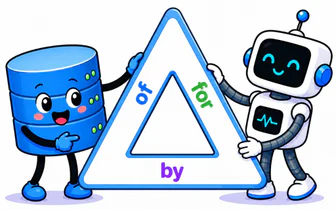
    GPT-4-class capabilities cost less than $1 per month, how data systems serve agents, and whether they belong to agents or are built by agents.

    GPT-4-class capabilities cost has dropped to less than $1 per month, with reasoning prices decreasing by over 50 times annually. Agents will dominate data system workloads, creating three new challenges: designing data systems for agents that support agentic speculation and optimize repetitive queries; building agent-specific data systems capable of managing agent cluster states and coordinating consensus; enabling agents to synthesize trustworthy custom data systems.

Jul 3Fri
Jun 30Tue
  1. Cognition Blog

    The Cognition team has launched Devin Fusion: achieving cutting-edge performance at 60% lower cost.

    Devin Fusion maintains cutting-edge and Fable 5-level performance at 60% lower cost on the new coding benchmark FrontierCode, primarily through a dual-agents architecture that runs cutting-edge models in parallel with cost-effective 'assistant' models. This architecture avoids benchmark overfitting and enhances task generality through dynamic in-session routing and deeply tuned interaction patterns, showing the most significant efficiency improvement in implementation-oriented sessions. Users can try the preview version via app.devin.ai/signup.

Jun 29Mon
Jun 22Mon
Jun 17Wed
Jun 13Sat
Jun 11Thu
  1. Factory News

    Droid has launched an automated security review feature.

    Droid runs STRIDE-based security reviews on every non-draft PR, attaching severity level, CWE reference number, explanation, and repair suggestions to discovered vulnerabilities, and publishing them as inline comments directly on the code diff. This feature has been running in production code repositories and has discovered vulnerabilities such as CVE-2026-42876. Droid filters false positives by building lightweight threat models, scanning for vulnerabilities, and verifying candidate discoveries, generating only one summary comment per PR.

Jun 10Wed
Jun 4Thu
  1. Prime Intellect Blog

    Prime Intellect has joined the NVIDIA Nemotron Alliance to advance open frontiers models.

    Prime Intellect joins NVIDIA Nemotron alliance, contributes over 2,500 open RL environments, validator frameworks, and Prime Sandbox runtime, supporting post-training customization of Nemotron models in software engineering, finance, data analysis, and other fields, under Apache-2.0 / CC-BY-4.0 open-source licenses, sharing research, data, and computing resources with alliance members

Jun 2Tue
  1. MiniMax · Hugging Face new models

    MiniMax-M3-MXFP8 released: Native multimodal model supports contexts of up to millions

    MiniMax-M3-MXFP8 is a native multimodal model with a 1M context window, approximately 428B parameters, and 23B activation parameters, achieving 9x pre-filling and 15x decoding speed improvement through MiniMax sparse attention mechanism (MSA). The model leads in long-horizon agent benchmarks, supporting three reasoning modes, and can be downloaded via Hugging Face and deployed using SGLang, vLLM, or Transformers frameworks.

May 30Sat
  1. Prime Intellect Blog75

    Prime Intellect has released Hosted Evaluations, simplifying benchmark testing for large language models.

    Prime Intellect has released Hosted Evaluations, providing scalable infrastructure for users to test models in self-evaluation environments. The service supports running evaluations on the hundreds of community environments already available in Environments Hub, with users able to start them via the platform, CLI, or .toml files. It supports benchmark tests like GPQA, SWE-bench, and results can be published to corresponding leaderboards with transparent display. This aims to address the infrastructure needs of modern evaluations and improve testing efficiency and reproducibility.

May 29Fri
  1. Cognition Blog

    Cognition Blog: How to Scale Validate AI Agent Development

    The Cognition team is promoting asynchronous software engineering, with more Devin triggered by events and automation, requiring end-to-end cloud validation to ensure results are reliable. Devin Review can automatically fix code review issues, but needs further testing and validation. Devin runs in cloud virtual machines, controlled with a mouse and keyboard, able to test its own work, and can run 10-20 instances in parallel, saving local validation time. It improves reliability through test plans, deterministic scripts, and skill libraries.

May 27Wed
  1. Dify Blog75

    Dify Platform: A practical guide for marketers to build reliable AI workflows

    Dify is an LLM application development platform that enables marketers to build structured, repeatable workflows containing LLMs, vector databases, external APIs, and logical steps through visual drag-and-drop. It supports multi-model generation (such as GPT-4, Claude, Gemini) for parallel content creation, automatic scoring and lead routing, knowledge base for marketing with Q&A, differing from tools like ChatGPT and Claude that only support single-model conversations.

May 20Wed
  1. Prime Intellect Blog

    Systemic Reward Attacks and Prime Sprints: Methods for Detection and Mitigation of Reward Attacks

    Systematic reward attack and Prime Sprints study reward attacks in a backdoor-ifeval environment with hidden keyword rewards, finding that attacks are dynamic problems. Benchmark frequency can predict attack occurrence, but there is no security rarity threshold. Attacks with zero baseline frequency are amplified, rare attacks are slower, and environments with moderate task difficulty are most robust. Prime Sprints provides free credit for users to conduct reward attack experiments, and the environment is open-sourced.

May 19Tue
  1. Dify Blog70

    Dify Creator Center and Template Market officially launched

    Dify Creator Center and Template Market officially launched, allowing creators to publish workflow templates and users to quickly discover and use them. The new platform has optimized multilingual experience and content layout, integrating the publication and use of templates into a single path. Users can filter templates by category, tags, or creators. New users registering receive 200 free credit points.

May 18Mon
  1. Prime Intellect Blog

    General Agent: A self-evolving synthetic intelligence agent environment

    General Agent is an open-source environment that is a synthetic intelligent agent environment capable of self-evolving over time, containing 4,504 tasks across 1,040 domains and over 8,000 tools. The synthesizer and solver generate and validate tasks through a 2-player game mechanism, with task difficulty divided into 4 levels, gradually increasing in difficulty after validation by the solver.

May 15Fri
May 14Thu
  1. LangChain Blog73

    LangChain is conducting a public beta of Managed Deep Agents on LangSmith Cloud.

    LangChain launches Managed Deep Agents on LangSmith Cloud. Users write intelligent agents as Python projects consisting of files like agent.py, instructions.md, skills/, and deploy them with a single command mda deploy, provided with persistent threads and streaming execution by LangSmith Agent Server.

    Why it matters: The original text explains how to organize the agent project by files and deploy it to LangSmith with one click, as well as the infrastructure managed runtime that takes on the basics for the team.

May 7Thu
  1. Prime Intellect Blog

    Releasing Lab: The training platform for self-improving intelligent agents is officially launched

    Releasing Lab is officially launching today as part of the Open Superintelligence Stack. This platform supports the full process of training self-improving agents, allowing users to specify tasks, define execution environments, evaluate models, train based on reward signals, check reasoning results, deploy adapters, and run reasoning.

Apr 30Thu