Skip to content
Live
Sep 25Fri
  1. Baseten Blog75

    LangChain fine-tunes on Baseten Loops via LangSmith tracing

    LangChain announced the launch of the LangSmith fine-tuning feature at the Interrupt 26 conference in New York today. The feature is based on the open-source CLI smithtune, which reads LangSmith traces to generate supervised fine-tuning datasets and trains them on Baseten Loops, finally deploying them to Baseten's dedicated inference service. The CLI uses the user's Baseten API key, and training and inference costs are charged to the Baseten account.


  2. GitHub Blog · AI & ML

    GitHub Security Lab Taskflow Agent implements automated fuzzing

    GitHub Security Lab Taskflow Agent automates the fuzzing process for C/C++ projects using LLM, completing entry point identification, build system analysis, test case generation, AFL++ execution, coverage analysis, and vulnerability report writing without manual intervention. The Agent uses the Claude Sonnet 5 model and manages state via an SQLite database to achieve iterative coverage improvement, doubling the time budget for each iteration until coverage growth stagnates.

Sep 24Thu
  1. OpenHands Blog75

    OpenHands Enterprise new features: enhanced visibility, governance, and control capabilities.

    OpenHands Enterprise's latest version has added organizational-level features such as management credentials, usage, integration, and automation, and updated the interface aligned with Agent Canvas. Administrators can configure organizational key sharing, monitor usage through the 'Your Budget' dashboard, support OAuth authentication to connect to MCP servers, and achieve cross-organizational visibility and management automation.

  2. GitHub Blog · AI & ML

    How does GitHub Copilot application render large pull requests?

    GitHub Copilot application addresses performance issues when rendering large pull requests with extensive comments by highly decomposing the document into two independent domains: deterministic code height and dynamic block effective height. The dynamic block geometry covers unpredictably tall content such as comment threads, drafts, and reply composers, each block identified by its content type rather than location and anchored to files, lines, and sides to ensure no loss during reordering. This design makes comment heights predictable before rendering, avoiding scroll jumps and enhancing rendering performance for large code differences.

  3. Microsoft Research

    Microsoft Research explores the advantages of offloading physical AI reasoning to edge or cloud GPUs.

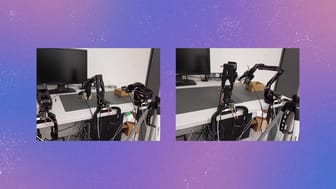
    Offloading physical AI reasoning to edge or cloud GPUs can significantly improve robot task success rates, support larger models, and extend battery life. In mobile operation tasks, offloading reasoning enhances robot response speed and accuracy, increases battery endurance, and reduces costs. Microsoft Research has developed a Kubernetes-based toolkit to support distributed reasoning deployment on robots, edge devices, and the cloud.

Sep 23Wed
  1. OpenHands Blog

    What is an AI dark factory? Software engineering insights learned from unmanned manufacturing.

    AI Dark Factory refers to AI agents autonomously completing software development, with humans only setting goals and constraints. Its core principle originates from unmanned manufacturing, i.e., achieving automation through standardized inputs, deterministic verification, and continuous monitoring, rather than relying on model intelligence improvement. Engineering needs to refactor processes around automation, taking repeatable environments, executable acceptance criteria, and execution records as the foundation. Currently, it is mainly applicable to boundary-defined repetitive tasks.

  2. OpenHands Blog

    OpenHands: Open-source code review intelligent agent platform and automated workflow

    OpenHands as an open-source code review intelligent agent platform integrates review, fix, and validation workflows, supporting on-premise, hosted cloud, or self-hosted deployment, offering a free open-source version and paid enterprise solutions; compared to other tools, it achieves end-to-end automation across repositories through agent technology, combining static analysis and AI reasoning to improve review quality, with flexible deployment and strict data control.

Sep 22Tue
  1. OpenHands Blog

    How to Self-Host AI Models: Complete Setup Guide

    Self-hosted AI models allow organizations to directly control the reasoning runtime environment, deployed model weights, and service operation methods, suitable for scenarios involving sensitive data, pursuing cost-effectiveness under continuous utilization, model customization, and controlling the model lifecycle. By deploying open-source weight model checkpoints on local workstations, private servers, or controlled cloud infrastructure, and using reasoning runtime service models such as vLLM, Ollama, or llama.cpp, applications can call self-hosted endpoints just like calling managed model APIs.

Sep 21Mon
  1. Microsoft Research

    RetroChimera released: A new framework for molecular retro-synthetic prediction reported in the Nature journal.

    RetroChimera was published in Nature, combining R-SMILES 2 and NeuralLoc models for reverse synthesis prediction. The framework, through a learning-based ensemble strategy ranking, outperformed existing models in blind tests and was more recognized by experts for its complex molecular disassembly suggestions. The model is open-source, aiming to accelerate the development of new pharmaceutical molecules and advanced materials.

  2. OpenHands Blog

    What is model-agnostic in AI? A practical guide

    Model-agnostic AI reduces direct dependency of applications and workflows on a single model, handling differences in authentication, request formats, model identifiers, etc. between different providers through an abstraction layer. OpenHands's model evaluation shows no single best model, its workflow supports use of different models for planning, implementation, debugging, and review, making model selection a continuous workload decision rather than a one-time vendor choice.

Sep 20Sun
  1. Qwen · Hugging Face new models

    Qwen/Qwen-Image-2.1-PE-I2I released: Open-source 7B parameter text-to-image generation and editing model

    Qwen/Qwen-Image-2.1-PE-I2I released, a 7B parameter unified text-to-image generation and editing model, featuring a 32-layer single-stream DiT architecture, supporting the generation of regular or transparent images, editing transparent layers, extracting photo subjects, and capable of editing with 10 reference images.

  2. Qwen · Hugging Face new models

    Qwen/Qwen-Image-2.1-PE-T2I release: Open source 7B parameter text-to-image generation and editing model

    Qwen/Qwen-Image-2.1-PE-T2I released, a 7B parameter unified text-to-image generation and editing model, featuring a 32-layer single-stream DiT architecture, supporting generation of regular or transparent images, editing transparent layers, extracting photo subjects, and enabling local editing through circular, doodle annotations, or independent masks. Its text-to-image prompt rewriting model Qwen3.5-VL 9B can convert multilingual requests into detailed English prompts and recommend aspect ratios.

Sep 17Thu
  1. Hamel Husain65

    What difficulties should be recorded that are not model errors?

    Any factors that make the product impractical should be recorded, including missing or damaged features unrelated to the model. Prioritize addressing issues rather than analyzing the causes of errors. For example, if customer service does not provide an order tracking link, it should be recorded even if the AI does not have this functionality. Identifying and prioritizing issues is the foundation of building evaluations, and some issues may be engineering or design flaws. Focusing on problems rather than root cause analysis helps write higher-quality annotations when viewing more data.

Sep 16Wed
Sep 14Mon
  1. Google · Hugging Face new models

    Google releases EmbeddingGemma 2 multimodal embedding model

    Google has released EmbeddingGemma 2, a multimodal embedding model with 740M parameters, supporting unified 768-dimensional vector representations for text, images, video, and audio. The model can run on consumer-grade hardware, providing low-latency semantic representations suitable for applications such as search, retrieval-augmented generation, etc. EmbeddingGemma 2 has performed excellently in multiple benchmark tests, such as text, code, visual document, and audio embedding benchmark tests, and supports vector truncation to reduce storage requirements.

  2. LangChain Blog71

    How to build paid media agents with LangChain

    LangChain publicly shares its construction method for paid media intelligence agents, which run on Slack, summarize ad platform and warehouse data weekly, and generate reports. Paid media increased from contributing 0 to 20% of the marketing pipeline within 6 months, and the cost per qualified lead decreased by 30% from June to August.

    Why it matters: LangChain publicly shares the complete engineering details of its paid media intelligence agents, including context hierarchy, on-demand tool discovery, and sub-agent isolation, which can serve as a reference for building long-running intelligent agents.

Sep 10Thu
  1. Mistral AI

    Cloudera collaborates with Mistral to bring dedicated, sovereign intelligence to enterprise data

    Cloudera collaborates with Mistral to integrate Mistral models into Cloudera's hybrid data platform, enabling businesses to deploy AI models in private clouds, public clouds, on-premises, and fully isolated environments while maintaining full control; Mistral allows businesses to train AI models with proprietary data in a controlled environment, transforming decades of institutional data into custom AI models while retaining ownership of both data and intelligence.

  2. DeepSeek · Hugging Face new models

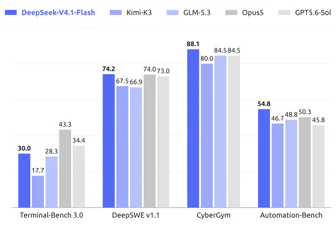
    DeepSeek-V4.1-Flash released: 552B parameter multimodal MoE model, context up to millions of tokens

    DeepSeek-V4.1-Flash is a 552B parameter multimodal MoE model that supports context up to one million tokens, natively processing images and text and generating text autoregressively. It adopts a Causal Encoder-Decoder architecture, reducing global KV cache usage to 890 bytes/token through technologies like CSA2 and FP4 primary KV cache, a 75% reduction compared to DeepSeek-V4-Flash.

  3. Cursor Changelog

    Cursor launches Projects feature

    Cursor launches the Projects feature today, supporting the handling of large workloads such as feature development, migration, or full applications, capable of maintaining context across months and automatically assigning tasks to thousands of sub-intelligent agents. The project runs independently in the cloud, synchronizing codebase knowledge and work preferences through shared files, coordinating agents responsible for planning and task allocation. The feature is currently in Beta and is gradually being rolled out to all users starting today.

Sep 9Wed
  1. Dify Blog65

    Dify market from discovery to response: tighter connection

    Dify has added featured banners and real-time update functions, allowing users to find works more conveniently and give likes, ratings, and text feedback. The market collects nearly 1000 plugins and over 300 templates, supporting the construction of applications on the existing basis. Featured banners display top works and platform updates, and the direct feedback mechanism ensures creators receive feedback on the real-world use experience, forming a closed loop from construction to learning.

Sep 8Tue
  1. Mastra Blog

    Mastra Factory Beta released: An open-source automated software factory

    Mastra Factory Beta released, this open-source software factory can now automate 25-35% of PRs and close 50-60% of issues, based on the Mastra infrastructure and changing collaboration processes. It connects GitHub, Linear, and Slack, supports configurable workflows, and each agent works in a sandbox environment. Since the alpha version was launched in July, the aforementioned efficiency improvements have been achieved.

Sep 7Mon
  1. Browser Use

    What is a Headless Browser?

    A Headless Browser is a browser without a graphical user interface, controlled programmatically for automation testing, web scraping, etc. It has become popular due to the adoption of AI browser agents. Headless Chromium starts 60% faster than normal mode, uses 51% less CPU, and has a 42% lower peak RAM.

Sep 5Sat
  1. Microsoft AI News

    MAI-Image-2.6 released, MAI-Image-2.6-Flash launched

    MAI-Image-2.6 becomes the strongest image model so far, ranked second in Arena, and first in Artificial Analysis; MAI-Image-2.6-Flash generates images 2.8 times faster than GPT-Image-2-Medium, with a 72% efficiency improvement. Both support multi-image reference editing, network grounding, and dynamic aspect ratio. MAI-Image-2.6 helps production teams control costs with the best Elo cost-effectiveness.

Sep 4Fri
  1. Dify Blog65

    Add automatic reminder function to Calendly using Dify Agent

    Users create an Agent on the Dify platform to connect Calendly and Gmail tools, achieving the function of automatically sending daily meeting reminder emails. The Agent uses Calendly MCP to obtain meeting schedules and participant information, and refers to preset email templates to send reminders through Gmail without modifying Calendly itself. This solution is suitable for SaaS products that only need to supplement a single workflow function.

  2. LangChain Blog

    LangChain MCP: Stateless protocol, extraction functions, and other updates

    LangChain has moved MCP support into the main package and upgraded to the FastMCP protocol, enabling stateless interaction, tool list caching, and interruptible extraction features. The new protocol, supported by LangGraph, enables a 98x increase in ChatGPT tool calls, allowing clients to cache tool directories and handle model request parameters. MCPAdapter supports multi-server connections and OAuth 2.1 authentication, enabling servers to be independently configured for authentication and transport layers.

Sep 3Thu
  1. Prime Intellect Blog

    NIXL and ModelExpress enable GLM-5.2 RL weight transfer to be completed within 4 seconds

    NIXL and ModelExpress have reduced the RL weight transfer time for GLM-5.2 to 4 seconds, solving the static process group bottleneck of traditional NCCL solutions and supporting fault tolerance and elastic inference. Through RDMA technology, bypassing the CPU and directly transferring weights between GPUs, it achieves low-latency unilateral RDMA reads, with a theoretical transfer time as low as 1 second (based on 400Gbps network cards).

Sep 2Wed
  1. OpenHands Blog

    How does OpenHands Agent Canvas make it easier to manage agents, configure more securely, and automate more conveniently?

    Through eight updates, OpenHands Agent Canvas has made it easier to track agent work, configure more securely, and automate more conveniently, and has launched the Canvas Apps Beta version and new automation runtime stages, supporting running agent work in the correct environment, understanding the execution process, reviewing results, and reusing workflows. The new version has added agent activity indicators, context and cost monitoring, custom app support, and form-based configuration and automation runtime management features for pre-built workflows.

Sep 1Tue