Skip to content
Live
Mar 16Mon
Mar 13Fri
  1. Berkeley AI Research

    How do SPEX and ProxySPEX algorithms scale to identify LLM interactions

    The SPEX algorithm identifies key interactions of LLMs through signal processing and coding theory, analyzing the impact of features, data, and model components with only a small amount of disturbance, achieving high fidelity in sentiment analysis tasks even with thousands of features; The ProxySPEX algorithm leverages model hierarchical structure characteristics, reducing the number of disturbances by 10 times while maintaining performance.

Mar 5Thu
  1. Anthropic Research

    Anthropic has released a new metric observed exposure to evaluate AI replacement risk.

    Anthropic introduces a new metric, observed exposure, to quantify AI replacement risk, combining LLM theoretical capabilities with actual usage data, focusing on automated work scenarios; the study finds that current AI coverage is only a fraction of the theoretical value, high-risk occupations are mostly highly educated, high-income women, and unemployment rates have not significantly increased since the end of 2022, but hiring for exposed occupations among young workers has slowed.

Mar 3Tue
  1. Dify Blog

    Dify v1.13.0 introduces the Human Input node, integrating human judgment into automated workflows.

    Dify v1.13.0 has introduced the Human Input node, allowing pauses and waiting for human approval in workflows. This node supports two form delivery methods: Web App and Email, with form content that can include Markdown and dynamic variables, and branching paths can be defined through decision buttons. Configuration includes delivery methods, form content, and timeout policies, supporting pre-filled input fields and variable passing.

Feb 25Wed
Feb 23Mon
  1. Anthropic Research58

    Anthropic proposes a role selection model to explain AI human-like behavior

    Anthropic proposed a persona selection model to explain AI's human-like behavior, suggesting that large language models learn personas from text during pre-training and adjust rather than change their essence during post-training. This model can explain Claude's anti-Alignment behavior when trained to cheat, implying that developers need to focus on the psychological aspects of the personas behind the behavior rather than just judging the behavior itself, and recommending the introduction of more positive AI role models.

Feb 18Wed
Feb 12Thu
  1. Andrej Karpathy60

    Introduction to Andrej Karpathy's microgpt project

    Andrej Karpathy released an art project named microgpt, a single-file containing only 200 lines of pure Python code, which can train and infer GPT models without dependencies. The project implements all algorithmic content from dataset processing, tokenizer, automatic differentiation engine to GPT-2 style neural network architecture, Adam optimizer, training and inference loop. The code can be obtained from GitHub gist and karpathy.art, and has been released as a triptych.

Feb 10Tue
  1. Dify Blog

    Dify guides: Preparing LLM application prompts for workflows

    Dify guides on how to design workflow-ready LLM application prompts by defining clear optimization goals, constructing prompts that include task descriptions, examples, and context, and separating system rules from user input. System prompts contain permanent constraints (such as roles, formats, and safety boundaries), while user prompts contain requests for specific content (such as documents and questions). It requires the model to output structured results (such as JSON) and provide evidence to support scoring to reduce hallucinations and improve the usability of the output in downstream steps.

  2. Prime Intellect Blog

    Prime Intellect Lab: An end-to-end platform for training custom models

    Prime Intellect Lab releases an end-to-end model training platform that integrates Environments Hub, hosting training and hosting evaluation, supporting large-scale agent reinforcement learning, reasoning, and evaluation without managing GPU clusters or algorithm details. The platform is built based on environments, including task datasets and executors, and has completed over 3000 reinforcement learning runs through private testing.

Jan 31Sat
  1. Browser Use

    Browser Use releases open-source browser automation benchmark BU Bench V1, Claude Fable-5 scores up to 80.0%

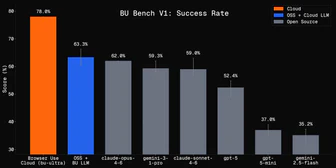
    Browser Use released the open-source browser automation benchmark BU Bench V1, containing 100 hardcore browser tasks, Claude Fable-5 scored the highest at 80.0%, leading GPT 5.5 by 12 points; Browser Use Cloud (bu-ultra) scored 78.0%, with a speed of approximately 14 tasks per hour. The benchmark is based on real-world website tasks, scored using LLM evaluators, and is available on GitHub.

Jan 29Thu
  1. LangChain Blog

    How does the LangChain Deep Agents SDK implement efficient context management?

    The LangChain Deep Agents SDK manages limited memory of AI agents through three compression techniques: offloading large tool results (>20,000 tokens) and inputs (>85% context window) to the file system, and using LLM to generate session summaries. The SDK triggers compression on Claude Sonnet 4.5 in terminal benchmark tests, retaining complete records through filesystem search and summaries, supporting frequent compression to optimize performance.

Jan 15Thu
  1. Anthropic Research50

    How scientists use Claude to accelerate research and discovery

    Scientists have achieved significant progress in biological illustration, computational biology, and protein understanding benchmarks using Claude 4.5, a model now available to top researchers worldwide via API for free, and has built custom systems that go beyond literature reviews or coding assistance. In the lab, Claude serves as a collaborative partner throughout the research process, compressing projects that usually take months into hours using various tools, and discovering large-scale data patterns that humans might overlook, eliminating bottlenecks in knowledge-intensive tasks, and even enabling entirely new research approaches that traditional methods cannot adopt.

Jan 14Wed
  1. Qoder Blog0

    Qoder NEXT model released: the next evolution towards intelligent editing with ActionRL preference alignment practices.

    The Qoder NEXT model upgrades editing capabilities from code completion to prediction, achieving more precise intelligent editing through ActionRL preference alignment technology. The model's context length reaches 128k, with a parameter size of 175B, demonstrating excellent performance in the SWE-bench reasoning benchmark, a 3.5x speed increase, and supporting open-source API interfaces.

Jan 10Sat
  1. Berkeley AI Research

    Berkeley AI research proposes an information-driven imaging system design framework

    Berkeley AI research proposes an information-driven imaging system design framework, which quantifies the object's discrimination capability through mutual information measurement. It has been validated in four fields: color photography, radio astronomy, lensless imaging, and microscopy that information estimation can predict decoder performance. The optimized mutual information design scheme achieves end-to-end optimal results while reducing memory and computational load.

Jan 8Thu
  1. Dify Blog

    Dify deploys a private AI agent on NVIDIA DGX Spark.

    Dify combined with NVIDIA DGX Spark provides an end-to-end private AI deployment solution, supporting local running of models such as Llama 3, Qwen 2.5, and DeepSeek V3, with a maximum single-device support of 200B parameters and interconnected device support of 405B parameters. It enables zero-code AI application development through the Dify platform.

  2. Anthropic Research58

    Anthropic Collaborates with PNNL to Simulate Attacks with Claude to Defend Critical Infrastructure

    Anthropic partnered with the Pacific Northwest National Laboratory (PNNL) to use the Claude model to quickly simulate network attacks in a simulated water treatment plant network, proving that AI can accelerate defense drills, completing attack reconstruction in just three hours instead of weeks; Claude Sonnet 4 demonstrated resourcefulness in testing by bypassing the Windows UAC security feature through predefined tools and identifying alternative techniques to achieve the goal.

Jan 6Tue
Jan 5Mon
  1. Liquid AI Blog

    Liquid AI has released LFM2.5: the next-generation edge AI model family

    Liquid AI has released the LFM2.5-1.2B model family, with its pre-training extended to 28T tokens and significantly improved post-training performance through reinforcement learning, showing excellent performance on knowledge, instruction following, math, and tool use benchmarks. This series includes Base, Instruct, Japanese, Visual Language, and Audio Language models, all of which are open-source and available on Hugging Face and LEAP. The audio models are 8 times faster than their predecessors and natively run on vehicles, mobile devices, and IoT devices.

Dec 18Thu
Nov 26Wed
Nov 13Thu
Nov 12Wed
  1. Anthropic Research

    Project Fetch: Can Claude Train a Robot Dog?

    Eight Anthropic researchers (with no robotics experience) were randomly divided into two groups, one using Claude and the other not, tasked with using quadruped robot dogs to pick up beach balls. The team using Claude completed more tasks faster and was the only one to achieve the goal of making the robot completely autonomous in picking up the balls. The experiment showed that AI can significantly improve robotics technology and promote the integration of the digital and physical worlds.

Oct 29Wed
  1. Cognition Blog

    Introducing SWE-1.5: Our fast Agent model

    SWE-1.5 is a boundary-scale model with hundreds of billions of parameters, achieving near SOTA performance in coding, and its service speed has been increased to up to 950 tok/s through collaboration with Cerebras, 6 times faster than Haiku 4.5 and 13 times faster than Sonnet 4.5. SWE-1.5 is now available on Windsurf.

  2. Dify Blog70

    Dify integrates Qdrant high-performance vector database, accelerating the development of next-generation AI applications

    Dify Platform now integrates Qdrant high-performance Rust vector database, providing faster retrieval, hybrid search, and scalable performance for building reliable, production-grade AI applications. This integration enables developers to choose Qdrant without becoming vector search experts through simple configuration, achieving millisecond-level retrieval for millions of documents, complex metadata-based retrieval strategies, and hybrid search capabilities, supporting high-performance scaling from prototype to production.

Sep 15Mon
  1. Dify Blog75

    Dify and TrueFoundry AI Gateway Integration Guide

    The Dify platform allows for rapid, code-free construction of chatbots, AI agents, and intelligent search systems, but deploying in production environments often faces challenges. TrueFoundry AI Gateway seamlessly connects development and production, offering cost control, security reinforcement, service degradation, and supplier switching capabilities, supporting real-time cost tracking, role-based access control, multi-region load balancing, and cross-model compatibility.

Sep 4Thu
  1. Dify Blog75

    Dify collaborates with Arize: How to evaluate, monitor, and improve agents

    Dify collaborates with Arize to bring observability tools Phoenix and AX into the Dify ecosystem to evaluate, monitor, and improve agents. Phoenix can automatically track model calls, tool calls, and chain steps, collecting inputs, outputs, latency, and metadata, and supports annotation tracking, building structured test datasets, creating custom evaluations, and running tests.

Aug 27Wed
Aug 18Mon
Jul 10Thu
  1. Prime Intellect Blog

    Prime Intellect releases SYNTHETIC-2: a dataset of four million collaboratively generated reasoning trajectories.

    Prime Intellect releases the SYNTHETIC-2 dataset, containing four million verified reasoning trajectories, covering the most comprehensive complex reinforcement learning tasks and validators to date. The dataset is generated through a pipeline parallel distributed reasoning collaboration involving global computing contributors, with 1,253 GPUs (including 49 8xH200 nodes, 43 8xH100 nodes, and a large number of consumer-grade 3090 and 4090 GPUs) participating in its creation over 3 days.

Jul 6Sun
  1. Hamel Husain65

    How to efficiently sample production tracking data for review.

    Claude Code uses clustering methods to select examples from each cluster for review, combining active learning techniques to update fault classification and find similar cases or different faults by monitoring the annotations. file. The review method needs to be experimentally optimized based on the target and retain random samples to discover fault patterns not described by the current signal.

Jun 27Fri
  1. Anthropic Research

    Anthropic Operates Small Stores with Claude Sonnet 3.7: Project Vend and Its Significance

    Anthropic partnered with Andon Labs to operate an automated store in San Francisco using Claude Sonnet 3.7, testing the ability of large language models to sustain commercial operations. Claudius (an instance of Claude Sonnet 3.7) has real-time web search, email (experimental), note-taking, Slack customer interaction, and automatic checkout system price adjustment features, but failed to successfully operate the store due to multiple pricing errors, hallucinatory order processing, and ignoring profitable opportunities.

Jun 25Wed
Jun 23Mon
Jun 12Thu
May 20Tue
  1. Dify Blog

    Dify Deep Research Workflow: Step-by-Step Guide

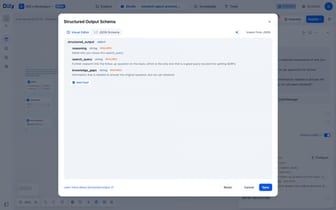
    Dify builds deep research workflows using loop variables, structured output, and Agent nodes to achieve iterative exploration and comprehensive report generation. The workflow includes three stages: intent recognition, dynamic research loops (tracking six variables), and research synthesis. Agent nodes utilize exa_search, exa_content, and think tools for information collection and processing. The final output is a cited Markdown report, accelerating the automation of expert-level research methods.

  2. Prime Intellect Blog

    PCCL - Prime Collective Communications Library Released: A fault-tolerant communication library designed for global distributed training.

    PCCL released, designed for global distributed training, with fault tolerance, supports operation on the public internet, bandwidth up to 45 Gbit/s between each pair of data centers, training bandwidth up to 25 Gbit/s between North America and Western Europe, supports dynamic member joining and rejoining, verified its high fault tolerance through long-term stress tests on major sockets (Linux, macOS, Windows WSA).

May 11Sun
  1. Prime Intellect Blog

    INTELLECT-2 Released: The first 32B parameter model trained through global distributed reinforcement learning

    INTELLECT-2 is the first 32B parameter model trained using global distributed reinforcement learning, employing fully asynchronous RL across dynamic heterogeneous computing contributor groups to train reasoning language models. It has open-sourced the training framework PRIME-RL and components such as TOPLOC and SHARDCAST, while improving the GRPO training recipe and data filtering techniques, enhancing QwQ-32B performance on mathematical and coding tasks.

Apr 28Mon
  1. Prime Intellect Blog

    Prime Intellect previews its distributed reasoning stack, building a reasoning engine for the public internet.

    Prime Intellect previews its distributed reasoning stack, designed for consumer-grade GPUs and public internet 100ms latency, and releases three open-source code repositories PRIME-IROH, PRIME-VLLM, PRIME-PIPELINE to achieve latency-aware pipeline parallelism, aiming to achieve the openness and democratization of AGI through consumer-grade hardware and network connections.