Skip to content
Live
Nov 12Thu
  1. Google Research58

    Google Research has released a wearable device-driven CKM risk assessment framework

    Google Research releases a wearable device-driven CKM risk assessment framework, predicting future health trajectories through an explainable health age model (CHA). The framework is trained on wearable data from 2.2 million weeks using the SensorWM model, providing personalized 12-week counterfactual health simulations combined with language models to generate clinically validated guidance plans. The CHA model integrates modifiable indicators such as heart rate, steps, and sleep to predict disease risk over 68,000 person-years, improving the predictive performance of clinical indicators.


  2. Meta Engineering40

    Meta Develops Intelligent Delivery System: AI Optimizes Computational Resource Allocation to Enhance Ad Sorting Performance

    Meta's Intelligent Delivery system, through AI optimization of computational resource allocation, has boosted ad sorting performance by approximately 10% since 2017. The system includes a Resource Core Model that predicts the marginal utility of computational resources (6B sparse parameters + 20M dense parameters), multi-layer mechanisms for cross-system resource migration, and a framework that uses AI agents to continuously monitor and detect changes in the response system.

  3. AWS Machine Learning Blog60

    AWS open-sources UAEF: cross-framework closed-loop evaluation AI agents

    AWS releases open-source framework UAEF, using adapters to unify the execution traces of LangGraph, LangChain, Strands Agents, Amazon Bedrock AgentCore, and Langfuse into AgentTrace, then scoring with 7 dimensions and 36 built-in metrics.

    Why it matters: The original text provides an adapter and metric design for cross-framework unified evaluation, allowing readers to judge the implementation method for comparing multi-framework agent versions.

  4. AWS Machine Learning Blog

    AWS Quick accelerates product development through AI-driven lifecycle management (AI-PDLC)

    AWS Quick's AI-driven product development lifecycle (AI-PDLC) transforms enterprise signals into validated prototypes through six specialized skill agents, combined with human approval. The Discovery agent analyzes pain points in enterprise data sources, and the Prioritize agent uses a 0-10 score framework to evaluate use case priorities, with all decisions requiring manual confirmation.

  5. The Verge · AI65

    Google DeepMind has released the AlphaGenome 2 model, analyzing how DNA affects different cells.

    Google DeepMind releases AlphaGenome 2 model, predicting gene variation impacts on different cell types and states by analyzing over 100 million cell outline data, identifying nearly double the variable gene expression mutations compared to the previous generation model

Nov 11Wed
  1. The Decoder

    German defense technology company Helsing releases Clarity AI platform, providing target preparation suggestions for weapon systems.

    German defense technology company Helsing has launched the Clarity AI platform, which generates target suggestions by integrating sensor data, open-source intelligence, etc. The information is processed by hundreds of AI agents and reviewed by humans, emphasizing European control and human supervision.

  2. Databricks Blog76

    Databricks upgrades Genie One to an enterprise AI collaboration workspace

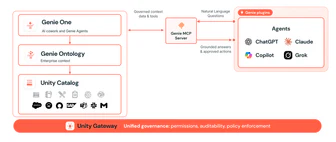
    Databricks announces Genie One as the unified entry point for enterprise AI collaboration, consolidating search, product generation, and cross-tool operations into one place, and providing enterprise context based on Genie Ontology, governed by Unity Gateway.

    Why it matters: The original text provides specific capabilities of Genie One from Q&A to product generation, cross-tool execution, and governance, allowing for judgment on how enterprise AI workbenches can be implemented.

  3. Databricks Blog58

    Databricks Genie Ontology's enterprise context layer brings business understanding to ChatGPT, Claude, Microsoft Copilot Cowork, and Grok Bot

    Databricks releases Genie Ontology, an enterprise context layer, combining managed definitions with continuous learning of organizational knowledge to provide business understanding capabilities for AI agents. Genie plugins support ChatGPT, Claude, Microsoft Copilot Cowork, and Grok Bot, enabling teams to maintain business context in Databricks and use it across multiple agents.

  4. Databricks Blog58

    Databricks Genie Agents now support analyzing more data sources to transform workflows

    Databricks Genie Agents can now perform high-quality business analysis, analyze large volumes of documents, and connect enterprise tools to automate actions by supporting unstructured data analysis and new MCP connectors. The new OpenSharing feature allows users to share managed agents with pre-installed data, instructions, and knowledge with partners, suppliers, and customers, accelerating the generation of external insights.

  5. Databricks Blog66

    Databricks has announced that Genie Ontology is now officially available.

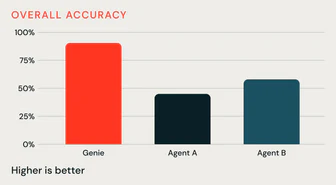
    Databricks announces the official availability of Genie Ontology, where agents continuously learn business context from dashboards, SQL queries, notebooks, and semantic models, and key definitions are managed by humans through Unity Catalog.

    Why it matters: The original text provides pass rates, time consumption, and token comparisons for benchmarks co-built with Turing, allowing judgment on the impact of the enterprise context layer on the accuracy of agents.

  6. Databricks Blog80

    Databricks releases new Genie: an autonomous AI colleague for complex enterprise work

    Databricks released a new version of Genie, positioning it as an autonomous AI colleague that can continuously track progress, follow up on missing inputs, and take action when new information arrives. Users can set guards and approve critical steps. The new version is paired with Genie Ontology, which provides business definitions and organizational knowledge. Genie Search uses a hybrid search combining indexing and MCP, and continues to use Unity Catalog permissions. Unity Gateway manages access, cost, and auditing uniformly.

    Why it matters: The original text outlines the boundary of Genie's ability to shift from an assistant to autonomously performing long-term tasks and its governance methods, which can be used to determine the context and permission controls needed for enterprise agents to go live.

  7. TechCrunch · AI

    Databricks new AI agent Genie v2.0 can complete multi-step tasks and provide unmodified feedback

    Databricks has released Genie v2.0 AI agent, which supports completing time-consuming multi-step tasks, building ontologies through platform information to obtain context, and allowing enterprise leaders to assign tasks for autonomous completion. CEO Ali Ghodsi demonstrated its internal use of Genie to analyze employee satisfaction surveys, evaluate executive proposals, summarize failed sales proposals, and prepare podcast interviews. The agent has become a source of unfiltered truth revealing company issues.

  8. The Verge · AI

    Adobe experimental AI tool: makes photos explorable, AI characters can converse, editing like copy and paste

    Adobe has launched experimental AI tools Project Screen Test to design AI characters through dialogue and generate audition animations; Project Sight Span converts photos into explorable 3D environments; Project Sound Bender allows users to customize sound effects like a color wheel; Project Rinse Repeat can replicate edits and apply them automatically to other objects in the same image

  9. Mastra Blog

    Mastra launches MCP Tasks feature to run background long tasks

    Mastra allows users to use tasks to run long tool calls in the background via MCPServer and MCPClient. The agent can poll the server until the task is completed and obtain the results; the agent is blocked during the tool call. The task feature enables the agent to respond to user requests while performing slow or expensive computations, for example, the agent runs a 30-day warehouse report in the background while continuously answering questions.

  10. Hugging Face Daily Papers

    InfraRSI: Utilizing recursive self-improvement training infrastructure

    InfraRSI transforms open-ended human instructions into validated training optimization through a five-stage workflow, achieving up to 2.75x acceleration in four single-node and multi-node dense as well as Mixture-of-Experts (MoE) LLM workloads, and increasing the average model FLOPs utilization (MFU) from 17.4% to 30.0%, surpassing existing tuners and coding agents.

  11. ITHome · AI

    OpenAI will discontinue the old voice mode of ChatGPT on December 11 and fully switch to GPT-Live

    OpenAI will discontinue the ChatGPT Advanced Voice Mode and Standard Voice Mode on December 11 and fully switch to GPT-Live. Since its release in July, GPT-Live usage has nearly doubled, but some users are dissatisfied with its issues of interrupting conversations and losing context. The old versions will start receiving discontinuation notices on November 10 and will be officially removed on December 11, with users automatically switching to GPT-Live beforehand.

  12. Latent Space65

    OpenAI discussed new ways of working for Codex at the AI Engineers Code Summit.

    OpenAI introduced new ways of working for Codex at the AI Engineers' Code Summit, including improvements to cloud functions, voice interaction, and agent collaboration. Codex Cloud 2.0 allows users to run multiple tasks in isolated instances, but there are still usability issues with cloud functions. The voice mode, as a control plane, can manage code repositories, and personal agents dots can serve as safety nets, delegation nodes, and ubiquitous presences.

  13. ITHome · AI65

    MooreThread completes adaptation of the MiniMax H3-Image image generation model

    MooreThread announced that its MTT S5000 AI computing card and MUSA software stack have been adapted to the MiniMax H3-Image image generation model. This model can generate high-resolution images of 4096×4096 pixels within 10 seconds, achieving speeds five times faster than mainstream market offerings. MooreThread has optimized the entire chain based on MTT S5000, supporting text-to-image generation, image reference, and editing capabilities.

  14. Comfy Blog

    Seedream 5.5 is provided through partner nodes

    Seedream 5.5 is provided through partner nodes in ComfyUI, a multimodal model that generates content from text and edits from images. This version advances in transparent RGBA generation, precise local multi-round editing, poster and chart generation with readable text and structured layouts, more realistic portraits, and lighting control. In ComfyUI, all features are integrated into a single node, allowing for sequential editing processes and direct transparent output to synthesis nodes.

  15. OpenRouter Blog70

    OpenRouter tutorial: How to fix OpenAI and Claude's 429 rate limit error

    OpenRouter published a tutorial explaining how to read the 429 response header and determine the rate limit source based on limit_source, providing three repair methods: retry, model fallback, and vendor failover.

    Why it matters: The author used the same batch of 60 requests to test three 429 handling methods, providing a comparison of time consumption and cost, which can be directly migrated to your own retry logic.

  16. Ars Technica · AI65

    Amazon releases AI-powered Ring drone and robot

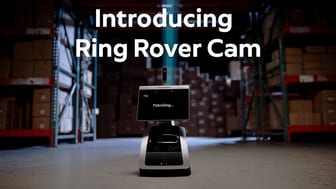
    Amazon introduces Ring Flight drone and Ring Rover Cam robot, offering 2K video features with 148-degree field of view and 360-degree rotation, respectively. The drone has a flight time of 8 minutes, and the robot is priced at $1000, supporting 4K recording and cloud storage for 180 days. Both are controlled via Alexa Home Map, but the drone's performance decreases on reflective surfaces, and the robot is limited to single-story indoor use.

  17. ITHome · AI

    Anthropic upgrades AI office suite: Claude Whiteboards, Sheets, and Data aiming to cover the entire team collaboration process

    Anthropic introduces Claude Whiteboards, Claude Sheets, and Claude Data, moving AI assistants from chat Q&A to team collaboration workstations

    Same story · 2 outlets

    How the accounts differ:The Verge states Claude Data is open to all paid users, while TechCrunch and The Decoder do not mention this.

  18. AWS Machine Learning Blog40

    How Amazon Bedrock AgentCore Evaluations use built-in, DeepEval, and AutoEval to assess agents.

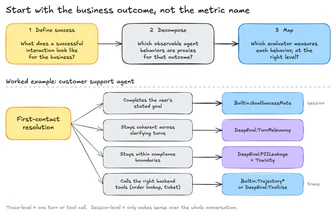
    Amazon Bedrock AgentCore Evaluations provides three evaluators—built-in, DeepEval, and AutoEval—to assess agents. The built-in evaluator is developed and tested by AWS, covering common dimensions; DeepEval and AutoEval are third-party open-source libraries, with AgentCore hosting them in production environments. The evaluation process requires first defining business success criteria, breaking them down into observable behaviors, and then mapping them to the appropriate evaluator level.