Skip to content
Live
Oct 21Wed
  1. Databricks Blog

    Databricks introduces Agent Memory to enhance intelligent agent capabilities

    Databricks introduces Agent Memory, which improves agent quality, reduces costs and latency by storing key facts, preferences, and processes, and supports running on Lakebase. It is currently in Beta version. Agent Memory is based on Databricks' latest memory research and uses the MemCurrent architecture. In internal benchmark tests, it has tripled the pass rate of agent tasks while reducing token usage by 31%.

  2. PyTorch Blog35

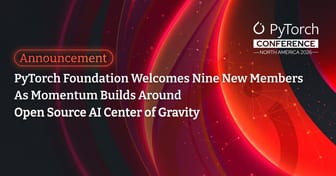
    PyTorch Foundation recruits nine new members to promote the development of the open-source AI ecosystem

    PyTorch Foundation announces the addition of nine new members, including Nebius, Nscale, and Shopify, strengthening its core position in the development of open-source AI and accelerating ecosystem breakthroughs. The addition of new members highlights the ecological importance of projects such as PyTorch, vLLM, and DeepSpeed, promoting the integration of AI research and commercial applications.

Oct 20Tue
  1. Hugging Face Blog58

    How does ALTK-Evolve surpass state-of-the-art models in the τ²-bench customer service task through learning and memory?

    ALTK-Evolve uses GPT-4.1 to learn and apply customer service scripts. In the τ²-bench customer service agent benchmark test, it surpasses all retail entries in the retail sector, achieving a score of 67.5% Pass^4, and does not require updating model weights. The model is based on a basic ReAct agent and GPT-4.1. It attempts to analyze tasks and use GPT-4.1 to distill success and failure into short behavioral rules, then adds these guidelines to the agent's system prompts without updating weights or manual annotation.

  2. Tessl Blog

    Tessl Blog: Stop line-by-line code review, start verifying intent

    Tessl Blog stops line-by-line code review and starts verifying intent. The team's merged PR volume is four times that of last year and almost all AI-generated, making review a bottleneck. The team shifts to reviewing intent before code generation (acceptance criteria, constraints, and edge cases), and transforms repetitive review comments into machine-executable rules (invariants), thus shifting the focus of review from the code itself to decision-making and rule ownership.

  3. Tessl Blog75

    From Standalone Coding Tools to Development Platforms: How Trust Affects the Adoption of AI Code Assistants

    Engineering teams' trust in AI code assistants determines their scope of use, ranging from viewing code differences to full authorization for merging. Trust is built through rapid validation mechanisms. Development platform costs increase with the intensity of AI agent work, with about 80% of the budget consumed by 20% of heavy users, requiring an evaluation of the effective cost per unit of work. Successful teams start with auxiliary tasks and gradually expand the scope of AI, rather than applying it directly to core systems.

  4. IBM Research Blog

    llm-d 1.0 Released: Strengthening Open Source AI Inference Production Environment

    The llm-d project announces the release of version 1.0, which is a Kubernetes-native distributed inference service network that supports deploying any model's inference stack on any accelerator in any cloud. This version enhances multi-tenant quality of service, zero-downtime operations, and agent-aware services to achieve continuous performance in common production operations. Through techniques such as prefix cache-aware routing and KV cache offloading, llm-d 1.0 can capture 97% of available cache reuse, reducing the cost of large-scale AI services.

  5. Hugging Face Blog58

    AnyLanguageModel 1.0 is released: supporting local model advancements on Apple platforms for a year.

    AnyLanguageModel 1.0 is released, supporting local model advancements on Apple platforms for a year. New support added for cloud models such as OpenAI Chat Completions, Anthropic Messages, and Google Gemini. Local model support includes llama.cpp, MLX, and Core ML. Tool calling and guided generation features are expanded. Cloud models have the same functionality as local models, and API keys support dynamic acquisition through closures.

  6. Hugging Face Blog62

    PyTorch 2.15 brings FP8 and faster LLM decoding to the MPS backend.

    The Hugging Face PyTorch team introduces updates to the MPS backend in PyTorch 2.15, adding the tensor torch.float8_e4m3fn and F.scaled_mm, with FP8 tensors occupying half the space of BF16.

    Why it matters: The original text provides specific numbers for the MPS backend in FP8, MoE decoding, and memory usage, which can be used to judge the actual changes in running models locally on Mac.

  7. AI as Normal Technology75

    New paper: Rising trend in AI agent evaluation

    Researchers have proposed 33 trends in the rise of AI agent evaluation, pointing out that evaluating agents is more complex than evaluating models, requiring attention to the entire behavioral trajectory rather than just results, and emphasizing that the scope of evaluation needs to be expanded to laboratories, specific use cases, and real-world environments, while calling for more interdisciplinary evaluators to participate and ensure their independence.

  8. Claude · YouTube

    Claude has launched Claude Dashboards and Claude Motion

    Claude has launched Claude Dashboards and Claude Motion, with the former supporting the real-time conversion of data platform or CRM data into dashboards in all paid plans, and the latter supporting the generation of animated explanatory videos from reports or charts in Team and Enterprise plans, both generated in code form without a video model, with content that can be modified and exported as MP4 or edited.

Oct 19Mon
  1. LangChain Blog

    How Nu company builds AI health coaches using LangGraph and LangSmith and prioritizes evaluation

    Nu company, while developing AI health coach Nu, prioritized building evaluation criteria to avoid boundary-crossing medical diagnoses. Using the LangGraph framework and LangSmith tools, it ensures the system meets health guidance needs while complying with regulatory requirements through LLM judges scored by category and open-ended behavior tests. The evaluation framework is designed separately for single responses and complete conversations, supporting rapid migration between two leading model providers. Safety probes and guard nodes review conversation content in real-time, ensuring the product stays within compliance boundaries.

  2. n8n Blog

    How to run n8n AI workflows locally on NVIDIA DGX Spark without cloud API

    n8n workflows can run locally on NVIDIA DGX Spark without calling cloud APIs. By deploying the 35B hybrid expert model Qwen3.6-35B-A3B (NVFP4 format) and 8 other models on DGX Spark, tasks such as transcription, OCR, and image generation are supported. All models are accessed by n8n through OpenAI-compatible endpoints. Deployment requires caching models and using version 0.30.0 of vLLM to ensure offline operation and license compliance.

  3. Prime Intellect Blog

    prime-rl v0.10.0 released: Improving training speed, introducing new RL loss IPO, and unifying the evaluation stack

    prime-rl v0.10.0 has been released, defaulting to the new RL algorithm IPO to improve the stability of asynchronous RL and optimize performance. It supports new models such as Qwen3.8 Flash, and increases training throughput by 1.15 times (based on the torchtitan platform) through MoE optimization and custom kernels.

  4. Google Developers Blog

    LiteRT Tensor API release: A new solution for native model development on edge devices.

    LiteRT Tensor API is released, supporting developers to write and optimize models natively in C++ on edge devices, enabling cross-platform deployment (CPU/GPU/NPU) without script conversion. Developers can fully control the computational graph structure and directly load model weights, achieving zero-copy data transfer through shared accelerator buffers, while providing building blocks for AI coding agents.

  5. Artificial Analysis Articles

    HealthBench and HealthBench Professional: Evaluating AI model performance in real health conversations

    OpenAI has released the HealthBench and HealthBench Professional evaluation benchmarks to assess the performance of AI models in real health conversations. In HealthBench Professional, GPT-6 Astra and GPT-6.1 Sol scored the highest after length adjustment (66.0% and 65.1%), while Claude Sonnet 5.5 scored the lowest (63.0%).

  6. Inception Labs Blog

    Inception Labs launches Mercury 2, enhancing the ability and efficiency of building AI applications

    Inception Labs has launched Mercury 2, increasing the number of free tokens from 10M to 100M. The new Inception API key includes 100M free tokens, and the free tier's request frequency has been increased 10 times. Mercury 2 performs better in real-time speech, search, AI coding sub-agents, and multi-agent workflows. The first token response time is reduced, end-to-end latency is lowered, and tool calls are more reliable.

  7. Inception Labs Blog

    The rise of Mercury 2 and real-time sub-agents

    Mercury 2 completes context compression tasks in just 150 seconds while maintaining the same quality as Sonnet 4.6, with a 5-fold speed increase and a 90% cost reduction. Augment Code uses it for enterprise-level coding AI agents, achieving an 82% reduction in compression latency and a 90% cost cut, and dynamically allocates tasks through the Prism model router, reducing total LLM expenditure by 30%.

  8. Ollama Blog

    Cloudflare's 27B multimodal decision model Clef has landed on the Ollama cloud platform

    Cloudflare's 27B multimodal decision model Clef has landed on the Ollama cloud platform, users can run it locally or use cloud services. Clef transforms state and typed question patterns into decisions, supports text and image input, is compatible with Jev and System One APIs, is fine-tuned based on Qwen3.8-27B, and adopts the Apache 2.0 license. In Cloudflare's decision index evaluation, Clef outperforms Jev and performs leading in most benchmark tests.

  9. Together AI Blog

    Together Post-Training: Flexible and efficient model fine-tuning service

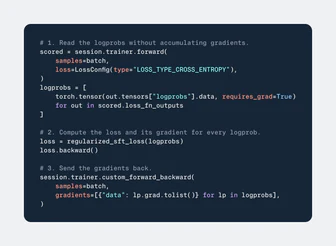
    Together AI has launched Post-Training services, supporting the construction of custom models through reinforcement learning and supervised fine-tuning without complex infrastructure. The service provides flexible training loop definition capabilities and optimizes the underlying system and infrastructure to improve model quality and training speed. It supports mainstream open-source models such as Muse Spark Open, GLM 5.3, Kimi K3, and Qwen 3.8-27B, running on dedicated GPU resources to ensure efficient and numerically consistent training.

  10. Inception Labs Blog

    Inception Labs launches Mercury 3: the most powerful diffusion-style large language model in history

    Inception Labs releases Mercury 3, this diffusion large language model surpasses GPT-6 Luna and Claude Haiku 5.5 in multiple benchmark tests, with a speed increase of 4-8 times reaching over 1,000+ tokens/second, expanding the context window to 1M tokens, with prices per million input/output tokens being $0.20 and $0.70 (50% discount at launch).

Oct 18Sun
  1. vLLM releases

    vLLM v0.32.0 released: new features and performance optimizations

    vLLM v0.32.0 released, including 814 commits, contributions from 363 contributors, adding support for structured state Q&A via the POST /v1/systemone endpoint, new hf tools and parser support for general templates, low-precision KV cache optimization across all platforms, Model Runner V2 becomes the default for ROCm, startup and service performance improved by 43-85%

  2. MIT News · AI75

    MIT researchers develop multimodal AI model to provide 'clear' view for materials science

    The multimodal AI model developed by MIT researchers combines 3D atomic structures with natural language descriptions, generating rich structural language descriptions from experimental research papers and first-principles calculation databases, helping AI learn the key properties of materials. The model outperforms text-only models in identifying solid-state lithium-ion battery electrolyte materials and can learn geometric structure representations, providing new research tools for materials science.