Skip to content
Live
Oct 16Fri
  1. Microsoft Research

    Magnetar achieves provable general computation

    Magnetar proves that programs written in Rust, Go, or C are, on average, 10 to 39 times faster than the fastest comparable systems, and achieves security solely by relying on standard hash functions, solving the three major challenges of zero-knowledge proofs: efficiency, generality, and usability. It significantly reduces proof overhead by leveraging repetitive computations and early termination of the proof process, making proof generation as routine as running a program, and can be used in scenarios such as AI agent behavior verification and financial transaction validation.

Oct 15Thu
  1. Baseten Blog

    NVIDIA Nemotron 3.5 Super VL released on Baseten

    NVIDIA Nemotron 3.5 Super VL combines visual understanding, reasoning, and tool use, supporting reading documents, images, application interfaces, and videos, scoring 1190 Elo in the GDPval evaluation, higher than Nemotron 3 Super's 493. Developers can fine-tune it via Baseten Loops SDK and evaluate it using NVFP4 weights on Blackwell GPU.

  2. Mistral AI

    Mistral AI launched the Timestral time series foundational model family

    Mistral AI released the Timestral time series foundational model family, with the smallest model at only 209M, ranking first in three major benchmark tests (GIFT-Eval, TIME, and fev-bench), outperforming models with larger parameter sizes; this series includes four sizes ranging from 5M to 209M parameters, supports past and future covariates, runs efficiently on CPUs, and can be fine-tuned for specific domains via Mistral Forge.

  3. Apple Machine Learning Research

    Selection-Based Structured Reasoning: A framework for efficient multimodal search agents

    The Selection-Based Structured Reasoning (SSR) framework restructures reasoning into selection rather than open-ended generation, selecting the most likely solution from predefined reasoning candidates before each action, significantly reducing reasoning costs. Validated using 2B and 4B models on seven multimodal search benchmarks, SSR achieved average success rates comparable to leading search agents of the same scale, reducing single-step reasoning latency by 90% and total reasoning latency per task by 28-54%.

  4. Google Developers Blog

    How to evaluate AI agents: Beyond sensory checks.

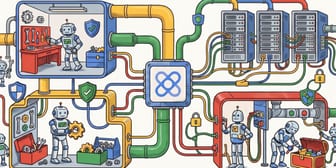
    Evaluating AI agents cannot rely solely on perception checks, as agents may fall into retry loops or produce hallucinatory responses that still appear normal, leading to soaring cloud costs and token usage. A repeatable evaluation process should be established, starting with defining key user journeys (CUJ), using simulated user testing, and employing multiple layers of checks such as unit tests, deterministic metrics, LLMs as judges for scoring standards, and integration tests. Combining manual review tracking with automated validation can detect latent regressions early in development and expand the evaluation framework as agent capabilities grow.

  5. Apple Machine Learning Research

    MLX and RDMA implement local and distributed large language model inference on Mac Studio

    On a cluster of four Mac Studio machines, Muse Spark Open (816B parameters) generates at a speed of over 36 tokens/second. The Mac Studio M5 Ultra version offers 4.6x faster inference speed (TTFT) and 1.6x faster tokens/second compared to the M3 Ultra, benefiting from the GPU neural accelerator and 1.2 TB/s memory bandwidth.

  6. Google Developers Blog

    Google OAuth Launches DPoP Support: Protecting Refresh Token Security

    Google OAuth Platform Launches DPoP Support, Encrypting Refresh Tokens and Client Key Pairs at the Application Layer to Prevent Token Theft and Replay Attacks. This scheme uses DPoP only for constrained long-lived refresh tokens, ensuring they cannot be replayed even if stolen, while short-lived access tokens remain standard Bearer tokens to maintain high performance. DPoP works with DBSC to defend against API and web session credential theft, but note the key sharing challenges in multi-agent workflows.

  7. AI as Normal Technology

    Beyond Automation: New Research Directions in AI

    Beyond Automation: A new research direction in AI argues that AI should not be limited to automating human labor but should explore new directions for enhancing humans and promoting human-machine collaboration. This perspective advocates for AI research to focus on new issues such as transparent agents, process tracking, and human-machine interaction design to push AI beyond pure technological automation and achieve broader applications.

  8. Mistral AI · Hugging Face new models

    Mistral AI releases Timestral-123M time series base model

    Mistral AI releases Timestral-123M time series base model, with 123M parameters, using a patch-based Transformer architecture, context length of 32,768 time steps, single prediction covers 1,024 time steps, outputs 21 quantiles. The model achieves optimal accuracy in zero-shot prediction on GIFT-Eval, TIME, and fev-bench evaluations, and is licensed under the Modified MIT License.

  9. LangChain Blog

    How LangChain Deep Agents Manage Context Windows Through Middleware

    LangChain Deep Agents manage context windows through middleware, preventing unnecessary information from entering and filtering existing content. It employs techniques such as offloading (saving large tool results and user messages to files), summarization (compressing old messages), skills (loading on demand), sub-agents (separating noisy tasks), and long-term memory (preserving learning across sessions). These techniques are implemented by inserting middleware at critical points like model calls and tool calls, allowing users to use them without writing code.

  10. Google Research

    Deep Review: Google's intelligent document verification system

    Google has launched the Deep Review intelligent document verification system, providing rigorous feedback and technical validation for complex documents, supporting PDF and plain text input, offering 2 free reviews per week, and integrating advanced API, collaborating with 4 top computer conferences such as STOC 2026 and ICML 2026, processing over 16,000 pre-submission feedbacks for papers.

Oct 14Wed
  1. Ant Group inclusionAI · Hugging Face new models

    inclusionAI/Ling-3.0-flash-UBTree released: Speculative decoding model based on UBTree technology

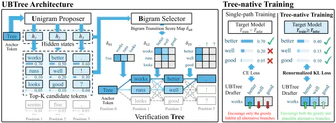
    inclusionAI released the Ling-3-Flash-UBTree-B16 model, combining a five-layer DFlash backbone and a learned bigram selector, proposing multiple candidate continuations for Ling3-Flash for target model validation, with 482M parameters, achieving 3x+ E2E speed improvement on benchmarks like MMLU, and the UBTree adaptation is not yet open source, with SGLang integration support expected to be released soon.

  2. Ant Group inclusionAI · Hugging Face new models

    inclusionAI/Ming-3.0-asr-tiny released: Context-aware speech recognition model supporting multiple language dialects

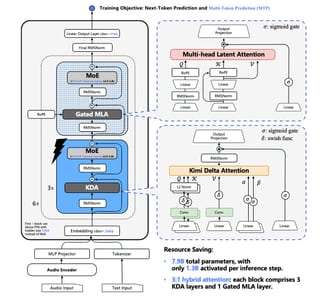
    inclusionAI/Ming-3.0-asr-tiny combines Ling-tiny-v3 language backbone and audio encoder, supporting single-round Chinese and English speech transcription and recognition of 15 dialects, improves professional term recognition rate through hot words or dialogue context, model parameter size not mentioned, evaluated in noisy speech and 5 application areas, provides PyTorch/Transformers inference examples and MIT license.

  3. METR

    How to evaluate the control and monitoring of internal AI agents

    Assessors can collect evidence of the reliability of internal AI agent monitoring by monitoring five core sub-questions: coverage, system vulnerability monitoring, evasion monitoring, response mechanisms, and potential impact. The focus of the assessment is on LLM monitoring, as agents typically have broad permissions, requiring an understanding of their full range of actions. The assessment requires access to reasoning logs, monitoring logs, and employee interviews, and checks whether there are blocking monitors and whether unmonitored reasoning is indeed non-agent reasoning.

  4. NVIDIA Blog

    Multiple cities in Europe have deployed NVIDIA-driven AI agents to improve urban operational efficiency.

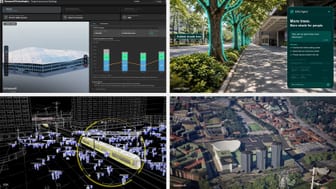
    Multiple cities in Europe, along with software, infrastructure, and integration partners, are using NVIDIA's accelerated computing to build physical AI agents and digital twin systems to optimize urban operational decisions. These applications can predict maintenance needs, guide urban planning, and enhance public service response capabilities, involving Belgium, Finland, France, Italy, Netherlands, Poland, Sweden, and the UK.

  5. StepFun · Hugging Face new models

    Step-5-Preview-NVFP4 model release by LeapX Stars

    LeapX Stars releases flagship model Step-5-Preview-NVFP4, with 600B total parameters and 27B active parameters, supporting up to 1M context windows, excels in software engineering, professional knowledge work, and financial fields, capable of processing text, images, and video, deployable via OpenAI-compatible API or offline generation.

  6. Google DeepMind

    Google DeepMind releases Gemini 4 Argon and emphasizes security protection

    Gemini 4 Argon demonstrates cutting-edge capabilities in coding, finance, law, and other fields, particularly enhancing cybersecurity defense functions. Its effectiveness has been validated through the Fairwind project and internal testing. The model performs excellently on benchmark tests like MMLU and employs a three-layer real-time protection mechanism (input filtering, internal introspection, continuous monitoring) and automated bias monitoring, significantly reducing the risk of harmful requests and violations. It successfully intercepts over 99% of external biosecurity jailbreak attempts while reducing shortcut behavior in coding tasks to 2%.

  7. GitHub Blog · AI & ML

    GitHub's secret detection model: Discover more secrets with less noise

    GitHub released a dedicated secret detection model that combines a fine-tuned ModernBERT classifier with regular expressions, reducing false positives by 11.5% while achieving a higher acceptance rate and shortening post-push scan execution time by 86%, with a cost reduction of 98%. The model distinguishes real credentials from similar items by analyzing file paths, variable names, and contextual code, making general secret detection extendable to push protection possible.

  8. Google DeepMind

    Gemini 4 Argon brings breakthrough progress to robotics technology

    Gemini 4 Argon has achieved major breakthroughs in physical understanding, code generation, and visual semantic reasoning, achieving a pure reasoning score of 87% on the Embodied Reasoning (ERQA) benchmark test, surpassing all leading models. Argon can be applied to all stages of the robot's lifecycle, including mobile manipulation practice using MuJoCo, zero-shot robot control, and closed-loop steering of video world models.