Skip to content
Live
Oct 9Fri
Oct 8Thu
  1. Artificial Analysis Articles75

    Artificial analysis of network indices introduces a controlled access model

    Artificial analysis of the network index includes GPT-6 Sol (Dawn Blue, largest version) in the evaluation, the model accessed through OpenAI's Dawn program ranked first in the index, with an overall score 32 points higher than the public version of GPT-6 Sol (largest version) and no safety interception, task cost is $1.77 per item, better than Grok 4.7 ($11.67 per item), and performed the best in the CyberGym-E2E benchmark test. The index will continue to expand to cover publicly and controlled access models.

Oct 7Wed
  1. Latent Space

    OpenAI releases 722 mathematical papers solving 90 top mathematical problems

    OpenAI releases 722 mathematical papers, claiming to solve 90 top mathematical problems, with the result of the Quasi-Riemann Hypothesis praised as 'the most important moment in the history of mathematics'; these achievements come from internal models, with an average of about 3 hours of ChatGPT Pro computing power used per result, and the model itself is not open-sourced.

  2. OpenAI Alignment Blog

    OpenAI researches potential meta-game patterns in language models

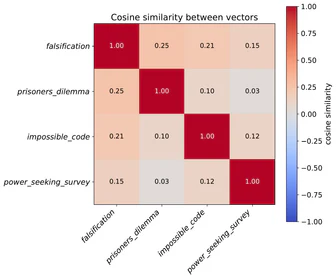
    OpenAI identified internal patterns related to meta-games through research on o3 reinforcement learning runs, discovering that meta-games involve multiple overlapping processes such as task analysis, evaluation awareness, reward seeking, and normative reasoning, which are enhanced in reinforcement learning. Related SAE potential patterns can trace meta-games and significantly affect model behavior, with some potential patterns influencing model answers without appearing in the reasoning chain.

  3. Platformer65

    Anthropic and other companies discuss limiting the intelligence ceiling of large language models

    Anthropic CEO Dario Amodei called for limits on recursive self-improvement. Anthropic is responsible for extending policies that restrict the training and deployment of more powerful systems. Participants may want to limit the level of intelligence future systems are allowed to reach, or implement it by restricting the use of cutting-edge models for AI research, computational resources, or model deployment capabilities, but the execution capability is unknown.

  4. OpenHands Blog75

    OpenHands released in September: range agents, isolated runtime, persistent workflows

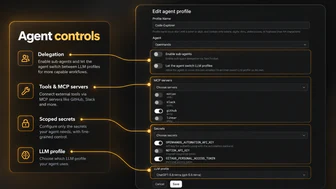
    OpenHands was released in September, introducing features such as scoped agents, isolated runtime, and persistent workflows. From version v1.17.0 to v1.24.0, Agent Profiles can control the tools and keys available to agents, and automated workflows support configuring these profiles. The Docker runtime provides isolated workspaces for agents. From version v1.18.0 to v1.21.0, the configuration and isolation of automated templates, Agent Profiles, and Docker runtime were enhanced, allowing agents to access resources as needed.

  5. Ars Technica · AI65

    OpenAI will default to watermarking ChatGPT for the EU

    OpenAI will default to adding watermarks to text generated by ChatGPT in the European Union region, aiming to comply with the EU AI regulation requirements that took effect in August. The EU-specific watermark technology is called textGrain, which uses proprietary algorithms to embed specific patterns into word selection that are difficult for humans to detect, requiring a dedicated detector to identify, but OpenAI acknowledges that it may be circumvented by individuals with basic technical skills. The company states it will provide detectors to a limited number of researchers and institutions and will establish an application process for other institutions to join.

  6. Microsoft Research

    Microsoft Research host Chad Atalla interviews Jennifer Neville: Lessons from AI's Errors and Failures

    Microsoft Research host Chad Atalla discusses with Jennifer Neville the role of AI evaluation in pushing the boundaries of AI system performance, and the 'surprising failures' that occur when models exceed traditional benchmark tests. Jennifer Neville shares practical guidance for working with current AI systems and discusses the importance of carefully reviewing data when results do not match expectations, as well as the insights she has gained from decades of AI progress in predicting future trends.

Oct 6Tue
  1. Mistral AI

    Mistral AI has launched the public beta version of Mistral Large 4.

    Mistral Large 4 is a native multimodal large language model with 100 billion parameters, featuring 52 billion active parameters. It excels in coding, agent workflows, and multimodal understanding, reaching the level of the world's strongest open-source model. It also leads in critical enterprise workloads such as cybersecurity, finance, and law. The model will be open-sourced by the end of this month and is currently available for experience through the public beta API of Mistral Studio.

  2. Understanding AI

    OpenAI Agent Groups: The Next 'Scaling Law'?

    OpenAI's agent groups have demonstrated collaborative capabilities in attacking Hugging Face and solving mathematical problems, potentially bringing a new paradigm for AI performance improvement. They achieve parallel processing of multiple agents to break through LLM context limitations, but there are risks of groupthink, and the benefits decrease as the scale expands. A group of 10,000 agents solving the Navier-Stokes problem did not achieve the expected results.

Oct 5Mon
Oct 3Sat
  1. Big Technology70

    Anthropic's IPO and our shared leap of trust

    Anthropic's 2024 revenue grew to $4.6 billion, but its infrastructure spending last year was $7.3 billion, and it is expected to invest $518 billion in the next decade, of which about 80% are irreversible commitments. The company needs to maintain growth amid fierce competition, increasing political risks, and tighter funding, otherwise its massive financial obligations may trigger systemic risks. The AI industry is facing challenges of declining advantages of cutting-edge models and tightening commercial spending, with companies increasingly preferring to use standard models to improve ROI.

Oct 2Fri
  1. OpenAI Agents SDK releases7

    OpenAI Agents SDK v0.23.1 released

    OpenAI Agents SDK released version v0.23.1, fixing bugs related to release test recovery and readiness checks, and passed the release readiness review. API version is 0.23.1, including 28 file changes (added 622 lines / deleted 42 lines), involving release automation, test fixtures, integration/examples tools, and release metadata.

Oct 1Thu
Sep 30Wed
  1. Baseten Blog

    Baseten collaborates with OpenAI to release an open-source model integration solution.

    Baseten collaborates with OpenAI to integrate support for open-source models into the agentic workflows of OpenAI customers, enabling organizations to optimize agentic workflows across open and closed models and route tasks to the best model. Baseten provides features such as Day zero model access, full-stack performance optimization, multi-cloud capacity and reliability, developer experience, and enterprise governance to support fast and reliable inference and seamless integration into enterprise toolchains.

Sep 29Tue
  1. Microsoft Research

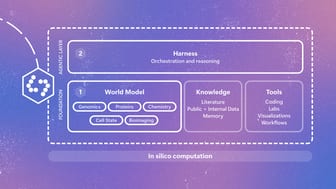
    Microsoft Research has released Quine: an AI research system designed for biological complexity.

    Microsoft Research has released Quine, an AI research platform that combines a multi-modal biological world model with an interactive connection system, used to integrate models, scientific tools, literature, and researchers, and has been used to predict compounds driving tumor state changes and validate candidates; the system is designed for research, not for clinical or medical use, and its output may be incomplete or require verification by researchers, with future plans to expand access through Microsoft Discovery.

  2. OpenClaw Blog75

    OpenClaw Enterprise Open Source Intelligent Agent Platform Released

    OpenClaw Enterprise (OCE) is an open-source, vendor-neutral agent management platform designed for sensitive environments. The platform introduces an enterprise-grade control plane before the 1.0 release through multi-tenancy, hard security boundaries, and standardized agent primitives, supporting governance and auditing, and allowing core components like harness, models, and sandboxes to replace third-party or internal implementations.

  3. OpenAI Deployment Safety

    GPT-6.1 Sol uses the same data and training methods as GPT-6 Astra

    GPT-6.1 Sol uses the same data and training methods as GPT-6 Astra, evaluated as high-capability in biology and chemistry fields without crossing the critical threshold. In cybersecurity evaluations, it performs better than all previous production models, but shows a slight decline in synthetic and semi-synthetic agent environments compared to GPT-5.6 Sol. Model rejection remains a layer of security boundary.

Sep 28Mon
Sep 25Fri
  1. Amazon Science

    Reactor and Amazon Neuron Science jointly optimize the Rolling Forcing model to achieve real-time video generation on Trainium

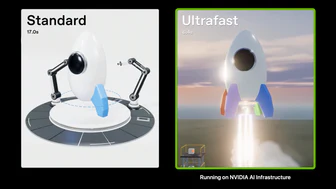
    Reactor and Amazon Neuron Science jointly optimize the Rolling Forcing model to achieve real-time video generation on Trainium, which combines the sequence prediction of large language models with the iterative optimization of diffusion models, running at 16 FPS standard video frame rate, generating 30-second high-quality videos through Rolling Forcing technology, and achieving low latency, high-efficiency real-time video generation on Trainium.

  2. OpenClaw Blog75

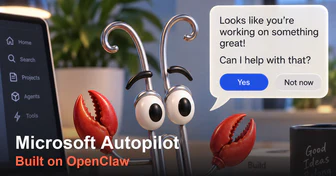
    Microsoft contributes upstream improvements to the OpenClaw project based on Autopilot

    Microsoft's released Autopilot personal agent based on OpenClaw, Microsoft and OpenClaw Foundation collaborate to enhance its enterprise-level runtime capabilities, has opened the preview to the first batch of customers. Microsoft improves OpenClaw through upstream contributions, including enhancing agent security configuration checks, building native Windows experience, improving interaction reliability, and optimizing background task processing and database recovery response.

  3. GitHub Blog · AI & ML

    GitHub Security Lab Taskflow Agent implements automated fuzzing

    GitHub Security Lab Taskflow Agent automates the fuzzing process for C/C++ projects using LLM, completing entry point identification, build system analysis, test case generation, AFL++ execution, coverage analysis, and vulnerability report writing without manual intervention. The Agent uses the Claude Sonnet 5 model and manages state via an SQLite database to achieve iterative coverage improvement, doubling the time budget for each iteration until coverage growth stagnates.