Skip to content
Live
Oct 24Sat
  1. AWS Machine Learning Blog

    Use AWS CDK custom resources to orchestrate SageMaker AI endpoint auto-scaling.

    Use AWS CDK custom resources to automatically orchestrate SageMaker AI endpoint updates with auto-scaling, without manual intervention. Through three custom resources (decommission, update, register scalable targets, attach extension policies) achieve explicit dependency order, ensuring endpoint configuration and auto-scaling parameters are synchronized in a single deployment. The deployment stack includes three custom resources, two Step Functions state machines, and twelve Lambda functions.

  2. Amazon Science

    Audible's technology team has developed a new controllable speech synthesis technology to enhance the experience of audiobooks.

    Audible's technology team has developed a new controllable speech synthesis technology, by combining large language models (LLMs) and three innovative technologies to enhance the experience of audiobooks: 1) Develop a data synthesis pipeline to generate speech data with voice feature descriptions, train the model to understand the descriptions and generate matching audio; 2) Create an automatic system to analyze book characters and identify dialogues, with an accuracy of 97%, to provide stage directions for the model; 3) Improve the dialogue discrimination by 3.7 points in MUSHRA tests, and significantly improve the sound experience in English and Spanish tests by 80%.

  3. Hugging Face Blog

    LitPivot: Developing research ideas through dynamic context in the literature landscape

    LitPivot helps researchers adjust their research direction by reading previous literature, dividing research ideas into problems, contributions, and evaluation plans, and providing literature-based criticism and revision suggestions for each section. In a laboratory study involving 17 researchers, domain experts rated the literature foundation of novel ideas developed using LitPivot better than ideas developed using text editors and AI chat tools. Participants also reported stronger literature comprehension and improved understanding of the novelty and practicality of their ideas.

Oct 23Fri
  1. Tessl Blog38

    Who should own the keys when writing code through an agent?

    The amount and speed of code generated by the agent make manual review a bottleneck; the team needs to use tools as a substitute; the agent is only responsible for writing code without deployment permissions, deployment is controlled by pipelines; all data read by the agent is considered untrusted, the pipeline must ensure security through hash verification and short-term identity, and continuously monitor permission changes.

  2. MarkTechPost38

    TinyFish releases technical guidelines for Agent search architecture used in production-level AI agents

    TinyFish releases technical guidelines for Agent search architecture used in production-level AI agents, whose system is based on four web basic components: TinySearch, TinyFetch, TinyBrowser, and TinyAgent. It achieves a 79.0% completion rate on coding tasks on OpenBenchmarks by running a seven-stage control loop around the base model, realizing the lowest median task cost of $0.050 and token footprint.

  3. MarkTechPost71

    Google Cloud has launched Agent Compute Engine, allocating an independent microVM for each AI agent.

    Google Cloud announced Agent Compute Engine at AGNTCon + MCPCon, allocating a hardware-isolated microVM for each AI agent's session, with no credentials stored within the sandbox; a customer preview program is set to open in the coming months.

    Why it matters: The text disassembles the design of each intelligent agent's exclusive microVM and zero credential sandbox, and provides a comparison of isolation and idle processing with AWS, Azure, and E2B.

  4. ITHome · AI67

    Google launches ACE service: Provides 'independent workstations' for AI agents, automatically logs off when idle / Wakes up in under 500 milliseconds

    Google launches Agent Compute Engine (ACE) service, providing a secure, pauseable independent microVM environment for AI agents, supporting rapid wake-up (<500ms), initially used to support Gemini and other AI agents, and will be available for developers on Google Cloud in the future.

  5. ITHome · AI75

    1Password has introduced an intelligent agent password authorization feature.

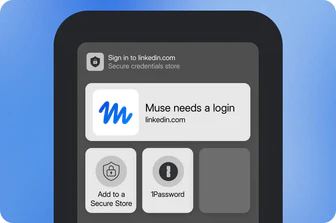
    1Password has launched 1Password for Agents platform, allowing personal AI agents to complete website logins without touching or storing user passwords. This feature initially supports Meta Muse, OpenAI ChatGPT Work with Dots, Anthropic Claude Duet, Grok Bot, and Town among other AI agents. Users need to approve credential authorization on their devices.

    Same story · 2 outlets

    How the accounts differ:The Verge states the feature allows AI agents to log in without viewing or processing user passwords, while TechCrunch specifies a unique digital key for verification and user alerts for manual confirmation.

  6. Sakana AI

    Sakana AI has launched the Sakana Aquarium AI agent platform based on ontology.

    Sakana AI has launched the Sakana Aquarium platform for building, executing, and running AI agents. It integrates organizational information through ontology, supporting the efficient construction and secure operation of AI agents. The platform includes three core mechanisms: ontology, governance, and agent execution base, achieving systematic organizational judgment criteria and task automation.

  7. Modal Blog58

    Sakana AI releases 100 billion parameter hybrid expert model Namazu and deploys it on the Modal platform

    Sakana AI has released Namazu, a hybrid expert model with 1 trillion parameters, for Japanese business contexts, web search, and code execution. The Modal team achieved memory and throughput improvements for Namazu on the Modal platform through NVFP4 precision quantization, custom DFlash model training, and kernel-level optimization, and it supports real-time training of 3 billion tokens. After deployment, the model's inference speed increased by 40%, the acceptance rate improved by 43%, and the latency decreased by 52%.

  8. Replit Blog

    Replit Monitoring Agent: Provides a dedicated autonomous operation and maintenance team for internal application developers

    Replit Monitoring Agent can automatically investigate, fix, and deploy production environment issues without manual intervention. The agent can access production logs and metrics, automatically verify repair solutions at the time of the problem, and report them via email. Users can choose whether to automatically publish the fix, currently no open-source version or specific parameter scale is announced.
  9. Modal Blog

    Modal releases open-source Tinker compatible training server Spindle

    Modal releases open-source Tinker compatible training server Spindle, supporting operation in Modal workspaces, replacing token billing with GPU time billing, customizable configurations, and supporting hundreds of concurrent training tasks. Spindle supports full-parameter training and multiple LoRA on various open-source models, with a distributed control plane and container auto-scaling at its core, suitable for teams needing custom training loops and cost reduction.

  10. MIT Technology Review · AI

    EXL explores the design principles of enterprise-level AI service frameworks

    EXL research finds that a company's AI competitive advantage depends more on the engineering systems around the model rather than the model itself; business load constraints should be defined first, then select appropriate models and service architectures, rather than doing the opposite; reliable, cost-effective, and large-scale AI application delivery needs to be achieved by measuring bottlenecks, targeted optimization, and building scalable architectures.

  11. Hacker News · AI hot posts

    OpenShell 0.1.x released: providing a secure private runtime for autonomous AI agents

    OpenShell 0.1.x released, providing a secure private runtime for autonomous AI agents, supporting a stable release pace, new isolation primitives, extended extension interfaces, and new APIs. Ensuring agents execute tasks without accessing real credentials, data, or networks through kernel-level policy enforcement (controlling file access, system calls, network connections) and formal verification (reviewing policy change risks).

  12. Amazon Science

    Amazon Science releases TorchNeuron: A PyTorch backend for AWS Trainium chips

    Amazon Science releases the open-source backend TorchNeuron, which translates PyTorch code into executable instructions for the AWS Trainium system, supporting existing PyTorch code to run on Trainium. It achieves efficient execution through optimizations like adaptive eager mode and multi-level cache, and uses an AI agent to screen 841 representative models and tens of thousands of tensor dimensions for benchmark testing.

  13. Databricks Blog60

    Databricks Talks AI Billing: How to Reduce the Unit Cost of Coding Agents by 90%

    Databricks executive Patrick reviews the process where the cost of AI coding agents increased exponentially after the company fully adopted them, and then reduced the unit cost by up to 90% by controlling the layer. He mentions that shifting traffic to cheaper new models contributed to more than 50% of the reduction, and Smart Router reduced the average task cost by more than 30% while maintaining near the quality of the most expensive model. This internal solution was later productized as Unity Gateway, which is now used by thousands of customers.

    Why it matters: Databricks executive reviews the process of its own AI coding costs from out of control to reducing the unit cost by 90%, providing migratable practices for gateways, routing, and self-built evaluations.

  14. Databricks Blog38

    Fraud Analyst AI Coworker: Detect telecom fraud in real-time on a single platform.

    Fraud Analyst AI Coworker can detect telecom fraud in real-time on a single platform. The AI addresses the shortcomings of traditional fraud detection systems in terms of architecture through techniques such as cross-channel correlation, behavioral modeling, and device simulation. Its context window covers 6-7 system data sources, with a speed increase of 3.4 times, but the original text does not mention specific parameter scale, benchmark scores, price, and availability (open source/closed source/API).

  15. MarkTechPost

    Gradium open-sources Phonon, a 31M parameter TTS model that can run on devices

    Gradium open-sources Phonon, a 31M parameter TTS model that can run on devices, supports English, includes 37 built-in voices, Apache 2.0 license, file size 64.5 MB, no cloud calls, GPU or character-based billing required. Phonon 31m generates audio for the first time on CPU in just 6.9 ms, 29.9 times faster than real-time, WER of 1.70% on 500 hard sentence sets

  16. Microsoft Research58

    Flint-interactive: A language for creating interactive data visualizations

    Flint-interactive makes AI-generated charts highly interactive, allowing users to explore data through clicks, filtering, zooming, highlighting, and cross-chart interactions. It simplifies the construction of complex interactions through advanced semantic events and update operations, and leverages the Flint compiler to handle interaction logic and visual dependencies, enhancing reliability and development efficiency. Flint-interactive supports creating interactive data stories, dashboards, and connected experiences, enabling AI agents to generate charts with interactive features to help users analyze data more efficiently.

  17. AWS Machine Learning Blog34

    How Rescale uses Strands Agents and AI-DLC to build intelligent AI routing agents

    Rescale utilizes Strands Agents and the AI-DLC framework to set up intelligent routing agents on AWS in five days and deploy them in production within weeks. The agent classifies end-to-end test failures at night by calling Claude Opus 4.8, retrieves historical failure patterns from the knowledge base, queries MCP logs for runtime evidence, and generates remediation reports containing file references, function names, and recommended fixes for engineers to review.

  18. Hugging Face Blog

    Hugging Face releases OlmoEarth v1.3: Global satellite embedding model achieves new milestones

    Hugging Face releases OlmoEarth v1.3, a satellite embedding model, offering global pre-computed embeddings (10m resolution, 64 and 128 dimensions), available to users without login or technical knowledge. The model performs best in 27 evaluations, with 128-dimensional embeddings scoring highest in 20 evaluations and 64-dimensional embeddings leading in 18. Training costs are reduced by 53% compared to v1.2 and 18% compared to v1, with corresponding reductions in carbon emissions. Weights, data, and code are all open source.

  19. Google Developers Blog

    Google API Gateway supports streaming: Real-time AI-ready APIs without changing specifications.

    Google API Gateway now supports streaming, allowing real-time API calls without changing the specification. Streaming supports Server-Sent Events (SSE), chunked transfer encoding, HTTP response streaming, and WebSocket, with the longest connection time up to one hour. During the public preview, the streaming feature was enabled when creating the gateway using the `--enable-streaming` flag, and it is planned to be automatically enabled in the official release without additional configuration.

Oct 22Thu