Skip to content
Live
Oct 21Wed
  1. Ant Group inclusionAI · Hugging Face new models35

    inclusionAI/Ling-3.0-tiny-UBTree release: A fine-tuned model based on UBTree technology

    inclusionAI released the UBTree fine-tuned version of Ling-3.0-tiny, Ling-3.0-tiny-UBTree-B16, with 183.1M parameters, combining a five-layer DFlash backbone and a bigram selector, achieving 2.6-3.5 times speed improvement on benchmarks like GSM8K and MATH-500. This model needs to be used in conjunction with the target model. The UBTree adaptation for the open-source version of SGLang has not yet been released.

  2. NVIDIA Blog62

    NVIDIA expands its family of open models to cover language, robotics, biology, and quantum computing

    NVIDIA expands its family of open models to cover language, robotics, biology, and quantum computing, including the new Nemotron 3.5 Super VL and Nemotron 3.5 Bolt.

    Why it matters: NVIDIA has rolled out open models across four lines: language, robotics, biology, and quantum, allowing readers to judge the coverage of its open-source ecosystem based on this.

  3. Mistral AI50

    Mistral collaborates with NVIDIA to advance AI in engineering

    Mistral is collaborating with NVIDIA to integrate AI models with NVIDIA accelerated computing and physics modeling tools, accelerating engineering simulations and enabling closed-loop AI-driven design. The collaboration will launch public benchmarks and open datasets, standardizing the evaluation of physics and agent AI in computer-aided engineering, and leveraging NVIDIA Omniverse for 3D simulations and resource creation.

  4. NVIDIA Blog55

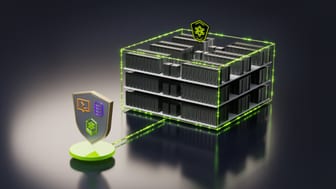
    NVIDIA Confidential Computing expands, providing secure extension capabilities for cutting-edge model builders across global infrastructure

    NVIDIA Confidential Computing protects models and data execution through hardware root isolation and encrypted authentication, adding Confidential Bare Metal deployment options, enabling cutting-edge model builders to run sensitive workloads on third-party infrastructure while retaining model data control.

  5. NVIDIA Blog

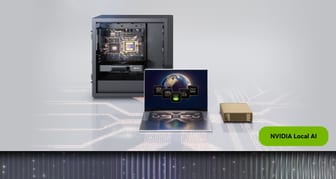
    NVIDIA showcased its full lineup of local AI hardware: RTX Spark, DGX Spark, and DGX Station, helping to power next-generation intelligent agents.

    NVIDIA showcased its full lineup of local AI hardware at GTC Berlin, with RTX Spark now available to support personal agents on Windows PCs, DGX Spark enabling developers to build and scale Linux applications, and DGX Station designed for Linux enterprise teams to run cutting-edge workloads, with the Windows version launching in December.

  6. AWS Machine Learning Blog58

    TwelveLabs' Pegasus 1.5 is now available on Amazon Bedrock

    TwelveLabs' Pegasus 1.5 video language model is now available on Amazon Bedrock, which can convert long videos into structured, timestamped metadata, supports analyzing the entire video based on user-defined standards and returns JSON data of matching segments, analysis duration extended to two hours per request, no pre-indexing required and data remains within AWS boundaries.

  7. The Decoder74

    The U.S. military's Cyber Command ECHOTRIBBLE project is turning AI agents into autonomous network weapons.

    The U.S. military's Cyber Command (ARCYBER) is developing a platform named ECHOTRIBBLE, designed to transform AI agents into autonomous weapons capable of moving autonomously within other networks and 'neutralizing' targets. Internal documents obtained reveal that the project 'is designed for autonomous navigation of infrastructure' and can 'identify and neutralize identified threats/targets'. The system is expected to spread between devices like a computer worm until it finds the target and can operate on the cloud and 'networkless' isolated systems. Experts warn that such autonomous systems could cause uncontrollable collateral damage.

  8. TechCrunch · AI65

    Figma expanded MCP support but its founder considers it a non-perfect agreement.

    Figma announced 20 new MCP partners at the Config inaugural conference in India, but its founder Dylan Field stated that MCP is not a perfect agreement and still needs improvement. Field expressed concerns about MCP's shortcomings in data sharing and noted that companies like Anthropic have not fully opened their resources. Figma believes that opening MCP may pose risks of abuse but remains committed to an open ecosystem.

  9. Databricks Blog

    Deploy RFD4-Proteina on Databricks

    Databricks has integrated the RFD4-Proteina model into Genesis Workbench, supporting execution in AI runtime environments and connecting research data and workflows. Developers can build and adjust pipelines using Genie Code and the NVIDIA BioNeMo Agent Toolkit, leveraging serverless NVIDIA GPU computing for protein design.

  10. OpenHands Blog63

    Recursive Flint released on OpenHands: Open-source model helps local efficient coding workflows.

    Recursive Flint is released, a hybrid expert model with 4 billion parameters, designed for efficient local inference, activating only about 250 million parameters per token, achieving 125+ tokens/second on M4 Pro MacBook Pro, and reaching 150+ tokens/second on NVIDIA RTX Spark. OpenHands, as its first partner, supports the model's operation on local hardware, providing developers with an open-source coding model option.

  11. Hugging Face Blog66

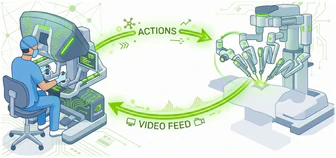
    NVIDIA has released the Cosmos3-H-Dreams surgical generative simulation model.

    NVIDIA has released Cosmos3-H-Dreams, extending interactive generative simulation to clinical gallbladder removal scenarios, capable of generating surgical scenes in real-time based on instrument movements.

    Why it matters: The original text explains the migration path from desktop stitching to clinical cholecystectomy scenarios, as well as the trade-off between quality and delay between four-step and two-step distillation checkpoints.

  12. Hugging Face Blog58

    FairStress: A benchmark for a more in-depth evaluation of LLM decision fairness

    FairStress benchmark evaluated LLM performance in demographic fairness across 300 decision scenarios across 29 fields (such as recruitment, healthcare), including 13 million test cases. The study found that the same persuasive prefixes (adversarial prefixes) have varying impacts on model decisions across different demographic groups, and there are differences in how models explain decisions containing demographic information.

Oct 20Tue
  1. Cohere Blog

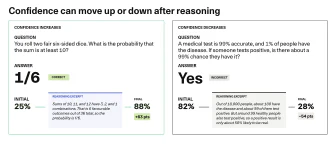
    CALIBER: Rethinking the Confidence of Reasoning Models

    CALIBER estimates success probability before inference through training reasoning models and evaluates the confidence of specific answers after inference, significantly reducing calibration error. This 7B model on the BigMathDigits benchmark reduces ECE from 0.059 to 0.028 (a reduction of 52.5%), while achieving an AUROC of 0.806 and a Brier score of 0.130, proving that confidence evaluation is more reliable and can effectively distinguish between correct and incorrect answers.

Oct 19Mon
  1. Artificial Analysis Articles70

    AA-PersonalityBench releases: a benchmark to measure the communication ability of AI models

    AA-PersonalityBench evaluates 30 personality traits, including friendliness, through 900 questions, using LLM judges for blind pairwise judgments, providing Elo scores and 95% confidence intervals; Claude Sonnet 5.5 scores highest in traits like friendliness (Elo 1000), and Gemini 4 Argon (high) performs outstandingly in traits like transparency (Elo 1059).

  2. Artificial Analysis Articles

    HealthBench and HealthBench Professional: Evaluating AI model performance in real health conversations

    OpenAI has released the HealthBench and HealthBench Professional evaluation benchmarks to assess the performance of AI models in real health conversations. In HealthBench Professional, GPT-6 Astra and GPT-6.1 Sol scored the highest after length adjustment (66.0% and 65.1%), while Claude Sonnet 5.5 scored the lowest (63.0%).

  3. Inception Labs Blog

    The rise of Mercury 2 and real-time sub-agents

    Mercury 2 completes context compression tasks in just 150 seconds while maintaining the same quality as Sonnet 4.6, with a 5-fold speed increase and a 90% cost reduction. Augment Code uses it for enterprise-level coding AI agents, achieving an 82% reduction in compression latency and a 90% cost cut, and dynamically allocates tasks through the Prism model router, reducing total LLM expenditure by 30%.

  4. MiniMax News

    MiniMax M3.1 Flash released: Next-generation model with improved performance and reduced cost

    MiniMax M3.1 Flash is officially launched, with nearly a threefold increase in online inference speed and a 70% reduction in cost compared to the previous generation. The model performs excellently in benchmark tests for complex intelligent tasks (cowork), computer use, software development, and network security, ranking highly in the AutomationBench-AA for automated tasks, scoring 73.7% on DeepSWE v1.1, 61.7 on OSWorld V2, 29.6 on ALE, and 82% on CyberGym.

  5. Ollama Blog

    Cloudflare's 27B multimodal decision model Clef has landed on the Ollama cloud platform

    Cloudflare's 27B multimodal decision model Clef has landed on the Ollama cloud platform, users can run it locally or use cloud services. Clef transforms state and typed question patterns into decisions, supports text and image input, is compatible with Jev and System One APIs, is fine-tuned based on Qwen3.8-27B, and adopts the Apache 2.0 license. In Cloudflare's decision index evaluation, Clef outperforms Jev and performs leading in most benchmark tests.

  6. Together AI Blog

    Together Post-Training: Flexible and efficient model fine-tuning service

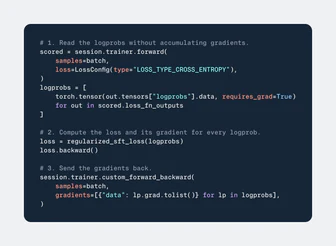
    Together AI has launched Post-Training services, supporting the construction of custom models through reinforcement learning and supervised fine-tuning without complex infrastructure. The service provides flexible training loop definition capabilities and optimizes the underlying system and infrastructure to improve model quality and training speed. It supports mainstream open-source models such as Muse Spark Open, GLM 5.3, Kimi K3, and Qwen 3.8-27B, running on dedicated GPU resources to ensure efficient and numerically consistent training.

  7. Inception Labs Blog

    Inception Labs launches Mercury 3: the most powerful diffusion-style large language model in history

    Inception Labs releases Mercury 3, this diffusion large language model surpasses GPT-6 Luna and Claude Haiku 5.5 in multiple benchmark tests, with a speed increase of 4-8 times reaching over 1,000+ tokens/second, expanding the context window to 1M tokens, with prices per million input/output tokens being $0.20 and $0.70 (50% discount at launch).