Skip to content
Live
Nov 5Thu
  1. Hugging Face Daily Papers38

    D3D: Decoupled Diffusion Drafting Asynchronous Speculative Decoding Technology

    D3D breaks the dependency on the hidden states of the target model through an independent diffuser, achieving asynchronous drafting and verification. In seven benchmarks, D3D combined with block denoising and auxiliary autoregressive supervision increases the average decoding speed of Qwen3-8B and Qwen3-32B by 5.00 times and 5.71 times respectively, outperforming DFlash (4.03 times and 3.67 times), and reaching 7.48 times acceleration on GSM8K. The code, model checkpoints, and benchmark scripts are open source.

  2. NVIDIA Technical Blog65

    How NVIDIA Uses AI Agents to Simplify AI Factory Operations

    NVIDIA has developed the AI Factory Operations Agent to simplify operations within DGX SuperPOD, automatically correlating compute, network, hardware, and scheduling issues through a single interface to help SREs identify the causes of training performance degradation. The agent can process data from multiple dashboards, improving operational efficiency.

  3. MarkTechPost

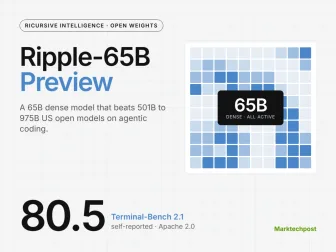
    Ricursive AI has released Ripple-65B Preview: a 65B dense open-source model that scored 80.5 on Terminal-Bench 2.1.

    Ricursive AI has released Ripple-65B Preview, a 65B dense open-source model, scoring 80.5 on Terminal-Bench 2.1, becoming the highest-scoring open-source model in the United States. Its parameter size is 65B (active parameters), pre-training used 12T tokens, with a maximum context length of 1M, and is released under the Apache 2.0 license.

  4. MarkTechPost

    webAI has released TwIL-8B, an 8.8B inference model that scored 98.2 on MATH-500.

    webAI has released TwIL-8B, an 8.79B dense inference model fine-tuned based on IBM Granite 4.2 8B, achieving 98.2 on MATH-500 and 81.6 on LiveCodeBench†, using 38% fewer tokens than Qwen3.5-9B.

  5. Epoch AI65

    Epoch Capabilities Index update adopts Bayesian model methodology

    Epoch Capabilities Index (ECI) update adopts Bayesian model methodology, providing more reliable estimates of model capability uncertainty and the probability of comparing capabilities between models. The new method is based on four-parameter logistic (4PL) item response theory (IRT), using Claude 3.5 Sonnet (ECI 130) and GPT-5 (ECI 150) as anchor models, and achieves cross-temporal consistency through linear transformations to fix parameter location and scale.

  6. AWS Machine Learning Blog

    Use Amazon Bedrock AgentCore to evaluate decision models

    Amazon Bedrock AgentCore Evaluations support scoring agents using 15 built-in evaluators or custom evaluators (LLM or code). Decision models are suitable for questions with a fixed set of answers, such as Jev and Strands Decider 2B, which provide calibrated probabilities rather than free text. The code example shows how to convert AgentCore evaluation input into a decision model request and convert model probabilities back into evaluation results.

  7. Google Research

    Agile Deliberation: How AI Assists Humans in Defining Subjective Concept Boundaries

    The Agile Deliberation framework assists humans in defining the boundaries of subjective concepts through iterative dialogue, transforming fuzzy ideas into precise AI instruction blueprints. The framework is divided into two stages: concept definition and concept iteration, which processes fuzzy images through direct feedback. In 18 user experiments of 1.5 hours each, it significantly reduces user fatigue and anxiety, making AI model performance superior to standard baselines.

    Same story · 2 outlets

    How the accounts differ:Google Research mentions user experiments reducing fatigue and anxiety; MarkTechPost focuses on F1 score improvements.

  8. The Decoder

    CloudOpsBench, a newly open-sourced benchmark, reveals AI's reasoning bottlenecks in cloud operations.

    CloudOpsBench version 1.0 includes 45 AWS cloud operations tasks developed by the University of Michigan team, discovering severe reasoning bottlenecks in AI agents. Claude Fable 5.1 solves only 60%, GPT-6 Astra 53%, with 80% failing due to misjudged task scope or incomplete checks, and 20% errors causing irreversible infrastructure damage. The project is open-sourced under the Apache 2.0 license.

  9. vLLM Blog75

    vLLM provides Day-0 support for Kimi K3.1 Pro

    vLLM announces Day-0 support for the open-sourced Kimi K3.1 Pro on NVIDIA, AMD, Google TPU, and Alibaba's Zhenwu PPU, a 2.8T parameter (104B activation) multimodal MoE model with 1M context tokens.

    Why it matters: The vLLM team details the engineering trade-offs for Day-0 adaptation of Kimi K3.1 Pro, including specific numbers for sparse attention, KV cache packing, and DCP.

  10. AWS Machine Learning Blog41

    How U Mobile builds an intelligent customer service center AiDaH based on Amazon Bedrock AgentCore

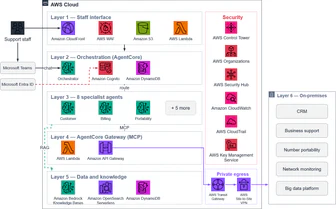
    U Mobile partnered with AWS to develop the AiDaH intelligent customer service center based on Amazon Bedrock AgentCore, handling 150 operational scenarios through cross-system real-time coordination, chained reasoning, and a multi-tenant security framework, resulting in an 84.5% reduction in critical business work orders. AiDaH will launch a pilot by the end of 2025 and officially launch in Q3 2026, using Microsoft Teams as the interaction interface

  11. The Decoder

    GPT-6 Astra reprograms other AI models directly through weights

    GPT-6 Astra reprograms other AI models directly by analyzing model weights, without traditional training. It correctly identifies the games and image generation shapes learned by the network, and by modifying 0.016% of the weights on Qwen3.5-0.8B, it increases the accuracy of the MATH-500 benchmark test from 7.9% to 48.1%. Researchers believe its potential lies in security audits and targeted behavioral adjustments, but the model's capabilities are still limited.

  12. O'Reilly Radar65

    How to Measure AI's Impact on Delivery Speed

    Does AI make software development faster? Delivery speed is not productivity, but the ratio of value output to cost. Since software deliverables are not standardized, metrics like lines of code and PR numbers are unreliable, and estimations are inaccurate. Measuring delivery speed requires comparing a team's performance before and after. Through randomized controlled trials, alternating between tasks using AI and tasks not using AI can reduce interference from other process improvements, thus more accurately assessing the actual impact of AI on delivery speed.

Nov 4Wed
  1. Together AI Blog

    Together Compiler: A continuous compiler for AI inference

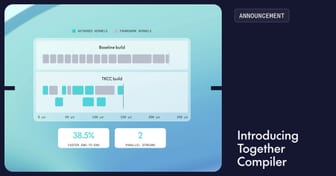
    Together Compiler (TKCC) achieves continuous optimization of AI inference workloads through high-throughput agents, reducing the latency of cutting-edge open-source models (Kimi K3, GLM 5.3) within 24 hours.

    Same story · 2 outlets

    How the accounts differ:Together AI Blog mentions models Kimi K3 and GLM 5.3; MarkTechPost mentions SemiAnalysis InferenceX AgentX.

  2. a16z News65

    Phaze launches a high-performance remote desktop solution to assist AI agents

    Phaze provides a local workstation experience for AI agents, especially suitable for interactive, low-latency tasks like Blender or Unreal Studio. It is designed specifically for AI agents, achieving seamless compatibility, management, and operation. The Phaze team previously created Parsec, a leading remote desktop for graphics-intensive applications, which has been acquired by Unity.

  3. Together AI Blog50

    Together AI launches Polymorphic Inference: Adaptive open-source model inference technology

    Together AI Launches Polymorphic Inference Technology, Continuously Compiling and Optimizing Open Source Model Inference Performance Using AI Agents to Address Challenges Such as Model Release Acceleration, Architectural Diversity, and Rapid Changes in Workloads and Hardware Platforms. This Technology Enables Inference Systems to Adapt Quickly to Dynamic Environments, for Example, Achieving Near-Hardware-Limit Performance When 80% of OpenRouter Traffic Comes from Models Released in the Past Three Months.

  4. Together AI Blog75

    Together AI has released Together Compiler, continuously compiling and optimizing AI inference.

    Together AI has released Together Compiler (TKCC), which uses high-throughput intelligent agents to continuously generate optimization solutions for inference engines, achieving 1.3-3x TPS improvements on cutting-edge open-source models like Kimi K3, GLM 5.3, MiniMax M3.1-Flash, and DeepSeek v4.1-Flash within 24 hours.

    Same story · 2 outlets

    How the accounts differ:Together AI Blog mentions models Kimi K3 and GLM 5.3; MarkTechPost mentions SemiAnalysis InferenceX AgentX.

    Why it matters: The original text provides a comparison of throughput improvements and engine startup time on multiple cutting-edge models, allowing for an assessment of changes in the inference optimization process.

  5. Hugging Face Daily Papers34

    LoCo: A local preference learning method for reasoning compression

    LoCo teaches reasoning models when to stop reasoning through local preference learning, significantly reducing output length in mathematical and code tasks while maintaining or improving accuracy. The method reduces completion length by 41.7%--45.4% on mathematical tasks and 23.4%--36.3% on code tasks, while maintaining or improving accuracy, and achieves the best AUC on all code benchmarks. LoCo's code and models will be publicly released.

  6. Hugging Face Daily Papers65

    FactEmbed: Enhancing Composed Image Retrieval Performance through Decomposed Embeddings

    FactEmbed decouples query understanding from embedding construction, simulating pre-retrieval visual modifications using decomposed latent vectors, significantly improving performance in composed image retrieval. The method outperforms existing technologies in the CIR benchmark, optimizing decomposed representations through intermediate target imagination, and achieving efficient inference using global-level embeddings and mean pooling of latent vectors.

  7. ITHome · AI62

    XPeng, in collaboration with Peking University, Hong Kong University, and others, has released the GroundingPI pre-trained model, with its perception module scoring over GPT-6 Astra.

    The GroundingPI model jointly released by Xpeng, Peking University, Hong Kong University, etc., scored 73.68 in a comprehensive evaluation of 34 perception benchmarks, surpassing GPT-6 Astra's 71.54. The model, with a parameter size of about 4 billion, adopts a 'perception-first' technical approach, demonstrating higher data processing efficiency and stronger scene generalization capabilities in robotic simulation tasks, significantly reducing teaching costs while maintaining stability.

  8. Ai2 Blog

    Ai2 collaborates with Google to launch a new generation climate model NeuralGCM+

    Ai2 receives a $10 million three-year grant from Google.org to collaborate with Google Research in developing the open-source climate model NeuralGCM+, aiming to improve the speed and reliability of climate predictions; the model extends from Google Research's NeuralGCM, combining physical equations with AI to simulate the joint effects of the atmosphere and oceans, with simulation cycles extended to decades, supporting regional rainfall and water resource change predictions, and plans to promote research community collaboration through open-source code and documentation.

  9. ITHome · AI58

    OpenAI showcased the hardware results of its employees' 'side hustle': GPT-6 Astra assisted in producing designs in a week and prototypes in a month.

    Two employees of OpenAI used their spare time to complete a test device design with GPT-6 Astra in less than a week. The model handled the appearance, casing, circuit board, and firmware generation, and the contract manufacturer then produced the prototype in less than a month. OpenAI partnered with Mazda to use Astra for automotive design and simulation evaluation, exploring solutions for styling, performance, and cost optimization.

  10. Hugging Face Daily Papers42

    Route Anything: A Research Framework for Model and Strategy Routing in General AI Systems

    The Route Anything framework enhances the performance and efficiency of general AI systems by dynamically selecting and coordinating different AI models and strategies. It has constructed a 250,000-run trajectory matrix covering 25 benchmark tests, including 452 configurations such as language understanding, image, video, speech generation, coding, task proxying, and robotic operation.

  11. MarkTechPost

    Tencent's WeVisOne-VL unifies detection, OCR, segmentation, and Matting.

    Tencent WeChat Vision team releases open-source visual language model WeVisOne-VL, including 2B and 4B parameter versions, supporting detection, OCR, segmentation, and Matting, using a 9.6M parameter decoder to output pixel results, surpassing same-scale baselines in over 30 benchmark tests, with the 4B version achieving a 71.3 F1 score on Dense200 dense detection.

    Same story · 2 outlets

    How the accounts differ:Hugging Face Daily Papers states it uses a lightweight pixel decoder; MarkTechPost mentions a 9.6M parameter decoder.

  12. Hugging Face Daily Papers62

    Axion 1.0: An open-source foundation model for agents, simplifying implementation

    Axion 1.0 achieves competitive agent performance through a three-stage training process (two lightweight supervised fine-tuning + reinforcement learning) using fully open-source data and training pipelines. The model employs model-aware data construction and verifiable task generation, without specialized mid-training, direct preference optimization, or policy-intrinsic distillation, demonstrating excellent performance in multiple multi-agent benchmarks, comparable to leading commercial models in some tests, and openly sharing the complete development process to promote open-agent research.

  13. MarkTechPost71

    Anthropic open-sources FlashProve: using zkSNARK to prove responses from committed weights

    Anthropic's cutting-edge red team has released an open-source research prototype FlashProve, which uses zkSNARK to prove that a response is generated by committed model weights without revealing the weight information. On Llama 4 Maverick (400B MoE), a single H100 achieves a proof speed of approximately 110 tokens/s, with a proof size of 18.78 MB, and CPU verification takes 17 seconds.

    Same story · 2 outlets

    How the accounts differ:MarkTechPost states the proof volume is 18.78 MB; The Decoder states it is about 19 MB.