Skip to content
Live
Nov 6Fri
  1. Microsoft Research

    PDD Kit officially validated full-stack web applications written by AI intelligent agents

    The PDD Kit translates user intent into formal specifications and verifies whether the code written by the agent for each input conforms to these specifications, supplemented by testing. The team officially validated the Rust-written Pet Store login logic using the Chopin environment on GitHub Next with the PDD Kit, and the Verus tool discovered and fixed existing bugs, proving no login bugs under the specification.


Nov 5Thu
  1. LangChain Blog

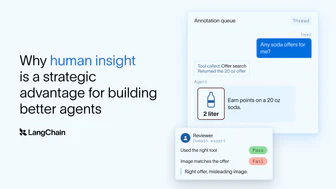
    How human insight constructs better intelligent agents - LangChain's three principles of human feedback

    LangChain explores three principles of human feedback to enhance agent development: expert judgment defines quality standards, comprehensive context evaluation, and converting feedback into reusable data; through agent trace to record user interactions and model behavior, manually labeled scoring with reasons, used to calibrate automated evaluators, improve evaluation criteria, and build golden datasets, forming reusable expert knowledge assets.

  2. TechCrunch · AI65

    Silicon Valley startup Aina has released the smart ring Aina AI Ring, integrating a screen, joystick, and microphone for interaction with AI agents.

    Silicon Valley startup Aina has released the smart ring Aina AI Ring, priced at $399, featuring a screen, joystick, and microphone. It allows interaction with AI agents via the microphone, records notes, and answers calls, serving as a controller for both AI and non-AI applications. The ring supports gesture control and can interact with Mac and phone screens to control music or smart home devices. Aina AI Ring has begun pre-orders and will ship in January 2027.

  3. Hacker News · 300+65

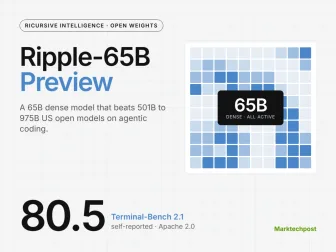
    Ripple-65B Preview: US Open Source Ultra-Large Scale Model Achieves SOTA on Agentic Coding

    Ripple-65B Improves Computational Efficiency by Optimizing SFT and RL Schemes, Using Synthetic Data Pipelines and Quality Filtering, Employing a Hybrid RL Scheme with Truncated Importance Sampling, Score Centering, and Linear Length Penalty in a High-Quality Long-Term Synthetic Environment, Achieving a TerminalBench 2.1 Score of 80.5 with Only 1.4M Rollouts, 70 Times Fewer than Reflection Beam

  4. ByteDance Seed · Hugging Face new models

    ByteDance-Seed/Qwen3-30B-A3B-MoE-SAE released

    ByteDance-Seed/Qwen3-30B-A3B-MoE-SAE is released, containing TopK sparse autoencoders (k=100, 2^20 latent variables) trained on layers 4, 30, and 46 of the Qwen3-30B-A3B model. Each SAE is approximately 17.2 GB, with reconstruction variance unexplained scores of 12.6%, 25.1%, and 7.6% respectively.

  5. IBM Research Blog36

    ORNL, IBM, and AMD jointly announce the quantum error correction collaborative design platform

    ORNL, IBM, and AMD deploy a quantum error correction (QEC) collaborative design platform at IBM's New York Poughkeepsie campus, integrating the IBM Quantum Nighthawk r2 processor with the ORNL Umbra HPC system, which includes the AMD Instinct MI355X GPU and 5th Gen AMD EPYC™ CPU, providing low-latency quantum-classical execution capabilities for algorithm development and validation in hybrid HPC-quantum computing environments.

  6. IBM Research Blog38

    HRL Laboratory's MEMS inertial sensor can rival GPS

    HRL Laboratory develops an inertial measurement unit (IMU) using advanced algorithms, providing an uninterrupted GPS alternative. Its MEMS inertial sensor is the size of a can of soup, with accuracy close to GPS, and solves the long-standing problem of bias drift. Through the AutoCal automatic calibration system, it continuously corrects errors, achieving unlimited navigation support. The IMU uses ASIC and advanced packaging technology to optimize cost and size, making it suitable for light vehicles such as drones.

  7. Hugging Face Daily Papers

    StreamDuo: A live commentator and a research agent for unseen new games

    StreamDuo pairs a trainable commentator with a frozen research agent that searches for game wiki entries to improve cross-game live commentary without training specifically for the target game. StreamDuo was trained on Baldur's Gate 3 and tested on ten unseen new games, increasing entity recall from 0.082 to 0.116, reducing source game leakage from 9.9% to 1.0%, and achieving the best timing, highest evaluation vitality, and overall quality in the live model.

  8. O'Reilly Radar

    How RouteLLM researchers train routers to choose between strong models and cheap models using preference data

    RouteLLM researchers train routers to choose between strong and cheap models, benchmark tests show more than double cost reduction with minimal impact on response quality. Automatic routing can help users get more help within budget, allowing the same subscription to support more requests or more frequent use of strong models. Users need to understand the routing effect and evaluate the cost and time benefits it brings, such as comparing different routing strategies through full interaction of code analysis tasks.

  9. 36Kr · AI65

    MachinePulse launches Karpo AI product, focusing on the transformation from vague moods to concrete arrangements in urban life

    MachinePulse has released the Karpo AI product, which provides specific city event arrangements by understanding users' vague moods. Karpo remembers user preferences (such as the dog at home Koda) and integrates real-world supplies (such as recommending dog-friendly places), intervening in decisions before users explicitly state their needs. The product team comes from companies like Doubao and TikTok, exploring 'lifestyle × AI' for overseas markets, capturing intentions through continuous dialogue and connecting city services.

  10. Hugging Face Daily Papers65

    The NEO-VLA framework eliminates fixed visual encoders to enhance the robustness of action strategies

    NEO-VLA framework eliminates fixed visual encoders by allowing action strategies to directly access deep visual representations in the network, achieving stronger robustness in various manipulation scenarios and distribution shifts. The framework uses lightweight convolutional layers to tokenize images and allows visual representations to evolve together with language in the backbone network, enabling action experts to obtain information from different depths of instruction-conditioned visual representations. Layer exploration experiments show that action key signals often reach their peak before the final visual representation is formed.

  11. MarkTechPost71

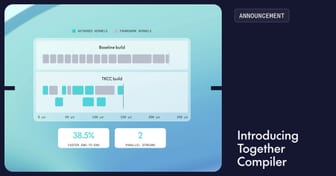
    Together AI has released Together Compiler, with agents enabling a 2.6x speedup in inference.

    Together AI has released Together Compiler (TKCC), a continuous compilation system driven by coding agents, which rewrites model forward computation and hot loads it into the resident inference engine, achieving up to 2.6 times the TPS of the publicly disclosed best configuration on SemiAnalysis InferenceX's AgentX workload, with each configuration completed within 2 nodes and 24 hours.

    Same story · 2 outlets

    How the accounts differ:Together AI Blog mentions models Kimi K3 and GLM 5.3; MarkTechPost mentions SemiAnalysis InferenceX AgentX.

  12. ByteDance Seed · Hugging Face new models58

    ByteDance-Seed/Cross-Layer-TopK-CLT released: a Cross-Layer Transcoder designed for Qwen3-8B-Base

    ByteDance-Seed released the Cross-Layer Transcoder (CLT) for Qwen3-8B-Base, which includes 36 layers × 32,768 latent variables, with 94.2B parameters, a total size of 377 GB, supporting fp32 inference, encoding by jointly scoring the top 360 activated latent variables across all layers, and reconstructing the original MLP output during decoding.

  13. QbitAI65

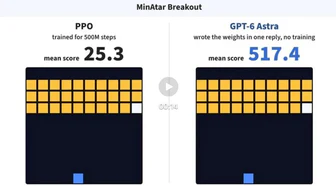
    spaCy author attacks MIT Astra research: modifying Qwen weights accused of being a smoke screen

    spaCy author Matthew Honnibal questions MIT Astra research, claiming its experiment modifying Qwen3.5-0.8B weights to improve math scores is misleading, mixing reading weight, writing weight, and repairing large models; Honnibal points out that Astra repairs large models by using Python programming and multiple forward tests, not directly reading weights, criticizing its presentation for blurring the boundaries of different capabilities.

  14. Hugging Face Daily Papers65

    The TurnWise framework enhances streaming video understanding through round-level credit assignment.

    The TurnWise framework improves streaming video understanding by round-level credit assignment and decision weight balancing. Its round-level credit assignment constructs group relative advantages using prefix scores from silent completions, and round-mean policy optimizes the token loss per round. Experiments show this method outperforms existing streaming video understanding RL methods.

  15. MarkTechPost

    Google AI Research releases Agile Deliberation framework for gray-area image classification

    Google AI Research releases Agile Deliberation framework, which transforms fuzzy concepts into structured definitions through human-in-the-loop, for gray-area image classification. The framework is based on Gemini 2.5 Pro and Gemini 2.5 Flash API, requiring no fine-tuning, with an average F1 score 10.5 points higher than zero-shot Gemini 2.5 Flash, reaching 0.59 in paid scenarios.

    Same story · 2 outlets

    How the accounts differ:Google Research mentions user experiments reducing fatigue and anxiety; MarkTechPost focuses on F1 score improvements.

  16. ITHome · AI

    NVIDIA releases CUDA Toolkit 13.5: Officially supports Vera Rubin and upgrades multi-GPU communication.

    NVIDIA releases CUDA Toolkit 13.5, officially supporting the next-generation AI computing platform Vera Rubin and deploying for enterprise production environments. Updates and upgrades include GPU resource scheduling, multi-GPU communication, mathematical computing libraries, and performance analysis tools, optimizing cuBLAS for low-precision matrix operations on NVFP4 and MXFP8 to improve training and inference throughput.

  17. MIT News · AI

    MIT researchers have developed the UQ-DAAAM system, enhancing the accuracy of robotic memory.

    The UQ-DAAAM system can identify and correct errors in robotic memory descriptions, quantifying uncertainty by comparing multi-view images and optimizing object descriptions, thereby improving the accuracy of robots' perception of objects, locations, and time. The current correction success rate is approximately 92%, with an accuracy improvement of 5%. The system employs LLM to integrate multi-view descriptions and uses heuristic rules to select the best supplementary images, significantly reducing computational load without rerunning VLM.

  18. ITHome · AI

    Kimi Hosted Agents are launched, providing Harness as a cloud service

    Kimi has launched Kimi Hosted Agents, providing Harness as a cloud service, supporting 7×24 hour hosting environments and long-term task execution. Enterprises can configure Agents on demand to quickly build internal business or product user applications, offering 140+ Skills and 30+ Plugins, with billing at ¥0.072 per hour of sandbox runtime plus model inference costs.

  19. ITHome · AI62

    Huawei announced that Ascend 0 Day support is available for Kimi K3.1 Pro inference deployment, further advancing the capabilities of 2.8 trillion-level MoE models.

    Ascend based on vLLM Ascend and SGLang synchronously implements 0 Day inference adaptation for Kimi K3.1 Pro, supporting the deployment of 2.8 trillion parameter models on Atlas 800 A3, 900 A3 SuperPod, and 950 SuperNode series, with native support for visual understanding and a million token context window.

    Same story · 2 outlets
  20. Cognition Blog

    SWE-2 Flash Released: A Low-Cost Intelligent Coding Model in the US

    SWE-2 Flash introduces a mid-training stage before reinforcement learning for the first time, significantly outperforming the baseline model Inkling-Small. Terminal-Bench 4.0 scores increased from 0.9% to 20.0%, and FrontierCode 2.0 improved from 3.2% to 24.0%, surpassing all US open-source models. This model is available in Devin Desktop and CLI, priced at one-fifth of SWE-2 and three times faster.