Skip to content
Live
Nov 5Thu
  1. OpenAI News67

    OpenAI's own pipeline discovered and patched 948 local privilege escalation vulnerabilities in the Linux kernel

    OpenAI has built an autonomous pipeline to find, verify, and generate patches for 948 local privilege escalation vulnerabilities in the Linux kernel. The material only provides this result, not disclosing the specific methods of the pipeline, vulnerability details, or patch implementation status.

    Why it matters: OpenAI uses an autonomous pipeline to locate and verify 948 local privilege escalation vulnerabilities in the Linux kernel, observable level of automation in the security research process.

  2. PyTorch Blog37

    Countdown to the deadline for proposals for PyTorch Day China 2026

    The call for proposals for PyTorch Day China 2026 ends on November 10 at 23:59 China Standard Time. The event is scheduled for December 12 in Beijing and is open to PyTorch developers, machine learning engineers, AI researchers, and open-source AI leaders from China and around the world. Proposals are welcome for talks and lightning talks covering five themes: model training and post-training, efficient inference and deployment, PyTorch core and hardware acceleration, physical AI, and PyTorch ecosystem and applications.

  3. Databricks Blog

    Databricks promotes the enterprise application case of open-weight models

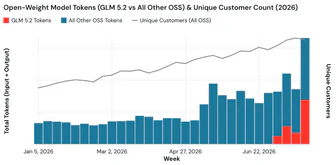
    The company is re-evaluating its reliance on a single cutting-edge model provider due to seven pressures: insufficient cost-effectiveness, frequent changes in model rankings, front-end model restrictions on legal work, changes in data retention policies, lack of visibility in model governance, model framework affecting performance, and the performance improvement of open-source weighted models.

  4. Gemini CLI releases15

    Gemini CLI v0.68.0-preview.0 released

    Gemini CLI v0.68.0-preview.0 released, fixed 35 issues including terminal width change history re-rendering, case-insensitive isWithinRoot check on Windows, dot-included Gemini 3 model identification, and $-pattern corruption in LLM prompt templates. Added extension validation command and evaluation test.

  5. AWS Machine Learning Blog

    Use Amazon Bedrock AgentCore to evaluate decision models

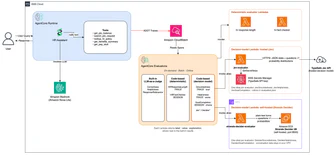
    Amazon Bedrock AgentCore Evaluations support scoring agents using 15 built-in evaluators or custom evaluators (LLM or code). Decision models are suitable for questions with a fixed set of answers, such as Jev and Strands Decider 2B, which provide calibrated probabilities rather than free text. The code example shows how to convert AgentCore evaluation input into a decision model request and convert model probabilities back into evaluation results.

  6. Google Research

    Agile Deliberation: How AI Assists Humans in Defining Subjective Concept Boundaries

    The Agile Deliberation framework assists humans in defining the boundaries of subjective concepts through iterative dialogue, transforming fuzzy ideas into precise AI instruction blueprints. The framework is divided into two stages: concept definition and concept iteration, which processes fuzzy images through direct feedback. In 18 user experiments of 1.5 hours each, it significantly reduces user fatigue and anxiety, making AI model performance superior to standard baselines.

  7. Hugging Face Blog65

    Dharma-AI releases Dharma Field Extractor: 2B parameter model extracts any document into JSON fields

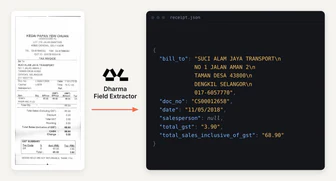
    Dharma-AI releases Dharma Field Extractor, a 2B parameter model, input document image and optional schema, output typed structured JSON, supports open extraction and schema-directed extraction, missing fields return null.

    Why it matters: The original text provides a comparison of quality and cost on self-built benchmarks, allowing readers to judge the feasibility of the small model specialized route in field extraction tasks.

  8. AWS Machine Learning Blog60

    The four-layer context engineering of production-level AI agents: The practice of Deep Insight in runnable code.

    The AWS team, referencing the open-source multi-agent data analysis solution Deep Insight, has broken down the context engineering of production-level AI agents into four layers: multi-agent architecture isolation of context, using prompts to limit output, externalizing heavy content to the file system, and using a validation agent with a fallback mechanism.

    Why it matters: The AWS team has broken down the context engineering into four layers and provided specific code and token-saving data from the open-source reference implementation, which can be directly used to modify your own Agent.

  9. AWS Machine Learning Blog

    AWS Quick's intelligent approval: retaining human oversight in AI agent work

    AWS Quick's Smart Approvals feature evaluates each action of user requests through existing controls, automatically approving actions that meet criteria or returning them to the user for review without requiring additional permissions. It uses an independent model classifier to evaluate actions, considering action content, data flow, and affected objects, and refers to the user knowledge graph to determine recipient relationships. Administrators can set which actions require manual approval, and users can also disable the feature.

  10. vLLM Blog75

    vLLM provides Day-0 support for Kimi K3.1 Pro

    vLLM announces Day-0 support for the open-sourced Kimi K3.1 Pro on NVIDIA, AMD, Google TPU, and Alibaba's Zhenwu PPU, a 2.8T parameter (104B activation) multimodal MoE model with 1M context tokens.

    Why it matters: The vLLM team details the engineering trade-offs for Day-0 adaptation of Kimi K3.1 Pro, including specific numbers for sparse attention, KV cache packing, and DCP.

  11. AWS Machine Learning Blog41

    How U Mobile builds an intelligent customer service center AiDaH based on Amazon Bedrock AgentCore

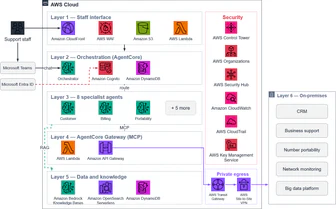
    U Mobile partnered with AWS to develop the AiDaH intelligent customer service center based on Amazon Bedrock AgentCore, handling 150 operational scenarios through cross-system real-time coordination, chained reasoning, and a multi-tenant security framework, resulting in an 84.5% reduction in critical business work orders. AiDaH will launch a pilot by the end of 2025 and officially launch in Q3 2026, using Microsoft Teams as the interaction interface

  12. AWS Machine Learning Blog38

    How Indegene builds an LLM-driven data quality agent on AWS to achieve enterprise-grade data quality modernization and scalability

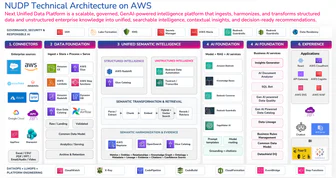
    Indegene built a production-grade LLM-driven data quality agent on AWS for its NEXT unified data platform (NEXT UDP), which generates context-aware data quality rules and verifies and generates executable SQL and Python code under centralized manual review governance, helping businesses improve data quality at scale and reduce the effort of building and maintaining data quality programs.

Nov 4Wed
  1. OpenAI News60

    OpenAI announced the acquisition of Pierre Computer Company.

    OpenAI announced its acquisition of Pierre Computer Company to expand the tool capabilities of Codex in code construction, understanding, and review. The original text did not disclose the transaction amount, timeline, or specific arrangements for the team and products after the acquisition.

    Why it matters: Official disclosure of the acquisition move, readers can understand Codex's reinforcement direction in code construction and review tools.

  2. Together AI Blog50

    Together AI launches Polymorphic Inference: Adaptive open-source model inference technology

    Together AI Launches Polymorphic Inference Technology, Continuously Compiling and Optimizing Open Source Model Inference Performance Using AI Agents to Address Challenges Such as Model Release Acceleration, Architectural Diversity, and Rapid Changes in Workloads and Hardware Platforms. This Technology Enables Inference Systems to Adapt Quickly to Dynamic Environments, for Example, Achieving Near-Hardware-Limit Performance When 80% of OpenRouter Traffic Comes from Models Released in the Past Three Months.

  3. Together AI Blog75

    Together AI has released Together Compiler, continuously compiling and optimizing AI inference.

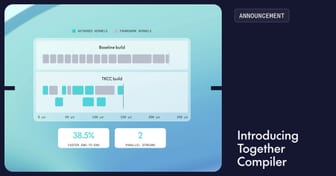
    Together AI has released Together Compiler (TKCC), which uses high-throughput intelligent agents to continuously generate optimization solutions for inference engines, achieving 1.3-3x TPS improvements on cutting-edge open-source models like Kimi K3, GLM 5.3, MiniMax M3.1-Flash, and DeepSeek v4.1-Flash within 24 hours.

    Why it matters: The original text provides a comparison of throughput improvements and engine startup time on multiple cutting-edge models, allowing for an assessment of changes in the inference optimization process.

  4. Ai2 Blog

    Ai2 collaborates with Google to launch a new generation climate model NeuralGCM+

    Ai2 receives a $10 million three-year grant from Google.org to collaborate with Google Research in developing the open-source climate model NeuralGCM+, aiming to improve the speed and reliability of climate predictions; the model extends from Google Research's NeuralGCM, combining physical equations with AI to simulate the joint effects of the atmosphere and oceans, with simulation cycles extended to decades, supporting regional rainfall and water resource change predictions, and plans to promote research community collaboration through open-source code and documentation.

  5. Gemini CLI releases15

    Gemini CLI v0.67.0-nightly.20261104.g89e9d25d6 released

    Gemini CLI v0.67.0-nightly.20261104.g89e9d25d6 released, fixing stream failures during extension publishing and downloading, retaining explicit gemini-2.5-flash model in dynamic model parsing, supporting SubagentStop event mapping and merging hook definitions, waiting for history replay before ACP session/load response, providing --userns=keep-id for rootless podman.

  6. Meta Engineering34

    Meta launches F3 Lightning to accelerate the large-scale production of advertising ML features

    Meta launches F3 Lightning to address bottlenecks in F3 graph publishing by decoupling feature publishing from execution, enabling independent validation deployment. It adopts optimizations such as stable compute identifiers, a single execution plan, shared memory buffers, and dense index mapping, making the production speed of extraction features approximately 3.6 times faster than F3 without increasing infrastructure compute costs.

  7. OpenAI Agents SDK releases40

    OpenAI Agents SDK v0.24.0-alpha.6 released

    OpenAI Agents SDK v0.24.0-alpha.6 released, supporting submission of work through captured Turn control, passive event handling, manual request handling, redirection and cancellation, and extending local storage session state recovery and tool policy features. New features include local storage, native output, experimental external job recovery, and tool selection, while updating the API, such as using Agent.run() instead of Runner, and unified FunctionTool callback and manual tool.

  8. Hugging Face Blog60

    IBM trains 20B small model Palette to generate slides according to its own design language

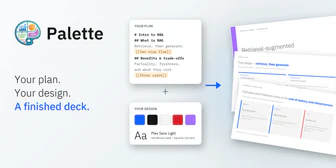
    IBM's research team fine-tunes a 20B open-source weight model, Palette, using a two-role LoRA scheme where designers write JSON briefs and encoders generate pptxgenjs code page by page to create presentations according to IBM Design Language.

    Why it matters: IBM uses synthetic data and checks to repair closed-loop training for a 20B small model to create presentations, providing a method that can be transferred to other structured outputs.

  9. Google DeepMind75

    Google Antigravity launches cheminformatics skills, completing drug discovery process in one hour

    Google DeepMind releases a set of cheminformatics skills (Cheminformatics Skills) for Google Antigravity, based on RDKit and integrated with ChEMBL and PubChem, where language models are responsible for process orchestration and scientific reasoning, and deterministic chemical tools perform molecular calculations.

    Why it matters: The original text provides a complete process of cheminformatics skills in real lung cancer drug cases, which can be used to determine the division of labor for intelligent agents in scientific research workflows.