Skip to content
Live
Nov 6Fri
  1. Apple Machine Learning Research

    Apple's Amortizing Maximum Inner Product Search accelerates retrieval

    Apple's Amortizing Maximum Inner Product Search, presented at ICML 2026, learns support functions by training small neural networks to understand typical query matching patterns at a fixed cost, achieving faster precise retrieval during inference. This method utilizes ICNN to learn support functions, and KeyNet directly outputs the best matching key vector, both trained on supervised datasets constructed based on actual query distributions, significantly improving retrieval efficiency in RAG scenarios.

  2. Microsoft Research

    PDD Kit officially validated full-stack web applications written by AI intelligent agents

    The PDD Kit translates user intent into formal specifications and verifies whether the code written by the agent for each input conforms to these specifications, supplemented by testing. The team officially validated the Rust-written Pet Store login logic using the Chopin environment on GitHub Next with the PDD Kit, and the Verus tool discovered and fixed existing bugs, proving no login bugs under the specification.

Nov 5Thu
  1. LangChain Blog

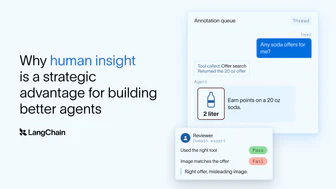
    How human insight constructs better intelligent agents - LangChain's three principles of human feedback

    LangChain explores three principles of human feedback to enhance agent development: expert judgment defines quality standards, comprehensive context evaluation, and converting feedback into reusable data; through agent trace to record user interactions and model behavior, manually labeled scoring with reasons, used to calibrate automated evaluators, improve evaluation criteria, and build golden datasets, forming reusable expert knowledge assets.

  2. ByteDance Seed · Hugging Face new models

    ByteDance-Seed/Qwen3-30B-A3B-MoE-SAE released

    ByteDance-Seed/Qwen3-30B-A3B-MoE-SAE is released, containing TopK sparse autoencoders (k=100, 2^20 latent variables) trained on layers 4, 30, and 46 of the Qwen3-30B-A3B model. Each SAE is approximately 17.2 GB, with reconstruction variance unexplained scores of 12.6%, 25.1%, and 7.6% respectively.

  3. IBM Research Blog36

    ORNL, IBM, and AMD jointly announce the quantum error correction collaborative design platform

    ORNL, IBM, and AMD deploy a quantum error correction (QEC) collaborative design platform at IBM's New York Poughkeepsie campus, integrating the IBM Quantum Nighthawk r2 processor with the ORNL Umbra HPC system, which includes the AMD Instinct MI355X GPU and 5th Gen AMD EPYC™ CPU, providing low-latency quantum-classical execution capabilities for algorithm development and validation in hybrid HPC-quantum computing environments.

  4. IBM Research Blog38

    HRL Laboratory's MEMS inertial sensor can rival GPS

    HRL Laboratory develops an inertial measurement unit (IMU) using advanced algorithms, providing an uninterrupted GPS alternative. Its MEMS inertial sensor is the size of a can of soup, with accuracy close to GPS, and solves the long-standing problem of bias drift. Through the AutoCal automatic calibration system, it continuously corrects errors, achieving unlimited navigation support. The IMU uses ASIC and advanced packaging technology to optimize cost and size, making it suitable for light vehicles such as drones.

  5. ByteDance Seed · Hugging Face new models58

    ByteDance-Seed/Cross-Layer-TopK-CLT released: a Cross-Layer Transcoder designed for Qwen3-8B-Base

    ByteDance-Seed released the Cross-Layer Transcoder (CLT) for Qwen3-8B-Base, which includes 36 layers × 32,768 latent variables, with 94.2B parameters, a total size of 377 GB, supporting fp32 inference, encoding by jointly scoring the top 360 activated latent variables across all layers, and reconstructing the original MLP output during decoding.

  6. AWS Machine Learning Blog

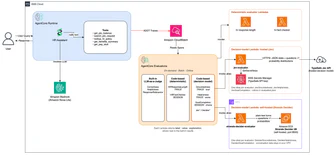
    Use Amazon Bedrock AgentCore to evaluate decision models

    Amazon Bedrock AgentCore Evaluations support scoring agents using 15 built-in evaluators or custom evaluators (LLM or code). Decision models are suitable for questions with a fixed set of answers, such as Jev and Strands Decider 2B, which provide calibrated probabilities rather than free text. The code example shows how to convert AgentCore evaluation input into a decision model request and convert model probabilities back into evaluation results.

  7. Google Research

    Agile Deliberation: How AI Assists Humans in Defining Subjective Concept Boundaries

    The Agile Deliberation framework assists humans in defining the boundaries of subjective concepts through iterative dialogue, transforming fuzzy ideas into precise AI instruction blueprints. The framework is divided into two stages: concept definition and concept iteration, which processes fuzzy images through direct feedback. In 18 user experiments of 1.5 hours each, it significantly reduces user fatigue and anxiety, making AI model performance superior to standard baselines.

  8. vLLM Blog75

    vLLM provides Day-0 support for Kimi K3.1 Pro

    vLLM announces Day-0 support for the open-sourced Kimi K3.1 Pro on NVIDIA, AMD, Google TPU, and Alibaba's Zhenwu PPU, a 2.8T parameter (104B activation) multimodal MoE model with 1M context tokens.

    Why it matters: The vLLM team details the engineering trade-offs for Day-0 adaptation of Kimi K3.1 Pro, including specific numbers for sparse attention, KV cache packing, and DCP.

  9. AWS Machine Learning Blog41

    How U Mobile builds an intelligent customer service center AiDaH based on Amazon Bedrock AgentCore

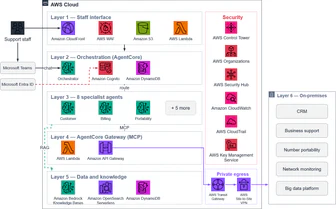
    U Mobile partnered with AWS to develop the AiDaH intelligent customer service center based on Amazon Bedrock AgentCore, handling 150 operational scenarios through cross-system real-time coordination, chained reasoning, and a multi-tenant security framework, resulting in an 84.5% reduction in critical business work orders. AiDaH will launch a pilot by the end of 2025 and officially launch in Q3 2026, using Microsoft Teams as the interaction interface

Nov 4Wed
  1. Together AI Blog50

    Together AI launches Polymorphic Inference: Adaptive open-source model inference technology

    Together AI Launches Polymorphic Inference Technology, Continuously Compiling and Optimizing Open Source Model Inference Performance Using AI Agents to Address Challenges Such as Model Release Acceleration, Architectural Diversity, and Rapid Changes in Workloads and Hardware Platforms. This Technology Enables Inference Systems to Adapt Quickly to Dynamic Environments, for Example, Achieving Near-Hardware-Limit Performance When 80% of OpenRouter Traffic Comes from Models Released in the Past Three Months.

  2. Together AI Blog75

    Together AI has released Together Compiler, continuously compiling and optimizing AI inference.

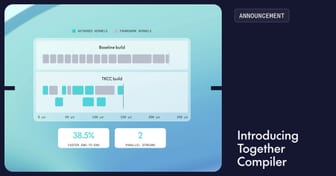
    Together AI has released Together Compiler (TKCC), which uses high-throughput intelligent agents to continuously generate optimization solutions for inference engines, achieving 1.3-3x TPS improvements on cutting-edge open-source models like Kimi K3, GLM 5.3, MiniMax M3.1-Flash, and DeepSeek v4.1-Flash within 24 hours.

    Why it matters: The original text provides a comparison of throughput improvements and engine startup time on multiple cutting-edge models, allowing for an assessment of changes in the inference optimization process.

  3. Ai2 Blog

    Ai2 collaborates with Google to launch a new generation climate model NeuralGCM+

    Ai2 receives a $10 million three-year grant from Google.org to collaborate with Google Research in developing the open-source climate model NeuralGCM+, aiming to improve the speed and reliability of climate predictions; the model extends from Google Research's NeuralGCM, combining physical equations with AI to simulate the joint effects of the atmosphere and oceans, with simulation cycles extended to decades, supporting regional rainfall and water resource change predictions, and plans to promote research community collaboration through open-source code and documentation.

  4. Meta Engineering34

    Meta launches F3 Lightning to accelerate the large-scale production of advertising ML features

    Meta launches F3 Lightning to address bottlenecks in F3 graph publishing by decoupling feature publishing from execution, enabling independent validation deployment. It adopts optimizations such as stable compute identifiers, a single execution plan, shared memory buffers, and dense index mapping, making the production speed of extraction features approximately 3.6 times faster than F3 without increasing infrastructure compute costs.

  5. OpenAI Agents SDK releases40

    OpenAI Agents SDK v0.24.0-alpha.6 released

    OpenAI Agents SDK v0.24.0-alpha.6 released, supporting submission of work through captured Turn control, passive event handling, manual request handling, redirection and cancellation, and extending local storage session state recovery and tool policy features. New features include local storage, native output, experimental external job recovery, and tool selection, while updating the API, such as using Agent.run() instead of Runner, and unified FunctionTool callback and manual tool.

  6. Hugging Face Blog50

    StateBench: Testing how language models track state changes in long documents

    StateBench is a long-context state tracking benchmark that tests how language models maintain tracking changes in entity information within long documents. The benchmark includes four difficulty levels, ranging from simple immutable assignments to complex dependency assignments. It found that cyclic and hybrid models generalize better than Transformers on direct training tasks, but cutting-edge models like Gemini 3.8 Flash, Claude Opus 5.5, and GPT-6 Sol still fail in complex state tracking with long inputs.

  7. AWS Machine Learning Blog38

    How does Cartesia build ultra-low latency speech AI applications on AWS?

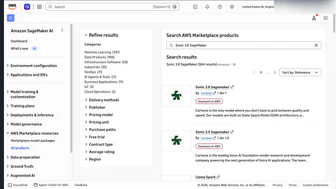
    Cartesia uses state space models (SSM) designed for real-time speech AI and AWS infrastructure to achieve sub-100ms text-to-speech and speech-to-text, supporting voice cloning for 44 languages, suitable for scenarios such as virtual assistants and customer service centers. The Sonic model generates the first audio byte in about 90ms, and the Ink model has native turn detection and noise robustness. The API interface supports real-time streaming output.

  8. AWS Machine Learning Blog32

    Amazon Quick integrates structured and unstructured data.

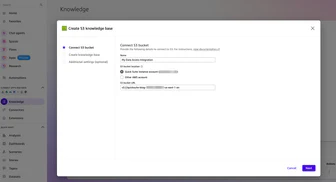
    Amazon Quick integrates structured and unstructured data by connecting Amazon S3 and creating a knowledge base, enabling users to query with a single conversational AI agent. This solution includes a data layer (unstructured content stored in S3 and structured data as semantic datasets), a workspace layer (integrating data types into a single workspace), and an agent layer (custom chat agents linked to the workspace and returning combined responses).