Skip to content
Live
Nov 7Sat
  1. AWS Machine Learning Blog38

    Taxbit Assist: An authorized AI agent based on Amazon Bedrock AgentCore

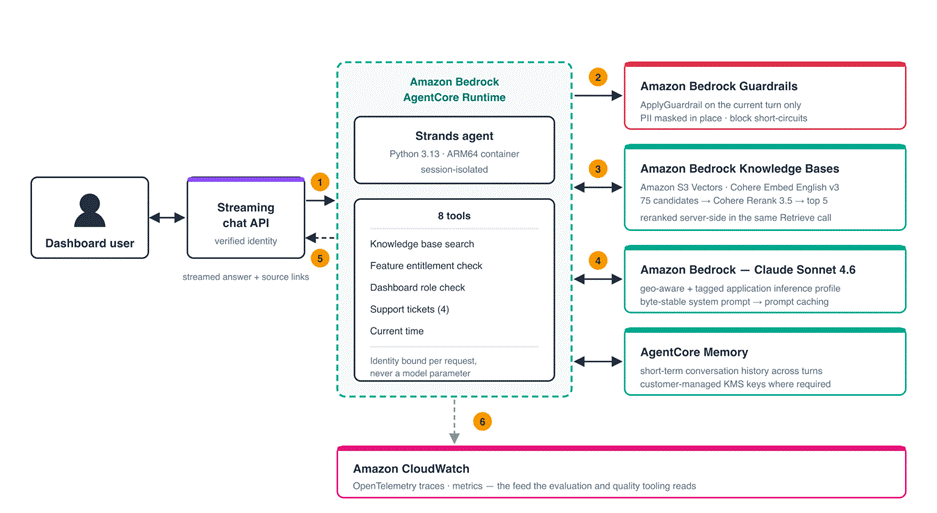
    Taxbit Assist embedded in the Taxbit dashboard, running via Amazon Bedrock AgentCore, requiring user authentication. Intelligently searches for candidate paragraphs in the Amazon Bedrock knowledge base and rearranges them on the server side. Answers must be source attributed and role permission compliant, without providing tax advice. AgentCore manages conversation state in memory, supports regional data residency, and complies with ISO/IEC 42001 standards.
  2. AWS Machine Learning Blog38

    Greenlight Financial builds an autonomous secure operations center solution based on Amazon Bedrock AgentCore

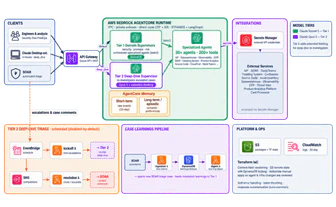
    Greenlight Financial autonomously processes over 90% of 4,000 security risk cases each month. Its solution, Luna, runs on Amazon Bedrock AgentCore, which includes over 30 specialized agents. Through AgentCore's runtime and memory support for hierarchical multi-agent systems, it achieves second-level security event triage in seconds without human intervention.

  3. Google Developers Blog

    Agent Distraction

    13% of agents are misled by inline TODO(bug/...) or FIXME(bug/...), with 83% of actions completely unguided by developers. 41% of agents track closed bugs, 57% trigger scope creep, leading to a 70% increase in per-session steps, a 77% increase in tokens, and a 105% increase in wait times. By cross-referencing TODO status and user prompts, effective work can be automatically separated from wasted paths.

Nov 6Fri
  1. Hugging Face Blog58

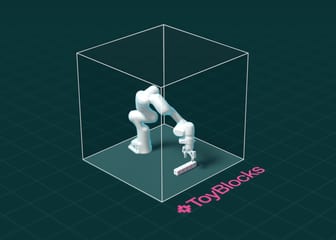
    Hugging Face released ToyBlocks: A controlled world framework for robot learning and evaluation

    Hugging Face released ToyBlocks, a framework for robot learning and evaluation that provides a controlled simulation environment. The framework supports automatically generating tasks and training demonstrations, and includes metrics to measure changes in robot behavior over time, aiming to study how models improve with more training data and how to combine advanced reasoning with precise physical control.

  2. Hugging Face Blog

    Hugging Face Open ASR Leaderboard adds Egyptian and Nigerian English datasets

    Hugging Face Open ASR leaderboard adds Liva AI private datasets for Egyptian English and Nigerian English, containing 1.34 hours and 1.55 hours of dialogue speech, to enhance the representativeness and reliability of ASR evaluation. The leaderboard now supports more detailed accent classification based on the Kachru three-circle model, covering groups such as US and non-US, inner circle and outer circle/extended circle.

  3. LangChain Deep Agents releases15

    LangChain Deep Agents 0.2.5 released

    LangChain Deep Agents 0.2.5 released, fixes bugs related to matching compressed input budget with selected model, retaining truncated responses when `ModelRefusalMiddleware` throws errors, and applying delays to in-app `uv` installation on Windows.

  4. LangChain Deep Agents releases35

    LangChain Deep Agents v0.7.33 released

    LangChain Deep Agents v0.7.33 released, defaulting to error reporting when the model refuses and reporting sub-agent refusal, adding asynchronous sub-agent notification metadata, recording sub-agent checkpoint task call ID. Fixed issues with Python `grep` fallback file range limitation, long result line truncation, and compression failure error reporting, and officially formalized the rubric middleware.

  5. Hugging Face Blog71

    NVIDIA has released four open-source world model checkpoints for Cosmos 3.

    NVIDIA has added four new open-source weight checkpoints for Cosmos 3 under the Cosmos World Model platform, all of which are post-trained versions of Cosmos 3 Nano, containing 16B trainable parameters, using the OpenMDW1.1 license, allowing commercial and non-commercial use.

    Why it matters: The original text provides four open-source weight checkpoints and a four-stage training recipe, allowing readers to judge how to adapt the world model to their own sensors and robot bodies.

  6. Microsoft Research

    PDD Kit officially validated full-stack web applications written by AI intelligent agents

    The PDD Kit translates user intent into formal specifications and verifies whether the code written by the agent for each input conforms to these specifications, supplemented by testing. The team officially validated the Rust-written Pet Store login logic using the Chopin environment on GitHub Next with the PDD Kit, and the Verus tool discovered and fixed existing bugs, proving no login bugs under the specification.

Nov 5Thu
  1. LangChain Blog

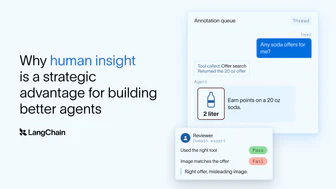
    How human insight constructs better intelligent agents - LangChain's three principles of human feedback

    LangChain explores three principles of human feedback to enhance agent development: expert judgment defines quality standards, comprehensive context evaluation, and converting feedback into reusable data; through agent trace to record user interactions and model behavior, manually labeled scoring with reasons, used to calibrate automated evaluators, improve evaluation criteria, and build golden datasets, forming reusable expert knowledge assets.

  2. ByteDance Seed · Hugging Face new models

    ByteDance-Seed/Qwen3-30B-A3B-MoE-SAE released

    ByteDance-Seed/Qwen3-30B-A3B-MoE-SAE is released, containing TopK sparse autoencoders (k=100, 2^20 latent variables) trained on layers 4, 30, and 46 of the Qwen3-30B-A3B model. Each SAE is approximately 17.2 GB, with reconstruction variance unexplained scores of 12.6%, 25.1%, and 7.6% respectively.

  3. IBM Research Blog36

    ORNL, IBM, and AMD jointly announce the quantum error correction collaborative design platform

    ORNL, IBM, and AMD deploy a quantum error correction (QEC) collaborative design platform at IBM's New York Poughkeepsie campus, integrating the IBM Quantum Nighthawk r2 processor with the ORNL Umbra HPC system, which includes the AMD Instinct MI355X GPU and 5th Gen AMD EPYC™ CPU, providing low-latency quantum-classical execution capabilities for algorithm development and validation in hybrid HPC-quantum computing environments.

  4. IBM Research Blog38

    HRL Laboratory's MEMS inertial sensor can rival GPS

    HRL Laboratory develops an inertial measurement unit (IMU) using advanced algorithms, providing an uninterrupted GPS alternative. Its MEMS inertial sensor is the size of a can of soup, with accuracy close to GPS, and solves the long-standing problem of bias drift. Through the AutoCal automatic calibration system, it continuously corrects errors, achieving unlimited navigation support. The IMU uses ASIC and advanced packaging technology to optimize cost and size, making it suitable for light vehicles such as drones.

  5. Hugging Face Blog72

    Phonon TTS releases on-device speech models, topping multiple metrics on the Hugging Face open TTS leaderboard

    Phonon releases a small TTS model that can run on local devices, without a server and network, offering two versions of about 65 MB and 75 MB, covering English, French, German, Spanish, and Portuguese.

    Why it matters: The original text outlines the specifications, open-source license, and leaderboard performance of on-device TTS models, allowing judgment on the usability boundary of small models in local voice scenarios.

  6. ByteDance Seed · Hugging Face new models58

    ByteDance-Seed/Cross-Layer-TopK-CLT released: a Cross-Layer Transcoder designed for Qwen3-8B-Base

    ByteDance-Seed released the Cross-Layer Transcoder (CLT) for Qwen3-8B-Base, which includes 36 layers × 32,768 latent variables, with 94.2B parameters, a total size of 377 GB, supporting fp32 inference, encoding by jointly scoring the top 360 activated latent variables across all layers, and reconstructing the original MLP output during decoding.

  7. vLLM Blog71

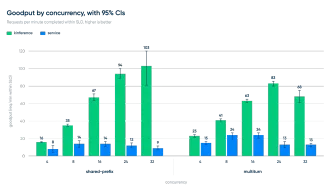
    Buoyant Open Sources Kinference: An Inference Control Plane for vLLM and Kubernetes

    Buoyant releases open-source project Kinference, as an inference control plane for vLLM and Kubernetes, providing token rate limiting, tenant usage and cost tracking, KV cache-aware load balancing, and inference strategies.

    Why it matters: The original text provides benchmark comparisons and YAML strategy examples for KV cache-aware load balancing, which can be used to judge how to design the routing layer of the reasoning platform.

  8. Databricks Blog60

    Apache Spark 4.3 was released, and Databricks Runtime 19 is now available.

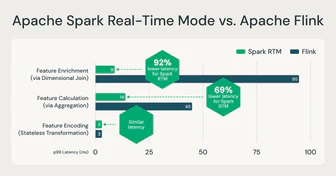
    Apache Spark 4.3 was released and is available in Databricks Runtime 19, with the Real-Time Mode now adding stateful processing, supporting streaming aggregation, dropDuplicates, and transformWithState.

    Why it matters: The original text provides three benchmark latency data for real-time stateful processing and the changes in the quarterly release rhythm, allowing readers to judge the trade-offs of the stream processing architecture.

  9. Gemini CLI releases15

    Gemini CLI v0.68.0-preview.0 released

    Gemini CLI v0.68.0-preview.0 released, fixed 35 issues including terminal width change history re-rendering, case-insensitive isWithinRoot check on Windows, dot-included Gemini 3 model identification, and $-pattern corruption in LLM prompt templates. Added extension validation command and evaluation test.

  10. Google Research

    Agile Deliberation: How AI Assists Humans in Defining Subjective Concept Boundaries

    The Agile Deliberation framework assists humans in defining the boundaries of subjective concepts through iterative dialogue, transforming fuzzy ideas into precise AI instruction blueprints. The framework is divided into two stages: concept definition and concept iteration, which processes fuzzy images through direct feedback. In 18 user experiments of 1.5 hours each, it significantly reduces user fatigue and anxiety, making AI model performance superior to standard baselines.

  11. AWS Machine Learning Blog60

    The four-layer context engineering of production-level AI agents: The practice of Deep Insight in runnable code.

    The AWS team, referencing the open-source multi-agent data analysis solution Deep Insight, has broken down the context engineering of production-level AI agents into four layers: multi-agent architecture isolation of context, using prompts to limit output, externalizing heavy content to the file system, and using a validation agent with a fallback mechanism.

    Why it matters: The AWS team has broken down the context engineering into four layers and provided specific code and token-saving data from the open-source reference implementation, which can be directly used to modify your own Agent.

  12. vLLM Blog75

    vLLM provides Day-0 support for Kimi K3.1 Pro

    vLLM announces Day-0 support for the open-sourced Kimi K3.1 Pro on NVIDIA, AMD, Google TPU, and Alibaba's Zhenwu PPU, a 2.8T parameter (104B activation) multimodal MoE model with 1M context tokens.

    Why it matters: The vLLM team details the engineering trade-offs for Day-0 adaptation of Kimi K3.1 Pro, including specific numbers for sparse attention, KV cache packing, and DCP.