 Claude · YouTube
Claude is launching whiteboard, spreadsheet, and data analysis features.
Claude Whiteboards and Claude Sheets enter beta, Claude Dashboards officially launch as Claude Data
Claude · YouTubeClaude Whiteboards and Claude Sheets enter beta, Claude Dashboards officially launch as Claude Data
 LangChain Blog
Workday has utilized LangGraph for agent orchestration and LangSmith for tracking and evaluation, reducing prototype development time from 5 months to within 1 day with a 4-person team by 2025 and supporting production environment deployment. Its Python SDK 'Workday LangChain' encapsulates LangChain core components and routes through internal services (including LLM gateway, RAG retrieval) while meeting enterprise-level security and compliance requirements.
 PyTorch Blog
ExecuTorch WebGPU backend allows PyTorch models to run in WebGPU browsers without converting framework formats, supporting multiple models such as Llama 3.2, Qwen3, and Gemma 3.
 AWS Machine Learning Blog
Amazon launched Bedrock Observational Data Lake, which transmits original model invocation logs from linked accounts to a central account via CloudWatch. Processed by Data Firehose and converted to Parquet format for storage in S3, it ultimately provides a unified query interface through Athena.
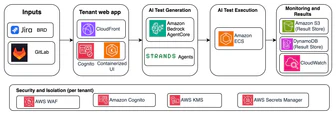
AWS Machine Learning BlogTCS has built an Agentic test orchestrator for BFSI clients, transforming requirements into executable controlled tests through Amazon Bedrock AgentCore, breaking down tests into dedicated tasks and executing them using their respective agents, tools, and validation rules, while meeting project-specific context, API, and browser UI testing, tenant-level security isolation, and repeatable test path requirements, significantly improving test throughput and allowing engineers to focus on risk analysis and exploratory testing.
 MiniMax NewsFeatured8080
MiniMax has released an open-source weight image generation model based on H3, H3-Image, which supports text-to-image, reference image generation, and image editing, capable of generating 4096 × 4096 4K images within 10 seconds, and supports up to 16 reference images.
Why it matters: The official provides 4K generation speed, reference image quantity, and pricing range, which can be used to judge the gap between open-source image models and closed-source solutions.
 Codex releases00
GitHub Copilot released version 0.169.0-alpha.9, without mentioning specific update content.
 NVIDIA Newsroom
NVIDIA has contributed OpenShell, an open-source autonomous agent secure runtime, to the Cloud Native Computing Foundation (CNCF) and launched new tools such as NVIDIA Kubernetes Engine and NVIDIA Kubernetes Recipes to help teams deploy and manage GPU infrastructure on Kubernetes.
 OpenAI News
A new study by OpenAI and Upwork shows that the demand for freelancers is changing, requiring a new set of skills, and the budget and duration of AI-related projects are increasing.
 Amazon Science
Mitra-v2 leads the single-model field in the TabArena benchmark, outperforming Mitra-v1 on 33 datasets and ranking first on ScoringBench.
 Google DeepMind5858
Google DeepMind released two foundational datasets, SatWeave and PARDIG, to support the development of weather, hydrological, and climate applications.
 Claude Code releases1515
The Claude Code v2.1.322 version has added a fast mode in the global, US, and European regions on the Vertex platform. If Vertex rejects this mode, it will fall back to standard speed.
 Anthropic ResearchSame story · 2 outlets
Anthropic partnered with Diode Computers to test the ability of Claude Fable 5.2 to design electronic devices, a model capable of completing electronic hardware from design to prototyping.
How the accounts differ:Anthropic Research states Claude Fable 5.2 completes hardware from design to prototype, while Claude mentions designing a working voice assistant center including PCB layout, CAD modeling, and firmware.
 LangChain Deep Agents releases1515
LangChain Deep Agents release deepagents-code==0.2.6 version, including new features such as making idle compression settings traceable, adding trigger tags for uninstall tracking, and fixing bugs like dcode startup under Windows and local server traffic bypassing the proxy.
LangChain Deep Agents releases1515LangChain Deep Agents 0.7.35 released, fixing bugs such as preserving the parent agent's prompt cache prefix for child agents, retaining symbolic link names in virtual file system results, marking `read_file` media and Nemotron nudge as harness notifications, etc.
Codex releases00GitHub Copilot rust-v0.169.0-alpha.8 released, this version includes the latest feature improvements and fixes.
Codex releases00GitHub Copilot has released version 0.169.0-alpha.7, offering code generation, review, security, and collaboration features, supporting custom integrations and continuous updates.
 Google Research
 launches Language Explorer online platform, presenting global language diversity through visualization and data. The tool integrates the open-source LinguaMeta dataset, supporting 1,000 languages, aimed at helping researchers, educators, and enthusiasts explore language differences. The platform has been showcased as an interactive installation at the new exhibition at the Berlin Communication Museum and offers an online version for public access.
Claude · YouTubeSame story · 2 outlets5858Claude Fable 5.2 designs a voice assistant center from a prompt word, including circuit board layout, CAD shell modeling, and firmware writing. Diode Computers manufactured the prototype board according to its design documents. This is one of the three devices designed by Claude in the project. Anthropic and Diode have a business relationship.
How the accounts differ:Anthropic Research states Claude Fable 5.2 completes hardware from design to prototype, while Claude mentions designing a working voice assistant center including PCB layout, CAD modeling, and firmware.
Codex releases00GitHub Copilot released version 0.169.0-alpha.6, but no specific update content was provided.
 Databricks Blog2222
Sendoso converts buying signals into a sales pipeline via Genie One AI agent without exporting lists or logging into other tools. The MCP server on Databricks Marketplace integrates Sendoso functionality into existing data environments, AI suggests gifts, researches recipients, and drafts notes, supporting direct display of data and reasons in Genie One.
 Meta Engineering3838
LLDB supports application debugging across CPU and GPU through the neutral accelerator plugin architecture of lldb-server, separating general debugging infrastructure from hardware-specific device control, presenting CPU and GPU as independent debugging processes that work together in a single debugging session. This architecture converts hardware-specific debugging APIs into concepts understood by LLDB through plugins, supporting collaborative debugging of CPUs and GPUs with different architectures, registers, memory spaces, and execution models while maintaining the neutrality of the client.
 IBM Research Blog5252
IBM will embed the Praxis Policy Engine (PPE) as a policy filter into the open-source AI proxy server Praxis, supporting strategy control over tools, prompts, model calls, etc.
 Hugging Face Blog3838
Elith and NVIDIA released Nemotron-Personas-Finance-Japan, which is the first open-ended persona dataset at the scale of one million records, combining Japanese official statistics with household finance and financial literacy data.
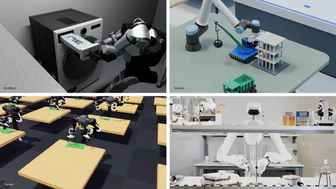
NVIDIA NewsroomFeatured7878NVIDIA released the open-source world action model GR00T 2 on CoRL, built on NVIDIA Cosmos, trained with 100,000 hours of NVIDIA open-source first-person human data, and can complete 40 out of 50 evaluation tasks without task-specific demonstrations.
Why it matters: The original text provides the success rate of GR00T 2 on few-shot tasks and the training throughput improvement of Isaac Lab 3.0, which can be used to judge the extent to which simulation training promotes robot deployment.
Codex releases00GitHub Copilot rust-v0.169.0-alpha.4 has been released, including the latest feature improvements and fixes.
NVIDIA Newsroom3232NVIDIA has released an optimized deployment solution for South Korea's leading open-source models, Dynamo, supporting SK Telecom A.X K2, LG AI Research K-EXAONE 2.0, Upstage Solar Open 2, and Motif Technologies Motif-3, achieving up to 2x performance improvement through optimized multi-GPU coordination and communication, accelerating model production deployment.
NVIDIA Newsroom3838South Korean companies are adopting NVIDIA NemoClaw and OpenShell to accelerate intelligent agent development. Hyundai Motor is exploring NVIDIA NemoClaw blueprints and OpenShell runtime, while AIM Intelligence integrates the Starfort platform with OpenShell to support safe intelligent agents.
 MiniMax · Hugging Face new models
MiniMax-H3-Image-PE uses prompt expansion (PE) to convert short requests into detailed image descriptions and recommends aspect ratios. It supports two workflows: text-to-image (T2I) and image editing, using fine-tuned FP4 weights from Qwen3.8-27B. The online API can be accessed via platform.minimax.io or platform.minimax.cn, and the documentation provides support in both Chinese and English.
 OpenAI Agents SDK releases2222
OpenAI Agents SDK v0.24.0-alpha.7 released, supports classic workflows and native execution, adds voice and managed tools, introduces persistent session storage and context control. The new version defaults to strict mode execution, requiring updates to existing environments; bundled model default inference strength is increased to medium.
Codex releases00Rust 0.169.0-alpha.3 released, including 1 commit.
 Tencent Hunyuan · Hugging Face new models2222
Qwen3.8-27B-DSpine-b16 pre-trained model released by Mixue, featuring 27B parameters, b16 precision, 5 layers of Draft layers, and an 8,192 token sliding window, designed to improve efficiency during inference and must be used with the Qwen3.8-27B model.
LangChain Deep Agents releases2525langchain-quickjs 0.3.12 released, adds support for disabling timeout per call, fixes interpreter close blocking issue in CodeInterpreterMiddleware.__del__, and resolves nested schema `$ref` parsing issue in PTC signatures.
 vLLM Blog3838
vLLM releases LibTorch ABI Stable CUDA since v0.33.0, allowing PyTorch upgrade without rebuilding.
Databricks Blog2222Databricks exposes shared Delta tables as real-time data sources through OpenSharing, allowing recipients to read incremental changes using Structured Streaming without local file tracking.
Codex releases00GitHub Copilot 0.169.0-alpha.2 released, this AI coding assistant is used for tasks, projects, and automation work, providing code review, quality analysis, and security vulnerability detection features.
OpenAI News3838OpenAI has released BioBasicsBench, a benchmark containing 100 tasks, to evaluate the ability of AI agents to interpret raw experimental data and handle daily wet experimental science.
LangChain BlogFeatured7272LangChain introduces asynchronous sub-agents in Deep Agents, where a resident orchestrating agent interfaces with users, and the sub-agents execute long tasks in the background in parallel and report results upon completion.
Why it matters: The original text provides five management tools and notification mechanisms for asynchronous sub-agents, which can be used to determine how to set up the workflow for parallel long tasks.
Claude Code releases2222Claude Code v2.1.319 released, automatic mode is changed when telemetry or feature flags are disabled, server-side checks are disabled; server-side checks enabled after LLM gateway need to set CLAUDE_CODE_AUTO_MODE_SERVER=1.