Skip to content
Live
Nov 12Thu
  1. AWS Machine Learning Blog

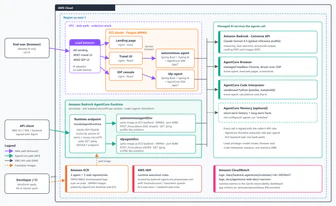
    Build autonomous AI agents using Amazon Bedrock and Spring AI

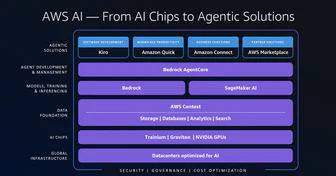
    Java teams can leverage Amazon Bedrock and Spring AI to build autonomous AI agents, addressing scalability, governance, security, and operational challenges. Spring AI brings AI capabilities to the JVM through the Spring framework (auto-configuration, dependency injection, composable advisors), while the Amazon Bedrock AgentCore platform supports framework and model-agnostic agent construction, connection, and optimization.

  2. AWS Machine Learning Blog58

    How does Amazon SageMaker HyperPod detect and recover silent data corruption?

    Amazon SageMaker HyperPod detects silent data corruption (SDC) by adding three checks in the PyTorch DDP training loop, including non-finite gradient checks, loop replay audits, and weight fingerprint comparisons. When issues are detected, suspicious nodes are isolated and replaced by HyperPod, having been tested and verified on a 4 ml.p5.48xlarge instance cluster.

  3. AWS Machine Learning Blog

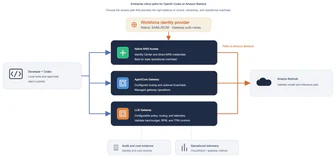
    Deploying OpenAI Codex on Amazon Bedrock Practice

    Developers use OpenAI Codex for code exploration and engineering work through Amazon Bedrock. Amazon Bedrock supports Codex inference and can be integrated with AWS Identity, IAM, and observability practices. It is recommended to start with Native AWS Access for small-scale pilots, use GPT-5.6 Sol for validation, authenticate through IAM Identity Center, and configure model permissions and observability targets.

  4. Databricks Blog

    Interview with Alasdair Anderson: The Daily Work and Industry Insights of a Databricks Solution Architect

    Alasdair Anderson, a Solutions Architect at Databricks, shared his daily work routine, covering technical construction and team coaching; he emphasized how platforms like Lakebase and Agentbricks help financial industry clients achieve second-level data processing and business process reshaping; 'Customer First' and 'Pragmatic Truth' in the company culture are reflected in practices such as analyzing industry reports and real-time risk modeling, while open and transparent internal collaboration also promotes global teams in efficiently solving complex challenges.

  5. Databricks Blog

    How Databricks Detects Credential-Driven Attacks

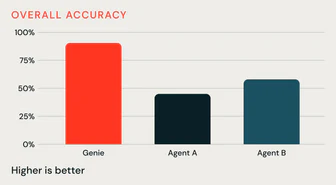
    Databricks detects credential-driven attacks by analyzing audit logs and Genie, finding stolen credentials listed from new IPs in secret scopes, directories, and repositories within minutes, then reading secrets containing service principal credentials, and subsequently having the service principal create functions and join admin groups, these non-linear event sequences reveal intrusion behavior.

  6. Google Research58

    Google Research has released a wearable device-driven CKM risk assessment framework

    Google Research releases a wearable device-driven CKM risk assessment framework, predicting future health trajectories through an explainable health age model (CHA). The framework is trained on wearable data from 2.2 million weeks using the SensorWM model, providing personalized 12-week counterfactual health simulations combined with language models to generate clinically validated guidance plans. The CHA model integrates modifiable indicators such as heart rate, steps, and sleep to predict disease risk over 68,000 person-years, improving the predictive performance of clinical indicators.

  7. Apple Machine Learning Research

    Weighted State Souping for Efficient Long-Context Retrieval

    Weighted State Souping proposes query dependency weighting to combine cached State state encodings, significantly improving long-context performance on tasks such as single-hop and multi-hop document question answering, pinpoint retrieval, variable tracking, and tool use. The method can be adapted into an efficient sparse variant, achieving near-constant encoding costs while maintaining (or sometimes improving) performance.

  8. Apple Machine Learning Research

    Gating Mechanisms of State Space Models (SSMs): Memory and Contextual Learning Research

    State Space Models (SSMs) lag behind Transformers in contextual learning and precise retrieval tasks, as their gating mechanism leads them to first learn memory solutions, delaying or preventing the convergence of correct contextual learning solutions, but the gating mechanism is beneficial for improving long sequence generalization.

  9. Apple Machine Learning Research

    Evaluating Evaluators: Investigating the Performance of LLM Judges in Personalized Writing Style Evaluation

    Researchers evaluated the performance of Large Language Model (LLM) judges in personalized writing tasks and found that the quality of judges is weakly correlated with general LLM capabilities measured by MMLU (Pearson’s ρ ≤ 0.2), and their performance is influenced by writing tasks and evaluation criteria (e.g., general helpfulness vs. stylistic personalization). LLM evaluators were more consistent and performed better in pairwise comparisons than in independent scoring responses. The 'strongest' LLM did not reliably replicate human evaluations, possibly due to being overly sensitive to subtle details overlooked by human annotators and weaker LLMs.

  10. Claude · YouTube42

    Claude Code's use case selection between Fable 5.2 and Opus

    Claude Code released Fable 5.2, requiring users to select Opus 5.5, Fable 5.2, Sonnet 5.5, or Haiku 5.5 based on task type, or distribute tasks across models. The availability and usage restrictions of each model vary depending on the subscription plan. Guidelines suggest using the corresponding model for complex coding and knowledge work, open-ended technical tasks, and low-cost limited tasks, respectively.

    Same story · 3 outlets

    How the accounts differ:TechCrunch states the input price of Fable is reduced to $8 per million tokens; others do not mention the price.

  11. Meta Engineering40

    Meta Develops Intelligent Delivery System: AI Optimizes Computational Resource Allocation to Enhance Ad Sorting Performance

    Meta's Intelligent Delivery system, through AI optimization of computational resource allocation, has boosted ad sorting performance by approximately 10% since 2017. The system includes a Resource Core Model that predicts the marginal utility of computational resources (6B sparse parameters + 20M dense parameters), multi-layer mechanisms for cross-system resource migration, and a framework that uses AI agents to continuously monitor and detect changes in the response system.

  12. AWS Machine Learning Blog60

    AWS open-sources UAEF: cross-framework closed-loop evaluation AI agents

    AWS releases open-source framework UAEF, using adapters to unify the execution traces of LangGraph, LangChain, Strands Agents, Amazon Bedrock AgentCore, and Langfuse into AgentTrace, then scoring with 7 dimensions and 36 built-in metrics.

    Why it matters: The original text provides an adapter and metric design for cross-framework unified evaluation, allowing readers to judge the implementation method for comparing multi-framework agent versions.

  13. AWS Machine Learning Blog

    AWS Quick accelerates product development through AI-driven lifecycle management (AI-PDLC)

    AWS Quick's AI-driven product development lifecycle (AI-PDLC) transforms enterprise signals into validated prototypes through six specialized skill agents, combined with human approval. The Discovery agent analyzes pain points in enterprise data sources, and the Prioritize agent uses a 0-10 score framework to evaluate use case priorities, with all decisions requiring manual confirmation.

  14. Google AI Blog

    Google AI has launched Tabletop: a customizable collaborative space supporting team planning, interaction, and sharing.

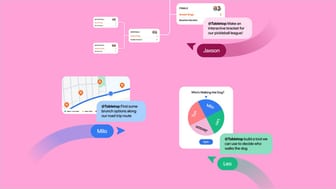
    Google AI has launched Tabletop, a new experimental platform for real-time collaboration, supporting teams to generate customized itineraries, polls, expense splits, and schedules. Users can create interactive spaces via @tabletop prompts or templates, share links for multiple people to use simultaneously, similar to Google Docs. It is currently rolling out to users over 18 in the US via a waiting list.

  15. Google Developers Blog78

    Google releases generative UI open protocol A2UI 1.0

    Google has released the Generative UI Open Protocol A2UI 1.0, which is the first stable version of the protocol, allowing AI agents to respond with interactive interfaces instead of plain text. Version 1.0 adds bidirectional function calls, accessibility support, and extended metadata, and provides open-source rendering SDKs for Web, Android, iOS, as well as agent SDKs for Python, TypeScript, and Dart.

    Why it matters: A2UI 1.0 extends agent output from pure text to native interactive interfaces, providing multi-platform renderers and integration scheme examples, allowing for judgment on the implementation methods of generative UI.

Nov 11Wed
  1. Databricks Blog76

    Databricks upgrades Genie One to an enterprise AI collaboration workspace

    Databricks announces Genie One as the unified entry point for enterprise AI collaboration, consolidating search, product generation, and cross-tool operations into one place, and providing enterprise context based on Genie Ontology, governed by Unity Gateway.

    Why it matters: The original text provides specific capabilities of Genie One from Q&A to product generation, cross-tool execution, and governance, allowing for judgment on how enterprise AI workbenches can be implemented.