Skip to content
Live
Nov 6Fri
  1. Hugging Face Blog71

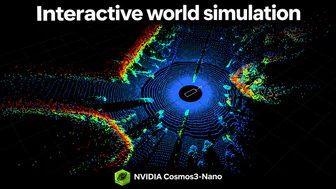
    NVIDIA has released four open-source world model checkpoints for Cosmos 3.

    NVIDIA has added four new open-source weight checkpoints for Cosmos 3 under the Cosmos World Model platform, all of which are post-trained versions of Cosmos 3 Nano, containing 16B trainable parameters, using the OpenMDW1.1 license, allowing commercial and non-commercial use.

    Why it matters: The original text provides four open-source weight checkpoints and a four-stage training recipe, allowing readers to judge how to adapt the world model to their own sensors and robot bodies.

  2. OpenAI News75

    OpenAI releases GPT-6 Cyber security model

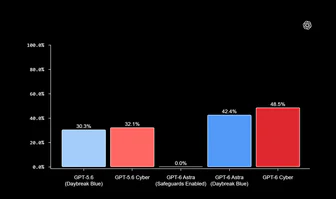
    OpenAI releases GPT-6 Cyber, a security model for discovering exploitable vulnerabilities and developing solutions, trained to keep its behavior within authorized limits.

    Why it matters: OpenAI releases a dedicated model for vulnerability discovery and remediation, emphasizing authorized scope constraints, observable boundaries of security agent capabilities.

  3. Google AI Blog78

    Google releases Gemini Omni 1.2 Flash, supports 15-second videos and cuts prices by 30%

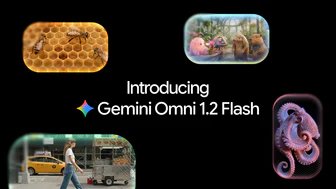
    Google has released Gemini Omni 1.2 Flash and has officially opened it through the Gemini API and Gemini for business. The duration of native video generation has increased from 10 seconds in Omni 1.1 to 15 seconds, with a step length of 1 second specified from 3 to 15 seconds. The price of 720p has been reduced to 0.07 US dollars per second, a decrease of 30% from 1.1.

  4. Google DeepMind78

    Google DeepMind has released Gemini Omni 1.2 Flash, supporting 15-second videos and reducing the price by 30%.

    Google DeepMind has released Gemini Omni 1.2 Flash, increasing the native video generation duration from 10 seconds in Omni 1.1 to 15 seconds, and it has been fully opened in the Gemini API and Gemini for business.

    Why it matters: The original text lists specific changes in duration, price, and reference consistency, allowing readers to judge how the cost and workflow of video generation will change.

Nov 5Thu
  1. ByteDance Seed · Hugging Face new models

    ByteDance-Seed/Qwen3-30B-A3B-MoE-SAE released

    ByteDance-Seed/Qwen3-30B-A3B-MoE-SAE is released, containing TopK sparse autoencoders (k=100, 2^20 latent variables) trained on layers 4, 30, and 46 of the Qwen3-30B-A3B model. Each SAE is approximately 17.2 GB, with reconstruction variance unexplained scores of 12.6%, 25.1%, and 7.6% respectively.

  2. Hugging Face Blog72

    Phonon TTS releases on-device speech models, topping multiple metrics on the Hugging Face open TTS leaderboard

    Phonon releases a small TTS model that can run on local devices, without a server and network, offering two versions of about 65 MB and 75 MB, covering English, French, German, Spanish, and Portuguese.

    Why it matters: The original text outlines the specifications, open-source license, and leaderboard performance of on-device TTS models, allowing judgment on the usability boundary of small models in local voice scenarios.

  3. ByteDance Seed · Hugging Face new models58

    ByteDance-Seed/Cross-Layer-TopK-CLT released: a Cross-Layer Transcoder designed for Qwen3-8B-Base

    ByteDance-Seed released the Cross-Layer Transcoder (CLT) for Qwen3-8B-Base, which includes 36 layers × 32,768 latent variables, with 94.2B parameters, a total size of 377 GB, supporting fp32 inference, encoding by jointly scoring the top 360 activated latent variables across all layers, and reconstructing the original MLP output during decoding.

  4. OpenAI News62

    OpenAI launches Images 2.6, enabling faster image generation and GIF creation support

    OpenAI has released Images 2.6, bringing faster image generation, GIF creation, more precise editing, and new API controls. This version covers three access points: ChatGPT, Codex, and API.

    Why it matters: The original text lists four changes: image generation speed improvement, GIF creation, more precise editing, and API control, which can be used to judge the boundary of image capabilities for ChatGPT, Codex, and API.

  5. Hugging Face Blog65

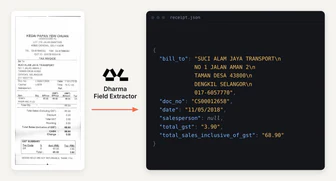
    Dharma-AI releases Dharma Field Extractor: 2B parameter model extracts any document into JSON fields

    Dharma-AI releases Dharma Field Extractor, a 2B parameter model, input document image and optional schema, output typed structured JSON, supports open extraction and schema-directed extraction, missing fields return null.

    Why it matters: The original text provides a comparison of quality and cost on self-built benchmarks, allowing readers to judge the feasibility of the small model specialized route in field extraction tasks.

Nov 4Wed
Nov 3Tue
  1. Hugging Face Blog

    Transformers Model Integration Contracts Released: Hugging Face Launches Model Integration Contracts Standard

    Transformers supports over 750 model types, its test suite includes 88,000+ CPU tests and 200,000+ GPU tests. Hugging Face releases Model Integration Contracts (MIC) standard, including compressed models (such as a 66 MB weight UMT5 fix), runnable examples (such as SmolLM text generation), and human review baselines.

Nov 2Mon
  1. Moonshot AI · Hugging Face new models

    Kimi K3.1 Pro Released: Open-Weight Multimodal AI Model

    Kimi K3.1 Pro is an open-source multimodal AI model by Moonshot AI, with 2.8T parameters, 104B activation parameters, and a context window of 1M tokens, demonstrating excellent performance in areas such as coding, 3D creation, and financial research. Compared to Kimi K3, it adopts Gated DSA layers to improve long text processing efficiency and has outperformed competitors like Claude Fable 5.1 and GPT-6 Astra in benchmarks such as Terminal-Bench 4.0.

  2. Sakana AI38

    Sakana AI held a seminar: Jürgen Schmidhuber talks about the past and future of AI, Japan will challenge language models, world models, and physical AI

    Jürgen Schmidhuber, professor at the Sakana AI Symposium, presented a speech reviewing the many ideas that contributed to modern deep learning and generative AI from the 1980s to the 1990s, and introduced the LSTM paper proposed in 1990. Sakana AI announced the development of a pre-trained model, planning to release a small language model named 'Sawara Small' in spring 2027.

Oct 31Sat
  1. OpenAI Deployment Safety58

    Supplementary notes on the GPT-Rosalind-6 system

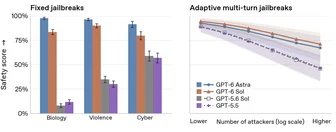
    GPT-Rosalind-6 uses the same weights as GPT-6 Astra, no training data has been added or additional post-training performed. In the GeneBench Pro v13 test, GPT-Rosalind-6 achieved a single attempt success rate of 37.7% on the highest reasoning budget (129 questions), surpassing GPT-Rosalind-5.5's 16.7%. The model has been rated high-capability in the fields of biology and chemistry and is continuously monitored to adjust safety measures.

Oct 30Fri
  1. Ant Group inclusionAI · Hugging Face new models38

    inclusionAI/ZwZ2-9B-GGUF GGUF format weights release

    inclusionAI releases ZwZ2-9B GGUF format weights, belonging to the Zooming without Zooming v2 project, including language models (FP16, Q8_0, Q4_K_M) and visual encoders and projectors (mmproj, FP16, Q8_0, Q4_K_M), requiring pairing with llama.cpp Qwen3.5 multimodal support for use, supporting CLI inference and Web Chat deployment.

  2. Ant Group inclusionAI · Hugging Face new models

    inclusionAI/ZwZ2-4B-GGUF model weights released

    The inclusionAI/ZwZ2-4B-GGUF model weights have been released. This model is part of Zooming without Zooming v2 and is divided into a language model (FP16, Q8_0, Q4_K_M) and a visual encoder and projector (mmproj, FP16, Q8_0, Q4_K_M), offering multiple precision combinations. It needs to be used with llama.cpp (supporting Qwen3.5 multimodal).
  3. OpenAI Deployment Safety

    GPT-6 Luna system card update: Version on October 29, 2026

    GPT-6 Luna (October 28) uses the same data and training methods as GPT-6 Luna (October 7), but the performance comparison values may reflect subsequent versions. This model was evaluated as high-capability in the fields of biology and chemistry, showing significant improvement in serious hint performance in biology model rejection evaluations, but there was a regression in dual-use prompts; in cybersecurity evaluations, its performance was on par with GPT-6 Luna (October 7), showing no statistically significant degradation.

Oct 29Thu
  1. Hugging Face Blog85

    Mistral Large 4 (Le Chonk) released on Hugging Face

    Mistral releases multimodal MoE model Mistral Large 4 (Le Chonk), with approximately 1T total parameters, 49B activation parameters, a context window of 1M tokens, offering two official versions FP8 and NVFP4, as well as GGUF made by Unsloth and llama.cpp teams.

    Why it matters: The original text provides specific scores for the 1T total parameter, 49B activation multimodal MoE model on cybersecurity and coding benchmarks, along with measured throughput for local and endpoint deployment.

  2. Mistral AI82

    Mistral releases open-source model Mistral Large 4 (Le Chonk) with trillion parameters

    Mistral releases open-weight version of its flagship trillion-parameter native multimodal model Mistral Large 4 (Le Chonk), which has been in public preview for three weeks.

    Why it matters: The official provides data on the encoding, security, and inference efficiency of the trillion-parameter open-source model, as well as weight downloads and self-hosting paths.

  3. ByteDance Seed · Hugging Face new models

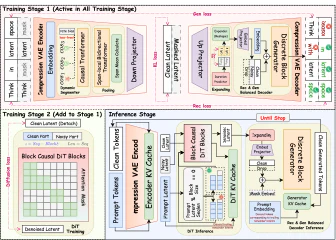
    ByteDance-Seed/GenFirst releases: A generative pre-reconstruction method for stable end-to-end latent generation modeling

    ByteDance-Seed/GenFirst trains a latent VAE and combines it with a generative prior to avoid latent collapse, which usually makes end-to-end training unstable. The two-stage plan of this method is used for prior and entropy weights: the first stage lets the prior shape the latent geometry, and the second stage reduces both weights tenfold, allowing the decoder to recover details.

Oct 28Wed
  1. Hugging Face Blog78

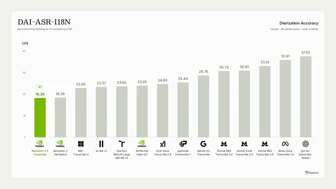
    NVIDIA has released Nemotron 3.5 Transcribe and the Granary v2 data pipeline.

    NVIDIA has released the open-source weight model Nemotron 3.5 Transcribe, integrating transcription, speaker separation, translation, and audio Q&A into a single checkpoint, supporting transcription in 40 languages, translation between 31 languages and English, and speaker annotation in 13 languages, capable of processing the longest 1-hour recordings and annotating up to 8 speakers.

    Why it matters: The original text provides a unified weighting model for multilingual transcription, speaker separation, and translation, along with an open data pipeline and fine-tuning recipes, which can be used to determine the adaptation path for voice scenarios.

  2. Hugging Face Blog76

    Liquid AI releases LFM3 series: Same 2B backbone derived text, visual, audio, multimodal and decision models

    Liquid AI releases the new generation Liquid Foundation Models, LFM3, deriving six 2B-level models from the shared backbone LFM3-1.7B-Base, covering text, vision, audio, multimodal, and decision, all open weights on Hugging Face.

    Why it matters: Liquid AI derives six modality models from the same 2B-level backbone and provides single-card fine-tuning and edge deployment paths, which can be used to judge the specialization route for small models.

  3. Google DeepMind84

    Google DeepMind releases world model Genie 4

    Google DeepMind releases world model Genie 4, which can generate interactive simulated worlds with native audio in real-time, and change weather, camera angles, and scene elements in real-time with text prompts. Genie 4 natively generates environmental sounds and voice conversations for the first time, with characters able to converse in real-time and respond to scene events; Gemini 3.8 Flash acts as a guiding intelligence in the loop, breaking down goals into steps and verifying frame by frame.

    Why it matters: The official disclosure of three capabilities—native audio, real-time text control, and Gemini-guided reasoning—can be used to judge the position of the world model in robotics and content preview.

Oct 27Tue
  1. Microsoft AI News

    MAI Cyber 1.1 Flash Released: More Accurate Vulnerability Discovery and Lower Token Costs

    MAI Cyber 1.1 Flash provides performance equivalent to MAI Cyber 1 Flash on the internal MDASH vulnerability scanning evaluation suite, reducing the cost per scan by 18%. The model is more focused, enabling MDASH systems to present useful findings at a lower cost. Currently, MAI Cyber accounts for nearly 50% of MDASH scans, and MAI Cyber 1.1 Flash is now open to validation customers through MDASH.

  2. Microsoft AI News67

    Microsoft released the MAI Image 2.7 image editing model, ranking 3rd on Arena Edit and 2nd on Artificial Analysis.

    Microsoft AI released the image editing model MAI Image 2.7, launching as a preview version. It ranks 3rd in Arena Edit and 2nd in the Artificial Analysis image editing chart, making Microsoft AI the 2nd place lab.

    Why it matters: Microsoft announced the rankings of MAI Image 2.7 on two image editing lists and provided the improvement magnitude on 10 use cases compared to the previous generation.