Skip to content
Live
Oct 22Thu
  1. Hugging Face Blog

    How to reduce inference cost by 77% in real-world applications using a specialized SLM vocabulary list.

    Qwen3-4B's specialized vocabulary list VocabX reduces inference cost by 77% by focusing on the cost of each token rather than frequency, without changing the base model. This method for the Portuguese essay scorer reduces the output layer vocabulary from about 152,000 lines to about 65,000 lines, significantly reducing the computational overhead of token splitting and unused vocabulary items.

Oct 21Wed
  1. NVIDIA Blog62

    NVIDIA expands its family of open models to cover language, robotics, biology, and quantum computing

    NVIDIA expands its family of open models to cover language, robotics, biology, and quantum computing, including the new Nemotron 3.5 Super VL and Nemotron 3.5 Bolt.

    Why it matters: NVIDIA has rolled out open models across four lines: language, robotics, biology, and quantum, allowing readers to judge the coverage of its open-source ecosystem based on this.

  2. Hugging Face Blog58

    FairStress: A benchmark for a more in-depth evaluation of LLM decision fairness

    FairStress benchmark evaluated LLM performance in demographic fairness across 300 decision scenarios across 29 fields (such as recruitment, healthcare), including 13 million test cases. The study found that the same persuasive prefixes (adversarial prefixes) have varying impacts on model decisions across different demographic groups, and there are differences in how models explain decisions containing demographic information.

Oct 20Tue
  1. Hugging Face Blog58

    How does ALTK-Evolve surpass state-of-the-art models in the τ²-bench customer service task through learning and memory?

    ALTK-Evolve uses GPT-4.1 to learn and apply customer service scripts. In the τ²-bench customer service agent benchmark test, it surpasses all retail entries in the retail sector, achieving a score of 67.5% Pass^4, and does not require updating model weights. The model is based on a basic ReAct agent and GPT-4.1. It attempts to analyze tasks and use GPT-4.1 to distill success and failure into short behavioral rules, then adds these guidelines to the agent's system prompts without updating weights or manual annotation.

  2. Hugging Face Blog58

    AnyLanguageModel 1.0 is released: supporting local model advancements on Apple platforms for a year.

    AnyLanguageModel 1.0 is released, supporting local model advancements on Apple platforms for a year. New support added for cloud models such as OpenAI Chat Completions, Anthropic Messages, and Google Gemini. Local model support includes llama.cpp, MLX, and Core ML. Tool calling and guided generation features are expanded. Cloud models have the same functionality as local models, and API keys support dynamic acquisition through closures.

  3. Hugging Face Blog62

    PyTorch 2.15 brings FP8 and faster LLM decoding to the MPS backend.

    The Hugging Face PyTorch team introduces updates to the MPS backend in PyTorch 2.15, adding the tensor torch.float8_e4m3fn and F.scaled_mm, with FP8 tensors occupying half the space of BF16.

    Why it matters: The original text provides specific numbers for the MPS backend in FP8, MoE decoding, and memory usage, which can be used to judge the actual changes in running models locally on Mac.

Oct 19Mon
Oct 17Sat
  1. LangChain Deep Agents releases17

    LangChain Deep Agents 0.1.86 Released

    LangChain Deep Agents released version 0.1.86, adding NVIDIA OpenShell as a sandbox provider, fixed multiple bugs including improved alias matching, accurate reporting of workspace rejection, replacing duplicate thread recovery errors, replacing chat input on recall prompts, displaying expiration prompts in the footer, providing actionable errors when Groq tools are limited, and comparing effective interpreter permissions, etc.

Oct 16Fri
  1. Tencent Hunyuan · Hugging Face new models

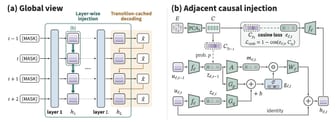
    Qwen3-8B-DSpine-b16 released: Speculative decoding model with parallel drafting and deep conditional injection

    Qwen3-8B-DSpine-b16 released by Qwen, employing speculative decoding technology with parallel drafting and deep conditional injection, achieving an average acceptance length score of 10.55 on Qwen3-8B. The model supports a context length of 8192 tokens, uses bfloat16 data type and fa3 attention backend, installation requires git clone and pip install, and runs via sglang serve.

Oct 15Thu
  1. Mistral AI · Hugging Face new models

    Mistral AI releases Timestral-123M time series base model

    Mistral AI releases Timestral-123M time series base model, with 123M parameters, using a patch-based Transformer architecture, context length of 32,768 time steps, single prediction covers 1,024 time steps, outputs 21 quantiles. The model achieves optimal accuracy in zero-shot prediction on GIFT-Eval, TIME, and fev-bench evaluations, and is licensed under the Modified MIT License.

  2. Anthropic Newsroom60

    Anthropic grants METR employee-level access to evaluate model risks

    Anthropic announced it has begun providing a team at the nonprofit organization METR with near-employee internal access to evaluate the risks of its frontier models, and METR will publicly release the evaluation results. Anthropic stated it cannot veto METR's release but may request that information in predefined categories be redacted, and said Anthropic ultimately determines which information falls into these categories.

    Why it matters: The original text discloses the specific division of the three-tier evaluation access and the boundaries of METR's publication rights, which can be used to compare with third-party evaluation arrangements at other frontier labs.

Oct 14Wed
  1. Mistral AI · Hugging Face new models

    Mistral AI releases Timestral-5M time series base model

    Mistral AI releases Timestral-5M time series base model, the 5M parameter version supports zero-shot prediction, context length up to 32,768 time steps, single forward prediction can cover 1,024 time steps, and outputs 21 quantiles. In GIFT-Eval, TIME, and fev-bench evaluations, Timestral-209M achieves state-of-the-art accuracy for zero-shot prediction, and all Timestral models outperform other models at their parameter scale.

Sep 20Sun
  1. Qwen · Hugging Face new models

    Qwen/Qwen-Image-2.1-PE-I2I released: Open-source 7B parameter text-to-image generation and editing model

    Qwen/Qwen-Image-2.1-PE-I2I released, a 7B parameter unified text-to-image generation and editing model, featuring a 32-layer single-stream DiT architecture, supporting the generation of regular or transparent images, editing transparent layers, extracting photo subjects, and capable of editing with 10 reference images.

  2. Qwen · Hugging Face new models

    Qwen/Qwen-Image-2.1-PE-T2I release: Open source 7B parameter text-to-image generation and editing model

    Qwen/Qwen-Image-2.1-PE-T2I released, a 7B parameter unified text-to-image generation and editing model, featuring a 32-layer single-stream DiT architecture, supporting generation of regular or transparent images, editing transparent layers, extracting photo subjects, and enabling local editing through circular, doodle annotations, or independent masks. Its text-to-image prompt rewriting model Qwen3.5-VL 9B can convert multilingual requests into detailed English prompts and recommend aspect ratios.

Sep 10Thu
  1. DeepSeek · Hugging Face new models

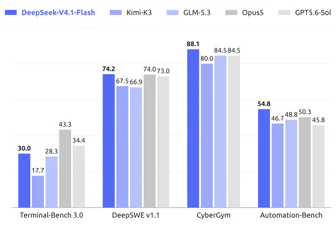
    DeepSeek-V4.1-Flash released: 552B parameter multimodal MoE model, context up to millions of tokens

    DeepSeek-V4.1-Flash is a 552B parameter multimodal MoE model that supports context up to one million tokens, natively processing images and text and generating text autoregressively. It adopts a Causal Encoder-Decoder architecture, reducing global KV cache usage to 890 bytes/token through technologies like CSA2 and FP4 primary KV cache, a 75% reduction compared to DeepSeek-V4-Flash.

Jun 13Sat
Jun 2Tue
  1. MiniMax · Hugging Face new models

    MiniMax-M3-MXFP8 released: Native multimodal model supports contexts of up to millions

    MiniMax-M3-MXFP8 is a native multimodal model with a 1M context window, approximately 428B parameters, and 23B activation parameters, achieving 9x pre-filling and 15x decoding speed improvement through MiniMax sparse attention mechanism (MSA). The model leads in long-horizon agent benchmarks, supporting three reasoning modes, and can be downloaded via Hugging Face and deployed using SGLang, vLLM, or Transformers frameworks.

May 19Tue
Mar 17Tue