 Codex releases1010
GitHub Copilot rust-v0.165.0-alpha.1 released
GitHub Copilot rust-v0.165.0-alpha.1 has been released, version number 0.165.0-alpha.1.
Codex releases1010GitHub Copilot rust-v0.165.0-alpha.1 has been released, version number 0.165.0-alpha.1.
 Hugging Face Blog
Hugging Face releases torch-neuronx model supporting query Space, detecting AWS Trainium compatibility. This Space supports querying whether mainstream models (such as Qwen3-0.6B) with a scale of 175B parameters can run on Trainium without modification, and provides running scripts.
 Tencent Hunyuan · Hugging Face new models
Tencent Mixuan released the WeVisOne-VL-4B model, built on Qwen3-VL, integrating a 9.6M parameter pixel decoder, supporting object-level perception (open-vocabulary object detection, pointing localization, counting, pointing and OCR) and pixel-level perception (pointing segmentation and promptable alpha friction), suitable for research tasks such as visual localization, pointing, counting, OCR localization, pointing segmentation, and image friction.
 OpenAI News
OpenAI collaborates with Poland's National Network and Information Security Agency NASK to advance AI safety, security, and research to enhance security defenses and support more resilient digital ecosystems
Codex releasesClaude Code 0.164.0 released, adding ten sets of prompt preset slots and keyboard menu quick access, supports setting models, reasoning strength, speed, and permission configurations directly via /model and /permissions parameters, allows full-screen preview and image generation in terminals supporting Kitty or Sixel graphics.
 Gemini CLI releases1515
Gemini CLI v0.67.0-nightly.20261023.ga713410ab released, fixed issues with server extension token metadata retention, ensured all function-calling model turns receive thought signatures, handled termination signals and cancellation of execution tools in non-interactive mode, and preserved ${VAR} placeholders in legacy setting migration.
 vLLM Blog5858
vLLM provides zero-day support for MiniMax-M3.1-Flash on NVIDIA Blackwell, Rubin, and AMD MI350 series GPUs, performing excellently on agent workloads.
 NVIDIA Blog
Kazakhstan is shifting its AI ecosystem from infrastructure plans to deployment, covering the entire AI layer from infrastructure to models to applications. During NVIDIA founder Huang Renxun's visit to Astana, the Minister of AI and Digital Development in Kazakhstan discussed with Huang Renxun the plan for the country to become an AI nation, establishing energy and computing infrastructure to support local AI and applying it to the economy.
 PyTorch Blog5858
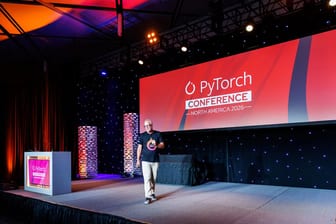
PyTorch Conference North America 2026 will be held in San Jose, attracting over 3500 participants, focusing on accelerating open intelligence and exploring the impact of PyTorch Foundation projects (PyTorch, vLLM, DeepSpeed, Ray, Helion, Safetensors).
 Sakana AI
 has launched the Sakana Aquarium platform for building, executing, and running AI agents. It integrates organizational information through ontology, supporting the efficient construction and secure operation of AI agents. The platform includes three core mechanisms: ontology, governance, and agent execution base, achieving systematic organizational judgment criteria and task automation.
OpenAI NewsAnima uses GPT-6 and GPT-Live to reduce clinic phone waiting time by 75% and enhance the medical team's ability to respond to patients
Hugging Face BlogFeatured6666Microsoft and Hugging Face release ThinkingBox-Training, directly using ThinkingBox's deterministic verification of database final states as reinforcement learning rewards, training Qwen3.8-27B for 50 steps with GRPO
Why it matters: Microsoft and Hugging Face directly use database final state verification as reinforcement learning rewards and have publicly released task filtering and training code, which can be transferred to other stateful intelligent agent training
 Microsoft AI NewsFeatured7878
Microsoft's Health MAI team released the AI diagnostic system MAI-DxO and its accompanying benchmark SDBench, with the results published in Science. On 304 NEJM complex cases, MAI-DxO achieved an 83% diagnostic accuracy rate, with doctors achieving 36% with external information and 22% without; on MIMIC-IV-ED's emergency common cases, it was 80%, with doctors at 47%.
Why it matters: The original text provides a step-by-step diagnostic benchmark and a quantitative comparison of multi-agent orchestration, allowing readers to understand the path of medical AI evaluation shifting from exam questions to interactive diagnosis.
 Anthropic ResearchFeatured8282
Anthropic partnered with Theorem to complete formal verification of the RISC-V assembly layer for 239 entry points in 123 OSS-Fuzz open-source libraries using Claude. The verification proves that these programs will not crash with any input less than 64 MB, with the proof code consisting of about 180 million lines of Rocq.
Why it matters: Anthropic used Claude to formally prove the RISC-V assembly layer for 123 open-source libraries and provided cost and reuse data, which can be used to determine whether this method can enter the daily development process.
 Anthropic Newsroom2828
Anthropic invites chief researchers in the life sciences field and their research teams to apply for the use of the Claude model to collaborate on exploring key issues such as causal human biology, structural and computational molecular biology, medicinal chemistry, drug discovery, and clinical science. Visiting researchers will work directly with Anthropic researchers for 8-12 weeks to jointly analyze, develop research tools, and open-source related data and code. Research results will belong to the researchers. Applications must explain how to benefit from the collaboration and the feasibility of producing results.
 Claude Code releases1515
Claude Code v2.1.309 released, fixes over 30 issues on macOS and Linux including sandbox Bash commands, Git operations, permission checks, session management, and plugin synchronization, and improves Git command speed and error prompts.
 LangChain Deep Agents releases4545
`deepagents-code` 0.2.0 version now requires Python 3.14 and has removed low-value startup tests.
LangChain Deep Agents releases4545deepagents-talon 0.1.0 released, now requires Python 3.14, adds independent Slack and Discord tasks, background subagent capacity configuration, `/effort` inference control, Discord domain mention reply feature, and `openshell` sandbox support.
 Amazon Science
 releases the open-source backend TorchNeuron, which translates PyTorch code into executable instructions for the AWS Trainium system, supporting existing PyTorch code to run on Trainium. It achieves efficient execution through optimizations like adaptive eager mode and multi-level cache, and uses an AI agent to screen 841 representative models and tens of thousands of tensor dimensions for benchmark testing.
 Databricks BlogFeatured6060
Databricks executive Patrick reviews the process where the cost of AI coding agents increased exponentially after the company fully adopted them, and then reduced the unit cost by up to 90% by controlling the layer. He mentions that shifting traffic to cheaper new models contributed to more than 50% of the reduction, and Smart Router reduced the average task cost by more than 30% while maintaining near the quality of the most expensive model. This internal solution was later productized as Unity Gateway, which is now used by thousands of customers.
Why it matters: Databricks executive reviews the process of its own AI coding costs from out of control to reducing the unit cost by 90%, providing migratable practices for gateways, routing, and self-built evaluations.
Databricks Blog3838Fraud Analyst AI Coworker can detect telecom fraud in real-time on a single platform. The AI addresses the shortcomings of traditional fraud detection systems in terms of architecture through techniques such as cross-channel correlation, behavioral modeling, and device simulation. Its context window covers 6-7 system data sources, with a speed increase of 3.4 times, but the original text does not mention specific parameter scale, benchmark scores, price, and availability (open source/closed source/API).
Databricks Blog3838Databricks engineer Kevin Stumpf points out that enterprise AI adoption is shifting from focusing on token usage to focusing on return on investment. The core of AI cost management is to measure, attribute, control, and optimize the expenses of models, agents, applications, and teams.
OpenAI News3535OpenAI launches Decisions API, providing applications with fast, focused, and low-cost decision-making capabilities.
PyTorch Blog3535The PyTorch Foundation welcomes 24 ambassadors from five regions, covering communities from Nigeria, Burkina Faso to Singapore, India, Romania, Spain, the UK, and the US. The ambassador corps will play a role in education, mentorship, technical content, community activities, and open-source contributions, promoting the adoption and engagement with open-source AI technology.
 AWS Machine Learning Blog2727
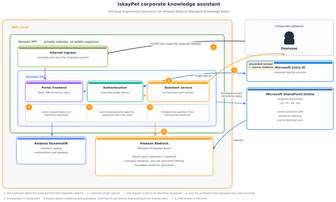
IskayPet has built an enterprise knowledge assistant using Amazon Bedrock Managed Knowledge Bases, which can answer employee questions in four areas (retail operations, veterinary care, HR onboarding, and procurement), across three countries and four languages, without managing RAG infrastructure.
AWS Machine Learning Blog4848Amazon Polly Generative engine upgrade provides more natural and accurate speech output, adding 14 new voices (across 9 regions), for the first time making Hindi and Finnish generally available. The upgrade is plug-and-play, with unchanged API calls and voice names, so existing applications do not need to be modified. Supports emotion and prosody expression based on text context, with new languages being Hindi (Arjun/Kiara) and Finnish (Suvi), totaling 57 generated voices (11 languages/25 regions), with prices unchanged.
Anthropic NewsroomFeatured7171Anthropic announced that it is donating the Agent Skills open standard to the Linux Foundation's Agentic AI Foundation (AAIF), a foundation co-founded by Anthropic, Block, and OpenAI. Anthropic had previously donated MCP to it.
Why it matters: The original text explains the adoption scale and governance transfer of Agent Skills, allowing readers to judge who will maintain this intelligent agent skills standard in the future.
 IBM Research Blog2222
Qiskit SDK v2.6 released, adding compiler pass-manager framework in C API, QPY serialization and custom operations, supporting use in non-Python environments, QPY format upgraded to v18, minimum Python version requirement 3.10, source code build requires Rust 1.89.
 Google Developers Blog3434
Project Chrysalis Architecture combines the Gemini platform with Agent Development Kit (ADK) on Google Cloud.
AWS Machine Learning BlogAWS Machine Learning Blog3434Amazon Quick is a HIPAA-eligible AI workspace platform whose chat agents can perform multi-step tasks across structured and unstructured data (such as clinical records and claims). It securely integrates with external systems via pre-built connectors like Slack and Salesforce, and supports custom tool integration.
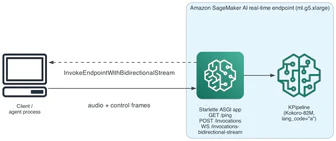
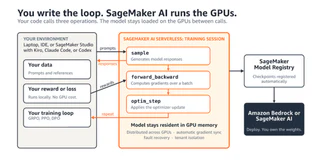
AWS Machine Learning Blog5858The Amazon SageMaker Training Session API allows users to drive GPU-accelerated sessions from a local Python process, enabling algorithmic freedom through operations like forward_backward(), optim_step(), and sample(). SageMaker AI manages GPU resources.
AWS Machine Learning BlogSageMaker AI introduces model customization features without GPU management, allowing users to control post-training logic through training sessions without managing underlying infrastructure. Supports technologies such as SFT, DPO, RLVR, RLAIF, and multi-round RL, with options for LoRA or full fine-tuning.
 Microsoft Research5858
Flint-interactive makes AI-generated charts highly interactive, allowing users to explore data through clicks, filtering, zooming, highlighting, and cross-chart interactions. It simplifies the construction of complex interactions through advanced semantic events and update operations, and leverages the Flint compiler to handle interaction logic and visual dependencies, enhancing reliability and development efficiency. Flint-interactive supports creating interactive data stories, dashboards, and connected experiences, enabling AI agents to generate charts with interactive features to help users analyze data more efficiently.
OpenAI NewsUber promotes OpenAI's ChatGPT Work to over 30,000 employees, helping teams research, analyze data, create presentations, and complete complex workflows.
AWS Machine Learning Blog3434Rescale utilizes Strands Agents and the AI-DLC framework to set up intelligent routing agents on AWS in five days and deploy them in production within weeks. The agent classifies end-to-end test failures at night by calling Claude Opus 4.8, retrieves historical failure patterns from the knowledge base, queries MCP logs for runtime evidence, and generates remediation reports containing file references, function names, and recommended fixes for engineers to review.
Hugging Face BlogHugging Face releases OlmoEarth v1.3, a satellite embedding model, offering global pre-computed embeddings (10m resolution, 64 and 128 dimensions), available to users without login or technical knowledge. The model performs best in 27 evaluations, with 128-dimensional embeddings scoring highest in 20 evaluations and 64-dimensional embeddings leading in 18. Training costs are reduced by 53% compared to v1.2 and 18% compared to v1, with corresponding reductions in carbon emissions. Weights, data, and code are all open source.
Google Developers BlogGoogle API Gateway now supports streaming, allowing real-time API calls without changing the specification. Streaming supports Server-Sent Events (SSE), chunked transfer encoding, HTTP response streaming, and WebSocket, with the longest connection time up to one hour. During the public preview, the streaming feature was enabled when creating the gateway using the `--enable-streaming` flag, and it is planned to be automatically enabled in the official release without additional configuration.
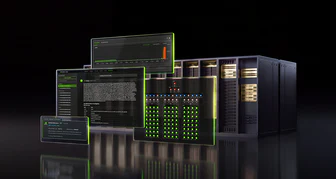
NVIDIA BlogNVIDIA announced the Minerva platform today, which integrates telemetry data from infrastructure and AI workloads and applies proprietary AI models to transform it into timely, actionable insights, helping teams identify problems earlier and maintain the productivity of their AI factories.