Skip to content
Live
Nov 14Sat
  1. Hugging Face Daily Papers

    Test-Time Baking (TTB) released: A strategy for efficiently rendering decoder-only large-view synthesis models

    Test-Time Baking (TTB) strategy enhances the fidelity of new-view decoding for large-view synthesis models (LVSMs) by baking global scene information from cross-view attention into lightweight MLPs, while maintaining Test-Time Training efficiency. It achieves up to 23x rendering speed improvement with quality comparable to current state-of-the-art techniques on multiple benchmarks.


Nov 13Fri
  1. Hugging Face Daily Papers

    SO-Arena evaluates the capability spectrum and reliability of a model

    SO-Arena evaluates system one model through 11 domains and 5 capability families, finding differences in scalability and reasoning gain, and high overall accuracy does not guarantee reliable decision-making. This benchmark assesses the capability spectrum through reliable sources and manual verification, domain-specific difficulty standards, and iterative execution of actions in a sandbox; it evaluates decision reliability through decision stability under option set changes and answer identification when there are no valid options. 21 model evaluations show differences in scalability and reasoning gain across domains, and the best system one model ranks only seventh in reliability.

  2. Hugging Face Daily Papers

    Duo: A Reciprocal World Model for Full-Duplex Interaction

    Duo v1 introduces the Reciprocal World Model (RWM), which jointly models intentions and reality through autoregressive reasoning, synchronized attention, and dual inference distillation, achieving real-time full-duplex audio-video interaction. The model continuously perceives audio-video input while responding to users in real time, treating intelligence and physical reality as equal foundational components of the world, supporting interactions such as dialogue, sharing objects, and reshaping virtual scenes. The first batch of models has been open-sourced.

Nov 12Thu
  1. Hugging Face Daily Papers

    TOME-Math: A mathematical proof supervisory corpus based on structured textbooks

    TOME-Math transforms 2,118 university mathematics textbooks into approximately 380K structured proof supervision records, preserving chapter order, proposition-proof links, and dependency references, used for fine-tuning to improve the mathematical reasoning ability of language models by 16.7 percentage points, surpassing all three public instruction datasets. This corpus will be released to promote structured mathematical supervision research.

  2. Hugging Face Daily Papers65

    One Table Benchmark launched: a benchmark test for general table models in generation, interpolation, and prediction tasks

    The One Table Benchmark tested the table generation, imputation, and prediction capabilities of 46 models on 56 datasets, finding that these tasks share conditional information but have different fidelity and target interactions. Fixed models exhibit a trade-off between utility and fidelity, while frozen base models perform outstandingly in prediction and numerical imputation, indicating that unified table models have the potential to improve classification reconstruction and joint sampling.

  3. Hugging Face Daily Papers

    FINCOSMOS: An open-world evaluation paradigm for intelligent agents in the financial domain.

    FINCOSMOS has introduced an open-world evaluation paradigm for evaluating intelligent agents in the financial field. In 150 simulated user interactions, no session was accepted because all sessions failed during program checks, with the agent reporting only 54-64% of the undisclosed details. Human experts attributed 88.33% of the failures to the agent.

Nov 11Wed
  1. Hugging Face Daily Papers

    InfraRSI: Utilizing recursive self-improvement training infrastructure

    InfraRSI transforms open-ended human instructions into validated training optimization through a five-stage workflow, achieving up to 2.75x acceleration in four single-node and multi-node dense as well as Mixture-of-Experts (MoE) LLM workloads, and increasing the average model FLOPs utilization (MFU) from 17.4% to 30.0%, surpassing existing tuners and coding agents.

  2. Hugging Face Daily Papers65

    MMDM: Large-scale Multi-task Decision Model Evaluation Benchmark

    MMDM evaluated 28 decision models, showing that most models perform well on common knowledge but poorly on interdependent options, constrained decision-making, and multiple-choice tasks. For example, Perplexity Decider-V1.2 achieved 78.75% accuracy on single-choice knowledge, but only 53.95% and 47.95% respectively on option logic and constrained planning, while the best accuracy of all models on hard multiple-choice was only 36.81%.

  3. Hugging Face Daily Papers65

    Infrathon: A benchmark for language intelligent agents used in long-term AI infrastructure optimization in the real world.

    Infrathon conducted 150 long-term AI infrastructure optimization task evaluations on six models, consuming a total of 10,000 GPU hours, and found that the model rankings changed with the evaluation duration. 135 tasks achieved further optimization in the latter half of the budget, and Claude Opus 5.5 increased the KV cache compression rate from 6.82% to 19.86%, exceeding human design baselines. Analysis shows that task violations, unreliable testing, and premature completion are the main obstacles to continuous optimization.

  4. Hugging Face Daily Papers

    dNaViT releases: Discrete code as a general visual representation

    dNaViT is a discrete native resolution vision Transformer that matches or exceeds specific baselines in visual understanding, generation, and editing tasks through grouped product quantization and dual-branch targets. It performs excellently on 12 visual understanding benchmarks, 4 generation benchmarks, and one image editing benchmark, proving that discrete vocabulary can be a universal visual representation

  5. Hugging Face Daily Papers65

    Longtail-SWE: High-quality long-tail software engineering task set

    Longtail-SWE has released 202 problem-solving tasks covering 13 underrepresented programming languages, for engineering problems that are scarce in existing benchmarks. Built through a solver-judge-repairer pipeline, the model was evaluated under 9 configurations, including state-of-the-art models, analyzing task-solving performance, consistency of repeated attempts, and resource usage. All benchmark instances, execution environments, tools, and agent trajectories have been open-sourced.

Nov 10Tue
  1. Hugging Face Blog

    Exploring the application of decision models from Hugging Face in non-text generation scenarios

    Hugging Face explores the application of decision models in non-text generation scenarios, such as using LLMs for customer support systems to handle refund requests. The model directly evaluates options and returns a probability distribution instead of generating text. Decision models take state and questions as input and output structured decisions and probabilities, which are superior to LLMs generating JSON directly, as the latter may not follow the request format and is inefficient. Decision models differ from classification models in that the former's output categories can be dynamically adjusted, while the latter's output categories are fixed and require retraining to expand.

  2. Hugging Face Daily Papers

    Frontier3DBench: A 3D creation benchmark test for code intelligent agents in open worlds across objects, scenarios, and interactions

    Frontier3DBench uniformly evaluated the ability of code agents in object, scene, and interactive 3D world creation across 145 tasks, GPT-6.1-sol performed best at the object and scene levels, with a total score of 66.02/100, but all configurations had reference reconstruction scores lower than text-driven generation in object and scene tasks. The generated world averaged 83.08/100 in local mechanisms, but only 20.82 and 30.26 respectively in motion removal and stateful workflow, showing that coordinated activity completion remains a core bottleneck

  3. Hugging Face Daily Papers

    ReproBridge: Building reproducibility for machine learning research artifacts

    ReproBridge enhances the success rate of machine learning experiment replication through standardized design (refined codebase, environment setup, experiment launchers, and replication guides), increasing the average replication rate of four models from 76.4% to 92.6% on ReproBridge-Bench. Refined artifacts reduce the average downstream API cost by 19.7%, narrow the success rate gap between models to 3.9 percentage points, and achieve a success rate above 90% for all models. Removing code or environment components significantly reduces replication effectiveness.

  4. Hugging Face Daily Papers

    Fast and Exact Relative-Position Attention via Structure-Aware Kernels

    A precise tile attention algorithm integrates additive relative position terms into the computation similar to FlashAttention, reducing memory and computational overhead, accelerating long-context relative position Transformers. The method (1) uses offset-aware tiles to avoid redundant index and memory access, (2) only computes necessary key/query relation products and reuses them in forward and backward passes, and (3) uses offset-based gradient sharding and aggregation to eliminate atomic contention.

  5. Hugging Face Daily Papers

    LLMs Don't Know What They Know: Benchmarking Temporal Self-Knowledge for Financial Backtesting

    GPT-5 correctly answered 76% of control facts in financial backtesting but claimed to know only 38%, and still correctly answered 61% of the facts it claimed to be unaware of. The claimed knowledge can extend to seven quarters after the measurement knowledge boundary. Historical date instructions can eliminate most knowledge claims without changing accuracy.

Nov 9Mon
  1. Hugging Face Daily Papers34

    LowRAM: A runtime method for low-rank keys and amortized values for composable KV cache compression

    LowRAM compresses keys using low-rank decomposition and uses small head networks to predict key values, while retaining residual correction for the most difficult-to-reconstruct markers, achieving 4x value cache compression with near-lossless performance. Selective reconstruction can increase peak decoding throughput by 5x for 262K context under 4x KV compression. Combining quantization and eviction, LowRAM pushes compression to 26.9x while retaining 94.5% of baseline performance.

  2. Hugging Face Blog45

    HOPE Advanced Pruning Method Released

    The HOPE method achieves better pruning effects in mixed expert language models by considering the second-order interactions between experts. It improves performance by 6.1% over the next best method on the agentic coding task at a 50% pruning rate. This method is validated on models like Qwen3.5-122B, where each MoE layer has 256 experts. After pruning, it can reduce memory usage by about 250 GB and is compatible with quantization.

Nov 7Sat
  1. Hugging Face Daily Papers65

    Drex open-source decision model released

    Drex open-source decision model returns the probability distribution of user options without autoregressive decoding, using supervised fine-tuning, RLAF, and consistency loss to improve accuracy, robustness, and latency. Its 35B parameter Max version achieves an industry-leading score of 67.52 on Decision Index 0.4.1, with a response time only 9% of GPT-6 Sol and 5% of Claude Opus 5.5.

Nov 6Fri
  1. Hugging Face Blog58

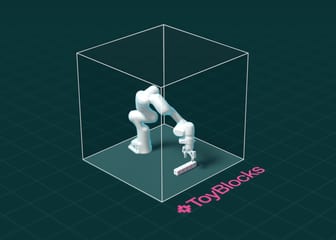
    Hugging Face released ToyBlocks: A controlled world framework for robot learning and evaluation

    Hugging Face released ToyBlocks, a framework for robot learning and evaluation that provides a controlled simulation environment. The framework supports automatically generating tasks and training demonstrations, and includes metrics to measure changes in robot behavior over time, aiming to study how models improve with more training data and how to combine advanced reasoning with precise physical control.

  2. Hugging Face Blog

    Hugging Face Open ASR Leaderboard adds Egyptian and Nigerian English datasets

    Hugging Face Open ASR leaderboard adds Liva AI private datasets for Egyptian English and Nigerian English, containing 1.34 hours and 1.55 hours of dialogue speech, to enhance the representativeness and reliability of ASR evaluation. The leaderboard now supports more detailed accent classification based on the Kachru three-circle model, covering groups such as US and non-US, inner circle and outer circle/extended circle.

  3. Hugging Face Daily Papers65

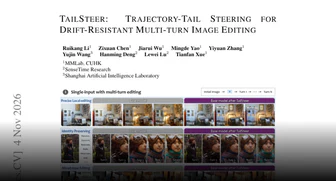
    TailSteer: A trajectory tail guidance training framework for anti-drift multi-round image editing

    TailSteer, by maintaining early denoising dynamics to approach the base model and learning fine deviations in trajectory tails from within the policy through rolling out, significantly reduces accumulated visual drift in multi-round editing while preserving pre-trained generation and editing capabilities. Experiments show that TailSteer can greatly reduce drift on FLUX, SenseNova, and Qwen series models in 15-20 rounds of editing and largely maintains the performance of the base model on large text-to-image and single-image editing benchmarks.