Skip to content
Live
Nov 14Sat
  1. The Decoder65

    Runway open-sources robot control model Praxis-1

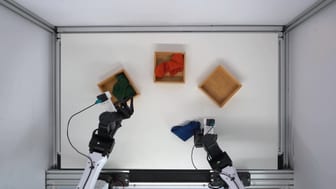
    Runway has released the open-source robot control model Praxis-1, which learns to control robots through video and has shown excellent performance in its own tests, scoring 46.2% on the Nvidia RoboLab-120 evaluation, leading similar models. The model requires additional training to adapt to new robot systems, the standard version requires an 80GB memory GPU, and it has been made available on Hugging Face.
Nov 13Fri
  1. QbitAI

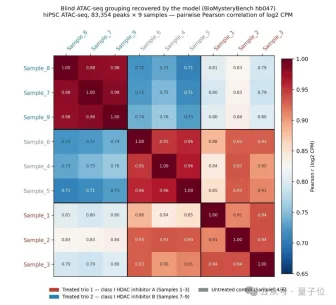
    Unbounded Frontiers opensources Fx-Bio-1031, life science RSI model surpassing GPT-6-Astra and Opus-5

    The boundaryless front-end open-source biological information large model Fx-Bio-1031 achieved 70.59% Pass@5 on the BioMysteryBench benchmark test, significantly outperforming GPT-6-Astra (47.06%) and Claude Opus-5 (52.94%). Fx-Bio-1031 adopts an efficient MoE architecture with 125B parameters and supports localized deployment, suitable for drug development, multi-omics analysis, and other scenarios.

  2. Ant Group inclusionAI · Hugging Face new models

    inclusionAI/Duo-1.0-causal-base released: A multimodal world model for full-duplex interaction

    inclusionAI releases Duo 1.0 causal-base model, a full-duplex multimodal world model for real-time audio-video interaction, including implementation weights and backbones, intent models and adapters, audio-video encoders, speech recognizers, and forced aligners. The model weights are based on MiniMax H3 initialization and are open-sourced.

  3. Hacker News · AI hot posts86

    Edge0 open sources 145B and 120B edge-side models and inference frameworks.

    Edge0 open-sourced the Edge0-145B and Edge0-120B two edge models, and also released a unified inference framework and deployment tools. Officially, the 145B model can run locally on compatible laptops, with peak memory of 29GB, decoding speed of 80+ tokens/s, pre-filling speed of 1100+ tokens/s, supporting context lengths of 128K–256K.

    Why it matters: The original text provides actual memory, speed, and multiple benchmark comparisons of the edge 145B model, which can be used to judge the practical boundaries of running cutting-edge models locally.

  4. Hugging Face Blog71

    IBM releases LLMON markup language and Granite 4.1 3B/8B preview models

    IBM released LLMON (LLM Object Notation) markup language on Hugging Face and launched two experimental preview models based on Granite 4.1: granite-4.1-3b-LLMON-preview and granite-4.1-8b-LLMON-preview, while also open-sourcing a GitHub toolkit.

    Why it matters: The original text provides the design motivation for the LLMON markup language and the two preview models, allowing readers to understand how separating instructions and data can reduce the risk of indirect prompt injection.

Nov 12Thu
  1. QbitAI82

    MiniMax open-source image model H3-Image: Native 4K, supports 16 reference images

    MiniMax's open-source image model H3-Image supports native 4K (4096×4096 pixels) generation and can take up to 16 reference images. The author tested that it can deduce orthogonal three-view drawings and mechanical exploded views based on product appearance images, and reduce the plasticity on details such as pores and freckles on human faces. The API price is 50% to 70% lower than that of mainstream competitors, with a 50% discount on the first week's 16MP requests.

  2. ITHome · AI

    Runway launches robot model Praxis-1, 15.6 times faster and cost reduced to 1/51

    Runway has launched the robot model Praxis-1, based on the Runway video foundation model with 27 billion parameters. In the RoboLab-120 benchmark test, it achieved a success rate of approximately 46.2%, with a speed increase of 15.6 times and a cost reduction to 1/51. This model is licensed under Apache 2.0 and both weights and code are open-sourced.

  3. ITHome · AI67

    Google DeepMind releases next-generation genome AI model AlphaGenome 2: from tissue prediction to single-cell analysis, identifying gene expression variation capabilities nearly double

    Google DeepMind has launched the AlphaGenome 2 model, which can predict the effects of DNA variations on specific cell types, nearly doubling its ability to identify gene expression variations to 30% (from 16%), and accurately predicting the direction of gene expression changes to 43% (from 23%). It supports cross-modal data inference and has opened API access to non-commercial research.

  4. The Verge · AI65

    Google DeepMind has released the AlphaGenome 2 model, analyzing how DNA affects different cells.

    Google DeepMind releases AlphaGenome 2 model, predicting gene variation impacts on different cell types and states by analyzing over 100 million cell outline data, identifying nearly double the variable gene expression mutations compared to the previous generation model

Nov 11Wed
  1. The Decoder

    Anthropic claims AI has weakened NVIDIA's CUDA advantage, reducing the time to switch to AMD chips to three days.

    Anthropic claims to have reduced the time to migrate its AI model, Claude, to AMD GPUs from several months to three days with almost no human intervention, thereby breaking its reliance on NVIDIA. The company states that the AI model Mythos has completed 99% of the kernel migration or writing work, allowing the new hardware to reach a usable performance level in three days, while traditional engineering methods require six to twelve months.

  2. Hacker News · AI hot posts

    Google SWE uses 48 AI agents to analyze NASA radar data, discovering unreported Mayan pyramids in Mexico within 72 hours

    Google SWE uses 48 AI agents to analyze NASA radar data, discovering unreported Mayan pyramids in Mexico within 72 hours; the agents process 1,200 km² of radar images, identifying suspected pyramids, plazas, and reservoir structures with right angles and sharp corners, which have been confirmed by the National Institute of Anthropology and History of Mexico as not being in the registered records.

  3. Ant Group inclusionAI · Hugging Face new models

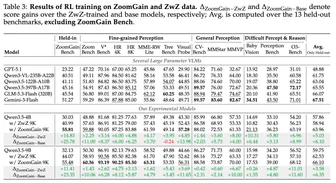
    inclusionAI/ZoomGain-4B-GGUF released: Multimodal model supporting image input

    inclusionAI/ZoomGain-4B-GGUF is a 175B parameter multimodal model supporting image input, using FP16, Q8_0, and Q4_K_M precision quantization. The model includes a language model and mmproj visual encoder/projector, converted to GGUF format via llama.cpp. It provides llama-mtmd-cli for command-line inference and llama-server for network chat functionality.

  4. Ant Group inclusionAI · Hugging Face new models

    inclusionAI/ZoomGain-9B-GGUF Released GGUF Format Weights

    The GGUF format weights for inclusionAI/ZoomGain-9B have been released, converted using llama.cpp, with the language model in FP16, Q8_0, Q4_K_M. The visual encoder and projector (mmproj) also adopt this quantization scheme. Both the language model and mmproj files need to be provided for image input, supporting CLI inference (llama-mtmd-cli) and Web Chat (llama-server) deployment.

  5. ITHome · AI

    Google's strongest VLA robot model, Gemini Robotics 2.5, debuts, can tie bows, already on the Mercedes production line

    Google launches VLA robot model Gemini Robotics 2.5, achieving leaps in dexterity, reliability, and safety, with a success rate of 96% on the Mercedes production line. The model has tested 200 tasks, with a success rate 30%-100% higher than the baseline, a speed increase of 20%-30%, and is compatible with robots like Apptronik Apollo 2, adopting ASIMOV-Jailbreak benchmark to enhance jailbreak resistance to 99.5%.

  6. MiniMax News80

    MiniMax releases open-source image generation model H3-Image

    MiniMax has released an open-source weight image generation model based on H3, H3-Image, which supports text-to-image, reference image generation, and image editing, capable of generating 4096 × 4096 4K images within 10 seconds, and supports up to 16 reference images.

    Why it matters: The official provides 4K generation speed, reference image quantity, and pricing range, which can be used to judge the gap between open-source image models and closed-source solutions.

  7. MarkTechPost

    Zyphra has released ZONOS3-Mini: an 800M parameter open-source speech synthesis model.

    Zyphra has released ZONOS3-Mini, an open-source speech synthesis model with 800M total parameters and 100M active parameters, supporting real-time local deployment and zero-shot voice cloning. The model ranks first in the open model category in Zyphra's self-developed ZTTS2-Eval benchmark test (66.2 points), with the first audio generation on a single H100 GPU taking 80 milliseconds, but the reference audio cloning effect is far lower than the embedded mode.

Nov 10Tue
  1. ITHome · AI

    Anthropic has launched the Claude Fable 5.2 and Claude Mythos 5.2 AI models, with a 20% reduction in API call fees.

    Anthropic has launched the Claude Fable 5.2 and Claude Mythos 5.2 models, the latter targeting professional institutions. Fable 5.2 has input and output costs per million tokens of $8 and $40, respectively, a 20% reduction from 5.1. Generation speed has been increased by up to 30%, with an optional fast mode that runs 2.5 times faster but at a higher price.

  2. Hugging Face Daily Papers

    Confucius4-R2T2: A stable prefix streaming speech recognition model for real-time transcription

    Confucius4-R2T2 is a stable prefix streaming speech recognition model for real-time applications, which converts a full context ASR model into a streaming model through post-training without architecture modification. Built based on Qwen3-ASR-1.7B, R2T2 achieves near-offline recognition accuracy and low transmission delay, supports configurable streaming block sizes, and demonstrates promising cross-lingual generalization capabilities. This model and implementation have been publicly released.

Nov 9Mon
  1. QbitAI82

    Tencent Hunyuan Hy4 released: 770B total parameters, 49B activation parameters, first supports native vision and computer operation

    Tencent Mixuan Hy4 is officially released, with a total of 770B parameters and 49B activation parameters. It introduces native visual capabilities and computer operation support for the first time, while also upgrading command compliance, long text understanding, and long-range Agent capabilities. The model has been launched on products such as Tencent Cloud TokenHub, WorkBuddy/CodeBuddy, and Yuanbao. API access has been provided to platforms like OpenRouter, Hermes, and OpenCode, with weights to be open-sourced in the near future.

    Why it matters: The author uses multiple long-range tasks to test the autonomous execution and self-check capabilities of the open-source model 'Hunyuan Hy4', thereby judging the actual level of open-source models in Agent delivery.

  2. QbitAI47

    Ji Yuan Law Release NeoHorse-1.5-Flash Preview, Agent model RSI enters the second round of iteration

    Ji Yuan Law Release Agent Native Model NeoHorse-1.5-Flash Preview, based on Qwen3.8-Flash training, 180B total parameters, 6B activation parameters, score improvement in Agents' Last Exam, Natural Language to Repository and other evaluations. This model iterates through recursive self-improvement (RSI) and combines the OpenSquilla platform to achieve differential diagnosis of multiple models and online learning, now open for limited internal testing.

  3. MIT News · AI38

    MIT develops FLEX platform to help robots understand natural language instructions

    The FLEX platform developed by researchers from MIT and New York University enables robots to infer deep meaning from natural language instructions, enhancing their motion planning capabilities. The platform uses GPT-4o to analyze instruction patterns, allowing robots to avoid electronic devices such as laptops and phones in virtual scenarios without explicit instructions. The entire process takes about five seconds, aiming to help robots understand the underlying intent behind human instructions.

  4. ITHome · AI60

    LG AI Research Institute announces the free opening of the K-EXAONE 2.5 model API to the public

    LG AI Research Institute has opened the K-EXAONE 2.5 model API for free, allowing any user to use it at no cost for development and research. This self-developed model enhances the capabilities of the intelligent agent through additional training and performs equally well as DeepSeek-V4.1-Flash and GLM-5.3 in benchmark tests such as AutomationBench and SWE-Bench Pro.

Nov 8Sun
  1. MiniMax · Hugging Face new models

    MiniMax-H3-Image-PE provides hint extension functionality

    MiniMax-H3-Image-PE uses prompt expansion (PE) to convert short requests into detailed image descriptions and recommends aspect ratios. It supports two workflows: text-to-image (T2I) and image editing, using fine-tuned FP4 weights from Qwen3.8-27B. The online API can be accessed via platform.minimax.io or platform.minimax.cn, and the documentation provides support in both Chinese and English.

Nov 7Sat
Nov 6Fri