Skip to content
Live
Jul 21Tue
  1. Meta AI Blog

    Meta AI's SAM 3 and DINOv3 models drive the first wave of progress for the Genesis mission project

    Meta AI's open-sourced SAM 3 and DINOv3 models achieve 3D semantic segmentation and reconstruction of scientific images within 15 minutes using 300 A100 GPUs on the NERSC supercomputer, helping the U.S. Department of Energy's Genesis mission project overcome the analytical bottleneck caused by data explosion after ALS upgrade, and has realized a 20-fold increase in monthly expert annotation efficiency in grapevine drought cell-level research.


Jul 9Thu
  1. Cognition Blog

    SWE-1.7 Released: A Cost-Reduction Solution for Cutting-Edge Intelligence

    SWE-1.7 is the strongest Cognition training model, achieving cutting-edge intelligence levels at a lower cost. It achieves breakthroughs by improving the RL pipeline (better infrastructure, more stable training, high-quality data, new techniques for long-term tasks), challenging the 'fine-tuning ceiling' assumption. It is provided on the Devin platform (Web/Desktop/CLI) by Cerebras, supporting 1000 TPS, with a FrontierCode 1 score of 42.3% in coding benchmarks.

  2. Meta AI Blog

    Meta AI has released the Muse Spark 1.1 multimodal reasoning model.

    Muse Spark 1.1 is the latest multimodal reasoning model released by Meta Superintelligence Labs, significantly improving in tool and computer use, coding, and multimodal understanding, supporting million-token context windows. It is open to developers for public preview via the Meta Model API, surpassing Muse Spark and matching leading alternatives in Meta's internal coding evaluations.

Jul 7Tue
Jul 3Fri
Jun 22Mon
Jun 13Sat
Jun 11Thu
Jun 2Tue
  1. MiniMax · Hugging Face new models

    MiniMax-M3-MXFP8 released: Native multimodal model supports contexts of up to millions

    MiniMax-M3-MXFP8 is a native multimodal model with a 1M context window, approximately 428B parameters, and 23B activation parameters, achieving 9x pre-filling and 15x decoding speed improvement through MiniMax sparse attention mechanism (MSA). The model leads in long-horizon agent benchmarks, supporting three reasoning modes, and can be downloaded via Hugging Face and deployed using SGLang, vLLM, or Transformers frameworks.

May 19Tue
Apr 14Tue
  1. Moonshot AI · Hugging Face new models

    Kimi K2.6 released: Open-source multimodal agent model breaks performance in long-term encoding and autonomous execution

    Kimi K2.6 is an open-source multimodal intelligent agent model that has made significant progress in long-term encoding, encoding-driven design, proactive autonomous execution, and group task orchestration. It has 1 trillion parameters, a context length of up to 256k tokens, achieving a score of 54.0 on the HLE-Full benchmark and 86.3 on the BrowseComp (agent group) benchmark, and supports 300 sub-agents executing 4,000 coordinated steps in parallel.

Apr 7Tue
  1. Cognition Blog

    SWE 1.6 Released: Enhancing the software engineering agent model experience.

    SWE 1.6 is the latest model built specifically for software engineering agents, providing general support on Windsurf with a speed of 950 tok/s and free for the next 3 months. Compared to SWE-1.5, SWE 1.6 improves by over 10% on SWE-Bench Pro by jointly optimizing user experience and reasoning fluency, significantly reducing behaviors like overthinking and redundant tool calls, making model interactions more efficient.

Apr 3Fri
Apr 2Thu
Mar 1Sun
Jan 31Sat
  1. Browser Use

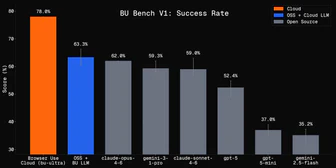
    Browser Use releases open-source browser automation benchmark BU Bench V1, Claude Fable-5 scores up to 80.0%

    Browser Use released the open-source browser automation benchmark BU Bench V1, containing 100 hardcore browser tasks, Claude Fable-5 scored the highest at 80.0%, leading GPT 5.5 by 12 points; Browser Use Cloud (bu-ultra) scored 78.0%, with a speed of approximately 14 tasks per hour. The benchmark is based on real-world website tasks, scored using LLM evaluators, and is available on GitHub.

Jan 15Thu
  1. Anthropic Research50

    How scientists use Claude to accelerate research and discovery

    Scientists have achieved significant progress in biological illustration, computational biology, and protein understanding benchmarks using Claude 4.5, a model now available to top researchers worldwide via API for free, and has built custom systems that go beyond literature reviews or coding assistance. In the lab, Claude serves as a collaborative partner throughout the research process, compressing projects that usually take months into hours using various tools, and discovering large-scale data patterns that humans might overlook, eliminating bottlenecks in knowledge-intensive tasks, and even enabling entirely new research approaches that traditional methods cannot adopt.

Jan 5Mon
  1. Liquid AI Blog

    Liquid AI has released LFM2.5: the next-generation edge AI model family

    Liquid AI has released the LFM2.5-1.2B model family, with its pre-training extended to 28T tokens and significantly improved post-training performance through reinforcement learning, showing excellent performance on knowledge, instruction following, math, and tool use benchmarks. This series includes Base, Instruct, Japanese, Visual Language, and Audio Language models, all of which are open-source and available on Hugging Face and LEAP. The audio models are 8 times faster than their predecessors and natively run on vehicles, mobile devices, and IoT devices.

Nov 26Wed
Oct 29Wed
  1. Cognition Blog

    Introducing SWE-1.5: Our fast Agent model

    SWE-1.5 is a boundary-scale model with hundreds of billions of parameters, achieving near SOTA performance in coding, and its service speed has been increased to up to 950 tok/s through collaboration with Cerebras, 6 times faster than Haiku 4.5 and 13 times faster than Sonnet 4.5. SWE-1.5 is now available on Windsurf.

Oct 16Thu
Aug 7Thu
  1. OpenAI News

    OpenAI introduces GPT-5

    Historical sample • 7 August 2025. OpenAI introduced GPT-5 as a system combining fast responses, deeper reasoning, and routing between them. This card is an editorial preview summary of the original announcement, not a current model recommendation.

May 22Thu
  1. Anthropic

    Anthropic introduces Claude Opus 4 and Sonnet 4

    Historical sample • 22 May 2025. Anthropic announced Claude Opus 4 and Claude Sonnet 4, emphasizing coding, reasoning and agent workflows. Read the original announcement for its evaluations and release context.

May 11Sun
  1. Prime Intellect Blog

    INTELLECT-2 Released: The first 32B parameter model trained through global distributed reinforcement learning

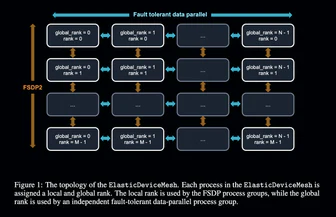
    INTELLECT-2 is the first 32B parameter model trained using global distributed reinforcement learning, employing fully asynchronous RL across dynamic heterogeneous computing contributor groups to train reasoning language models. It has open-sourced the training framework PRIME-RL and components such as TOPLOC and SHARDCAST, while improving the GRPO training recipe and data filtering techniques, enhancing QwQ-32B performance on mathematical and coding tasks.

Mar 25Tue
  1. Google DeepMind

    Google introduces Gemini 2.5 Pro Experimental

    Historical sample • 25 March 2025. Google introduced Gemini 2.5 Pro Experimental with reasoning capabilities and described availability through Google AI Studio and the Gemini app. This is a source-linked historical example for reviewing the original news interface.

Nov 29Fri
  1. Prime Intellect Blog

    INTELLECT-1 Released: The First Global Jointly Trained 10B Parameter Model

    INTELLECT-1 is released, the first 10B parameter language model trained through global collaboration, based on the Llama-3 architecture, completing 1T token training on 112 H100 GPUs across 5 countries and 3 continents, with the PRIME framework achieving a 400x reduction in communication bandwidth, 96% computational utilization, supporting sequence lengths of 8192 and a vocabulary of 128256, with the model code and data open-sourced.

Oct 11Fri
  1. Prime Intellect Blog

    INTELLECT–1 globally distributed training the first 10B parameter model

    INTELLECT-1 launches the world's first 10B parameter model distributed training, inviting the public to contribute computing power to advance the open-source AGI process. The training is based on the OpenDiLoCo open-source implementation, extending the 1B parameter scale of DeepMind DiLoCo's method by 10 times, significantly reducing communication frequency (up to 500 times), and lowering bandwidth requirements by 2000 times through quantized pseudo-gradients (int8) and 500-step outer optimizer synchronization.

Mar 15Fri