Skip to content
Live

Product updates · Page 2

Nov 7Sat21–40
  1. LangChain Blog72

    LangChain introduces asynchronous sub-agents for Deep Agents

    LangChain introduces asynchronous sub-agents in Deep Agents, where a resident orchestrating agent interfaces with users, and the sub-agents execute long tasks in the background in parallel and report results upon completion.

    Why it matters: The original text provides five management tools and notification mechanisms for asynchronous sub-agents, which can be used to determine how to set up the workflow for parallel long tasks.


Nov 6Fri
  1. ITHome · AI72

    Meta launches real-time voice chat and virtual avatar features for AI assistant Muse

    Meta announces the launch of real-time voice chat and virtual avatar features for its personal AI assistant Muse, rolling out first to users in the United States, covering mobile, web, and Mac apps. The feature is supported by two models, Muse Realtime Voice and Muse Realtime Avatar, capable of streaming vertical videos at a resolution of 448×768 and 25 frames per second. The delay from the user finishing speaking to receiving the first audiovisual response is approximately 870 milliseconds.

    Why it matters: The original text provides the latency, resolution, and interaction methods for real-time voice and virtual avatars, allowing readers to judge the maturity of such face-to-face intelligent agent interactions.

  2. Cursor Changelog78

    Cursor goes live with Live Apps, allowing building and sharing accessible applications within the editor

    Cursor introduces the Live Apps feature, where users describe their needs, and the cloud-based intelligence builds a web application, starts a Postgres database on demand, integrates with Cursor SSO authentication, and completes hosted deployment, generating a shareable link after publication.

    Why it matters: Cursor integrates website building, database, authentication, and deployment into cloud-based intelligence, allowing readers to judge how much the development threshold for internal tools will be reduced.

  3. Claude app release notes67

    Claude adds security and management controls for Enterprise plan and launches Personal Finance beta

    Claude Enterprise adds security center, reasoning hooks, centralized management, and more access control features, with several in beta stage. Claude also launches Personal Finance beta, which can link bank, credit card, loan, and investment accounts, view balances and expenses on one page, and ask Claude questions. Aimed at Pro, Max, and Ultra plans, available only in the US.

    Why it matters: Official explanation lists new security and management capabilities for the Enterprise version, and provides the open scope and available packages for Personal Finance beta.

  4. Mistral AI75

    Mistral releases Mistral Large 4 (Le Chonk) and expands Mistral Studio platform

    Mistral releases Mistral Large 4 (codename Le Chonk), featuring coding, defensive cybersecurity, and complex document reasoning, while expanding the enterprise platform Mistral Studio with new capabilities for hosted agents, applications, workflows, as well as enterprise context, agent observability, and evaluation features.

    Why it matters: The original text provides three types of capabilities (hosted agents, workflows, applications) and deployment options, allowing readers to judge the implementation methods of enterprise agents accordingly.

Nov 5Thu
  1. vLLM Blog71

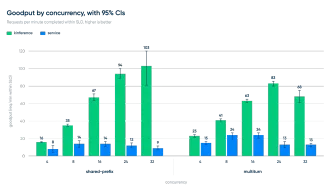
    Buoyant Open Sources Kinference: An Inference Control Plane for vLLM and Kubernetes

    Buoyant releases open-source project Kinference, as an inference control plane for vLLM and Kubernetes, providing token rate limiting, tenant usage and cost tracking, KV cache-aware load balancing, and inference strategies.

    Why it matters: The original text provides benchmark comparisons and YAML strategy examples for KV cache-aware load balancing, which can be used to judge how to design the routing layer of the reasoning platform.

  2. Databricks Blog60

    Apache Spark 4.3 was released, and Databricks Runtime 19 is now available.

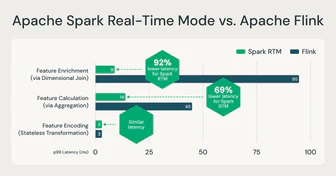
    Apache Spark 4.3 was released and is available in Databricks Runtime 19, with the Real-Time Mode now adding stateful processing, supporting streaming aggregation, dropDuplicates, and transformWithState.

    Why it matters: The original text provides three benchmark latency data for real-time stateful processing and the changes in the quarterly release rhythm, allowing readers to judge the trade-offs of the stream processing architecture.

  3. The Decoder71

    ChatGPT supports generating dynamic GIFs based on the OpenAI Images 2.6 model.

    ChatGPT now supports generating dynamic GIFs, this feature is based on OpenAI's new Images 2.6 model, and is being pushed to all ChatGPT and Codex users on web, desktop, and mobile platforms.

    Why it matters: ChatGPT has added GIF generation capabilities, allowing readers to understand the progress of image models in cross-frame consistency and API variant divisions.

  4. vLLM Blog75

    vLLM provides Day-0 support for Kimi K3.1 Pro

    vLLM announces Day-0 support for the open-sourced Kimi K3.1 Pro on NVIDIA, AMD, Google TPU, and Alibaba's Zhenwu PPU, a 2.8T parameter (104B activation) multimodal MoE model with 1M context tokens.

    Why it matters: The vLLM team details the engineering trade-offs for Day-0 adaptation of Kimi K3.1 Pro, including specific numbers for sparse attention, KV cache packing, and DCP.

Nov 4Wed
  1. Together AI Blog75

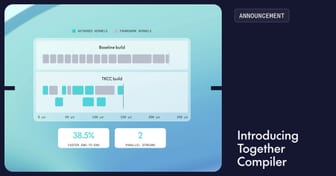
    Together AI has released Together Compiler, continuously compiling and optimizing AI inference.

    Together AI has released Together Compiler (TKCC), which uses high-throughput intelligent agents to continuously generate optimization solutions for inference engines, achieving 1.3-3x TPS improvements on cutting-edge open-source models like Kimi K3, GLM 5.3, MiniMax M3.1-Flash, and DeepSeek v4.1-Flash within 24 hours.

    Why it matters: The original text provides a comparison of throughput improvements and engine startup time on multiple cutting-edge models, allowing for an assessment of changes in the inference optimization process.

  2. The Verge · AI75

    Apple has opened up Siri AI capabilities to third-party apps in iOS 27.3

    Apple has opened up new Siri AI capabilities to developers with iOS 27.3, allowing third-party apps to access personal context, natural language prompts, and screen awareness to complete tasks. This update was released in Developer Preview form and adds app skills that can be created by developers, combining multiple tasks into a single action.

    Why it matters: The original text listed the specific interaction methods for Siri AI to access third-party applications, and readers can judge which cross-application operations the voice assistant can perform based on this.

  3. Google DeepMind75

    Google Antigravity launches cheminformatics skills, completing drug discovery process in one hour

    Google DeepMind releases a set of cheminformatics skills (Cheminformatics Skills) for Google Antigravity, based on RDKit and integrated with ChEMBL and PubChem, where language models are responsible for process orchestration and scientific reasoning, and deterministic chemical tools perform molecular calculations.

    Why it matters: The original text provides a complete process of cheminformatics skills in real lung cancer drug cases, which can be used to determine the division of labor for intelligent agents in scientific research workflows.

Oct 30Fri
  1. Factory News78

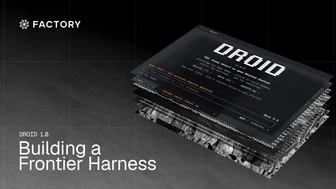
    Factory releases Droid 1.0: an intelligent agent harness for enterprise development

    Factory releases Droid 1.0, a major update to its intelligent agent harness, with programmatic tool calling enabled by default (Script mode). The model can execute hundreds of tool calls within a single request in a sandbox, executing JavaScript.

    Why it matters: The original text provides cost and time data for Droid 1.0 compared to Codex, Claude Code, and other harnesses on Terminal-Bench 4, which can be used to determine the selection of agent harnesses.

  2. LangChain Blog67

    LangChain adds browser capabilities to Managed Deep Agents

    LangChain adds browser capabilities to Managed Deep Agents, allowing developers to export browser configurations through define_browser, enabling managed agents to read page rendering results and perform click operations.

    Why it matters: The original text provides the integration method for browser tools, handoff mechanisms, and WebVoyager experimental data, which can be used to determine how managed agents can cover web tasks without APIs.

  3. LangChain Blog67

    LangChain releases Managed Deep Agents v0.10, adding browser usage and asynchronous sub-agents

    LangChain releases Managed Deep Agents v0.10, adding browser usage capabilities to let agents operate websites without APIs, and supporting asynchronous sub-agents to run long tasks in the background.

    Why it matters: The original text provides specific configuration methods and handover processes for browser takeover and asynchronous sub-agents, allowing judgment on the division of labor for agents handling websites without APIs and long tasks.

Oct 29Thu
  1. QbitAI72

    Genspark releases Media Studio video Agent workbench

    Genspark releases video Agent workbench Media Studio, integrating over 70 model versions from more than 20 manufacturers, where large language models act as directors responsible for writing scripts and scheduling video, image, and audio models.

    Why it matters: The author conducted a complete test of the entire process from short drama to knowledge explanation video, allowing readers to judge the completeness and shortcomings of multi-model arrangement in real-world creation based on this.

  2. The Decoder80

    Google announced the integration of third-party AI agents into Android Studio at the Android Dev Summit and released a new Gemini API

    Google announced Android Studio Rabbit 2 at the Android Dev Summit, supporting more than 40 coding agents, including Claude, Codex, and Google Antigravity, to run within the IDE through the open-sourced Agent Client Protocol.

    Why it matters: Android Studio opens third-party intelligent agent access and provides corresponding changes at the CLI and MCP levels, which can be used to judge the changes in mobile development workflows.

  3. Microsoft Official Blog72

    Microsoft opens the Copilot harness through Foundry, supporting the development of multi-model intelligent agents

    Microsoft opens the GitHub team's Copilot harness built by GitHub through Microsoft Foundry, providing a fully managed way to build intelligent agents that can reason, call tools, and complete long tasks.

    Why it matters: Microsoft opens the multi-model harness supporting multiple Copilot products internally to Foundry, allowing readers to judge the trade-offs of building their own orchestration layer based on this.

  4. Artificial Analysis Articles72

    Artificial Analysis Reviews GitHub Copilot Fusion: Performance slightly lower than Opus 5.5, single-task cost halved

    Artificial Analysis tested GitHub Copilot CLI's Copilot Fusion highest settings in Coding Agent Index v2.0, with a single task cost of 5.59 USD, while Claude Code with Opus 5.5 (max) costs 11.42 USD, only 2 points lower in overall score.

    Why it matters: Artificial Analysis used Coding Agent Index to test Copilot Fusion, providing a cost and token comparison with Claude Code at the same performance level.

Oct 27Tue
  1. Google Developers Blog66

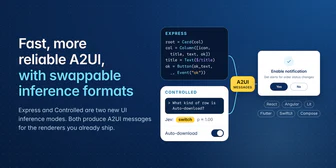
    Google launches replaceable reasoning format and A2UI Express for A2UI

    Google introduces a replaceable reasoning format for generative UI protocol A2UI, and adds default format A2UI Express, claiming it reduces latency up to 3 times and token usage up to 3 times less than Direct JSON for generating the same UI.

    Why it matters: The official provides an accessible way to replace reasoning formats with latency and token comparisons, facilitating engineering trade-offs for generative UI.