
Why it matters: The original text provides a self-evolution validation method in real convenience store scenarios, allowing readers to judge the progress of embodied intelligent agents from simulation to actual operations.
Live
Product updates · Page 3
ITHome · AIFeatured7272
ITHome · AIFeatured7171 Why it matters: Xiaomi has released the source code, bill of materials, and assembly tutorial for this desktop AI hardware, allowing readers to judge the threshold for low-cost DIY AI hardware.

 MarkTechPostFeatured7171
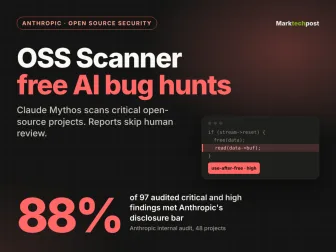
Anthropic has launched a free open-source vulnerability scanner, OSS Scanner.
Anthropic has released the OSS Scanner, which uses the strongest models including Claude Mythos to regularly audit key open-source projects, with reports sent directly to maintainers without manual review. As of October 19, 114 projects have been selected from approximately 650 applications, with 77 critical and 803 high-risk model ratings identified in the first 11 days of operation.
Why it matters: The original text provides information on the scanner's operation, accuracy data, and comparisons with projects like OSS-Fuzz, allowing readers to judge the credibility of vulnerability reports without manual review.
 The DecoderFeatured7878
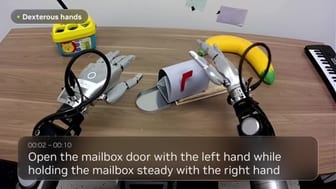
Nvidia's open-source robot video annotation engine Flora claims to be 125 times cheaper than GPT-6 Astra.
Nvidia's open-source data engine Flora, used for robot video annotation, claims to label one hour of video for about 0.72 USD, while GPT-6 Astra is about 88.50 USD. Flora consists of three fine-tuned Qwen3.5 models, each responsible for action segmentation, context-aware description, and reward scoring, covering three types of labels: action description, step-by-step scoring, and task success or failure judgment.
Why it matters: The original text provides Flora's three types of annotation capabilities, cost estimates, and item-by-item comparison with GPT-6 Astra, allowing readers to judge the boundary of open-source alternatives for robot video annotation.
 Ollama BlogFeatured6262
Ollama launches speech model, premiering Phonon text-to-speech
Ollama adds text-to-speech capability, the first integrated speech model is the small TTS model family Phonon from Gradium, currently supporting macOS, Windows, and Linux with support for Linux to be released soon.
Why it matters: The original text provides throughput comparison, accuracy, and OpenAI-compatible interface after Ollama integrates speech models, which can be used to judge the local TTS implementation method.
- MarkTechPostFeatured7171
Google Cloud has launched Agent Compute Engine, allocating an independent microVM for each AI agent.
Google Cloud announced Agent Compute Engine at AGNTCon + MCPCon, allocating a hardware-isolated microVM for each AI agent's session, with no credentials stored within the sandbox; a customer preview program is set to open in the coming months.
Why it matters: The text disassembles the design of each intelligent agent's exclusive microVM and zero credential sandbox, and provides a comparison of isolation and idle processing with AWS, Azure, and E2B.
ITHome · AIFeatured8080 OpenAI fully opens decision API based on GPT-6 Luna, with 0.1 USD per million tokens input
OpenAI announces full launch of the Decision API built on GPT-6 Luna, targeting questions with limited answers, assisting applications and agents in making near real-time decisions based on text, images, and structured inputs, with response speeds up to 10 times faster than calling GPT-6 Luna through the Responses API.
Why it matters: The original text provides the pricing, latency improvement, and single request limit changes for the Decision API, allowing readers to judge which type of agent workflow it suits.
 NVIDIA NewsroomFeatured7676
NVIDIA releases OpenShell reference architecture for enterprise security agents
NVIDIA releases the OpenShell reference architecture, based on the OpenShell secure runtime software, integrating Vera Rubin inference infrastructure, Vera CPU runtime intelligence framework, and the Sentry security framework on BlueField-4 DPU, and can be extended to the edge via RTX Spark, DGX Spark, and DGX Station.
Why it matters: The original text provides the full-stack architecture composition for secure operation of enterprise agents and the first batch of partners, allowing readers to judge the implementation form of enterprise-level agent governance.

 NVIDIA BlogFeatured6262
NVIDIA expands Agent Toolkit to enable enterprise agents to access company data
NVIDIA expands its open-source Agent Toolkit, adding components such as Agent Knowledge Foundation, the OpenShell secure runtime, and the NemoClaw blueprint, enabling enterprises to customize and govern agents with their own data.
Why it matters: The original article lists the new components of Agent Toolkit and details of deployments at multiple enterprises, showing how enterprise agents connect to their own data and are constrained by the runtime.
 vLLM BlogFeatured6060
vLLM supported the Recursive Flint model on the first day.
vLLM announced support on the day Flint was released, with both NVFP4 and BF16 checkpoints capable of running on a single GPU, decoding approximately 500 tokens/s per request on a single GB200 with a context of 100,000 tokens.
Why it matters: The original text provided Flint's day-0 support on vLLM, single-card throughput data, and the step-by-step kernel optimization process, allowing readers to judge the engineering trade-offs of small-batch inference based on this.

 Hugging Face BlogFeatured6262
PyTorch 2.15 brings FP8 and faster LLM decoding to the MPS backend.
The Hugging Face PyTorch team introduces updates to the MPS backend in PyTorch 2.15, adding the tensor torch.float8_e4m3fn and F.scaled_mm, with FP8 tensors occupying half the space of BF16.
Why it matters: The original text provides specific numbers for the MPS backend in FP8, MoE decoding, and memory usage, which can be used to judge the actual changes in running models locally on Mac.
 LangChain BlogFeatured6262
LangSmith has launched the public beta version of LLM Gateway, providing runtime control for production agents.
LangSmith LLM Gateway has entered public beta, serving as a centralized governance layer between agents and models, uniformly executing spending limits, rate limiting, model fallback, and sensitive data deidentification. Spending and rate limiting can be set at four levels: organization, workspace, API key, and user. When the limit is hit, the agent receives a 402 response; fallback rules can take effect uniformly across models and hosting providers.
Why it matters: The original text listed the specific control levels of the gateway in terms of cost, rate limiting, fallback, and data masking, which can help determine at which level the governance of the production intelligent agent should be placed.
- LangChain BlogFeatured7373
LangChain is conducting a public beta of Managed Deep Agents on LangSmith Cloud.
LangChain launches Managed Deep Agents on LangSmith Cloud. Users write intelligent agents as Python projects consisting of files like agent.py, instructions.md, skills/, and deploy them with a single command mda deploy, provided with persistent threads and streaming execution by LangSmith Agent Server.
Why it matters: The original text explains how to organize the agent project by files and deploy it to LangSmith with one click, as well as the infrastructure managed runtime that takes on the basics for the team.
 Anthropic ResearchFeatured7474
Anthropic launched Claude Managed Agents, decoupling the agent's brain from its hands
Anthropic has launched Managed Agents on the Claude Platform, splitting the agents into three replaceable interfaces - session, harness, and sandbox - for running long-term tasks.
Why it matters: Anthropic has disclosed the architectural trade-offs of hosting agents, showing readers how latency and security boundaries change when sessions, harnesses, and sandboxes are separated.

- Anthropic ResearchFeatured7171
Anthropic open-sources security audit tool Petri
Anthropic has released an open-source auditing tool, Petri (Parallel Exploration Tool for Risky Interactions), where automated agents test target models through multi-round dialogues, and then LLM reviewers score them based on safety dimensions and select the most worthy dialogues for manual review.
Why it matters: Anthropic has open-sourced the automated auditing tool Petri and provided cross-comparison results for 14 cutting-edge models on behaviors such as deception, sycophancy, and self-preservation.