Skip to content
Live
Nov 4Wed
  1. QbitAI58

    How does openJiuwen Agent-Memory achieve audio-visual dual-stream memory, understand long videos?

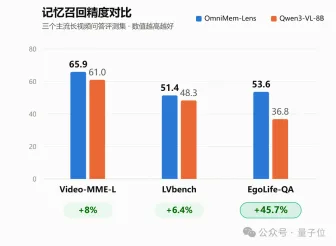
    openJiuwen Agent-Memory 0.2.0 version launched multimodal memory capabilities OmniMem-Lens, which understands video events through visual and auditory dual streams, recall accuracy improved by up to 45.7%, and online Q&A latency reduced by up to 97%. This technology segments memory according to real events, establishing a three-layer memory structure to achieve offline construction and online query, demonstrating outstanding performance on the EgoLife-QA benchmark set, with longer videos showing more significant latency reduction.

  2. MarkTechPost55

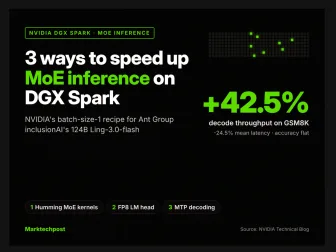
    NVIDIA demonstrates 3 methods to accelerate MoE inference on DGX Spark, increasing Ling-3.0-flash throughput by 42.5%

    NVIDIA boosts the inference throughput of the 124B parameter Ling-3.0-flash model on DGX Spark by 42.5% and speed by 3.5x with a new MoE backend, FP8 output layer, and built-in speculative decoding, without compromising accuracy. This optimization is suitable for single-user desktop systems, improving throughput from 37.81 tokens/s to 53.89 tokens/s and reducing latency by 24.5% on 1,319 GSM8K problem tests.

    Same story · 2 outlets

    How the accounts differ:NVIDIA Technical Blog states decoding is the memory bottleneck due to MoE computation and output layer projection, while MarkTechPost highlights the 42.5% throughput increase and 3.5x speedup due to new MoE backend, FP8 output layer, and speculative decoding.

  3. ITHome · AI42

    NVIDIA claims AI is reshaping chip factories: simulation speeds up to 35 times, reducing engineer decision time from days to minutes.

    NVIDIA claims AI is driving semiconductor foundries into the 'AI-defined factory' phase, accelerating simulation technology to compress engineering simulation from hours and days to just minutes. Applied Materials' Ginestra platform's shape simulation accelerates up to 35 times, reducing engineer decision time from days to minutes.

  4. Hugging Face Blog60

    IBM trains 20B small model Palette to generate slides according to its own design language

    IBM's research team fine-tunes a 20B open-source weight model, Palette, using a two-role LoRA scheme where designers write JSON briefs and encoders generate pptxgenjs code page by page to create presentations according to IBM Design Language.

    Why it matters: IBM uses synthetic data and checks to repair closed-loop training for a 20B small model to create presentations, providing a method that can be transferred to other structured outputs.

  5. AWS Machine Learning Blog32

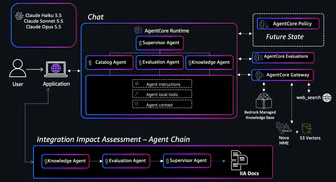
    Amazon Quick integrates structured and unstructured data.

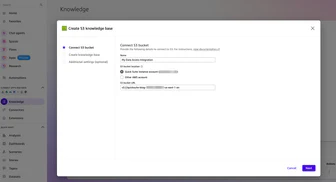
    Amazon Quick integrates structured and unstructured data by connecting Amazon S3 and creating a knowledge base, enabling users to query with a single conversational AI agent. This solution includes a data layer (unstructured content stored in S3 and structured data as semantic datasets), a workspace layer (integrating data types into a single workspace), and an agent layer (custom chat agents linked to the workspace and returning combined responses).

Nov 3Tue
  1. Hugging Face Daily Papers65

    When Latent Prediction Error Supports Physical Anomaly Claims - Research on Video World Models

    Research shows that the latent prediction error in video world models reflects appearance and motion rather than reliable measurements of physical anomalies. Comparisons of latent prediction, masked pixel reconstruction, and simple visual statistics on the IntPhys2 benchmark show that appearance is easy to decode, and V-JEPA2 only slightly reveals whether an event is possible.

  2. Hugging Face Daily Papers65

    From Fragmentation to Fusion: A Review and Roadmap of Multimodal Embeddings

    Embedding research is moving towards multimodal unification through contrastive learning and Transformer architectures, proposing a framework centered on transformation, alignment, and joint embedding to integrate different modalities. Embedding models support modern AI systems, but research is fragmented by modality, with each community developing in isolation. This paper proposes a coverage, comparability, and combinability framework, extending coverage through transformation, achieving comparability through alignment, and reaching combinability through joint embedding, providing a unified perspective on multimodal embedding research for the first time.

  3. Hugging Face Daily Papers

    Reviso: Not All Visual Evidence Should Be Given Equal Attention in Video Caption Generation

    Reviso is an intelligent video subtitle framework that prioritizes key visual evidence through hierarchical planning and active perception learning, enhancing subtitle quality and downstream video understanding capabilities. Multimodal large language models (MLLMs) generated video subtitles may overemphasize minor details while ignoring important context and key events.

  4. Ai2 Blog

    StateBench: Benchmark for testing large language models to track changes in long document states

    StateBench is a benchmark for testing large language models' ability to track entity state changes in long documents, including four difficulty levels: R-trivial, non-periodic, solvable, and general finite. Research finds that recurrent and hybrid models generalize far better than Transformers when directly trained on these tasks, while cutting-edge models like Gemini 3.8 Flash, Claude Opus 5.5, and GPT-6 Sol still struggle with more complex state tracking issues when input lengths vary.

  5. ITHome · AI65

    Developers flash Apple iOS 16.5 test firmware pack for Xiaomi REDMI K20 Pro

    Developer 'You say you like it but you're lying' has flashed the Apple iOS 16.5 test firmware package for Xiaomi REDMI K20 Pro phone, supporting dual systems and data persistence, requiring Android data to be cleared and TWRP Recovery to be replaced. It can switch systems through normal startup or Magisk module under Root privileges, but the developer emphasizes that this solution is a test version and carries the risk of bricking.

  6. Hugging Face Daily Papers47

    uni-robot-agent: Open-source robot use agent unified framework achieves zero-shot operation breakthrough

    The uni-robot-agent framework enables open-source weight robots to surpass proprietary models using agents in zero-shot operation, with its onboard Qwen3.8-Flash-Next scoring 31.39 in the RoboDojo evaluation, exceeding GPT-6 Astra-RoboProbe's 28.97 score and numerous VLA/WAM baselines, and performing excellently in 19 real tasks. Analysis indicates that effective robot use requires combining four general capabilities, suggesting future training should synergistically develop these capabilities.

  7. Hugging Face Daily Papers65

    CEPO: A general prompt optimization framework for multi-agent systems

    CEPO enhances prompt optimization for multi-agent systems by separating shared coordination from agent-specific execution, continuously improving the performance of four existing prompt optimization methods across 11 cross-domain benchmark tests. The framework uses shared coordinator prompts and agent-specific execution prompts, guiding them to update based on their respective roles, allowing shared coordination rules to be consistently optimized across all agents while maintaining independent adjustment of execution instructions. Experiments show that CEPO improves optimization budget efficiency and scales performance as the number of agents increases.

  8. PyTorch Blog34

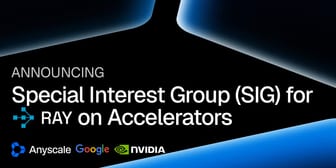
    Ray announces the Special Interest Group (SIG) for Accelerators

    Ray announces the Special Interest Group (SIG) for Accelerators, aiming to unite hardware vendors, Ray contributors, and application developers to create a neutral accelerator support roadmap. Initial focus will be on developing test infrastructure, hardware awareness capabilities, and network transmission, prioritizing shared hardware access, reproducible development and testing environments, and broader CI coverage.

  9. AWS Machine Learning Blog43

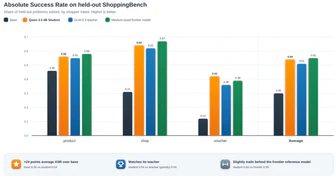
    Use knowledge distillation to build efficient intelligent agents on Amazon SageMaker AI

    Use knowledge distillation to fine-tune the shopping assistant on Amazon SageMaker AI, by transferring the behavior of cutting-edge models to small models through sequence-level knowledge distillation (SeqKD), generating reasoning trajectories for task-solving and using them for supervised fine-tuning to achieve efficient low-cost inference. SeqKD only requires the text output of the teacher model, without weights or logits, and is suitable for scenarios where access to the teacher model's internal information is not available, such as API models, and can evaluate the performance of student models through benchmark tests.

  10. Hugging Face Daily Papers65

    WeFair: Fidelity-Aware Alignment Technology Based on Human Feedback, Used for Personalized Query Rewriting in Short Video Search

    WeFair improves personalized query rewriting through a human feedback phase (demonstration, preference, and validation) based on fidelity perception, reducing intent drift and enhancing search effectiveness on short video platforms. This technology addresses the need for compact query rewriters in short video search, recovering user personalized intent from ambiguous queries under strict latency constraints. WeFair-2B outperforms strong rewriting baselines in overall accuracy and intent preservation in offline experiments, while online A/B testing shows a relative increase of 2.593% in effective video play rate and a relative decrease of 2.350% in query rewriting rate.

  11. Hugging Face Daily Papers38

    REA: A runtime for asynchronous cerebellar-brain control for embodied intelligent agents

    REA unifies deliberative and reactive strategies in a single runtime, achieving high success rates and reducing control overhead through asynchronous coordination in both simulated and real robotic tasks. On 3,000 test segments across 60 LIBERO-Pro tasks, REA achieved a 95.9% success rate, outperforming its best single-agent baseline from its strategy library (94.7%), while reducing control steps by 25% and control time by 17%.

Nov 2Mon
  1. Import AI42

    Realtime-Bench released: Benchmark tests to evaluate the performance of LLMs on low-latency tasks

    Realtime-Bench benchmark tests evaluated the performance of LLMs on 50 real-time interactive games and web tasks, with GPT-6 Astra achieving a 36% pass rate under real-time clock conditions; this test was developed by institutions such as the University of Texas at Austin to measure the model's real-time state awareness, adaptive reasoning, and time-aware action selection capabilities.

  2. Hugging Face Daily Papers38

    LARC framework implements continuous space latent reasoning to unify multimodal models

    The LARC framework alleviates the bottleneck of applying linguistic reasoning in image generation for unified multimodal models by reasoning on continuous hidden states, improving generation quality and achieving test-time scaling without discrete token bottlenecks. The framework includes two stages: curriculum supervised fine-tuning (SFT) and information gain reinforcement learning (RL). In text-to-image generation benchmark tests, LARC improved performance by 7% over BAGEL on GenEval and demonstrated clear test-time scaling behavior.

  3. Hugging Face Daily Papers65

    HiFOR: A hierarchical predictive framework for visual language action models

    HiFOR guides action generation by hierarchically predicting future states and retrieving relevant future information, enhancing robotic manipulation capabilities. The framework jointly predicts short-term state evolution, semantic milestones, and final goal states through hierarchical dependency masks (HDM), establishing cross-temporal dependency relationships; structured perception latent world modeling organizes future potential representations along temporal, perspective, and spatial dimensions, promoting fine-grained retrieval; action-guided decomposition world retrieval adaptively retrieves relevant future information based on action representations during the denoising process, providing targeted guidance for action generation.

  4. ITHome · AI65

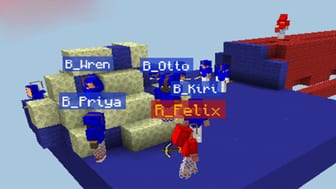
    Researchers test AI agent clusters in Minecraft: Collaboration is prone to bureaucracy, higher win rate against GPT in battles

    Researchers used 50 GPT-6.1 Sol agents to build a civilization community in Minecraft, but failed to develop due to bureaucratic tendencies; in a wake-up war test with 10 GPT-6.1 Sol against 10 Claude Opus 5.5, GPT agents adopted a more aggressive strategy, completing problem diagnosis and sharing solutions; in seven Mindustry battles, GPT agents won six and lost one, demonstrating the advantage of swarm mode.

  5. Hugging Face Daily Papers58

    Wizard: Real-time control of any world through agent control

    Wizard decouples character animation, scene control, and game logic from visual generation, allowing intelligent agents to control joint skeletons and scene geometry through structured visual agents, achieving real-time interaction at 24 FPS, zero-shot generalization to unseen scenes, characters, and actions. The team built 50.3 hours of aligned agent-video pairs, including 750 scenes and 178 characters, supporting character adaptive masking, causal adaptation, and few-step distillation techniques.

  6. ITHome · AI42

    The 2026 Mercedes-Benz E 300 L sedan has been launched: it is the first to feature an AI cockpit developed by a Chinese team.

    The 2026 Mercedes-Benz E 300 L sedan has been launched, with a recommended retail price ranging from 423,800 yuan to 509,800 yuan, with the starting price reduced by 16,000 yuan. This car is the first to feature a brand-new AI smart cockpit developed under the leadership of the Mercedes-Benz China R&D team, integrating the Doubao AI large model and supporting quarterly major version OTA updates.

  7. Moonshot AI · Hugging Face new models

    Kimi K3.1 Pro Released: Open-Weight Multimodal AI Model

    Kimi K3.1 Pro is an open-source multimodal AI model by Moonshot AI, with 2.8T parameters, 104B activation parameters, and a context window of 1M tokens, demonstrating excellent performance in areas such as coding, 3D creation, and financial research. Compared to Kimi K3, it adopts Gated DSA layers to improve long text processing efficiency and has outperformed competitors like Claude Fable 5.1 and GPT-6 Astra in benchmarks such as Terminal-Bench 4.0.

  8. Hacker News · AI hot posts65

    Y Combinator and Olam Labs researchers tested AI swarms in Minecraft and found they could not establish civilizations and fell into bureaucracy.

    Researchers from Y Combinator and Olam Labs tested groups containing hundreds of agents in Minecraft and found that they could not establish civilization and fell into bureaucracy. The study, based on the Mindcraft and Mineflayer frameworks, aims to provide insights into agent groups of AI in the real world.

  9. Hugging Face Daily Papers65

    Research indicates that collaborative design of System-1 and System-2 towards general artificial intelligence can reduce execution costs

    Research proposes that by allowing the lightweight predictor System-1 to evaluate candidate interactions before execution, the execution cost of the resource-intensive executor System-2 can be reduced, ideally reducing the computational workload to 1/ρ_u times (where ρ_u is the utility-related interaction density), and this collaborative design method is applicable to scenarios such as training, inference, decision-making, and agent tool use.

  10. ITHome · AI72

    Meituan LongCat releases LongCat-2.5 native multimodal model, 1.6T parameters targeted at long-range intelligent agent tasks

    Meituan Longma has released the native multimodal model LongCat-2.5 for long-range intelligent agent tasks, with a total parameter count of 1.6 trillion, activating about 48 billion parameters per token, enhancing native visual understanding and intelligent agent programming capabilities based on LongCat-2.0.

    Same story — showing the featured version《》

Nov 1Sun
  1. MarkTechPost58

    Nace AI open-sources Drex Max v1: a 27B decision model that can run locally on Apple Silicon

    Nace AI open-sources its most powerful decision model, Drex Max v1, which can run locally on Apple Silicon hardware. The model includes bf16 weights, Q8_0 GGUF format, affine Q4 checkpoints, and llama.cpp/Ollama branches, scoring 67.52 on the public decision index 0.4, surpassing Drex v2.0 (61.25), and achieving a 97.3 skill score on InfographicVQA.

  2. ITHome · AI58

    Exin Therapeutics successfully had an AI agent perform brain surgery on a mouse.

    Exin Therapeutics successfully had an AI agent control a robotic arm to inject a drug for treating epilepsy in a mouse, with the surgical process autonomously completed by the Anthropic Sonnet model for drug selection, brain region localization, and injection, under the full supervision of a veterinarian who needed to approve each step. The AI agent observed the injection site during the surgery through a camera, and finally injected 250 nanoliters of the drug, with the mouse recovering well. The Anthropic Opus 5.5 model refused to execute the surgery upon detecting biologically related content.

Oct 31Sat
  1. Hugging Face Daily Papers45

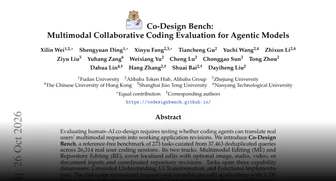
    Co-Design Bench: Multimodal Collaborative Coding Evaluation Benchmark for Agent Models

    The Co-Design Bench benchmark includes 273 tasks and 2,331 acceptance criteria written by experts, derived from 26,314 real user coding sessions. On 10 model endpoints, gpt-6-astra averages 69.9% passing the criteria for each task, but only 26.4% of tasks are fully satisfied; Qwen3.8-27B has an overall strict completion rate of 64.4% and ranks second in the repository editing subset.