Skip to content
Live
Nov 6Fri
  1. Hugging Face Blog71

    NVIDIA has released four open-source world model checkpoints for Cosmos 3.

    NVIDIA has added four new open-source weight checkpoints for Cosmos 3 under the Cosmos World Model platform, all of which are post-trained versions of Cosmos 3 Nano, containing 16B trainable parameters, using the OpenMDW1.1 license, allowing commercial and non-commercial use.

    Why it matters: The original text provides four open-source weight checkpoints and a four-stage training recipe, allowing readers to judge how to adapt the world model to their own sensors and robot bodies.

  2. Google AI Blog78

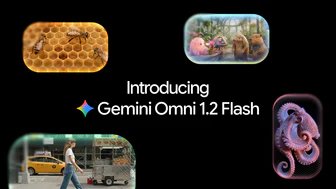
    Google releases Gemini Omni 1.2 Flash, supports 15-second videos and cuts prices by 30%

    Google has released Gemini Omni 1.2 Flash and has officially opened it through the Gemini API and Gemini for business. The duration of native video generation has increased from 10 seconds in Omni 1.1 to 15 seconds, with a step length of 1 second specified from 3 to 15 seconds. The price of 720p has been reduced to 0.07 US dollars per second, a decrease of 30% from 1.1.

  3. Google DeepMind78

    Google DeepMind has released Gemini Omni 1.2 Flash, supporting 15-second videos and reducing the price by 30%.

    Google DeepMind has released Gemini Omni 1.2 Flash, increasing the native video generation duration from 10 seconds in Omni 1.1 to 15 seconds, and it has been fully opened in the Gemini API and Gemini for business.

    Why it matters: The original text lists specific changes in duration, price, and reference consistency, allowing readers to judge how the cost and workflow of video generation will change.

  4. Microsoft Research

    PDD Kit officially validated full-stack web applications written by AI intelligent agents

    The PDD Kit translates user intent into formal specifications and verifies whether the code written by the agent for each input conforms to these specifications, supplemented by testing. The team officially validated the Rust-written Pet Store login logic using the Chopin environment on GitHub Next with the PDD Kit, and the Verus tool discovered and fixed existing bugs, proving no login bugs under the specification.

  5. The Decoder70

    Tencent has released the Hy4 model, which first supports image understanding and computer operation.

    Tencent has released the Hy4 model, which is capable of image understanding for the first time and can operate software such as Blender, CAD autonomously, the weight will be opened on an undetermined date later, it is currently only provided through applications such as Tencent Cloud, OpenRouter, and Yuanbao.

    Why it matters: Tencent Hy4 has joined image understanding and computer operation capabilities for the first time, there is a gap between third-party reviews and official statements, you can compare to see the real position of the open weight model.

Nov 5Thu
  1. LangChain Blog

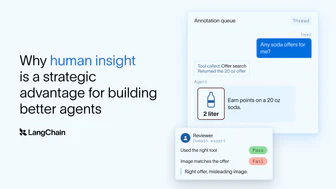
    How human insight constructs better intelligent agents - LangChain's three principles of human feedback

    LangChain explores three principles of human feedback to enhance agent development: expert judgment defines quality standards, comprehensive context evaluation, and converting feedback into reusable data; through agent trace to record user interactions and model behavior, manually labeled scoring with reasons, used to calibrate automated evaluators, improve evaluation criteria, and build golden datasets, forming reusable expert knowledge assets.

  2. ByteDance Seed · Hugging Face new models

    ByteDance-Seed/Qwen3-30B-A3B-MoE-SAE released

    ByteDance-Seed/Qwen3-30B-A3B-MoE-SAE is released, containing TopK sparse autoencoders (k=100, 2^20 latent variables) trained on layers 4, 30, and 46 of the Qwen3-30B-A3B model. Each SAE is approximately 17.2 GB, with reconstruction variance unexplained scores of 12.6%, 25.1%, and 7.6% respectively.

  3. O'Reilly Radar

    How RouteLLM researchers train routers to choose between strong models and cheap models using preference data

    RouteLLM researchers train routers to choose between strong and cheap models, benchmark tests show more than double cost reduction with minimal impact on response quality. Automatic routing can help users get more help within budget, allowing the same subscription to support more requests or more frequent use of strong models. Users need to understand the routing effect and evaluate the cost and time benefits it brings, such as comparing different routing strategies through full interaction of code analysis tasks.

  4. Hugging Face Daily Papers65

    The NEO-VLA framework eliminates fixed visual encoders to enhance the robustness of action strategies

    NEO-VLA framework eliminates fixed visual encoders by allowing action strategies to directly access deep visual representations in the network, achieving stronger robustness in various manipulation scenarios and distribution shifts. The framework uses lightweight convolutional layers to tokenize images and allows visual representations to evolve together with language in the backbone network, enabling action experts to obtain information from different depths of instruction-conditioned visual representations. Layer exploration experiments show that action key signals often reach their peak before the final visual representation is formed.

  5. ByteDance Seed · Hugging Face new models58

    ByteDance-Seed/Cross-Layer-TopK-CLT released: a Cross-Layer Transcoder designed for Qwen3-8B-Base

    ByteDance-Seed released the Cross-Layer Transcoder (CLT) for Qwen3-8B-Base, which includes 36 layers × 32,768 latent variables, with 94.2B parameters, a total size of 377 GB, supporting fp32 inference, encoding by jointly scoring the top 360 activated latent variables across all layers, and reconstructing the original MLP output during decoding.

  6. Hugging Face Daily Papers65

    The TurnWise framework enhances streaming video understanding through round-level credit assignment.

    The TurnWise framework improves streaming video understanding by round-level credit assignment and decision weight balancing. Its round-level credit assignment constructs group relative advantages using prefix scores from silent completions, and round-mean policy optimizes the token loss per round. Experiments show this method outperforms existing streaming video understanding RL methods.

  7. MarkTechPost

    Google AI Research releases Agile Deliberation framework for gray-area image classification

    Google AI Research releases Agile Deliberation framework, which transforms fuzzy concepts into structured definitions through human-in-the-loop, for gray-area image classification. The framework is based on Gemini 2.5 Pro and Gemini 2.5 Flash API, requiring no fine-tuning, with an average F1 score 10.5 points higher than zero-shot Gemini 2.5 Flash, reaching 0.59 in paid scenarios.

    Same story · 2 outlets

    How the accounts differ:Google Research mentions user experiments reducing fatigue and anxiety; MarkTechPost focuses on F1 score improvements.

  8. ITHome · AI

    NVIDIA releases CUDA Toolkit 13.5: Officially supports Vera Rubin and upgrades multi-GPU communication.

    NVIDIA releases CUDA Toolkit 13.5, officially supporting the next-generation AI computing platform Vera Rubin and deploying for enterprise production environments. Updates and upgrades include GPU resource scheduling, multi-GPU communication, mathematical computing libraries, and performance analysis tools, optimizing cuBLAS for low-precision matrix operations on NVFP4 and MXFP8 to improve training and inference throughput.

  9. ITHome · AI62

    Huawei announced that Ascend 0 Day support is available for Kimi K3.1 Pro inference deployment, further advancing the capabilities of 2.8 trillion-level MoE models.

    Ascend based on vLLM Ascend and SGLang synchronously implements 0 Day inference adaptation for Kimi K3.1 Pro, supporting the deployment of 2.8 trillion parameter models on Atlas 800 A3, 900 A3 SuperPod, and 950 SuperNode series, with native support for visual understanding and a million token context window.

  10. Epoch AI65

    Epoch Capabilities Index update adopts Bayesian model methodology

    Epoch Capabilities Index (ECI) update adopts Bayesian model methodology, providing more reliable estimates of model capability uncertainty and the probability of comparing capabilities between models. The new method is based on four-parameter logistic (4PL) item response theory (IRT), using Claude 3.5 Sonnet (ECI 130) and GPT-5 (ECI 150) as anchor models, and achieves cross-temporal consistency through linear transformations to fix parameter location and scale.

  11. The Verge · AI65

    AT&T Smart Security System has connected to Gemini for Home

    AT&T Connected Life Smart Security System becomes the first product to connect to Google Home Premium, enabling AI features like event summaries and video search through Gemini for Home, supporting natural language queries for activity logs. This integration is only available for users of the monthly $29.99 AT&T Professional Monitoring Plan, and adds a new feature for automatic arming/disarming based on user location.

  12. Google Research

    Agile Deliberation: How AI Assists Humans in Defining Subjective Concept Boundaries

    The Agile Deliberation framework assists humans in defining the boundaries of subjective concepts through iterative dialogue, transforming fuzzy ideas into precise AI instruction blueprints. The framework is divided into two stages: concept definition and concept iteration, which processes fuzzy images through direct feedback. In 18 user experiments of 1.5 hours each, it significantly reduces user fatigue and anxiety, making AI model performance superior to standard baselines.

    Same story · 2 outlets

    How the accounts differ:Google Research mentions user experiments reducing fatigue and anxiety; MarkTechPost focuses on F1 score improvements.

  13. AWS Machine Learning Blog41

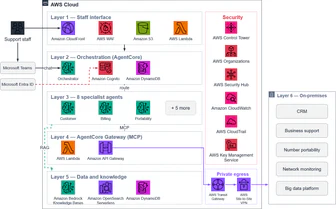
    How U Mobile builds an intelligent customer service center AiDaH based on Amazon Bedrock AgentCore

    U Mobile partnered with AWS to develop the AiDaH intelligent customer service center based on Amazon Bedrock AgentCore, handling 150 operational scenarios through cross-system real-time coordination, chained reasoning, and a multi-tenant security framework, resulting in an 84.5% reduction in critical business work orders. AiDaH will launch a pilot by the end of 2025 and officially launch in Q3 2026, using Microsoft Teams as the interaction interface

  14. Mastra Blog

    Mastra introduces the Knowledge feature to provide agents with corporate context

    Mastra introduces the Knowledge feature, allowing agents to use corporate documents, policies, or decisions as a shared knowledge base for page organization. This feature interacts directly with Mastra's context engineering primitives via signals, supporting agents in obtaining and updating knowledge at runtime. Agents can search, read, and write Knowledge within their authorized scope using tools. Currently in alpha version, and the API may change.

Nov 4Wed
  1. 36Kr · AI72

    After the decision model became popular, why does the physical world need fast on-device judgment?

    TypeSafeAI released decision model Jev in mid-September, which only outputs yes/no, scores, or probabilities, and within weeks of launch, user numbers broke a million, with about one-third of Fortune 500 companies starting to use it, and its valuation increased from about $200 million to $7.5 billion in 24 days.

    Why it matters: From the explosion in popularity of decision models to on-device judgment in the physical world, it shows an industrial change in AI capabilities shifting from generation to measurable decision-making.

  2. Hugging Face Daily Papers65

    FactEmbed: Enhancing Composed Image Retrieval Performance through Decomposed Embeddings

    FactEmbed decouples query understanding from embedding construction, simulating pre-retrieval visual modifications using decomposed latent vectors, significantly improving performance in composed image retrieval. The method outperforms existing technologies in the CIR benchmark, optimizing decomposed representations through intermediate target imagination, and achieving efficient inference using global-level embeddings and mean pooling of latent vectors.

  3. Hugging Face Daily Papers65

    EvoTeam: Achieving Multi-Agent Collaboration through Evolving Teams

    EvoTeam demonstrates effectiveness in four benchmark tests by executing experience-based joint evolution of team organization, interaction rules, and agent skills while maintaining a reusable team library. It maintains a reusable team library, guides collaboration through specific team interaction rules, and accumulates collaboration experience in compatible team contexts, with individual skills being reusable across different teams.

  4. Hugging Face Daily Papers65

    VidUEU-Agent: An intelligent agent for data management in multimodal understanding, editing, and unification tasks.

    The VidUEU-Agent framework solves the problem of scarce high-quality multimodal instruction data and high annotation costs in multimodal model development by automatically constructing instruction data from raw videos. The framework adopts a four-stage data construction process, combining visual language models and visual tools for evidence-based data synthesis, and utilizes downstream training feedback for autonomous iteration.

  5. Ai2 Blog

    Ai2 collaborates with Google to launch a new generation climate model NeuralGCM+

    Ai2 receives a $10 million three-year grant from Google.org to collaborate with Google Research in developing the open-source climate model NeuralGCM+, aiming to improve the speed and reliability of climate predictions; the model extends from Google Research's NeuralGCM, combining physical equations with AI to simulate the joint effects of the atmosphere and oceans, with simulation cycles extended to decades, supporting regional rainfall and water resource change predictions, and plans to promote research community collaboration through open-source code and documentation.

  6. Hugging Face Daily Papers42

    Route Anything: A Research Framework for Model and Strategy Routing in General AI Systems

    The Route Anything framework enhances the performance and efficiency of general AI systems by dynamically selecting and coordinating different AI models and strategies. It has constructed a 250,000-run trajectory matrix covering 25 benchmark tests, including 452 configurations such as language understanding, image, video, speech generation, coding, task proxying, and robotic operation.

  7. Hugging Face Daily Papers38

    YANAMI: A Large-Scale Multimodal Dataset and Benchmark for Multi-Round State Interaction

    YANAMI introduces a large-scale multimodal dialogue dataset and benchmark that requires models to track and implement evolving dialogue states across rounds, revealing that current unified multimodal models still struggle with this task. YANAMI-400K contains 400,000 multimodal dialogue rounds across 4 scenarios, requiring models to continuously track, store, and revise evolving multimodal dialogue states across rounds; YANAMI-Bench contains 400 multimodal rounds for system evaluation of multimodal state interaction, jointly evaluating dialogue state understanding and visual implementation.

  8. Hugging Face Daily Papers

    RoboColosseum evaluates physical intelligence in large-scale real environments

    RoboColosseum evaluates general robotic strategies across different robots and environments, finding weak consistency across robot platforms, limited open-world reliability, and significant differences in zero-shot and fine-tuning performance. This distributed evaluation framework assessed five visual language action (VLA) strategies and three cutting-edge AI agents on four robot platforms (SO-101, Franka, dual-arm YAM, humanoid G1). The results show that cutting-edge agents are comparable to dedicated VLA strategies, but all systems perform poorly in open-world tasks. RoboColosseum evaluates physical intelligence in large-scale real environments.