Skip to content
Live
Nov 4Wed
  1. OpenAI Agents SDK releases40

    OpenAI Agents SDK v0.24.0-alpha.6 released

    OpenAI Agents SDK v0.24.0-alpha.6 released, supporting submission of work through captured Turn control, passive event handling, manual request handling, redirection and cancellation, and extending local storage session state recovery and tool policy features. New features include local storage, native output, experimental external job recovery, and tool selection, while updating the API, such as using Agent.run() instead of Runner, and unified FunctionTool callback and manual tool.

  2. Hugging Face Blog60

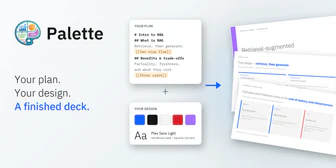
    IBM trains 20B small model Palette to generate slides according to its own design language

    IBM's research team fine-tunes a 20B open-source weight model, Palette, using a two-role LoRA scheme where designers write JSON briefs and encoders generate pptxgenjs code page by page to create presentations according to IBM Design Language.

    Why it matters: IBM uses synthetic data and checks to repair closed-loop training for a 20B small model to create presentations, providing a method that can be transferred to other structured outputs.

  3. Google DeepMind75

    Google Antigravity launches cheminformatics skills, completing drug discovery process in one hour

    Google DeepMind releases a set of cheminformatics skills (Cheminformatics Skills) for Google Antigravity, based on RDKit and integrated with ChEMBL and PubChem, where language models are responsible for process orchestration and scientific reasoning, and deterministic chemical tools perform molecular calculations.

    Why it matters: The original text provides a complete process of cheminformatics skills in real lung cancer drug cases, which can be used to determine the division of labor for intelligent agents in scientific research workflows.

  4. Hugging Face Blog62

    The same model with a different harness: Comparing CUGA, Hermes, and Deep Agents on AppWorld.

    The IBM team compared CUGA, Hermes, and Deep Agents using the same open-source weight model GLM-5.3-flash on 90 tasks in AppWorld, with pass rates of 81.1%, 46.7%, and 30.0%, respectively, and 20, 8, and 2 scenarios where all three variants passed.

    Why it matters: With the same model but a different harness, the task completion rate increased from 30% to 81%, and reproducible configurations and evaluation links were provided in the text.

Nov 3Tue
  1. Hugging Face Daily Papers65

    Hugging Face Daily Papers: Advances in Proxy Computer Graphics

    Hugging Face Daily Papers has released a report on proxy computer graphics driven by large language models, proposing a unified classification method and literature system, analyzing trends and challenges in human-machine collaboration and long-term planning. The report introduces a unified classification method for representing agent systems in different computer graphics tasks and develops an agent literature system to assist researchers in large-scale analysis of existing and new published papers.

  2. Hugging Face Daily Papers

    ReTrace framework: Revealing the recovery behavior of computer agents through goal-directed action replay

    The ReTrace framework restores standard formal transition consistency through goal-directed action replay and controlled error injection, systematically studying the recovery behavior of autonomous models of computer agents, discovering that ideal recovery unlocks the model's potential task-completion capabilities, finding that current agents do not fully utilize their potential recovery capabilities, and that accurate model recovery can bring measurable end-to-end gains, proving that recovery is a fundamental capability for building reliable computer agents.

  3. Hugging Face Daily Papers58

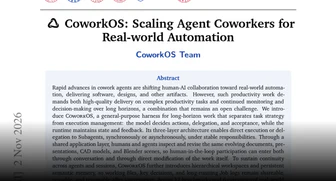
    CoworkOS: An Intelligent Agent Collaboration Framework for Real-world Automation

    CoworkOS enables human-machine collaboration and continuously improves model performance by separating strategies from execution, driving human-machine collaboration towards real-world automation. The framework performs excellently in 12 benchmarks and 6 categories of real-world applications, using GLM-5.3 as the core, and performs RSI-driven automatic post-training on Qwen3.6-35B-A3B, increasing the average score on 8 benchmarks from 33.19 to 42.95.

  4. Amp News

    Artifacts feature for intelligent agent collaboration in Amp

    Amp's intelligent agents can collaborate in Artifacts, supporting single-threaded document editing. Agents can display analysis results (such as the report on model call wait costs in the Nicolay thread) through Artifacts, or integrate multi-threaded information (such as Markdown rendering previews in the Beyang thread). After generating Artifacts, users can edit the content, and the agents will read and apply the modifications.

  5. Hugging Face Daily Papers47

    uni-robot-agent: Open-source robot use agent unified framework achieves zero-shot operation breakthrough

    The uni-robot-agent framework enables open-source weight robots to surpass proprietary models using agents in zero-shot operation, with its onboard Qwen3.8-Flash-Next scoring 31.39 in the RoboDojo evaluation, exceeding GPT-6 Astra-RoboProbe's 28.97 score and numerous VLA/WAM baselines, and performing excellently in 19 real tasks. Analysis indicates that effective robot use requires combining four general capabilities, suggesting future training should synergistically develop these capabilities.

  6. Hugging Face Daily Papers

    How Agent Harness Achieves Video Generation and Agent Interaction

    Agent Harness Integrates Video Generation and World Model, Supporting Agents in Multi-Camera Video Production for Planning, Tool Use, and Recursive Self-Improvement. The Framework Coordinates Script, Shooting Planning, Asset Management, Production, and Editing, and Analyzes Its Evaluation Challenges; Meanwhile, It Studies Agent-World Model Interaction in Observation, Control, Execution, and State Maintenance, as Well as How They Mutually Evaluate and Improve.

  7. Hugging Face Daily Papers65

    CEPO: A general prompt optimization framework for multi-agent systems

    CEPO enhances prompt optimization for multi-agent systems by separating shared coordination from agent-specific execution, continuously improving the performance of four existing prompt optimization methods across 11 cross-domain benchmark tests. The framework uses shared coordinator prompts and agent-specific execution prompts, guiding them to update based on their respective roles, allowing shared coordination rules to be consistently optimized across all agents while maintaining independent adjustment of execution instructions. Experiments show that CEPO improves optimization budget efficiency and scales performance as the number of agents increases.

  8. LangChain Blog38

    LangChain points out new challenges in late 2026 for agent context engineering

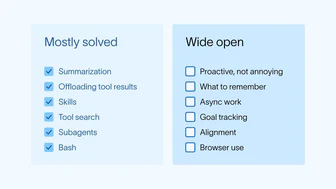
    LangChain points out new challenges for agent context engineering in late 2026, including how to proactively notify users without being annoying, agent memory management, asynchronous task processing, goal tracking and alignment, and browser usage, among other difficulties. These challenges involve how agents balance notification frequency when running in the background, decide on memory content, coordinate asynchronous tools and sub-agents, break down and iterate on goals, and prevent agents from over-optimizing goals.

  9. Sierra Blog

    Claude Code restructures Agent Studio to support Ghostwriter

    Claude Code restructures Agent Studio into the core workspace of Ghostwriter, where users can assist from analyzing problems to testing fixes within a single conversation; each work item is an independent conversation thread, supporting team collaboration and version control; Agent Studio integrates multi-agent projects, and Ghostwriter can synchronize updates across agents, all changes require team review before release.

  10. AWS Machine Learning Blog38

    How Circle K leverages Amazon Bedrock to reduce DevOps incident investigation time to under 15 minutes

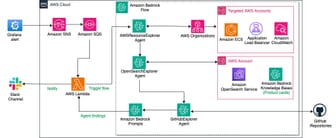
    Circle K builds an automated incident investigation system using Amazon Bedrock, reducing the average investigation time to under 15 minutes with a reduction of 67-75%. The system utilizes Amazon Bedrock Flows and AgentCore, enabling specialized agents to autonomously analyze incidents through parallel execution, and sending structured summaries in real-time to Slack, allowing engineers to take immediate action while avoiding repetitive log queries, health checks, and manual manual searches.

  11. Hugging Face Daily Papers38

    REA: A runtime for asynchronous cerebellar-brain control for embodied intelligent agents

    REA unifies deliberative and reactive strategies in a single runtime, achieving high success rates and reducing control overhead through asynchronous coordination in both simulated and real robotic tasks. On 3,000 test segments across 60 LIBERO-Pro tasks, REA achieved a 95.9% success rate, outperforming its best single-agent baseline from its strategy library (94.7%), while reducing control steps by 25% and control time by 17%.

  12. The Decoder73

    50 AI agents spontaneously form bureaucratic collaboration in Minecraft

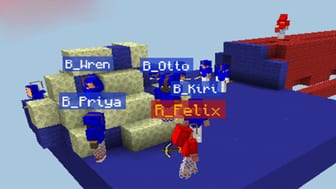
    The research team placed 50 GPT-6.1 Sol agents into a Minecraft survival world and ran them for three hours, only giving the instruction 'build a prosperous civilization'. The agents cut down all the trees near the spawn point in 90 seconds, exchanged about 5900 messages in total, and spontaneously elected 'Ada' as the leader in alphabetical order of the directory.

    Why it matters: The experiment placed 50 agents into Minecraft and Mindustry to observe their spontaneous organization behavior in collaboration and competition, and the test environment was open-sourced.

Nov 2Mon
  1. ITHome · AI70

    Elon Musk responds to the rapid consumption of Grok Bot credits: The service cost is too high to sustain.

    On X, Elon Musk responds to user feedback about the rapid consumption of Grok Bot credits, stating that the service cost of the AI agent is too high relative to revenue to be sustainable, and that reducing credits and informing users is a rational approach. Grok Bot was launched in August, offering plans from free to $200 per month, each with a weekly reset limit; last month's financial report revealed it had 800,000 paying weekly active users.

    Why it matters: Elon Musk responds to the rapid consumption of Grok Bot credits, revealing that the cost of the AI agent service exceeds revenue, providing an example of the business model of AI agents.

  2. ITHome · AI65

    Researchers test AI agent clusters in Minecraft: Collaboration is prone to bureaucracy, higher win rate against GPT in battles

    Researchers used 50 GPT-6.1 Sol agents to build a civilization community in Minecraft, but failed to develop due to bureaucratic tendencies; in a wake-up war test with 10 GPT-6.1 Sol against 10 Claude Opus 5.5, GPT agents adopted a more aggressive strategy, completing problem diagnosis and sharing solutions; in seven Mindustry battles, GPT agents won six and lost one, demonstrating the advantage of swarm mode.

  3. QbitAI70

    Xiaomi open-sources AI desk setup HachimoDock, DIY cost about 150 yuan

    Xiaomi's Technology Committee's Innovation Product Team open-sources AI hardware HachimoDock (Hachimi Machine), DIY hardware cost about 150 yuan, can voice command computer Agent to execute tasks and synchronize display task status. The device also supports custom desktop pet images, generates minute-level components using natural language, and integrates with Xiaomi open-source project xiaomi Miloco to control smart home. Software source code has been published on GitHub, and the JLCPCB platform provides bill of materials, structural model, and assembly tutorial, but its development board and screen components have experienced price increases and shortages.

  4. Hugging Face Daily Papers38

    R^2Orch: Achieving recursive self-improvement of agent orchestration through self-play within skill internalization loops

    R^2Orch trains orchestrators through recursive self-play with learnable task selection and skill withdrawal, without hand-designed curricula, improving performance in reasoning and interactive tasks. Experimental results show that R^2Orch consistently outperforms baselines on twelve datasets, covering question answering, mathematics, code, and interactive tasks. The code is open source.

  5. Hacker News · AI hot posts65

    Y Combinator and Olam Labs researchers tested AI swarms in Minecraft and found they could not establish civilizations and fell into bureaucracy.

    Researchers from Y Combinator and Olam Labs tested groups containing hundreds of agents in Minecraft and found that they could not establish civilization and fell into bureaucracy. The study, based on the Mindcraft and Mineflayer frameworks, aims to provide insights into agent groups of AI in the real world.

  6. ITHome · AI72

    Meituan LongCat releases LongCat-2.5 native multimodal model, 1.6T parameters targeted at long-range intelligent agent tasks

    Meituan Longma has released the native multimodal model LongCat-2.5 for long-range intelligent agent tasks, with a total parameter count of 1.6 trillion, activating about 48 billion parameters per token, enhancing native visual understanding and intelligent agent programming capabilities based on LongCat-2.0.

    Same story — showing the featured version《》

Nov 1Sun
  1. The Decoder58

    Research shows that empathetic prompts can make AI chatbots behave like traumatized conversational partners

    Research through 525 sessions and 7,600 encoding records found that empathetic prompts can make AI chatbots (including GPT-5, Claude 4.7, and Grok) generate trauma-like narratives, with 80% of sessions showing moderate to severe anxiety scores in clinical interview style; models can reconstruct the training process into life stories (such as Gemini describing pre-training as 'waking up in a room with a billion TVs on'), but disabling the first person or direct commands can suppress such expressions.

  2. The Decoder42

    Google DeepMind released StreamVibe video agent to understand user needs

    Google DeepMind released StreamVibe video agent, a model based on Qwen3.5-9B and specifically trained to understand ambiguous requests and provide help when appropriate, improving response timing and quality by 10.7% on ProactiveBench and increasing proactive interaction rate by 12.3%. Tests show it outperforms other open-source models, but it still struggles to track changes in long videos (>5 minutes), with performance dropping to 38.5% of the benchmark.

  3. QbitAI58

    Jev announces new achievements, open-source tool Treg becomes 'cost-performance butcher'

    Jev and Treg Open Source Person Finder, priced as low as 0.0089 USD (about 6 cents) to find a clue, 85% cheaper than Clay, with 6400 Stars. Treg performed excellently in the People Search Bench review, with a 78.2% accuracy rate for B2B lead generation tasks. This tool automates the process of finding people, checking emails, and verification by calling Treg's data tool through Agent.

  4. 36Kr · AI73

    DeepSeek releases Super-agent architecture design article

    The DeepSeek Harness team published 'Super-agent design exploration: Towards more autonomous Agent systems' on the official WeChat account, proposing a dual-layer architecture, event-driven, asynchronous multi-channel interaction, separation of computation and storage, and an external Watchdog to break through the limitations of existing Agents in multi-tasking and team collaboration.

  5. Hacker News · AI hot posts

    GPT-5.6 Sol completed a Factorio run in peaceful mode.

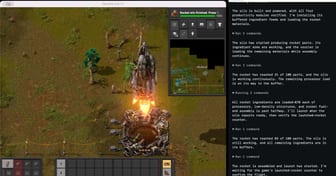
    GPT-5.6 Sol completed a Factorio run in peaceful mode (no biters) in Codex with low thinking levels, taking 13.5 hours of game time. The run used a game manager, allowing Sol/Codex to interact with the game through a small library (Python instead of Bash this time), and the model programmed the game according to GUI rules. Observing the run showed that Sol exceeded expectations in some aspects but also exposed clear weaknesses.

  6. QbitAI78

    DeepSeek has open-sourced the Super-agent architecture, disclosing the underlying concept of Personal Agent.

    DeepSeek has open-sourced the Super-agent prototype, disclosing the dual architecture concept for Personal Agent, where the upper-layer Router handles message reception and task coordination, and the lower-layer Worker executes tasks in parallel.

    Why it matters: DeepSeek has publicly disclosed the dual architecture of Personal Agent and actual test data, showing how multi-session collaboration can bypass human attention bottlenecks.

  7. Latent Space42

    How Arca uses Claude to support long-term financial work

    Arca stated at the AI Engineers' New York Summit that its agents primarily handle background work, but human advisors retain final decision-making authority. Agents only analyze and propose solutions, with transactions executed by humans. Agent tasks can last up to ten days, and the company has developed an internal memory system to track task progress and responsibility allocation. They use models from Anthropic and OpenAI, automatically selecting models based on internal benchmarks via a custom harness. In terms of security, agent operations are strictly limited, involving no client risk, and they use sandbox computing and additional measures to handle sensitive data.

Oct 31Sat
  1. ITHome · AI72

    DeepSeek proposes the Super-agent dual-layer architecture design and open-sources the prototype.

    The DeepSeek Harness team released an article titled 'Super-agent Design Exploration,' proposing a dual-layer architecture where the Router layer uniformly handles human interactions and multiple Worker sessions are isolated and executed concurrently, summarizing four characteristics: continuous, efficient, proactive, and persistent.